Brian is joined by His Excellency Talal Al Rahbi, the ambassador of the Sultanate of Oman to the United States of America, to discuss what it means to represent the “Switzerland of the Middle East” and the role of Oman’s quiet diplomacy. He also reflects on growing up during Oman’s transformation, his time spent in the United States, and why the two nations’ long-standing partnership matters today.
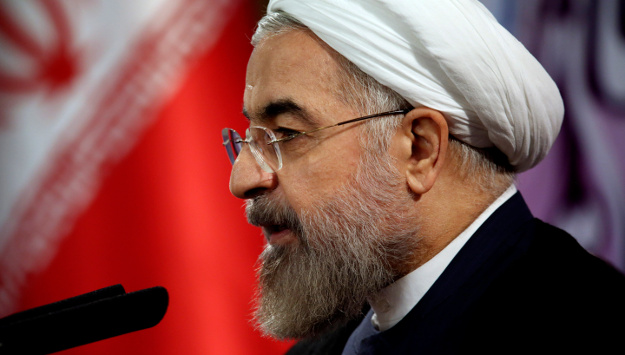
After decades of political setbacks, Iran’s former Revolutionary Guards commander has returned to the center of power. Is he an incidental beneficiary of war, or have observers underestimated him all along?
The Unavoidable Neighbor: Managing Iran Beyond the War
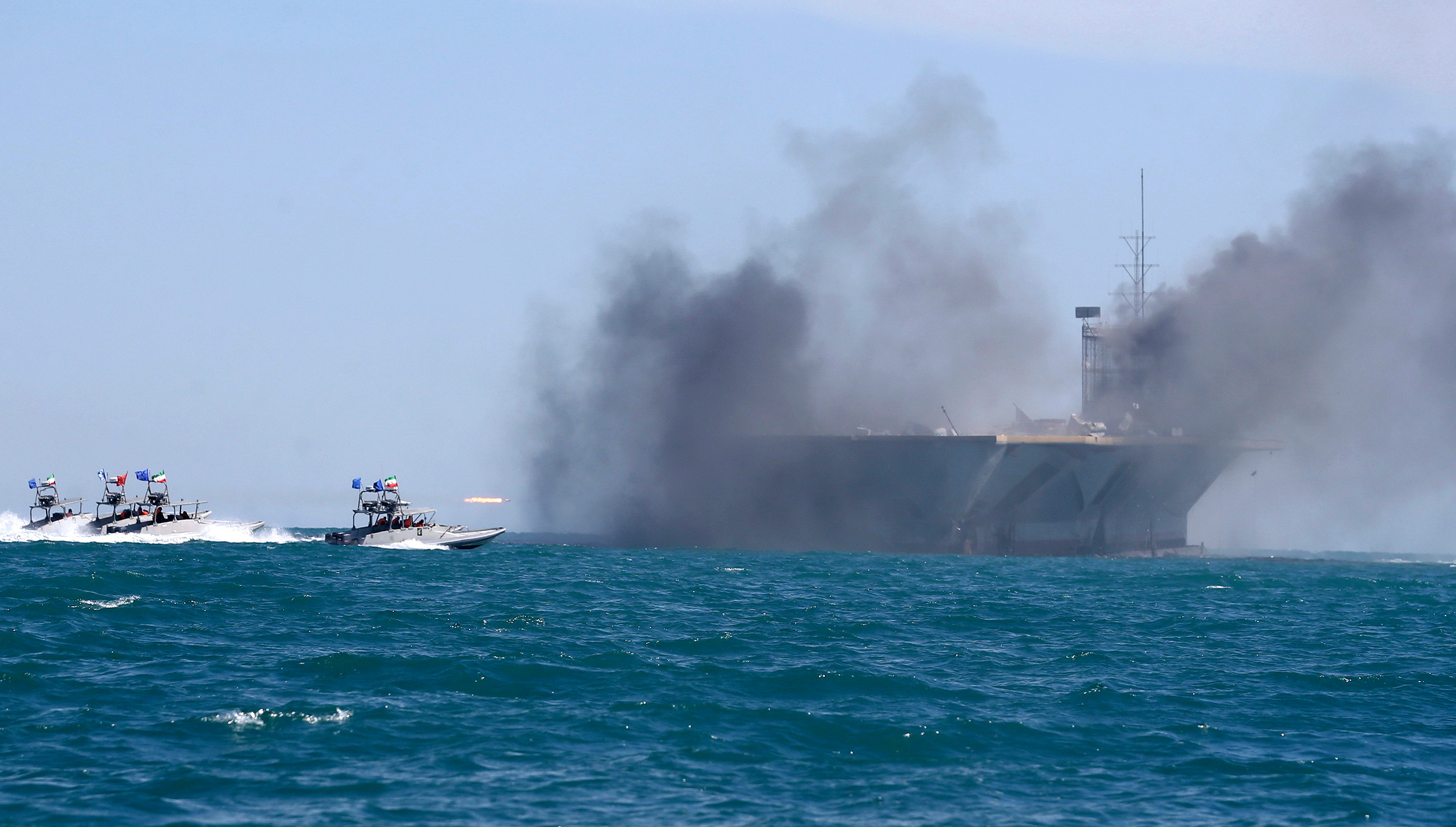
Gulf states and their partners are increasingly looking beyond their most immediate interests of containing the war with Iran. While recent talks between Saudi Arabia, Turkey, Pakistan, and Iran have kept de-escalation on the agenda, a broader regional security framework and non-aggression pact has also emerged, envisioning a longer-lasting solution to regional conflicts. The talks have yet to produce a settlement, but they reflect a growing recognition that Gulf security cannot depend entirely on Washington. Iran will still be there, and its neighbors will have to find ways of living with it.
March 26, 2015 – Paul Salem discusses the new challenge the unfolding crisis in Yemen poses to the region, and how the Arab League and the United States are responding as the fight against ISIS continues.
March 24, 2015: Alex Vatanka, senior fellow at The Middle East Institute, discusses the mood in Tehran as the deadline for negotiations approaches, the state of U.S.-Iranian relations, and what reaching a deal could mean to that relationship and the Arab world, in a brief interview.
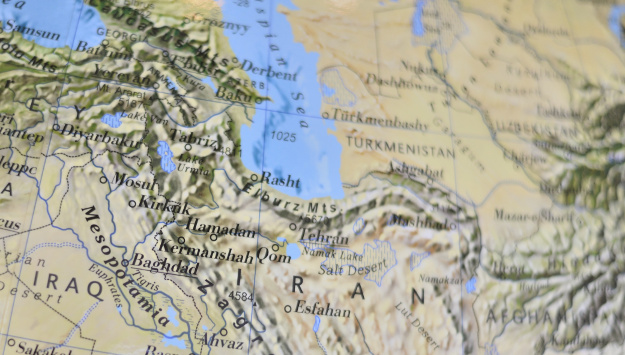
President Hassan Rouhani’s recent trip to Turkmenistan cannot be dismissed as a one-off. Since coming to office in August 2013, the Rouhani administration has prioritized relations with the Muslim states of the former Soviet Union. Given the potential for economic ties and trade, Tehran’s aspirations are fully understandable.
Collection Spotlight: In the Name of Oil: Anglo-American Relations in the Middle East, 1950-1958
Ivan L. G. Pearson’s In the Name of Oil: Anglo-American Relations in the Middle East, 1950-1958 provides a comprehensive analysis of the extent to which British interests in the Middle East influenced or were furthered by the United States between 1950 and 1958.
Historically, promoting dialogue between people of different nations has been a way to build bridges of understanding between countries. For example, since 1946, the U.S. Fulbright Exchange has served to strengthen relations between the United States and other countries. Similarly, as the partnership between China and the UAE has grown significantly in recent years, both governments have come to recognize the importance of overcoming linguistic-cultural barriers. They have therefore worked cooperatively to increase the number of Emirati and Chinese professionals who are acquainted with each other’s societal norms and customs, methods of performing business, and national and institutional interests.
Frustrated Turkey Turns to Onetime Ally Saudi Arabia
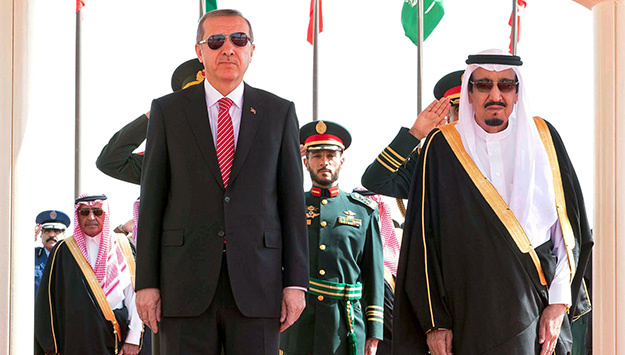
Frustrated by the United States’ failure to heed its advice on Syria and Iraq, and by Iran’s growing clout in these countries, Turkey seems to have decided to mend its frosty relationship with Saudi Arabia. When King Abdullah died earlier this year, Turkish President Recep Tayyip Erdogan immediately cut short an African tour and flew to Riyadh to offer his condolences. He declared a period of mourning in Turkey and ordered the Turkish flag to be flown at half-mast.
The GCC States and the Viability of a Strategic Military Partnership with China
The term “strategic partnership” has been increasingly used in GCC circles to signify that relations with China are important and worthy of long-term investment. In a March 14, 2014 speech during his visit to Beijing, Saudi Arabia’s then Crown Prince Salman announced that “we are witnessing the transformation of the relationship with China to one of strategic partnership with broad dimensions, to the benefit of both our countries.” Saudi Arabia’s position was echoed by the emir of Qatar during a 2014 visit to China in which issues of common concern to all GCC states, especially combating terrorism, were discussed. Abdel-Aziz Aluwaisheg, GCC general assistant secretary for negotiations and strategic dialogue, has also noted that there is growing interest in the Gulf to develop a “strategic dialogue” with China.
It has long been known that the Assad regime, facing a shortage of manpower in its regular army, has had to rely on irregular paramilitaries in its bid to reverse rebel advances. This became particularly apparent in 2013, when Hezbollah openly declared its participation in the capture of Qusayr, a town in Homs Province on the border with Lebanon.
The death of King Abdullah in late January 2015 brought a seamless transition of power in Saudi Arabia. Crown Prince Salman acceded to the throne and Prince Muqrin became crown prince, while Prince Muhammad bin Nayef, minister of the interior, became second deputy prime minister and the first grandson of Ibn Saud in line for the throne. Despite speculation to contrary, the smooth transition was strong evidence of a preexisting agreement that included the late king, Salman, and other senior princes.
When the Houthis, a Shia rebel group in Yemen, forced the country’s pro-Western president, Abed Rabbo Mansour Hadi, to flee the capital this past January, many in the region concluded that another Arab state had fallen into Tehran’s lap—a result, as one prominent commentator put it, of Iran’s “offensive state, the likes of which we have not seen in modern history.”
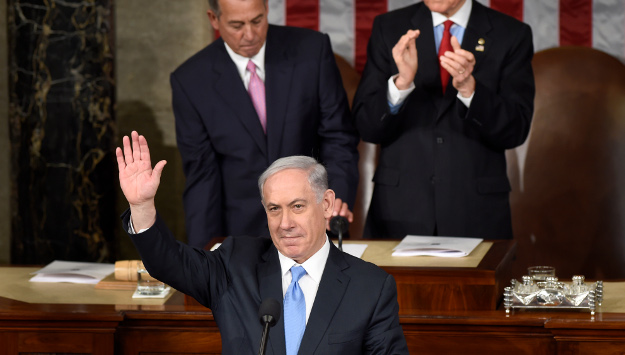
Israeli Prime Minister Benjamin Netanyahu has come to the United States, spoken his piece and returned home to Israel to finish campaigning for the March 17 elections. Netanyahu’s visit to Washington was neither the triumph he expected nor the disaster forecast by opponents of the visit. Indeed, the visit shed no new light on the supposedly central issue of the day: the state of play in the Iran negotiations.
The Middle East is experiencing unprecedented upheaval, and by all indications the region is likely to remain in turmoil for the foreseeable future. From Yemen to Bahrain to Syria and Lebanon, the sectarian agendas and geopolitical maneuverings of the two regional heavyweights – Iran and Saudi Arabia – will likely remain the key drivers fueling the regional fire.
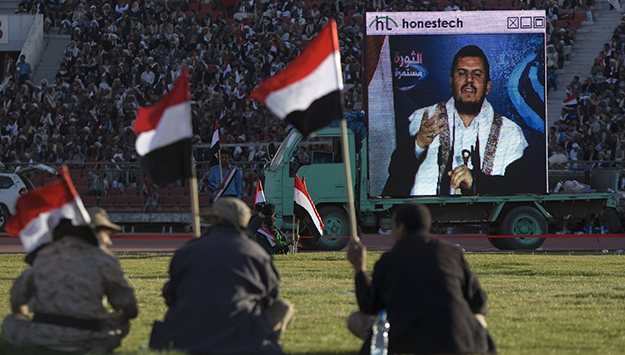
Yemen’s Ansar Allah: Causes and Effects of Its Pursuit of Power
Observers can be excused for confusion over events in Yemen. In late January, Ansar Allah—the group often referred to as Houthis—kidnapped President Abdu Rabbu Mansour Hadi’s chief of staff, sacked the presidential palace, and effectively placed the president and government ministers under house arrest. Ansar Allah’s demands, strangely, were that the president and government stay in power rather than leave.
The oldest peer-reviewed publication dedicated to the study of the modern Middle East, MEI’s flagship journal covers politics, society, and culture in the region.











 Ivan L. G. Pearson’s In the Name of Oil: Anglo-American Relations in the Middle East, 1950-1958 provides a comprehensive analysis of the extent to which British interests in the Middle East influenced or were furthered by the United States between 1950 and 1958.