Brian is joined by His Excellency Talal Al Rahbi, the ambassador of the Sultanate of Oman to the United States of America, to discuss what it means to represent the “Switzerland of the Middle East” and the role of Oman’s quiet diplomacy. He also reflects on growing up during Oman’s transformation, his time spent in the United States, and why the two nations’ long-standing partnership matters today.
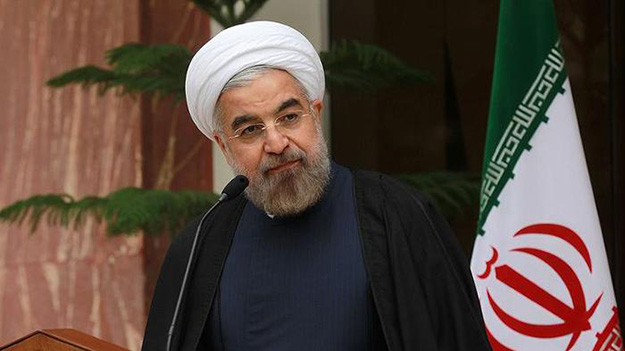
After decades of political setbacks, Iran’s former Revolutionary Guards commander has returned to the center of power. Is he an incidental beneficiary of war, or have observers underestimated him all along?
The Unavoidable Neighbor: Managing Iran Beyond the War
Gulf states and their partners are increasingly looking beyond their most immediate interests of containing the war with Iran. While recent talks between Saudi Arabia, Turkey, Pakistan, and Iran have kept de-escalation on the agenda, a broader regional security framework and non-aggression pact has also emerged, envisioning a longer-lasting solution to regional conflicts. The talks have yet to produce a settlement, but they reflect a growing recognition that Gulf security cannot depend entirely on Washington. Iran will still be there, and its neighbors will have to find ways of living with it.
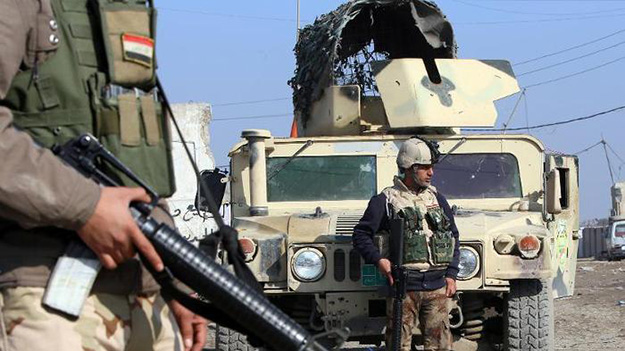
Since the departure of U.S. ground forces from Iraq in 2011 in the wake of failed negotiations to extend the 2008 Status of Forces Agreement, the security situation in Iraq has steadily declined. To many, the situation was predictable, as the absence of a residual U.S. force to mature the Iraqi security forces and moderate long-standing political tensions among the sects led to a security vacuum filled by extremists and terrorists. To others, 10 years of investment and over 4,000 troops lost was enough, and it was time for the Iraqis to resolve their own internal conflicts.
The following is an excerpt from “Iraq’s Tangled Foreign Interests and Relations,” written by MEI Vice President Paul Salem and published by the Carnegie Middle East Center on December 24, 2013. Click here to view the full report.
Scenarios of Change and Possibilities of Reform in Lebanon
The recent spate of bombings in Beirut underline the degree to which Lebanon has become entangled in the wider regional conflict being fought in and around Syria, but the paralysis of Lebanon’s political institutions indicate an equally deep domestic dysfunction. There is no doubt that part of Lebanon’s problems derive from its difficult geostrategic environment and require external developments and changes, and part of them come from the weaknesses of its domestic political and socioeconomic system and require internal reform.
During the 1970s the Communist Party dominated almost all walks of life in Vietnam. This strict control, especially in regard to the economy, failed to achieve sustainable development. Vietnamese authorities then began to pursue a policy of openness to the outside world, and the Doi Moi, or “renovation,” was launched in 1986. As a result of this and other gradual reforms, Vietnam has become one of the fastest-growing economies in Asia, with annual GDP growth averaging 7.1 percent between 2000 and 2012—a rate that the country is expected to sustain over the next decade. In this context, Gulf Cooperation Council (GCC)-Vietnam relations are promising and may develop steadily over the coming years.
Earlier this week, Iran and world powers reached a deal in which Iran will curb its nuclear program for six months in exchange for a drop in some sanctions. MEI spoke with one of its experts, Alex Vatanka, to gain an understanding of how hardliners in Iran are reacting to the deal as well as other internal dynamics in the Islamic Republic.
How have hardliners in Iran, such as the Revolutionary Guards, responded to the news of the interim agreement?
The Iran Nuclear Deal: Risks and Opportunities for the Region
The nuclear deal with Iran, though still temporary and tentative, is ushering in a historic shift in the patterns of power, conflict, and diplomacy in the region. Like all historic shifts, it is laden with uncertainty and risk of new conflicts, but also carries with it potential opportunities for further diplomacy and finding common ground. Given the precedent of conflict and mistrust in the region, it is no surprise that the deal has raised concerns among many of America’s allies.
Earlier today, double explosions near the Iranian embassy in Beirut killed at least 23, including an Iranian diplomat. The Abdullah Azzam Brigades, an Islamist group with links to al-Qa`ida, took responsibility for the attack. MEI sat down with its Vice President for Policy and Research, Paul Salem, to discuss the significance of the bombings in Lebanon as well as their regional and global implications.
Tell us about the bombing and the group that claimed responsibility for it.
Iran-India relations are far-reaching and multidimensional. However, a variety of issues, including the upheaval in the Middle East and North Africa, U.S and Israeli influence over the region, Iran-Israel belligerence, and terrorism all constrain bilateral diplomacy.
Maliki in Washington: Arms Deals, Politics, and Proxy Wars
Iraqi Prime Minister Nouri al-Maliki is in Washington this week for meetings with Vice President Joe Biden, Defense Secretary Chuck Hagel, and President Barack Obama. We sat down with MEI’s Vice President for Policy and Research, Paul Salem, to discuss the topics on the table, what each side hopes to accomplish, and how the United States should approach Iraq.
Saudi Arabia & the Arab Gulf’s Disappointment with U.S. Policy
Whether Saudi Arabia takes a seat on the United Nations Security Council or not, the initial snub is aimed primarily at the United States. In particular, U.S.-Saudi relations are in for an exceptionally difficult period—perhaps a return to the policies of King Faisal bin Abdulaziz. It appears that Saudi Arabia and the Arab Gulf now share the view of Sir Charles Johnston, a British diplomat in the 1960s, who offered the following assessment of U.S.
A Discussion with Ken Pollack, Author of Unthinkable
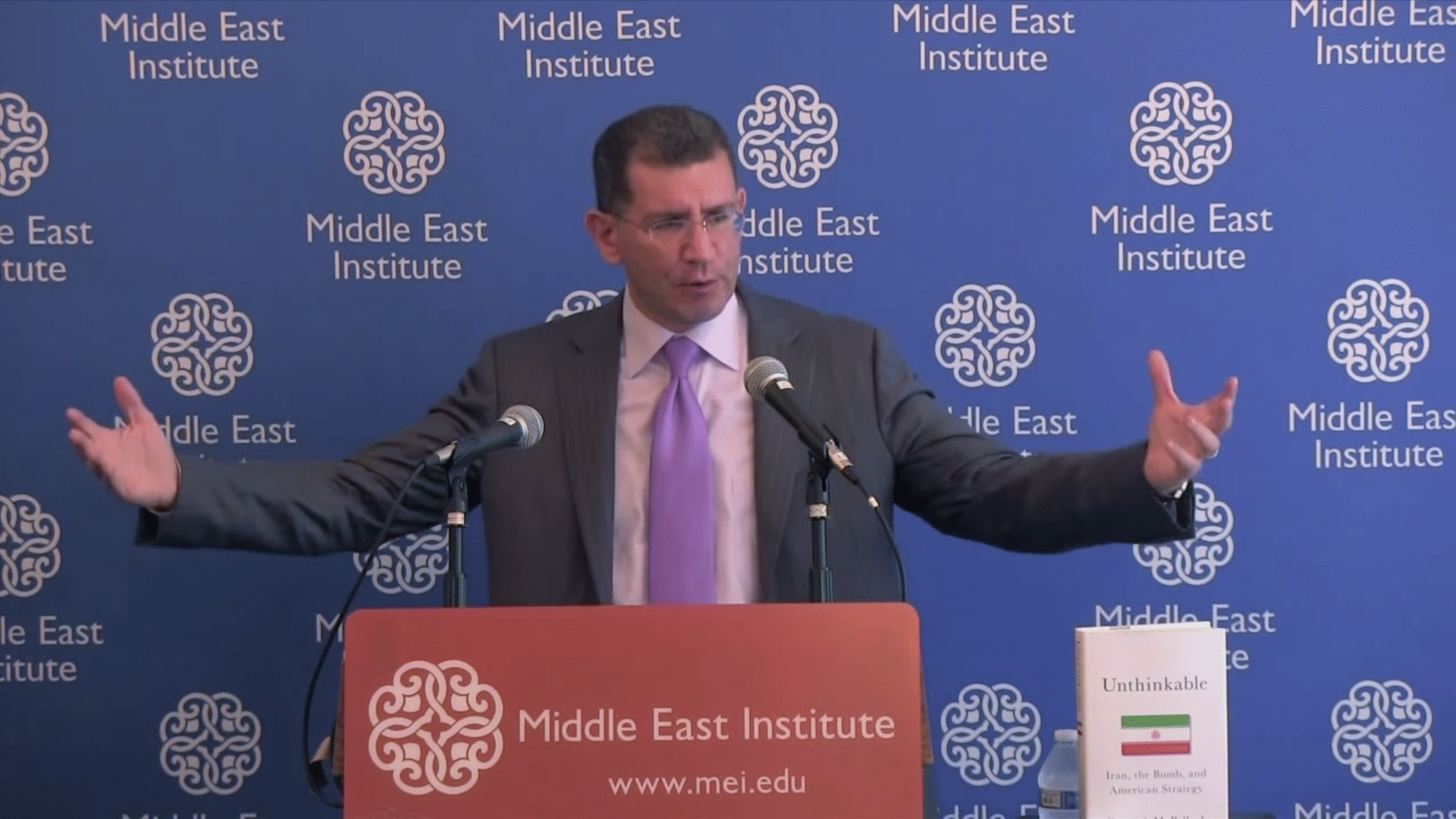
On Wednesday, October 16, 2013, the Middle East Institute hosted author and Brookings senior fellow Ken Pollack for a discussion of his book, Unthinkable: Iran, the Bomb, and American Strategy(Simon & Schuster, 2013). In his latest work, Pollack explores the protracted tensions underlying the U.S.-Iranian relationship, how it evolved to its current status, and how the U.S. should best address Iran’s nuclear ambitions.
A Discussion with Ken Pollack, Author of Unthinkable
The Middle East Institute is proud to host author and Brookings senior fellow Ken Pollack for a discussion of his book, Unthinkable: Iran, the Bomb, and American Strategy (Simon & Schuster, 2013). In his latest work, Pollack explores the protracted tensions underlying the U.S.-Iranian relationship, how it evolved to its current status, and how the U.S. should best address Iran’s nuclear ambitions.
The oldest peer-reviewed publication dedicated to the study of the modern Middle East, MEI’s flagship journal covers politics, society, and culture in the region.