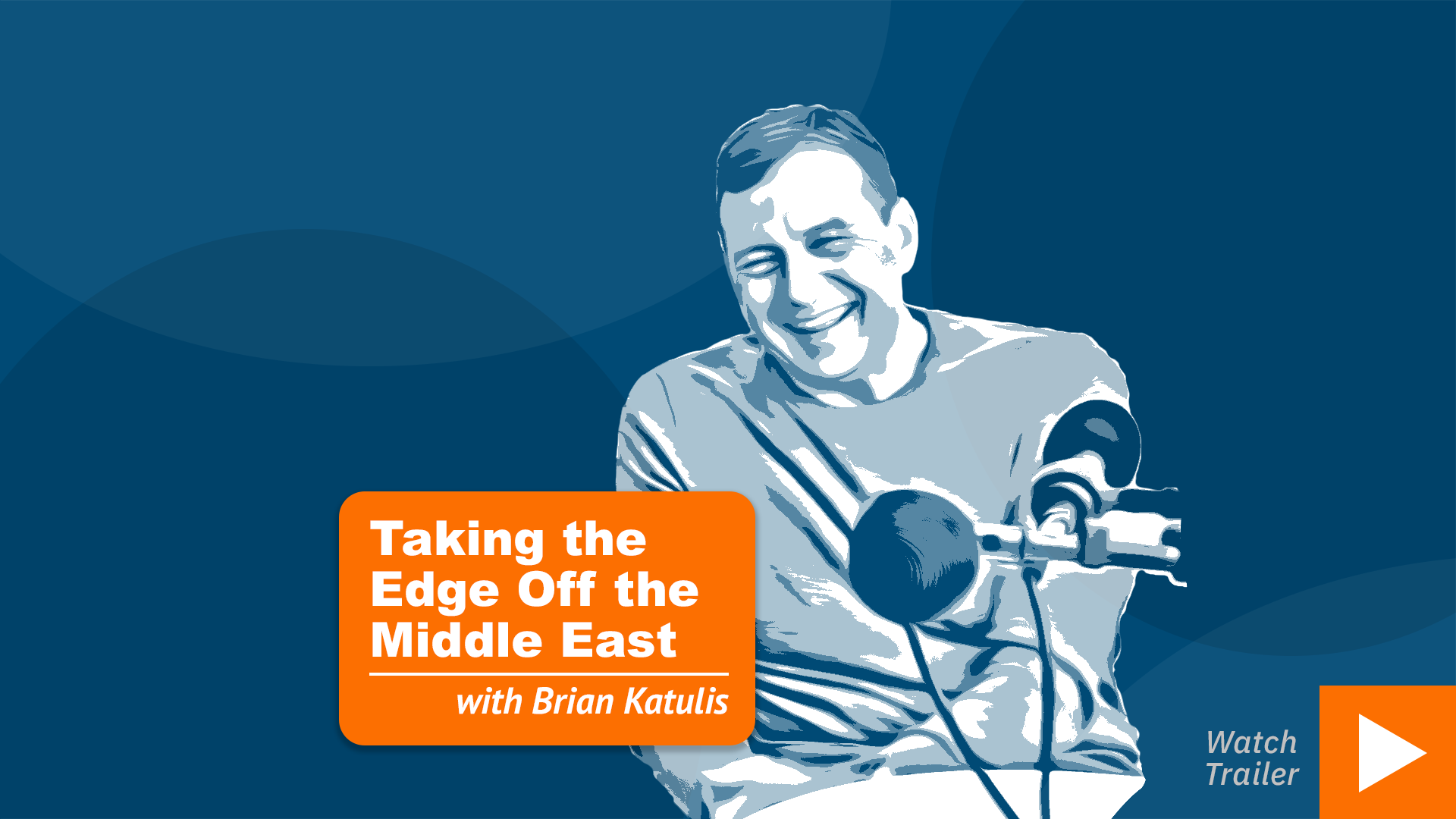
Brian is joined by His Excellency Talal Al Rahbi, the ambassador of the Sultanate of Oman to the United States of America, to discuss what it means to represent the “Switzerland of the Middle East” and the role of Oman’s quiet diplomacy. He also reflects on growing up during Oman’s transformation, his time spent in the United States, and why the two nations’ long-standing partnership matters today.
After decades of political setbacks, Iran’s former Revolutionary Guards commander has returned to the center of power. Is he an incidental beneficiary of war, or have observers underestimated him all along?
The Unavoidable Neighbor: Managing Iran Beyond the War
Gulf states and their partners are increasingly looking beyond their most immediate interests of containing the war with Iran. While recent talks between Saudi Arabia, Turkey, Pakistan, and Iran have kept de-escalation on the agenda, a broader regional security framework and non-aggression pact has also emerged, envisioning a longer-lasting solution to regional conflicts. The talks have yet to produce a settlement, but they reflect a growing recognition that Gulf security cannot depend entirely on Washington. Iran will still be there, and its neighbors will have to find ways of living with it.
Learning from Iraq: A New Model for Stability and Reconstruction Operations
Tue, 5/21/2013 12:00 pm to 1:00 pm The Middle East Institute is pleased to welcome Stuart Bowen, the Special Inspector General for Iraq Reconstruction, to discuss his proposals for how best to conduct Stability and Reconstruction Operations. Stability and Reconstruction Operations, or (SROs), entail governmental efforts to rebuild crucial infrastructure, implement rule of law, and ensure security in developing countries before, during, and after armed conflict. As Mr.
China’s Iraq Oil Strategy Comes Into Sharper Focus
“…Despite the inherent risks in dealing with complex and unstable markets such as Iraq, Chinese investors have been gaining a foothold in the country’s energy sector and in doing so have begun to face a unique set of challenges. In addition to having to navigate a tumultuous political and security environment, China is engaging a country that for a long period of time remained effectively under U.S. military occupation even as the central Iraqi government operated under a framework of limited sovereignty …
Gulf Arab Foreign Direct Investment (FDI): ASEAN Targets of Opportunity
Although China and India have been new favorable destinations for Arab investors, Southeast Asian countries offer distinctive and profitable investment markets, featuring high demand and relatively low labor costs. In recent years, investments from the Gulf Cooperation Council (GCC) to the Association of Southeast Asian Nations (ASEAN) have surged.
Challenging Stereotypes: Educational Aspirations of Emirati and Indian Muslim Women
Many Muslim women do not choose to forego education, but rather are unable to access this basic right mainly due to a lack of opportunity and socio-political constraints. The sharply contrasting cases of India and the United Arab Emirates (UAE) are illuminating in this respect. While the Indian case presents a stark picture, the Emirati case presents a bright and more hopeful one.
Interview with Indian Ambassador (ret.) Ranjit Gupta: Cairo, Egypt — The First Posting (1965-1968)
Even before I left India for Cairo, I had the impression that there was a special relationship between India and Egypt. Indeed, within a few weeks of my arrival in Cairo, I found tangible manifestations that it was indeed so and discovered many more in due course.
Companies from Asia are beating their European and American rivals in investments in Iraq. Being more prone to risk-taking, they are cashing in on the opportunity to establish businesses that would be profitable in the long-term.
The Middle East Institute is proud to host MEI Scholar Dr. Charles Schmitz for a discussion about Yemen’s political future. Two years after the start of anti-government protests in Yemen, the country remains torn by political divisions and rivalries. Schmitz will examine the political challenges ahead and whether or not the country’s upcoming National Dialogue holds the key to stabilizing Yemen.
The Middle East Institute is proud to host MEI Scholar Dr. Charles Schmitz for a discussion about Yemen’s political future. Two years after the start of anti-government protests in Yemen, the country remains torn by political divisions and rivalries. Schmitz will examine the political challenges ahead and whether or not the country’s upcoming National Dialogue holds the key to stabilizing Yemen.
The Middle East Institute is proud to host MEI Scholar Dr. Charles Schmitz for a discussion about Yemen’s political future. Two years after the start of anti-government protests in Yemen, the country remains torn by political divisions and rivalries. Schmitz will examine the political challenges ahead and whether or not the country’s upcoming National Dialogue holds the key to stabilizing Yemen.
The Middle East Institute is proud to host MEI Scholar Dr. Charles Schmitz for a discussion about Yemen’s political future. Two years after the start of anti-government protests in Yemen, the country remains torn by political divisions and rivalries. Schmitz will examine the political challenges ahead and whether or not the country’s upcoming National Dialogue holds the key to stabilizing Yemen.
The Middle East Institute is proud to host MEI Scholar Dr. Charles Schmitz for a discussion about Yemen’s political future. Two years after the start of anti-government protests in Yemen, the country remains torn by political divisions and rivalries. Schmitz will examine the political challenges ahead and whether or not the country’s upcoming National Dialogue holds the key to stabilizing Yemen.
The oldest peer-reviewed publication dedicated to the study of the modern Middle East, MEI’s flagship journal covers politics, society, and culture in the region.