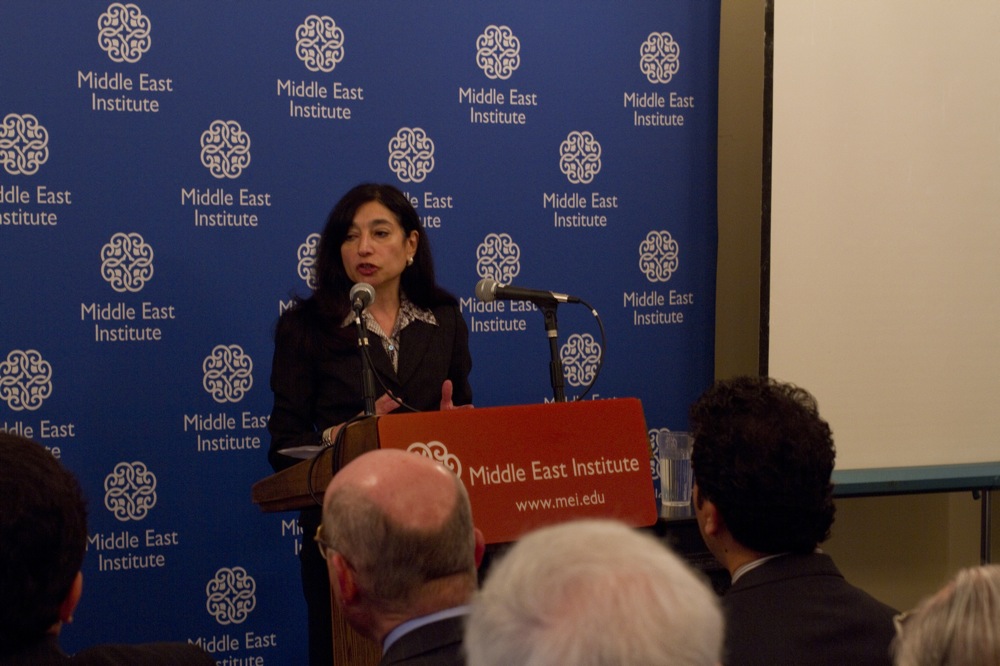
Brian is joined by His Excellency Talal Al Rahbi, the ambassador of the Sultanate of Oman to the United States of America, to discuss what it means to represent the “Switzerland of the Middle East” and the role of Oman’s quiet diplomacy. He also reflects on growing up during Oman’s transformation, his time spent in the United States, and why the two nations’ long-standing partnership matters today.
After decades of political setbacks, Iran’s former Revolutionary Guards commander has returned to the center of power. Is he an incidental beneficiary of war, or have observers underestimated him all along?
The Unavoidable Neighbor: Managing Iran Beyond the War
Gulf states and their partners are increasingly looking beyond their most immediate interests of containing the war with Iran. While recent talks between Saudi Arabia, Turkey, Pakistan, and Iran have kept de-escalation on the agenda, a broader regional security framework and non-aggression pact has also emerged, envisioning a longer-lasting solution to regional conflicts. The talks have yet to produce a settlement, but they reflect a growing recognition that Gulf security cannot depend entirely on Washington. Iran will still be there, and its neighbors will have to find ways of living with it.
The total number of Bahraini citizens is reported to be about 570,000 nationals, less than half of a total population of over 1.2 million.[1] Nevertheless, this very small number makes up an amazingly complex society comprised of groups and subgroups with different interests and agendas. A short unpacking of Bahraini society may shed some light on the problems facing the Kingdom in 2012, and perhaps guide us through possible steps toward reconciliation.
Are Iran’s leaders rational actors? This question matters when justifying any decision by Israel to preempt Iran’s acquisition of nuclear weapons. An Iranian regime seen as driven to destroy the Jewish state has to be dealt with differently than one whose objectives are mediated by calculations of costs and benefits. Deterrents that would be normally expected to restrain a state would not work with an irrational Iran.
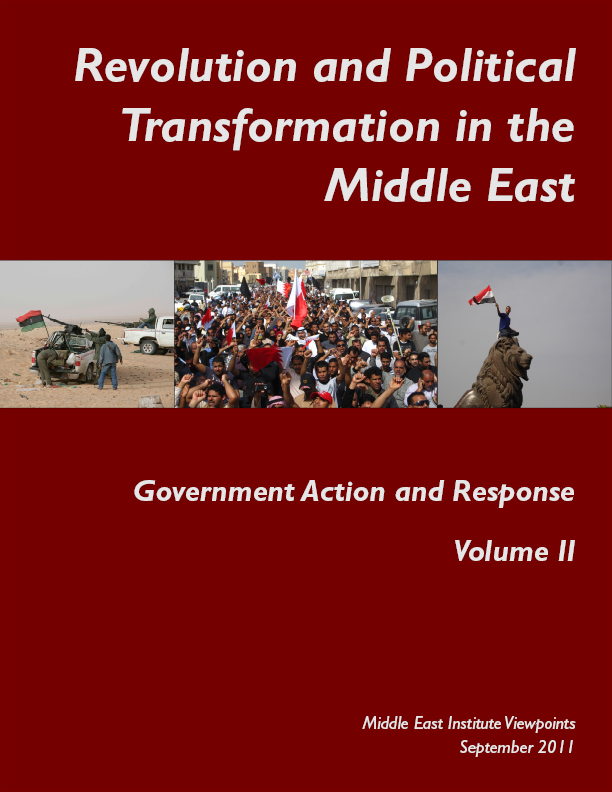
Introduction to Revolution and Political Transformation in the Middle East: Government Action and Response
Originally posted September 2011
On August 21, 2011, rebel forces in Libya rolled into the capital Tripoli, seemingly finishing off months of armed combat and foreign intervention and bringing down yet another Arab head of state. At the same time, sporadic but violent repression of protests in Syria continues, while other states remain calm or have seen their protest movements fizzle. We open this second volume of our series, Revolution and Political Transformation¸ at a time of uncertainty and transition for the region.
Reflections on the Role of American Universities in the Middle East
American higher education has been present in the region since 1866, when the American University of Beirut set the precedent for successful localization by planting roots and adapting to local society. Today, Arab governments themselves often direct and fund the cross-cultural educational export process, with far-reaching economic and social goals. For example, Qatar's U.S. branch campuses are an integral part of its broad education reform strategy designed to transform the country into a knowledge producing society. The UAE, in contrast, has adopted a business-model view of U.S.
Saudi Arabia on the Edge: The Uncertain Future of an American Ally
Of all the countries that are vital to the strategic and economic interests of the United States, Saudi Arabia is the least understood by the American people. Today's Saudis, far better informed than previous generations, are looking for new political institutions that will enable them to be heard, but these aspirations conflict with the kingdom's strict traditions and with the House of Saud's determination to retain power. Meanwhile, the country wishes to remain under the protection of American security but still clings to a system that is antithetical to American values.
Policy Privatization and Empowerment of Sub-National Forces: The Case of Private English Language Institutes in Iran
Originally posted July 2010
In the past, there was no need for learning a foreign language. Today, however, learning foreign languages should be included in school curricula … Today is not like yesterday, when our voice could not reach beyond the national boundary. Today, we can stay in Iran but publicize [our ideology] and export our revolution to other parts of the world in different languages.
The oldest peer-reviewed publication dedicated to the study of the modern Middle East, MEI’s flagship journal covers politics, society, and culture in the region.