Skip to Content
The India-Middle East-Europe Economic Corridor
  • Backgrounder
  • The India-Middle East-Europe Economic Corridor

    The India-Middle East-Europe Economic Corridor (IMEC) is a proposed multinational infrastructure initiative aimed at upgrading connectivity between the three regions through integrated trade, energy, and digital networks. Announced at the G20 summit in New Delhi in September 2023, IMEC is envisioned partially as a counterweight to China’s international infrastructure project, the Belt and Road Initiative.

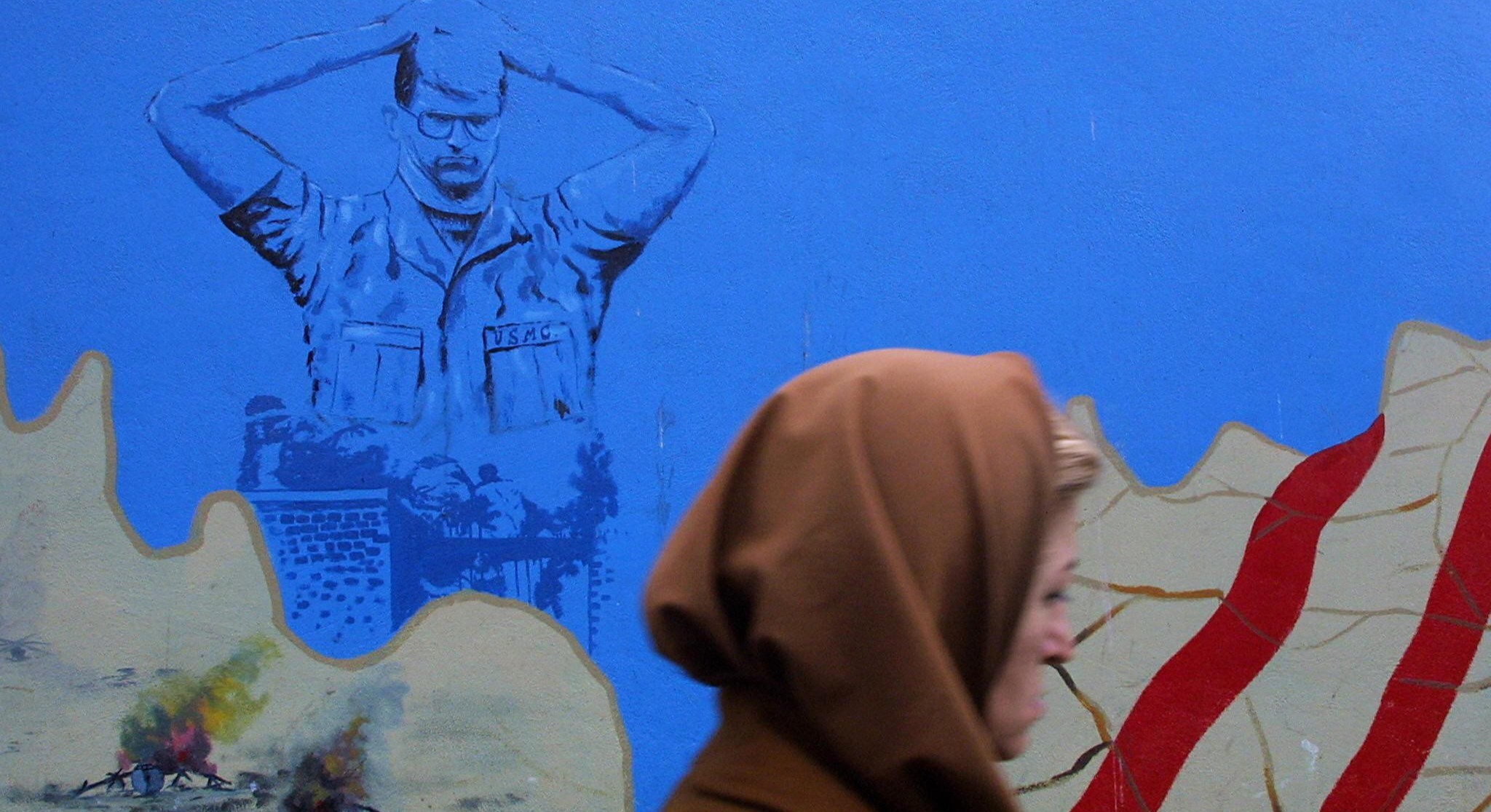
    June 3, 2026

    Featured Experts

    Filter by
    4435 Results
    Trump’s Gulf Visit: Strategic Stakes and Symbolic Optics
  • Podcast
  • Trump’s Gulf Visit: Strategic Stakes and Symbolic Optics

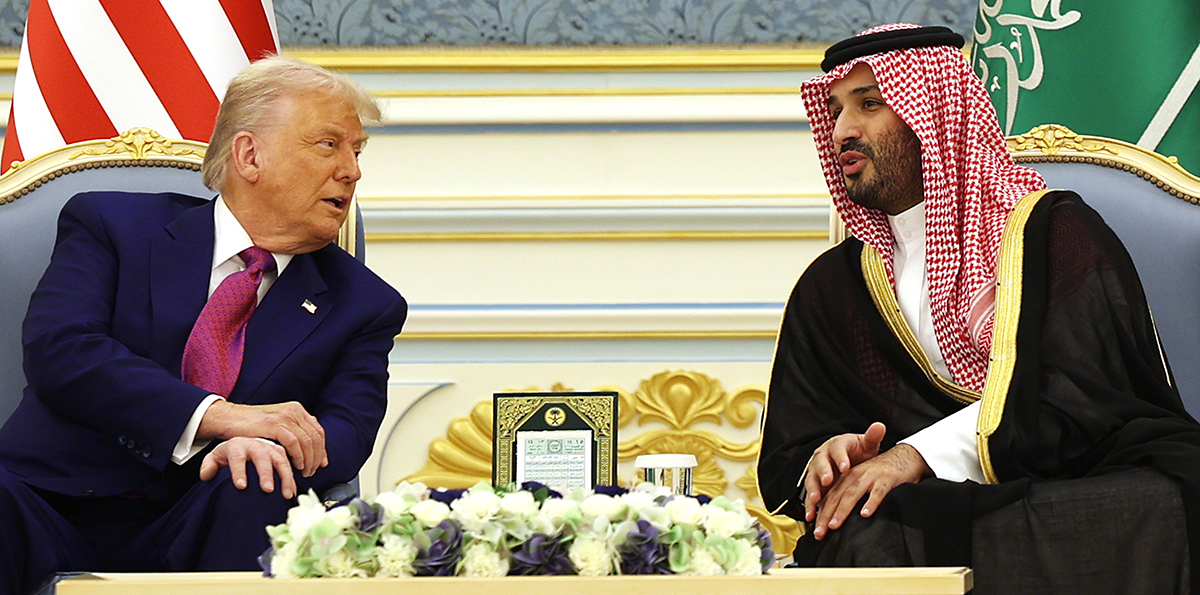
    President Donald Trump is heading to Saudi Arabia, Qatar, and the UAE on his first foreign trip of his second term, with major investment deals, defense cooperation, and tech diplomacy on the agenda. What are the Gulf states hoping to gain, and what does the trip signal about US policy in the region? Alistair Taylor speaks with Dr. Ibrahim al-Assil, Senior Fellow at MEI, about the goals of the visit, the geopolitical and economic dynamics at play, and how regional powers are navigating a complex landscape shaped by Iran, China, AI ambitions, and the crisis in Gaza.

    May 8, 2025

    US Policy in the Middle East: A Report Card
    Photo by Andrew Harnik/Getty Images
  • Report
  • US Policy in the Middle East: A Report Card

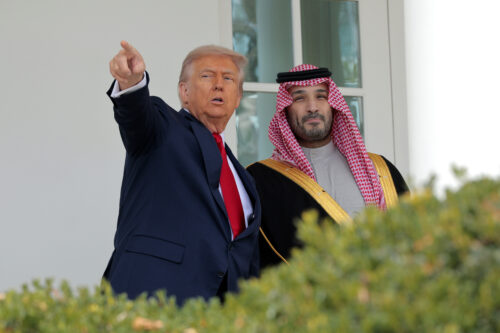
    President Donald J. Trump’s trip to the Middle East on May 13-16 comes on the heels of more than three months of whirlwind activity in US foreign policy where the region has been a higher priority than it was in the early months of the previous US administration. The US president has gained attention by proposing some provocative ideas and his team has made some signs of progress in talks with Iran, but thus far the second Trump administration has produced very few tangible advances for stability, prosperity, and progress in the Middle East. The following report assesses the US government’s actions on Middle East policy over the past three months, from late January to late April 2025.

    Realigning US-Saudi relations for the AI era
    FAYEZ NURELDINE/AFP via Getty Images
  • Analysis
  • Realigning US-Saudi relations for the AI era

    As Saudi Arabia accelerates its transformation into a global technology powerhouse, the United States has a pivotal opportunity to redefine its partnership with the kingdom. Moving beyond the traditional oil-for-security framework, a new partnership centered on artificial intelligence and digital infrastructure can anchor US-Saudi relations in the 21st century.​

    Trump’s domestic political support craters at the 100-day mark before his Middle East trip
    Photo by Bill Pugliano/Getty Images
  • Analysis
  • Trump’s domestic political support craters at the 100-day mark before his Middle East trip

    President Donald Trump reached the 100-day mark in his second term this week seeing a sharp drop in his domestic political standing. This comes less than two weeks before Trump embarks on a key Middle East trip to the Gulf. The administration may be looking to the presidential visit as a chance to achieve some progress, but the region remains fraught with uncertainty and US policy in the Middle East rarely provides domestic political dividends.

    5 key factors shaping Iran’s foreign policy calculus
    Photo by Fatemeh Bahrami/Anadolu via Getty Images
  • Analysis
  • 5 key factors shaping Iran’s foreign policy calculus

    Iran appears to be reorienting its approach to diplomatic engagement with its neighbors and the West by prioritizing the economic benefits of cooperation. A possible withdrawal of support for the Houthis is the latest significant potential outcome of Iran’s shifting stance. The following are five factors to watch for as a Tehran under duress reformulates its policies.

    First Stop, Riyadh: Why Trump’s Saudi Visit Will Be Nothing Like the Last
  • Video
  • First Stop, Riyadh: Why Trump’s Saudi Visit Will Be Nothing Like the Last

    As President Trump prepares for his visit to Saudi Arabia in May, MEI’s F. Gregory Gause, III unpacks the evolving Saudi-American relationship. Compared to his first term, Trump faces a more volatile Middle East and a Crown Prince Mohammed bin Salman whose calculations have fundamentally shifted. The new regional landscape has directly reshaped MBS’s priorities toward regional stability, cautious Iran relations, and economic transformation through Vision 2030. Discover what challenges await as these two leaders navigate complex dynamics, oil markets, and the fallout from the Gaza War.

    April 30, 2025

    US-Iran Nuclear Talks: A Fragile Opening for Diplomacy
  • Podcast
  • US-Iran Nuclear Talks: A Fragile Opening for Diplomacy

    Following seven years of diplomatic deadlock, Washington and Tehran have resumed nuclear negotiations — and for the first time in years, there are signs of real momentum.

    Alex Vatanka, MEI Senior Fellow and author of The Battle of the Ayatollahs in Iran, joins hosts Alistair Taylor and Matthew Czekaj to analyze the current round of talks, the technical issues under discussion, and the political stakes on both sides. He explores Iran’s economic and domestic pressures, US red lines, and the role of key players like Israel, China, and Oman in shaping the negotiations.

    April 24, 2025

    Deteriorating human security in Gaza will limit Trump’s Middle East aspirations
    Photo by Doaa Albaz/Anadolu via Getty Images
  • Analysis
  • Deteriorating human security in Gaza will limit Trump’s Middle East aspirations

    The spotlight on US policy in the Middle East remains focused on talks with Iran, with a third round set for Oman this coming weekend after discussions in Rome on April 19 offered some signs of progress. But a growing humanitarian crisis in the Gaza Strip and the stalled efforts to safely return hostages held by Hamas remain the biggest challenges that President Donald Trump’s administration has yet to address successfully.

    Could Russia support US-Iran negotiations? The risks outweigh the benefits.
    Photo by Yevgeny Biyatov/Sputnik/AFP via Getty Images
  • Analysis
  • Could Russia support US-Iran negotiations? The risks outweigh the benefits.

    President Donald Trump wants a deal with Iran. Russia has offered to mediate. But an agreement negotiated by Moscow would turn the Middle East upside down as well as negate years of Western efforts to impede and deter further aggression by the Kremlin.

    Could Russia support US-Iran negotiations? An indirect opportunity worth exploring.
    Photo by Contributor/Getty Images
  • Analysis
  • Could Russia support US-Iran negotiations? An indirect opportunity worth exploring.

    On April 12, the United States and Iran wrapped up their first round of renewed diplomatic talks in Muscat, with round two set for April 19, in Rome. In the interim, Iranian Foreign Minister Abbas Araghchi is in Moscow to coordinate with the Russians. But the real breakthrough will not come from nuclear talks alone — it will require confronting the region’s most explosive fault line: the Iranian-Israeli standoff. Russia claims it can help.

    Thinking the unthinkable: Improved US-Iran relations under Trump?
    Photo by Morteza Nikoubazl/NurPhoto via Getty Images
  • Analysis
  • Thinking the unthinkable: Improved US-Iran relations under Trump?

    It is no surprise that both Iran and the United States have approached their first diplomatic engagement in four years with wariness. There are plenty of reasons to be skeptical about the probability of the negotiations culminating in a deal. But it would be a mistake to assume that the conditions in 2025 are the same as existed in 2015. Time is not on the Iranians’ side now and changes afoot in the Middle East and the broader global community give Iran an incentive to move toward an agreement, assuming that Washington is sincere and realistic in its negotiations with Tehran.

    Woman, Life, Freedom: How the Arts Energized Iran’s Women-Led Uprising
    Artworks above courtesy of Mina Jafari
  • Arts & Culture
  • Woman, Life, Freedom: How the Arts Energized Iran’s Women-Led Uprising

    The Middle East Institute’s (MEI) Arts and Culture Center invites you to join an in-person panel conversation on the role of the arts in Iran’s Woman, Life, Freedom protest movement and the impact it continues to have three years after the death of Mahsa Amini at the hands of Iran’s morality police.

    April 16, 2025, 5:00 PM – 6:15 PM

    The MEI Art Gallery, 1763 N St. NW, Washington, District of Columbia 20036

    Three issues to watch in Trump’s emerging Iran policy approach
    Photo by Fatemeh Bahrami/Anadolu via Getty Images
  • Analysis
  • Three issues to watch in Trump’s emerging Iran policy approach

    The biggest development this past week in the Middle East policy of Trump’s second administration was the initiation of talks between the United States and Iran. This small sign of hope for diplomatic progress comes at a time when the administration continues to implement an assertive and unpredictable economic unilateralism that has roiled global markets and reduced trust and confidence between the United States and most close international partners. Brian Katulis unpacks three things to watch closely as Trump’s Iran policy evolves and his broader national security approach unfolds.

    Sheikh Tahnoon in Washington: UAE-US relations reimagined for the 21st century with technology at the core
    Photo via UAE Embassy press release
  • Analysis
  • Sheikh Tahnoon in Washington: UAE-US relations reimagined for the 21st century with technology at the core

    Sheikh Tahnoon bin Zayed, the United Arab Emirates’ national security adviser and a central figure in its tech and security landscape, visited Washington for high-level engagement with President Donald Trump’s team late last month, signaling a transformative shift in UAE-US relations.

    Read the Middle East Journal

    The oldest peer-reviewed publication dedicated to the study of the modern Middle East, MEI’s flagship journal covers politics, society, and culture in the region.