The Americans Are Gone. Will Iraq’s Militias Disarm?
On September 30, the US completed its military withdrawal from Iraq, ending a 12-year-long mission to combat ISIS that began in 2014. The date was also meant to be the deadline for disarming the largely Iranian-backed militias known as the Popular Mobilization Forces (PMF), but Prime Minister Ali al-Zaidi has now pushed that cutoff back to June 30, 2027. MEI Distinguished Diplomatic Fellow Amb. (ret.) Robert S. Ford joins hosts Alistair Taylor and Matthew Czekaj to discuss what the US military withdrawal means for Iraqi security and the nature of the bilateral relationship going forward. They also speak about what it will take for Baghdad to bring the PMF militias to heel, and how Iraq may navigate the post-Iran war era.
Jordan’s Economy Weathers Iran War’s Shocks and Finds New Opportunities
In the summer of 2003, King Abdullah II told Bloomberg Jordan sits “between Iraq and a hard place,” a play on words designed to describe the kingdom’s challenging environment to an American audience amid the US-led Iraq war to the east and the lingering Palestinian-Israeli conflict to the west. Jordan is grappling with a much “harder place” today.
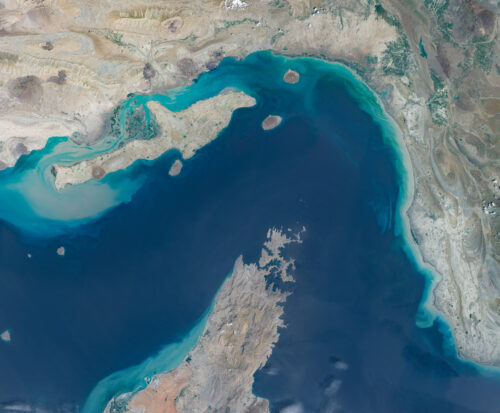
Proponents of the war with Iran have taken recent increases in crude-oil flows through the Strait of Hormuz as proof that the US strategy is finally working. President Trump is so confident in this that he recently rejected a seven-day plan, set forward by Iran’s foreign ministry, to end the war and open the strait. The United States is “winning tremendously,” Trump boasted.
The shock waves of Hosni Mubarak’s resignation have just started to roll across the Middle East, but in Egypt the upheaval has barely begun. The country now embarks on what the protesters in Tahrir square hope will be a transition to a true, civilian-led democracy. In the meantime, Egypt is headed for a period of military rule in some form, with the ultimate intentions of the armed forces leadership still in doubt. Will the military act to effect the “genuine transition” now demanded by the Obama Administration and the protesters themselves?
US-Libya Relations: Surviving the Wikileaks Controversy?
US-Libya Business Association Honorary Chairman Amb. David Mack and Executive Director Charles Dittrich traveled to Libya for five days in mid-December. They met with Libyan government officials, Libyan private business leaders and representatives of American companies working in the country. They will share impressions regarding the political and economic climate in Libya and the implications for both overall US-Libyan relations and the prospects for American business interests.
Soil and groundwater salinity has emerged as the most significant agricultural problem facing the Sultanate of Oman. Scant rainfall, coupled with high temperature, is always conducive to the accumulation of salts in soils. These conditions are predominant in Oman. Secondary soil salinity has increased at a very rapid rate due to the persistent use of saline groundwater, which, over time, has become more concentrated due to increased pumping by farmers in the Batinah region – the country’s most important agricultural area.
Low-Cost Methods to Treat Greywater: A Case Study from Oman
Oman is an arid country where the pressure on freshwater reserves is as severe as that of any other arid or semi-arid country in the world. Increasing water availability by treating and reusing wastewater, particularly for irrigation, is a government policy in Oman. Identification of alternative sources of water and development of appropriate technology to harness them in order to reduce pressure on freshwater reserves and production capacity in Oman is a priority.
This Commentary first appeared in the American Interest's Middle East Blog on January 31, 2011.
The end is now at hand for the government of Hosni Mubarak, ruler of Egypt for the last thirty years. Two outstanding questions face us now: What will the army do? And how should the United States react?
America's War on Terror After Iraq and Afghanistan
The Middle East Institute hosts a lecture and discussion with Mark N. Katz, examining the impact of the current and future US withdrawals from Iraq and Afghanistan on Islamic radicals. Katz argues that the US withdrawals from both countries will lead radicals to conclude they have defeated the US in the "War on Terror" and that US regional strength is on the decline. This, he argues, will spur Islamic radicals to seek further gains elsewhere.
Few question the desirability of finding a political resolution to the Afghan conflict or doubt Pakistan’s pivotal role. The growing divide of opinion in this country is over how best to achieve that outcome. One camp led by our military strategists insists that various political agreements are likely to result from accumulated military successes, sustained by Afghan governance reforms and economic improvements. Visible counterinsurgency gains are expected to gradually wean fighters away from the ranks of the insurgency.
This Commentary first appeared in McClatchy News on January 5, 2011.
The assassination of Salman Taseer, the governor of Punjab, Pakistan's largest province, has illustrated the increasingly chaotic environment in that country, which only promises to get worse in the new year. Weeks before his death, Taseer had the courage to say what his fellow politicians were unwilling to: that Pakistan's blasphemy law must be repealed in order for Pakistan to enter the community of modern nations.
The US and Libya: Normalization of a Stormy Relationship
*This article was first published in January 2011 by the Foreign Service Journal.
Relations between Libya and the U.S. have a turbulent history: War at the beginning of the 19th century; U.S. government support for Libyan independence after World War II; official and private-sector American engagement in the development of Libya’s oil wealth and human resources in the mid-20th century; Libyan terrorism and U.S. military retaliation in the 1980s; U.S.-engineered economic sanctions and isolation in the late 20th century; and restoration of diplomatic relations in 2006.
Iraq's Nobel No Show Suggests Democracy in the Balance
An earlier version of this Commentary first appeared in the American Interest on December 10, 2010
Iraq, the newest democracy in the Middle East, turned down an invitation to attend the December 10 investiture ceremony for the Chinese Nobel Peace Prize laureate Liu Xiaobo. It thus kept company with a litany of repressive governments that declined invitations to the ceremony, including Afghanistan, Cuba, Egypt, Iran, Kazakhstan, Morocco, Pakistan, Russia, Sudan, Saudi Arabia, Serbia, Tunisia and Venezuela.
Kān Yāmā Kān: Curriculum Development in the GCC – Adopting (Adapting) Models of Higher Education
Once upon a time in the land where the light of creation first shone, the fertile grounds around Baghdad nurtured the House of Wisdom.[1] Even as Europeans were looking for the light at the end of the Dark Ages, Caliph Haroon al-Rasheed and his son Caliph al-Mamoon had made Baghdad a center of learning. In Baghdad, scholars put words on “real” paper. They preserved Aristotle, Plato, Hippocrates, Euclid, Ptolemy, Pythagoras, and Brahmagupta and translated Greek, Persian, and Indian manuscripts.
The oldest peer-reviewed publication dedicated to the study of the modern Middle East, MEI’s flagship journal covers politics, society, and culture in the region.