The Americans Are Gone. Will Iraq’s Militias Disarm?
On September 30, the US completed its military withdrawal from Iraq, ending a 12-year-long mission to combat ISIS that began in 2014. The date was also meant to be the deadline for disarming the largely Iranian-backed militias known as the Popular Mobilization Forces (PMF), but Prime Minister Ali al-Zaidi has now pushed that cutoff back to June 30, 2027. MEI Distinguished Diplomatic Fellow Amb. (ret.) Robert S. Ford joins hosts Alistair Taylor and Matthew Czekaj to discuss what the US military withdrawal means for Iraqi security and the nature of the bilateral relationship going forward. They also speak about what it will take for Baghdad to bring the PMF militias to heel, and how Iraq may navigate the post-Iran war era.
Jordan’s Economy Weathers Iran War’s Shocks and Finds New Opportunities
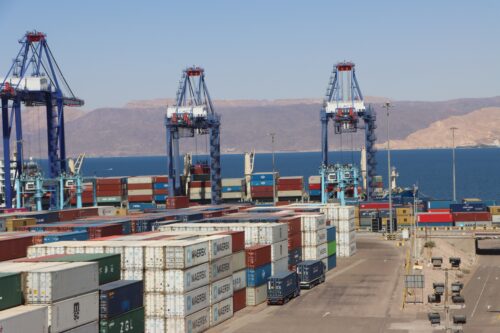
In the summer of 2003, King Abdullah II told Bloomberg Jordan sits “between Iraq and a hard place,” a play on words designed to describe the kingdom’s challenging environment to an American audience amid the US-led Iraq war to the east and the lingering Palestinian-Israeli conflict to the west. Jordan is grappling with a much “harder place” today.
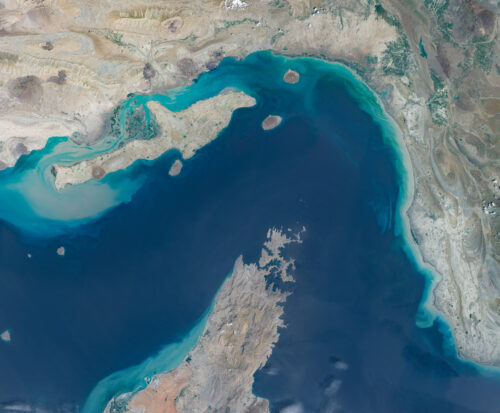
Proponents of the war with Iran have taken recent increases in crude-oil flows through the Strait of Hormuz as proof that the US strategy is finally working. President Trump is so confident in this that he recently rejected a seven-day plan, set forward by Iran’s foreign ministry, to end the war and open the strait. The United States is “winning tremendously,” Trump boasted.
Addressing the Crisis in Yemen: Strategies and Solutions
The Middle East Institute is proud to host two former Ambassadors to Yemen, Thomas Krajeski and David Newton, for a discussion about Yemen and the role of US foreign policy in a country some political analysts characterize as a failed state. As Yemen grapples with multiple crises, including the growing influence of Al Qaeda, a Houthi Rebellion in the north, a secessionist movement in the south and severe economic woes, what should the US do to help stabilize and secure one of the Arab world’s poorest countries?
Secretary Clinton’s visit to Pakistan has been a serious attempt to use public diplomacy to help the troubled US Pakistan relations. Her reaching out to people with a mix of soft power and hard talk was refreshing. It is time to ‘clear the air’ she said. But a lot more work needs to be done in the realm of policy to bring about a meaningful change in the relationship. The problems between Pakistan and the United States, referred to as the “trust deficit” for want of a better word, are many and mask much complexity at the heart of policy and systemic issues on both sides.
Liberal Enclaves: A Royal Attempt to Bypass Clerical Power
Within the first months of ‘Abdullah’s term as King, the Saudi government pursued a number of policies to improve the Kingdom’s economic profile. Saudi Arabia became a member of the World Trade Organization (WTO) and the limits were raised on foreign stakes in sectors such as banking, telecommunications services, wholesale, retail, and franchising. These reforms were intended to answer the economic priorities of diversifying from dependence on oil revenues, finding jobs for young Saudis, and opening up foreign investment.
Even Saudi film production has revived recently, following the move of Saudi Television empires such as Rotana and ART to cinematic production. This comes after more than two decades of suppression by conservative Islamist groups who prohibited film screenings to Saudi citizens. In 2005, the Kingdom saw the opening of the first movie theatre in Riyadh, followed by the release of a couple of Saudi films with Saudi actors. The first Saudi production was Zelal Assamt (2006), followed by the film Keif al Hal.
It was in the summer of 1979 that Islam in Saudi Arabia became all about women. At the urging of ‘Abd al-‘Aziz bin Baz, then chair of the Department of Religious Guidance, Legal Rulings, and Propagation of the Faith, Interior Minister Prince Nayf sent a letter to government offices asking for cooperation in curbing practices offensive to Islamic principles. At the top of the list of condemnable behaviors were unsuitably dressed foreign women shopping or eating out in public.
Saudi Arabia always has been a tough neighborhood for religious minorities. This has been especially true for the Kingdom’s Shi‘ites, the country’s largest minority, with almost two million of them living in the oil-rich Eastern Province. From early in the 20th century, Shi‘ites have been the targets of scorn and opprobrium, much of it with the official blessing of the Saudi rulers. The origins of anti-Shi‘ite enmity are hardly a mystery.
Though the Saudi royal family still rules the realm, they have initiated a number of reforms over the past 30 years. Some of these reforms have been bolder and more successful than others. Some have been doomed from the very start — a few, perhaps, were intended to be stillborn. Judicial reform is one of the most recent and potentially one of the most important reform initiatives undertaken in the Kingdom.
Tribes and the Saudi Legal-System: An Assessment of Coexistence
Saudi Arabia is overwhelmingly Islamic and has always been ruled under the Shari‘a, or Islamic law. The sheer existence of an additional legal system in Saudi Arabia, besides the Islamic Shari‘a, is regarded as an offense against the Islamic character or modernity of the country and its judicial system. Islamic law is supreme in Saudi Arabia, and the idea of the divine right of kings, used to justify absolute monarchies in Christian Europe, would be considered heresy. As divine law, it is immutable and unchangeable. As constitutional law it cannot be amended.
The oldest peer-reviewed publication dedicated to the study of the modern Middle East, MEI’s flagship journal covers politics, society, and culture in the region.