The Strategic Cost of Palestinian Powerlessness
This report considers the lack of Palestinian political agency as a driver of regional insecurity that must be resolved before wider conflicts can be settled. The author analyses the conditions that contributed to the destruction of Palestinian political capacity, including Israeli policies, Palestinian shortcomings, and exploitation by Iran, and makes recommendations for an Arab strategic initiative.
Iran’s New Grand Design: The Next Evolution of the Axis of Resistance
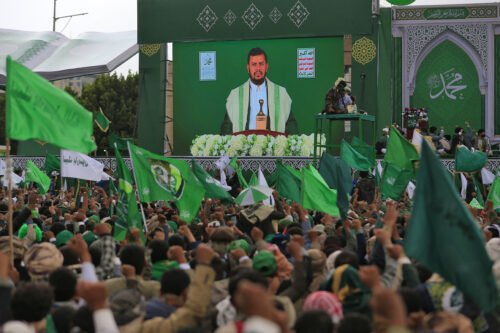
Iran is transforming its Axis of Resistance into a decentralized, Yemen-centered network that leverages the Houthis to threaten both the Strait of Hormuz and the Bab el-Mandeb, extending Tehran’s coercive reach over the world’s key maritime chokepoints and reshaping the post-war balance in the Middle East and Red Sea.
Featured Experts
MEI Art Gallery – August First Friday Open House
Monday Briefing: US and Israel both leave key questions unanswered in the Gaza war
Read MEI’s weekly briefing featuring expert analysis of key regional developments for the week ahead.
Iran bites its tongue on Bahrain?
On March 12, the United States Department of the Treasury sanctioned four individuals for supporting the Iran-linked al-Ashtar Brigades in Bahrain. This US announcement might suggest that Iranian-Bahraini relations are about to take a nose-dive. But in reality, that is unlikely to happen — at least not while Iranian-Saudi détente continues.
Pillars of sand: The environmental fragility of Gulf cities
Future climate change is set to increase temperatures around the Gulf further still, rising twice as fast as the global average and pushing the cities of this rapidly growing region toward the edge of their viability as human habitats. But how did this situation come to be in the first place, and why did humans settle in such an inhospitable environment and build such cities around the Gulf waters?
The great financing gap: The state of climate funding in MENA
The Middle East and North Africa region is one of the lowest recipients of climate finance compared to other areas of the globe, such as East Asia and the Pacific Islands, despite MENA’s exposure to extreme climate risks. The MENA region’s share of climate financing from the big three global climate funds — the Green Climate Fund (GCF), the Climate Investment Funds (CIF), and the Global Environment Facility (GEF) — and their sub-funds made up only 6.6% of their cumulative global financing through 2023.
How Sanctions Work: Iran and the Impact of Economic Warfare
“For Arabs, by Arabs”: Inaugural Design Doha Biennial spotlights emerging voices in Middle Eastern design
Amid a plethora of early spring exhibition openings, artist events, and biennales throughout the Middle East, one clearly stands out in terms of its scale, scope, and thought: the Design Doha Biennial, which ushers in a new phase in Qatar’s long-standing focus on art, culture, and design.
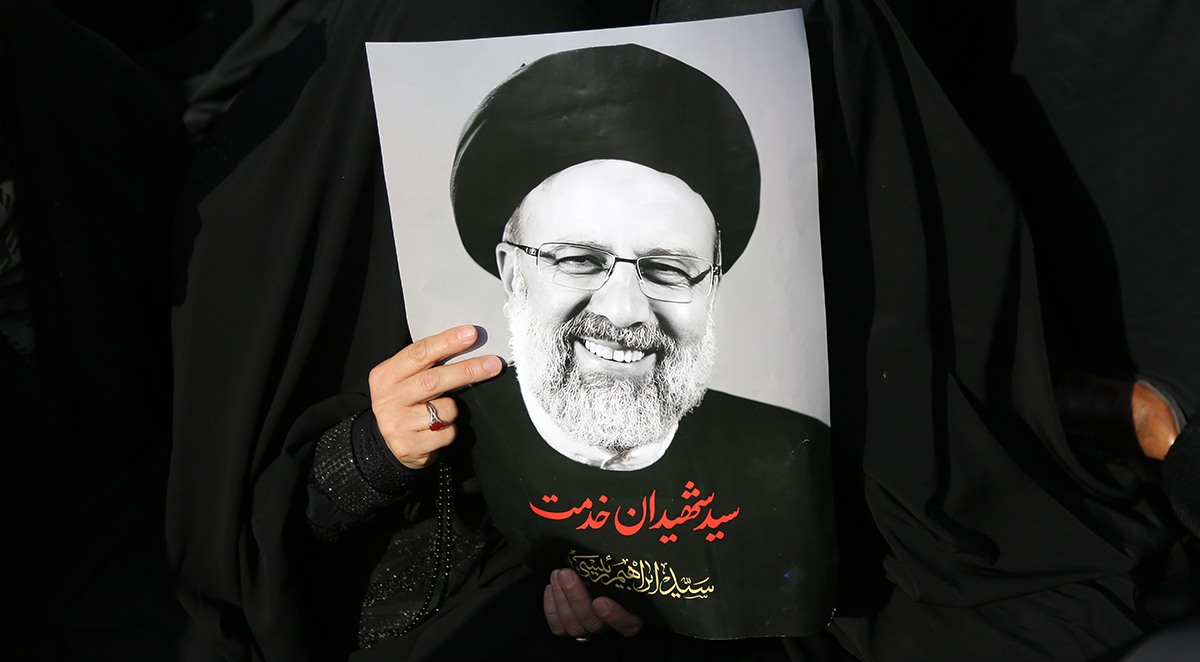
Iran’s Record-Low Election Turnout: Why Voters Stayed Away and What It Means for the Islamic Republic’s Future
Moving to a post-Khamenei era: Iran’s new rubber-stamp Assembly of Experts
The results of the March 1 election for Iran’s Assembly of Experts hold great importance for understanding how the regime is preparing for the selection of the next supreme leader. The major responsibility of this 88-member body is to designate Ayatollah Ali Khamenei’s successor, either after his death or if he becomes incapable of fulfilling his responsibilities.
Deal or No Deal: The Road to a Cease-fire in Gaza and on the Lebanon-Israel Border
As Western options narrow, Yemen's anti-Houthi forces vie for US military support
In recent weeks, Yemen’s main anti-Houthi leaders have increasingly been sending the same message to the US, urging it to provide support in the fight against the Houthis on the ground. The provision of military assistance is still hypothetical but seems more and more plausible given developments in Yemen, triggered by the Houthis’ continuing attacks on maritime shipping in the Red Sea.
The many lives of Oman’s forts
Home to around 1,000 forts, castles, and watchtowers, Oman has long used its historical structures to showcase the country’s rich history. Now, as part of an effort to promote cultural tourism, the sultanate is looking to develop more of them with a focus on the arts and cultural activities, giving its centuries-old heritage sites a new lease on life.
History rewrite: Did Saddam try to kill Bush?
In his new book, Steve Coll casts doubt on whether Iraqi intelligence had actually tried to assassinate former President George H. W. Bush in Kuwait in April 1993. If the Kuwait plot were a fabrication, it would fit yet another brick in the wall of many well documented falsehoods and misunderstandings that led to the US invasion. Unfortunately for that allegation, the plot was very likely to have been quite real.
Monday Briefing: Biden administration highlights humanitarian crisis for Palestinians in Gaza
Read MEI’s weekly briefing featuring expert analysis of key regional developments for the week ahead.
Moving to a post-Khamenei era: Cutthroat competition within the supreme leader’s office
In discussions on Iran’s future in a post-Khamenei era, one crucial player in the transition to a new supreme leader is often overlooked: the inner circle surrounding Ayatollah Ali Khamenei, primarily operating within the framework of the Office of the Supreme Leader.
Read the Middle East Journal
The oldest peer-reviewed publication dedicated to the study of the modern Middle East, MEI’s flagship journal covers politics, society, and culture in the region.