A Strategic Conundrum: Pakistan’s Transit Corridor to Iran as Lifeline or Liability
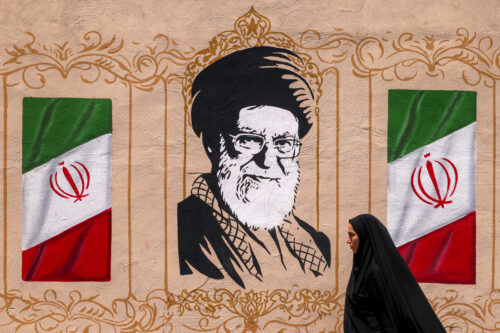
The US-Iran standoff over the Strait of Hormuz — disruptive to global trade and energy flows, and devastating for debt-burdened economies — has handed Pakistan an unexpected geoeconomic opportunity, one that may persist even if the framework agreement announced on June 14 results in a lasting peace and permanent reopening of the strait. But seizing it will have interlocking consequences for Islamabad’s ties with Tehran, Washington, and the Gulf states.
Iran: What’s Next for US Policy as the Region Seeks to Move On
As the US and Iran move to reopen the Strait of Hormuz, the war’s real lesson lies in how Gulf states rapidly adapted — building pipelines, ports, and rail to bypass the chokepoint. Washington should seize this momentum, pursuing a “long game” of regional connectivity that serves shared security and economic interests.
Featured Experts
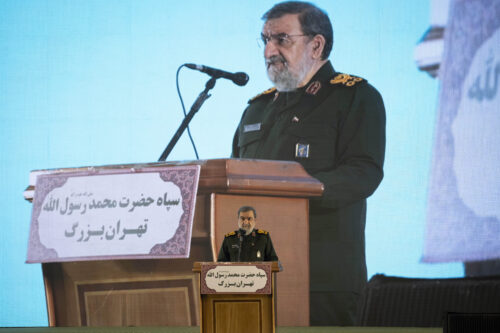
Iran’s Hardliners and the Nuclear Deal
Earlier this week, Iran and world powers reached a deal in which Iran will curb its nuclear program for six months in exchange for a drop in some sanctions. MEI spoke with one of its experts, Alex Vatanka, to gain an understanding of how hardliners in Iran are reacting to the deal as well as other internal dynamics in the Islamic Republic.
How have hardliners in Iran, such as the Revolutionary Guards, responded to the news of the interim agreement?
The Iran Nuclear Deal: Risks and Opportunities for the Region
The nuclear deal with Iran, though still temporary and tentative, is ushering in a historic shift in the patterns of power, conflict, and diplomacy in the region. Like all historic shifts, it is laden with uncertainty and risk of new conflicts, but also carries with it potential opportunities for further diplomacy and finding common ground. Given the precedent of conflict and mistrust in the region, it is no surprise that the deal has raised concerns among many of America’s allies.
Bombings in Beirut Indicate New Escalation
Earlier today, double explosions near the Iranian embassy in Beirut killed at least 23, including an Iranian diplomat. The Abdullah Azzam Brigades, an Islamist group with links to al-Qa`ida, took responsibility for the attack. MEI sat down with its Vice President for Policy and Research, Paul Salem, to discuss the significance of the bombings in Lebanon as well as their regional and global implications.
Tell us about the bombing and the group that claimed responsibility for it.
Perspectives on India-Iran Relations
Iran-India relations are far-reaching and multidimensional. However, a variety of issues, including the upheaval in the Middle East and North Africa, U.S and Israeli influence over the region, Iran-Israel belligerence, and terrorism all constrain bilateral diplomacy.
A Discussion with Ken Pollack, Author of Unthinkable
On Wednesday, October 16, 2013, the Middle East Institute hosted author and Brookings senior fellow Ken Pollack for a discussion of his book, Unthinkable: Iran, the Bomb, and American Strategy(Simon & Schuster, 2013). In his latest work, Pollack explores the protracted tensions underlying the U.S.-Iranian relationship, how it evolved to its current status, and how the U.S. should best address Iran’s nuclear ambitions.
A Discussion with Ken Pollack, Author of Unthinkable
The Middle East Institute is proud to host author and Brookings senior fellow Ken Pollack for a discussion of his book, Unthinkable: Iran, the Bomb, and American Strategy (Simon & Schuster, 2013). In his latest work, Pollack explores the protracted tensions underlying the U.S.-Iranian relationship, how it evolved to its current status, and how the U.S. should best address Iran’s nuclear ambitions.
A Discussion with Ken Pollack, Author of Unthinkable
America and Iran: Always Winter, Never Christmas
In C.S. Lewis’ fantasy land of Narnia, the white witch put a spell on her realm to ensure that there would be perpetual winter and that Christmas would never come. For 34 years American-Iranian relations have been similar: a long, hard freeze unbroken by any cracks or signs of thaw.
Support for el-Sisi: What’s in it for al-Saud?
When King Abdullah of Saudi Arabia and his foreign minister, Prince Saud al-Faisal, issued unequivocal pledges of support for Egypt’s military government and its crackdown on the Muslim Brotherhood, their move was widely depicted in the news media as a logical extension of the kingdom’s opposition to revolutionary movements in the Arab world. This simplistic view overlooks the fact that Saudi Arabia has responded differently to different uprisings—it supports the rebels in Syria, helped to crush them in Bahrain—and that aligning itself with Egypt’s new rulers could be a risky strategy.
Snapshots of the Iranian Diaspora in Malaysia
The Iranian diaspora in Malaysia is a diverse and vibrant community of educators, students, artists, and entrepreneurs. The following essays provide snapshots of the historical and cultural connections between Iran and Malaysia, as well as the personal and professional experiences and creative output of some of the members of this community.
Iranians in Malaysia: Artist Asghar Yaghoubi and His "Journey Within"
Artist Asghar Yaghoubi, who was born in Shiraz, Iran, moved to Malaysia in 2008. An accomplished painter and sculptor, he also teaches art at the Cube Gallery, of which he is the founder and director. The gallery is the first and only art gallery in Southeast Asia owned by an Iranian.
Iranians in Malaysia: Batik Artist Pegah Jahangiri
Artist Pegah Jahangiri hails from Tehran, but is currently a doctoral student in visual arts at the University of Malaya, Malaysia. She recently spoke to MEI about her work with batik, strikingly dyed cloth found all over the world, but particularly popular and refined in Southeast Asia.
The Iranian Diaspora in Malaysia: Emergent Pluralism
The Iranian diaspora in Malaysia is incredibly diverse. Supporters of the Green Movement, students, individuals who fast and pray and those who do not know the direction of the qibla, clerics who promote secularism and those who promote the authority of the vilayat-i faqih, Iranian Kurds, Turks, and Arabs, journalists, artists, and environmentalists: all these—and more—constitute the community of Iranians who have fled or quietly moved to Malaysia.
Collection Spotlight: The Iran-Iraq War
The Iran–Iraq War: Impact and Implications, by Efraim Karsh (edited), 1989
Read the Middle East Journal
The oldest peer-reviewed publication dedicated to the study of the modern Middle East, MEI’s flagship journal covers politics, society, and culture in the region.