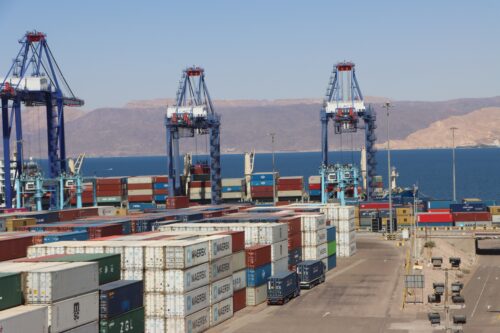
Jordan’s Economy Weathers Iran War’s Shocks and Finds New Opportunities
In the summer of 2003, King Abdullah II told Bloomberg Jordan sits “between Iraq and a hard place,” a play on words designed to describe the kingdom’s challenging environment to an American audience amid the US-led Iraq war to the east and the lingering Palestinian-Israeli conflict to the west. Jordan is grappling with a much “harder place” today.
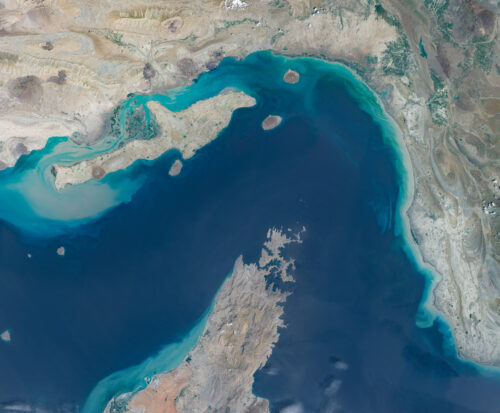
Proponents of the war with Iran have taken recent increases in crude-oil flows through the Strait of Hormuz as proof that the US strategy is finally working. President Trump is so confident in this that he recently rejected a seven-day plan, set forward by Iran’s foreign ministry, to end the war and open the strait. The United States is “winning tremendously,” Trump boasted.
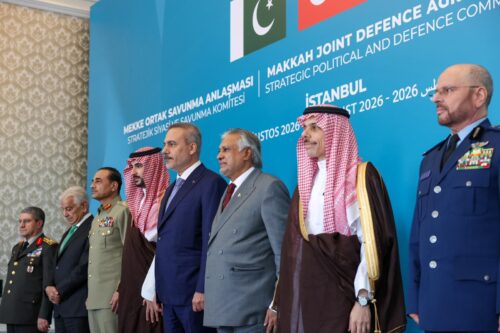
The Mecca Alliance Meets the Red Sea – Saudi Arabia’s New Defense Pact Faces Its First Major Test
When Saudi Arabia, Turkey and Pakistan agreed to a mutual defense pact in August, it was principally seen as a political commitment. The “Mecca alliance,” as it was dubbed, stipulated that an armed attack on one would be treated as an attack on all three, accompanied by deeper military cooperation.
Are Iran’s leaders rational actors? This question matters when justifying any decision by Israel to preempt Iran’s acquisition of nuclear weapons. An Iranian regime seen as driven to destroy the Jewish state has to be dealt with differently than one whose objectives are mediated by calculations of costs and benefits. Deterrents that would be normally expected to restrain a state would not work with an irrational Iran.
Policy Privatization and Empowerment of Sub-National Forces: The Case of Private English Language Institutes in Iran
Originally posted July 2010
In the past, there was no need for learning a foreign language. Today, however, learning foreign languages should be included in school curricula … Today is not like yesterday, when our voice could not reach beyond the national boundary. Today, we can stay in Iran but publicize [our ideology] and export our revolution to other parts of the world in different languages.
The oldest peer-reviewed publication dedicated to the study of the modern Middle East, MEI’s flagship journal covers politics, society, and culture in the region.