This article is part of a collection of short essays written by the Fellows of the Middle East Institute to explore aspects of the ongoing war with Iran. The intent of the collection is to help readers see new and unexpected elements of the dynamics and impact of the ongoing hostilities and to think harder, deeper, and broader about the implications of the conflict.
Turkey: Ankara’s Nuclear Ambitions in the Post-Iran War Environment
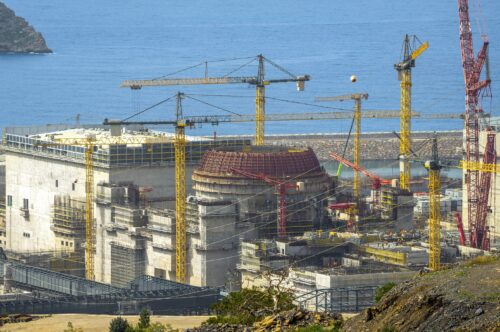
In February 2026, Turkish Foreign Minister Hakan Fidan suggested that shifting international dynamics could push Turkey to acquire nuclear weapons. That rhetoric, combined with Turkey’s civilian nuclear energy and research programs and its indigenous surface-to-surface missile development projects, has fueled concerns that these capabilities could eventually form the backbone of a Turkish nuclear weapons program.
When the US and Israel launched military action against Iran on February 28, 2026, it set in motion a chain of events that saw violence spread across the Middle East. Yet as the region found itself engulfed in conflict, Syria has experienced its most peaceful months in 15 years, and the government in Damascus appears determined to stay its course toward recovery.
Khamenei praises Assad and vows “resistance front” will soon pray in Jerusalem
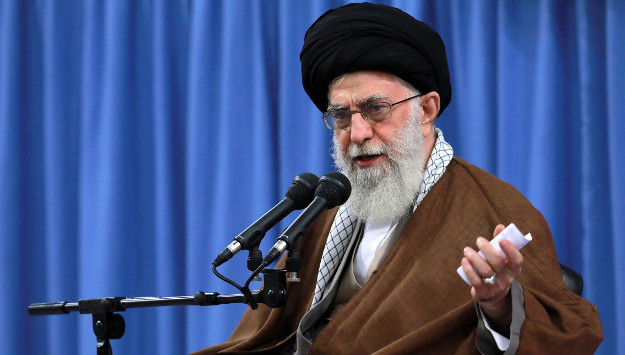
Iran’s Supreme Leader Ali Khamenei praised Syrian President Bahsar al-Assad as a “great fighter” and reiterated Tehran’s support for Syria as a “front line” state against the United States and Israel, the Iranian media reported. “Today, Syria is the front line. Therefore, it is our duty to support the Syrian resistance. Indeed, Mr. Bashar al-Assad emerged as a great fighter and stood up firmly and without hesitation.
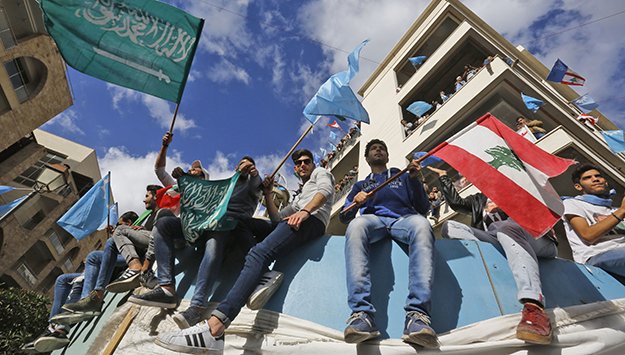
Reversing months of troubled relations, Saudi royal envoy Nizar al-Aloula arrived in Lebanon on Monday with messages of strong support for the country. He emphasized that Saudi Arabia sought strong and supportive relations with the Lebanese state and people, saying, “You will see a new approach from Saudi Arabia.” Aloula also extended an official invitation to Prime Minister Saad Hariri to visit Riyadh. Today Hariri is in Riyadh, where he met with King Salman and is due to meet with the crown prince.
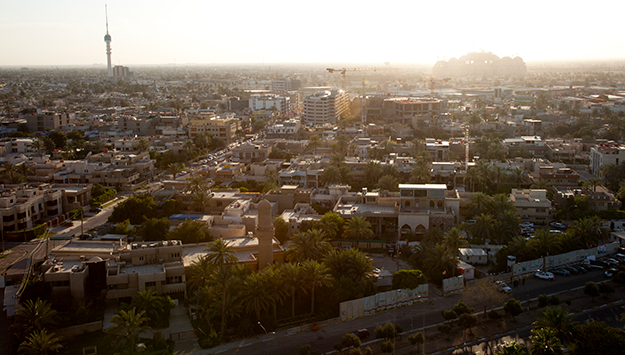
The Baghdad Declaration: good neighborhood principles for the Middle East
Over the course of the last three years, the Middle East Institute convened a regional dialogue involving participants acting in their personal capacities from Egypt, Iraq, Iran, Jordan, Lebanon, Saudi Arabia, Syria, United Arab Emirates and Turkey. The dialogue also involved participants from China, Europe, Russia and the United States. The discussions resulted in the following declaration of good neighborhood principles for the Middle East agreed in Baghdad 15-16 December 2017.
…….
The Middle East dialogue, which began its twice-a-year meetings in October 2012, convened its eleventh meeting in Baghdad 15-16 December. Participants included current and former officials and senior experts from Egypt, Iraq, Iran, Jordan, Lebanon, Saudi Arabia, Syria and United Arab Emirates as well as China, Europe, Russia, and the United States.
Iran-backed Afghan fighters in Syria vow to battle Israel and Saudi Arabia next
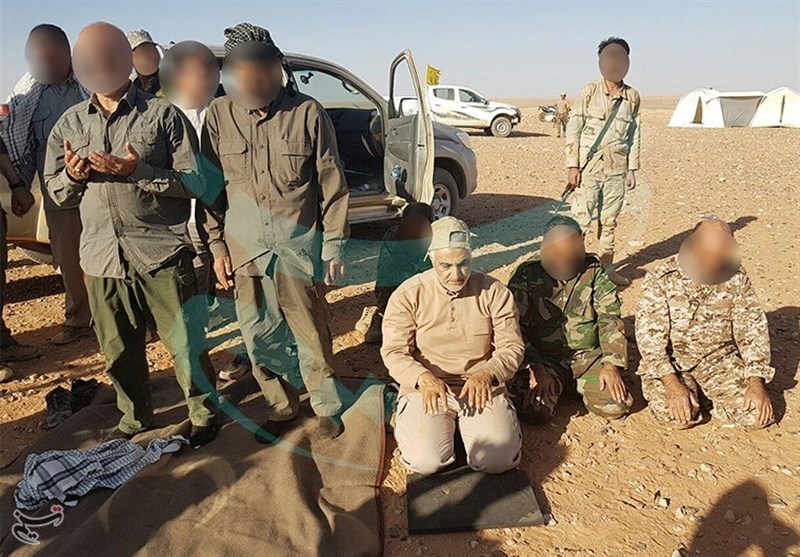
Sayed Ali-Asghar Hosseini, an Afghan national living in Iran, says he hopes to quickly recover from injuries he sustained in the Syrian conflict in order to return to the Arab country and take part in the next phase of war against Israel and Saudi Arabia. “Our real war with Israel and the al-Saud family is still there.
Tightening the screws on Pakistan | Monday Briefing
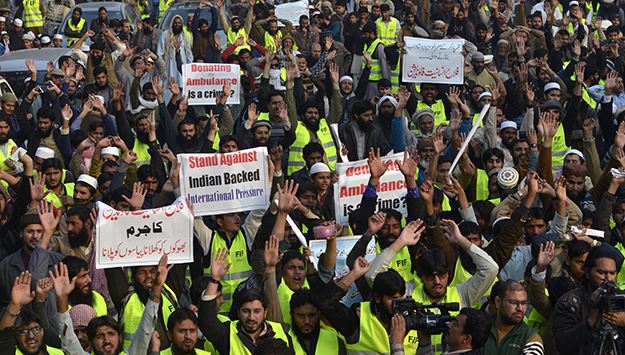
In this week’s Monday Briefing, MEI experts Marvin G. Weinbaum, Charles Lister, and Gerald Feierstein provide analysis on recent and upcoming events including the placement of Pakistan on a global terrorist financing “gray list,” the ongoing assault on eastern Ghouta following a UNSC cease-fire resolution, and diplomatic efforts on the war in Yemen.
It should be no surprise that Washington’s Syrian Kurdish allies—who have long had daggers drawn and pointed at our fellow NATO member Turkey—are now reconciling with our Syrian enemy President Bashar al-Assad.
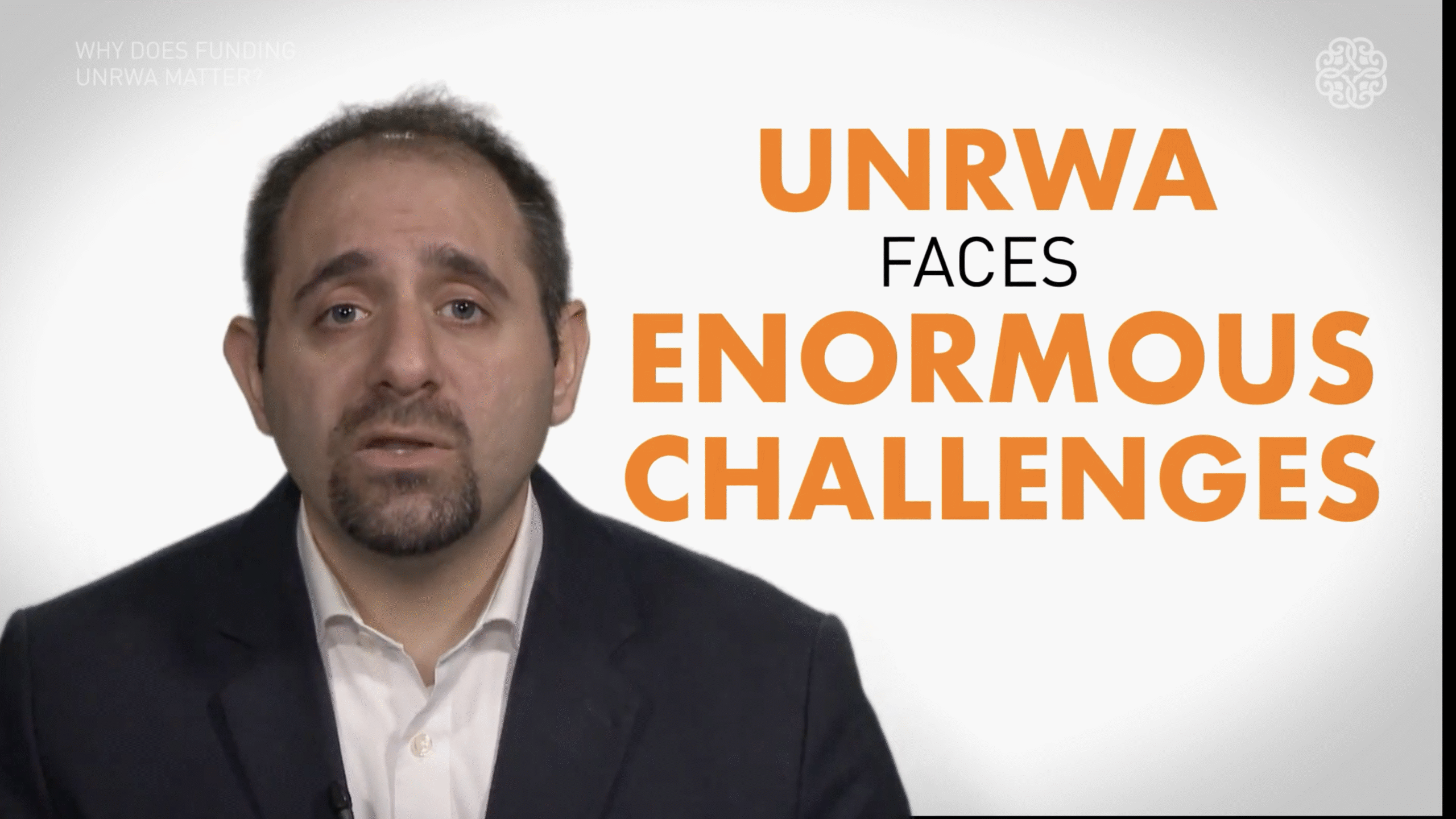
In January, President Donald Trump announced a major cut–$300 million–to the United Nations Relief and Works Agency (UNRWA). Since 1949, UNRWA has provided a critical lifeline to Palestinians displaced by war. Today, UNRWA supports 5 million Palestinian refugees.
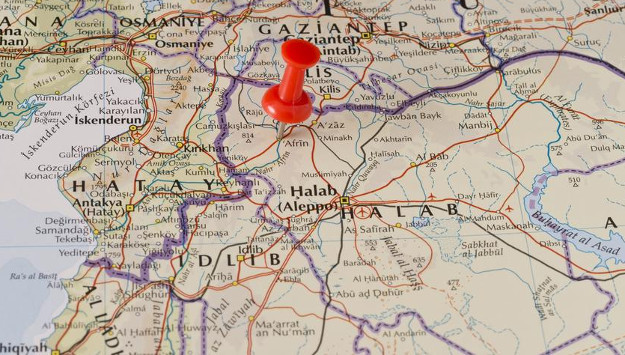
Turkey is one month into its military offensive against U.S.-backed Syrian Kurdish forces in the area of Afrin in northern Syria. How is the operation going, and how has the strained U.S.-Turkish relationship been affected? Gonul Tol, director of Turkish studies at MEI, and Amberin Zaman, a journalist and columnist for Al-Monitor, join host Paul Salem to discuss.
Report claims Iran deploys military personnel to Afrin to counter Turkish offensive
Dozens of Iranian fighters have joined the ranks of the People’s Protection Units (YPG) in the northern Syrian city of Afrin to fight the Turkish military and its allies trying to expel the Kurdish forces from the region,
Envisioning Palestine: strategies for Palestinian self-determination
Relations between the U.S. and the Palestinians are in free-fall. The Trump administration’s decisions to recognize Jerusalem as Israel’s capital and then cut funding to UNRWA to force the Palestinians back to the negotiating table have been met with mass protests and official recriminations. Meanwhile, peace has never seemed more distant, with a recent poll showing support for a two-state solution at a historic low among both Israelis and Palestinians.
China, Jerusalem and the Israeli-Palestinian Conflict
On the surface, the Chinese reaction to the US decision to effectively recognize Jerusalem as the capital of Israel was clear. Following President Trump’s announcement to transfer the US embassy to the Holy City on December 6, 2017. Several days later, China voted with every other member on the UN Security Council (UNSC) to uphold the international consensus and previous UN decisions on Jerusalem. By going against world opinion, the US arguably looked out of step in relation to the conflict. By contrast, China’s alignment with international public opinion gave it the aura of a potential mediator. This essay considers whether Beijing has the political will and capacity to make a significant positive impact on the Israeli-Palestinian conflict.
Weekly briefing: Netanyahu faces a whirlwind of investigations
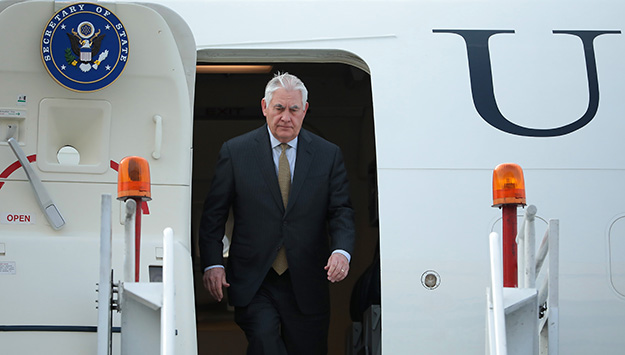
In this week’s Weekly Briefing, MEI experts Eran Etzion, Gonul Tol, and Ibrahim al-Assil provide analysis on recent and upcoming events including Benjamin Netanyahu investigations, the impact of Rex Tillerson’s visit to Turkey, and Russia’s presence in Eastern Ghouta.
The oldest peer-reviewed publication dedicated to the study of the modern Middle East, MEI’s flagship journal covers politics, society, and culture in the region.