This article is part of a collection of short essays written by the Fellows of the Middle East Institute to explore aspects of the ongoing war with Iran. The intent of the collection is to help readers see new and unexpected elements of the dynamics and impact of the ongoing hostilities and to think harder, deeper, and broader about the implications of the conflict.
Turkey: Ankara’s Nuclear Ambitions in the Post-Iran War Environment
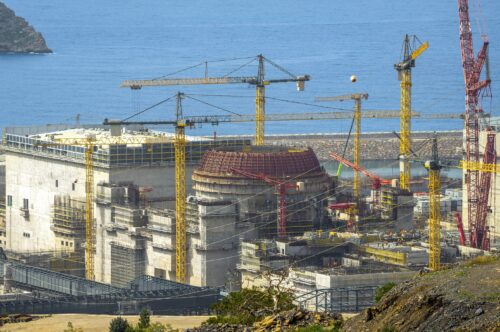
In February 2026, Turkish Foreign Minister Hakan Fidan suggested that shifting international dynamics could push Turkey to acquire nuclear weapons. That rhetoric, combined with Turkey’s civilian nuclear energy and research programs and its indigenous surface-to-surface missile development projects, has fueled concerns that these capabilities could eventually form the backbone of a Turkish nuclear weapons program.
When the US and Israel launched military action against Iran on February 28, 2026, it set in motion a chain of events that saw violence spread across the Middle East. Yet as the region found itself engulfed in conflict, Syria has experienced its most peaceful months in 15 years, and the government in Damascus appears determined to stay its course toward recovery.
All the President’s Militias: Assad’s Militiafication of Syria
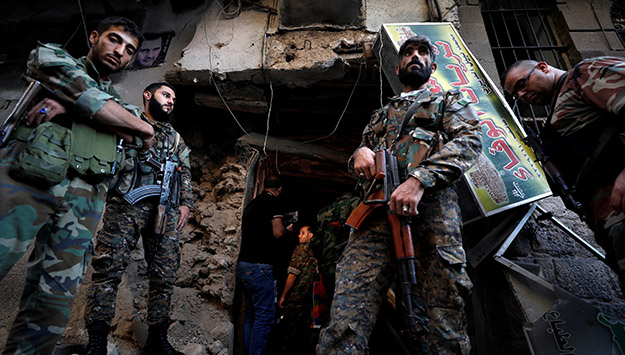
After nearly seven years of war, the military balance of power in Syria appears to have shifted in favor of President Bashar al-Assad and his allies, Russia and Iran. Since Russia’s military intervention in September 2015, Assad has managed to either retain or recapture most major population centers in the country encompassing so-called ‘Useful Syria’—including Damascus, Homs, Hama, Aleppo and Latakia. It most recently broke the ISIS siege on Deir Ezzor, paving the way for further gains in the city and its surrounding areas, leading to the Iraqi border town of Al-Bukamal.
I.R.G.C.'s Khatam al-Anbia Eyes Leading Role in Syria’s Reconstruction
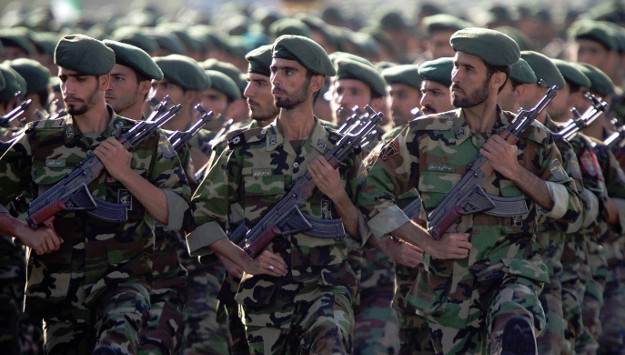
The head of Khatam al-Anbia Construction Base, the main engineering and construction arm of the Islamic Revolution Guards Corps (I.R.G.C.), has said that the conglomerate is ready to play a leading role in Syria’s reconstruction process, Tasnim News Agency reported.
The Multiple Sorrows of Trump’s Jerusalem Announcement | Monday Briefing
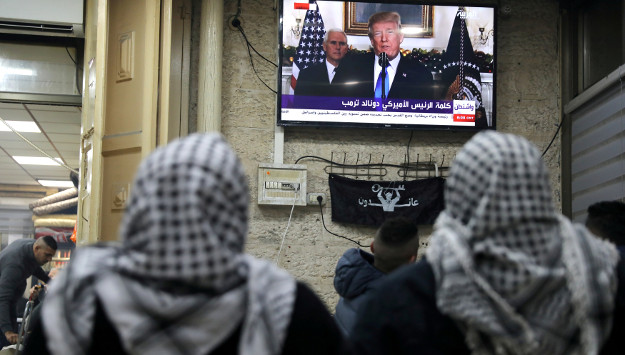
In this week’s Monday Briefing, MEI experts Paul Salem, Charles Lister, and Gonul Tol provide analysis on the international fallout from President Trump’s Jerusalem announcement and Russian President Vladimir Putin’s visit to Syria and then to Turkey to discuss Syria, Jerusalem, and energy matters.
The commander of Iran’s elite Quds Force today called leaders of Palestinian “resistance groups” to pledge Iran’s “all-out support” for them in their armed struggle against Israel,
Iran-Backed Militia Leader’s Tour of Lebanese-Israeli Border Raises Concern
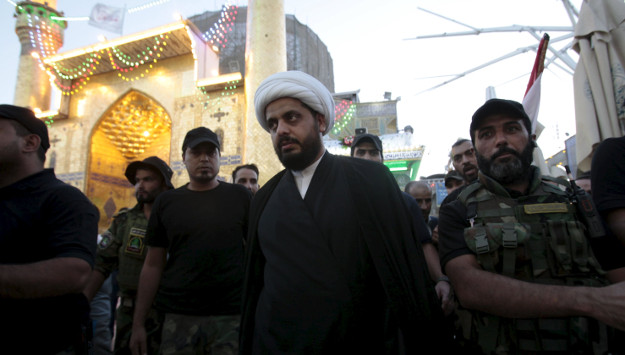
A prominent Iranian-supported Iraqi militia commander has visited the Lebanese-Israeli border and pledged to support Hezbollah in a potential war against Israel in the future, Iranian and
After the 2014 Israel-Gaza war, I tried and failed to convince Hamas to hand over a key border crossing between Gaza and Israel to the control of the Palestinian Authority (P.A.).
Recognizing Jerusalem as Israel's Capital Carries Enormous Risk
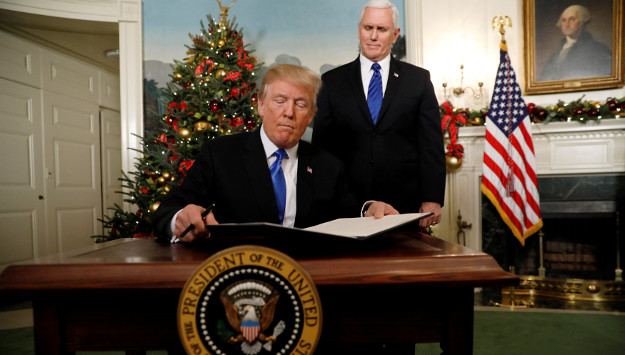
President Donald Trump’s decision to recognize Jerusalem as the capital of Israel is a major policy shift that carries enormous risk. Warnings from Arab and European allies of the “explosive” consequences of the move aptly reflect the fragile dynamics in the region and the sensitivity of the question of Jerusalem to millions worldwide.
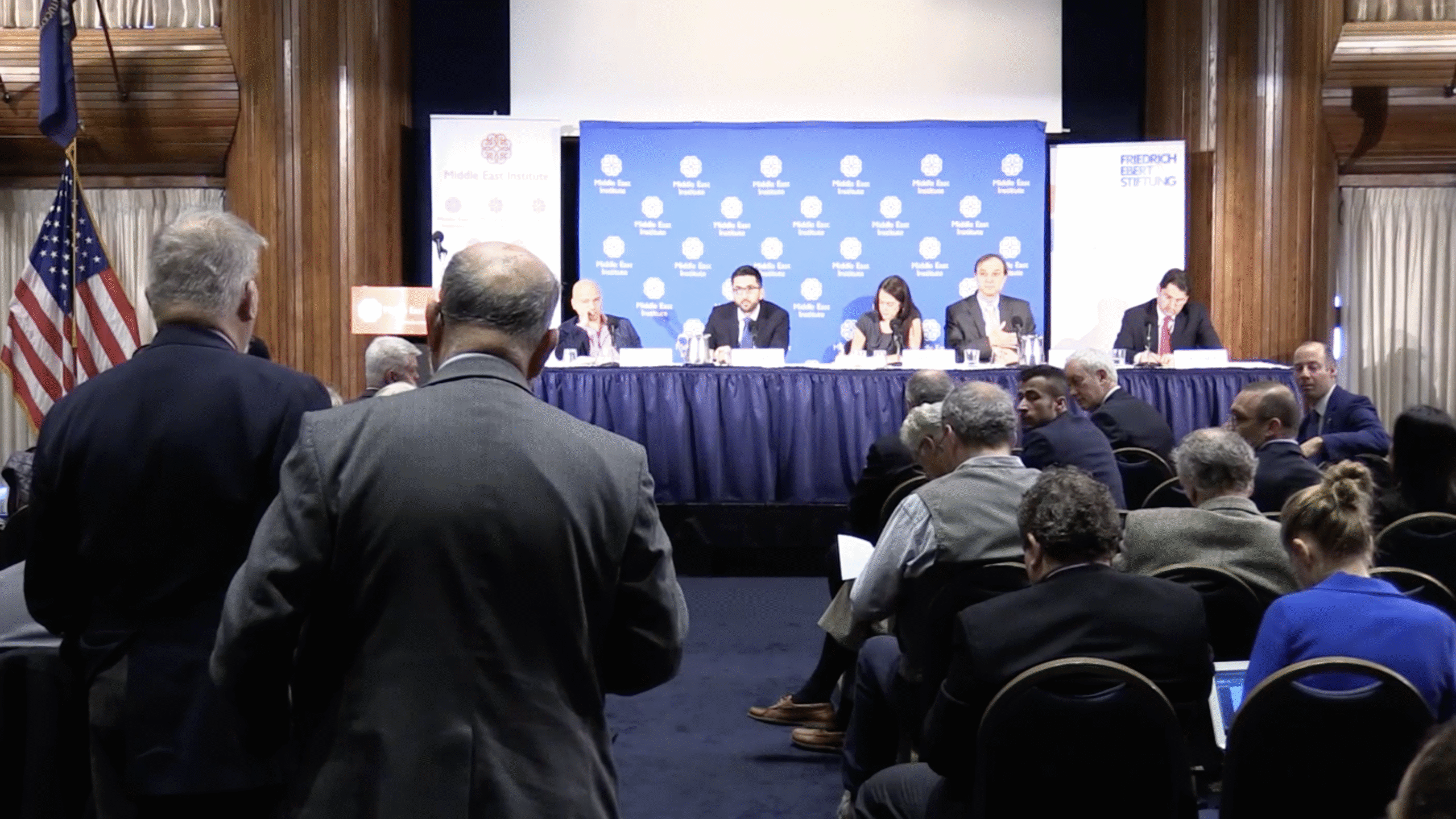
December 4, 2017- The Middle East Institute (MEI) and the Friedrich Ebert Foundation were pleased to host MEI’s 8th Annual Conference on Turkey. At a time of critical internal developments and international tensions, this program of three panels on Turkey’s domestic politics, economy, and foreign relations featured Turkish, European, and U.S. office-holders, policymakers, and expert analysts from both sides of the Atlantic.
Iran to Keep Its Forces in Syria in Defiance of International Pressure
Iranian Parliamentary Speaker Ali Larijani has said that Iranian forces will remain in Syria “as long as necessary” to continue to assist the embattled regime of Bashar al-Assad, Fars News Agency reported. “Iran will continue to help Syria to fight terrorism as long as it is needed,” the top Iranian lawmaker said in an interview with a state-run Russian outlet during his trip to Moscow. “The fight against terrorism has not ended.
From mixed signals over U.S. policy toward Syria’s Kurds, to an alleged kidnapping plot involving Michael Flynn, to the implication of President Erdogan in an international corruption scheme, U.S.-Turkey relations have struggled to find solid ground. Nicholas Danforth, senior policy analyst at the Bipartisan Policy Center, and Gonul Tol, director of Turkish studies at the Middle East Institute, join host Paul Salem to explain these stories and what they mean for both countries.
Rouhani Government Tasks I.R.G.C. to Spearhead Reconstruction Projects in Syria
The chief commander of Iran’s Islamic Revolution Guards corps (I.R.G.C.) has revealed that the Guards, rather than the Iranian private sector or other state-run companies, will spearhead Syria’s reconstruction efforts, Tasnim News Agency reported.
November 29, 2017- Syrian protest art served as a critical form of non-violent expression during the uprisings against the Assad government starting in 2011. Recognizing the work’s historic significance, the British Museum recently acquired a collection of posters, prints drawings and photographs produced during the conflict, and turned them into a unique exhibit, “Living Histories.”
Public Opinion in a Conflicted Middle East (Livestream)
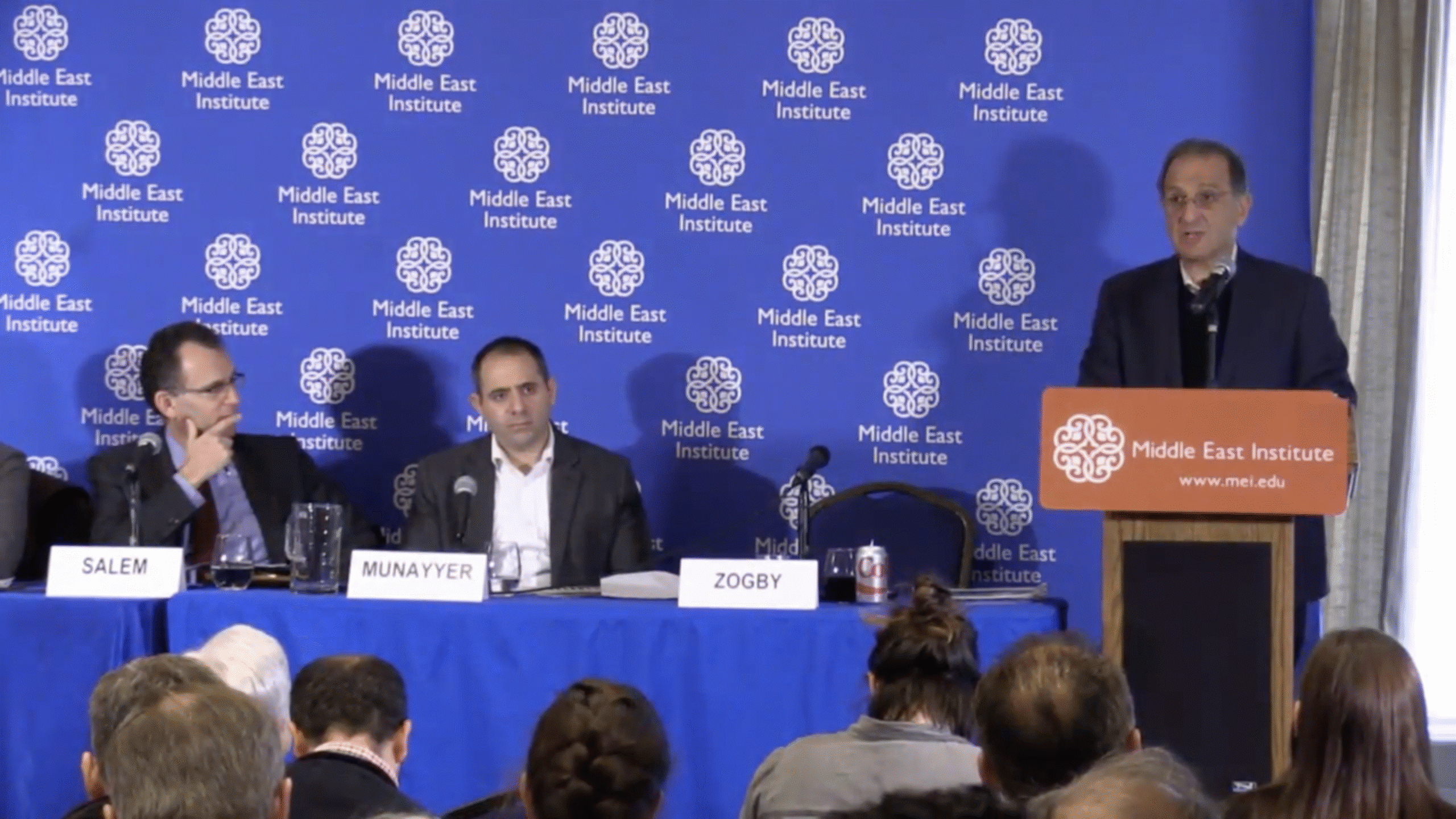
The Middle East Institute (MEI) and the Arab American Institute (AAI) are pleased to host James Zogby (AAI and Zogby Research Services) for the presentation of fresh polling results from across Egypt, Lebanon, Jordan, Palestine, Iraq, Saudi Arabia, the UAE, Iran, and Turkey. The report examines opinions from 7,800 respondents about the U.S. and other regional states’ roles in Syria, Iraq, and Yemen. It also looks at Trump Administration policy, political Islam, prospects for Israeli-Palestinian peace, the Iran nuclear deal, and the region’s refugee crisis.
The oldest peer-reviewed publication dedicated to the study of the modern Middle East, MEI’s flagship journal covers politics, society, and culture in the region.