Skip to Content
The Strategic Cost of Palestinian Powerlessness
  • Report
  • The Strategic Cost of Palestinian Powerlessness

    This report considers the lack of Palestinian political agency as a driver of regional insecurity that must be resolved before wider conflicts can be settled. The author analyses the conditions that contributed to the destruction of Palestinian political capacity, including Israeli policies, Palestinian shortcomings, and exploitation by Iran, and makes recommendations for an Arab strategic initiative.

    A Strategy to Win in Lebanon
  • Policy Memo
  • A Strategy to Win in Lebanon

    Lebanon is America’s next foreign policy win — if Washington acts now. The US has committed blood and treasure to neutralize Iran’s ability to project power and destabilize the Middle East. Lebanon is now the clearest opening to convert those investments into strategic gains and permanently dislodge the Islamic Republic from its most important regional foothold. Securing a sovereign Lebanon, achieving a lasting Israel-Lebanon peace, and dismantling Hizballah — the blueprint of Iran’s proxy model — would irreversibly weaken Tehran’s threat and consolidate a new regional order led by America’s partners before Iran has a chance to reverse its losses.

    Filter by
    3613 Results
    Trump's Middle East Approach, the Israeli-Palestinian Conflict, and the Future of US Statecraft – with Amb. Dennis Ross
  • Podcast
  • Trump's Middle East Approach, the Israeli-Palestinian Conflict, and the Future of US Statecraft – with Amb. Dennis Ross

    Ambassador Dennis Ross joins host Brian Katulis to break down what President Trump’s recent trip through Saudi Arabia, the UAE, and Qatar revealed about the administration’s approach to foreign policy in the Middle East—and what it means for the future of the region. They discuss the significance and substance behind the announced mega-deals, what’s really going on with Iran and the Houthi ceasefire, and how Trump is handling relations with Israel amid the ongoing war in Gaza.

    Trump should build on the momentum with Syria and help prevent a Turkey-Israel clash
    Photo by Bandar Al-Jaloud/Saudi Royal Court/Handout/Anadolu via Getty Images
  • Analysis
  • Trump should build on the momentum with Syria and help prevent a Turkey-Israel clash

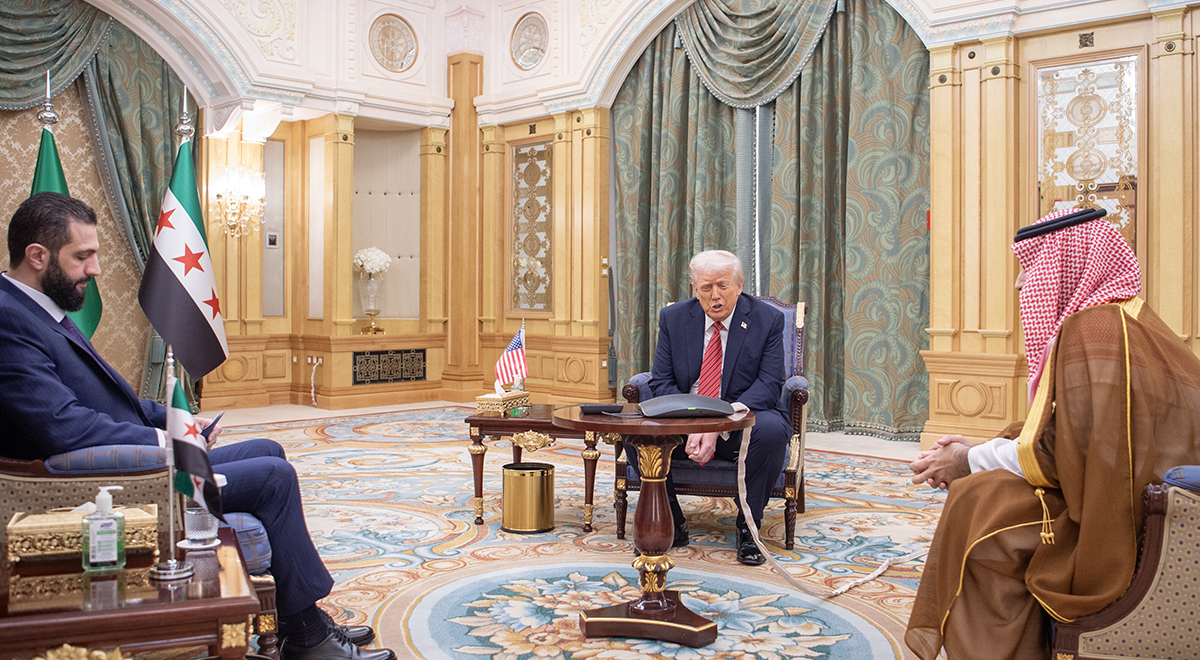
    Two recent developments present the new Syrian government with a critical opportunity to stabilize the country. First, US President Donald Trump announced plans to lift sanctions on Syria. Second, the Kurdistan Workers’ Party declared it would disband and dissolve itself — a move that will help Damascus to finalize a deal with the Syrian Democratic Forces and integrate it into the new Syrian national army. President Trump should build on this momentum and seize the opportunity to address one of the most complex remaining challenges facing Syria: the risk of a military confrontation between Turkey and Israel inside the country.

    A midstream appraisal of Trump’s historic Middle East trip
    Photo by BRENDAN SMIALOWSKI/AFP via Getty Images
  • Analysis
  • A midstream appraisal of Trump’s historic Middle East trip

    One of the strategic thrusts of the opening months of Trump’s second terms has been aimed at deepening America’s economic engagement with the leading economies of the Gulf. Thus, the first leg of his trip to the region resulted in a template for deeper US-Saudi ties.

    Illiberal Hegemony? Trump’s Foreign Policy and the GOP’s Identity Crisis – with Bill Kristol
  • Podcast
  • Illiberal Hegemony? Trump’s Foreign Policy and the GOP’s Identity Crisis – with Bill Kristol

    Neoconservatives and MAGA isolationists are locked in a battle for the soul of Republican strategy. Nowhere is the split more glaring than over the Middle East: hawks view it as a proving ground for American power and allegiance to Israel, while isolationists see only endless wars that have bled America dry. Where does Trump fall in this tug-of-war?

    Trump travels to a Middle East in transition
    U.S. President Donald Trump boards Air Force One on May 12, 2025, at Joint Base Andrews, Maryland. President Trump is traveling to Saudi Arabia, the first stop on his four-day Middle East visit and the first international trip of his second term. Photo by Win McNamee/Getty Images
  • Analysis
  • Trump travels to a Middle East in transition

    This week, US President Donald Trump makes his inaugural visit to the Middle East since the start of his second term, traveling to Saudi Arabia, Qatar, and the United Arab Emirates on May 13-16. Amid the heightened focus on US policy toward the Middle East, MEI’s experts take stock of Trump’s trip to the Gulf, how his administration has shaped its approach to the wider region in its first several months, and how regional actors are responding to the policies coming out of Washington.

    The Damascus-SDF agreement two months on: Fragile progress or delayed collapse?
    Photo by MOHAMAD DABOUL/Middle East Images/AFP via Getty Images
  • Analysis
  • The Damascus-SDF agreement two months on: Fragile progress or delayed collapse?

    On March 10, 2025, Ahmed al-Sharaa, the president of Syria, and Mazloum Abdi, the commander-in-chief of the Syrian Democratic Forces, signed a historic agreement, ending a long-running divide between Damascus and the Democratic Autonomous Administration of North and East Syria. Now, two months after the deal was signed, how far has it progressed, and what are the main obstacles and disputes between the parties during this transitional phase?

    May 9, 2025

    US Policy in the Middle East: A Report Card
    Photo by Andrew Harnik/Getty Images
  • Report
  • US Policy in the Middle East: A Report Card

    President Donald J. Trump’s trip to the Middle East on May 13-16 comes on the heels of more than three months of whirlwind activity in US foreign policy where the region has been a higher priority than it was in the early months of the previous US administration. The US president has gained attention by proposing some provocative ideas and his team has made some signs of progress in talks with Iran, but thus far the second Trump administration has produced very few tangible advances for stability, prosperity, and progress in the Middle East. The following report assesses the US government’s actions on Middle East policy over the past three months, from late January to late April 2025.

    It’s time to end the EU’s Assad-era sanctions on Syria
    Photo by Michele Spatari/NurPhoto via Getty Images
  • Commentary
  • It’s time to end the EU’s Assad-era sanctions on Syria

    As the EU prepares for its annual review of sanctions imposed on Syria, it faces a moment of reckoning — an opportunity to demonstrate whether its policies not only continue to be principled and legal, but also in line with its strategic interests. They no longer serve the purpose for which they were designed, and the EU should let the entire sanctions regime on Syria collapse unconditionally and immediately.

    May 6, 2025

    Trump’s domestic political support craters at the 100-day mark before his Middle East trip
    Photo by Bill Pugliano/Getty Images
  • Analysis
  • Trump’s domestic political support craters at the 100-day mark before his Middle East trip

    President Donald Trump reached the 100-day mark in his second term this week seeing a sharp drop in his domestic political standing. This comes less than two weeks before Trump embarks on a key Middle East trip to the Gulf. The administration may be looking to the presidential visit as a chance to achieve some progress, but the region remains fraught with uncertainty and US policy in the Middle East rarely provides domestic political dividends.

    Turkey at a Crossroads: Protests, Crackdowns, and the Future of Democracy
  • Podcast
  • Turkey at a Crossroads: Protests, Crackdowns, and the Future of Democracy

    The arrest of Istanbul Mayor Ekrem İmamoğlu has sparked the largest wave of public protests in Turkey in over a decade, signaling a potential turning point in the country’s political trajectory. As the opposition rallies support and President Erdoğan intensifies his crackdown, what lies ahead for Turkish democracy, the Kurdish peace process, and the broader political landscape? MEI Senior Fellow Gonul Tol joins host Alistair Taylor to unpack the growing unrest, the strategic stakes for Erdoğan’s ruling coalition, and the mobilization of a new generation of political activists.

    May 1, 2025

    Deteriorating human security in Gaza will limit Trump’s Middle East aspirations
    Photo by Doaa Albaz/Anadolu via Getty Images
  • Analysis
  • Deteriorating human security in Gaza will limit Trump’s Middle East aspirations

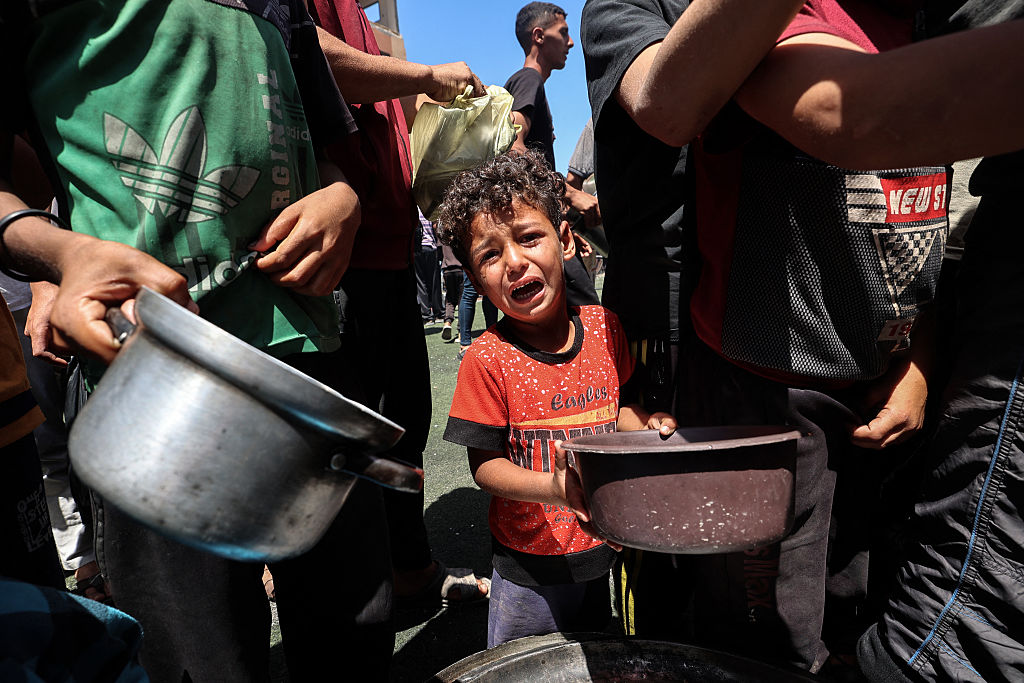
    The spotlight on US policy in the Middle East remains focused on talks with Iran, with a third round set for Oman this coming weekend after discussions in Rome on April 19 offered some signs of progress. But a growing humanitarian crisis in the Gaza Strip and the stalled efforts to safely return hostages held by Hamas remain the biggest challenges that President Donald Trump’s administration has yet to address successfully.

    Could Russia support US-Iran negotiations? An indirect opportunity worth exploring.
    Photo by Contributor/Getty Images
  • Analysis
  • Could Russia support US-Iran negotiations? An indirect opportunity worth exploring.

    On April 12, the United States and Iran wrapped up their first round of renewed diplomatic talks in Muscat, with round two set for April 19, in Rome. In the interim, Iranian Foreign Minister Abbas Araghchi is in Moscow to coordinate with the Russians. But the real breakthrough will not come from nuclear talks alone — it will require confronting the region’s most explosive fault line: the Iranian-Israeli standoff. Russia claims it can help.

    Thinking the unthinkable: Improved US-Iran relations under Trump?
    Photo by Morteza Nikoubazl/NurPhoto via Getty Images
  • Analysis
  • Thinking the unthinkable: Improved US-Iran relations under Trump?

    It is no surprise that both Iran and the United States have approached their first diplomatic engagement in four years with wariness. There are plenty of reasons to be skeptical about the probability of the negotiations culminating in a deal. But it would be a mistake to assume that the conditions in 2025 are the same as existed in 2015. Time is not on the Iranians’ side now and changes afoot in the Middle East and the broader global community give Iran an incentive to move toward an agreement, assuming that Washington is sincere and realistic in its negotiations with Tehran.

    Turkey’s strategic tangle
    Photo by Kemal Aslan/AFP via Getty Images
  • Analysis
  • Turkey’s strategic tangle

    For months, Turkey’s government has been trying to accomplish three major tasks simultaneously or nearly so to solidify its hold on power at home and enhance its influence in the broader region. Its three-pronged approach to fulfilling that goal consists of seeking to 1) crush democracy and destroy the political opposition in Turkey by bringing serious criminal charges against Ekrem İmamoğlu, the popular mayor of Istanbul; 2) bring Turkey’s pro-Kurdish party into a coalition to win the next national election with current President Recep Tayyip Erdoğan continuing his 22-year rule; and 3) leverage its new and powerful influence in Syria to neutralize Kurdish power in the northeast and in the Syrian national government.

    Three issues to watch in Trump’s emerging Iran policy approach
    Photo by Fatemeh Bahrami/Anadolu via Getty Images
  • Analysis
  • Three issues to watch in Trump’s emerging Iran policy approach

    The biggest development this past week in the Middle East policy of Trump’s second administration was the initiation of talks between the United States and Iran. This small sign of hope for diplomatic progress comes at a time when the administration continues to implement an assertive and unpredictable economic unilateralism that has roiled global markets and reduced trust and confidence between the United States and most close international partners. Brian Katulis unpacks three things to watch closely as Trump’s Iran policy evolves and his broader national security approach unfolds.

    Read the Middle East Journal

    The oldest peer-reviewed publication dedicated to the study of the modern Middle East, MEI’s flagship journal covers politics, society, and culture in the region.