This article is part of a collection of short essays written by the Fellows of the Middle East Institute to explore aspects of the ongoing war with Iran. The intent of the collection is to help readers see new and unexpected elements of the dynamics and impact of the ongoing hostilities and to think harder, deeper, and broader about the implications of the conflict.
Turkey: Ankara’s Nuclear Ambitions in the Post-Iran War Environment
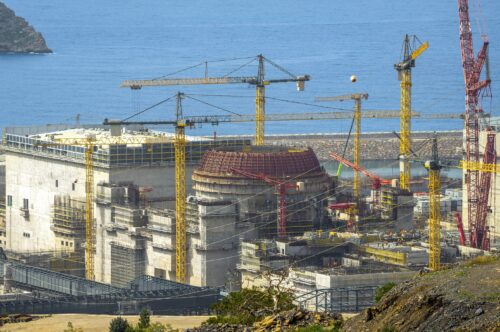
In February 2026, Turkish Foreign Minister Hakan Fidan suggested that shifting international dynamics could push Turkey to acquire nuclear weapons. That rhetoric, combined with Turkey’s civilian nuclear energy and research programs and its indigenous surface-to-surface missile development projects, has fueled concerns that these capabilities could eventually form the backbone of a Turkish nuclear weapons program.
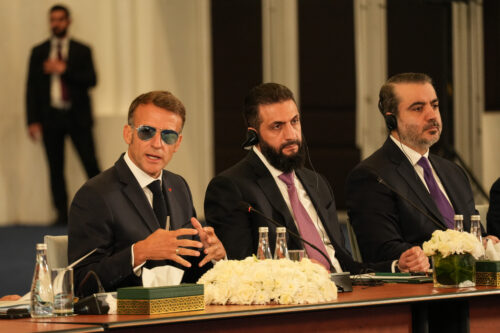
When the US and Israel launched military action against Iran on February 28, 2026, it set in motion a chain of events that saw violence spread across the Middle East. Yet as the region found itself engulfed in conflict, Syria has experienced its most peaceful months in 15 years, and the government in Damascus appears determined to stay its course toward recovery.
Gaza’s Economic Revival to be Addressed at Cairo Conference
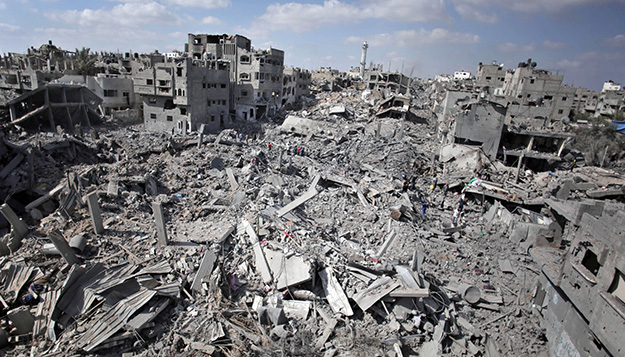
This summer’s war between Israel and Hamas, like the previous rounds — Operation Cast Lead in 2008-2009 and Operation Pillar of Cloud in 2012 — exacted a terrible cost not only in human lives (more than 2,100 Palestinians and 73 Israelis[1]) but also in the wholesale destruction of Gaza’s infrastructure. The Palestinian Authority estimates reconstruction and rehabilitation costs of the recent conflict to exceed $4 billion, more than two times Gaza’s GNP.[2]
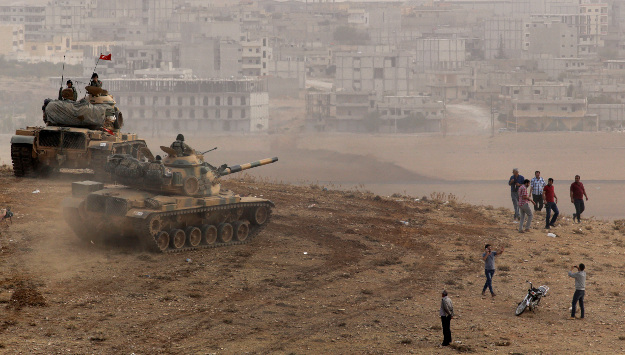
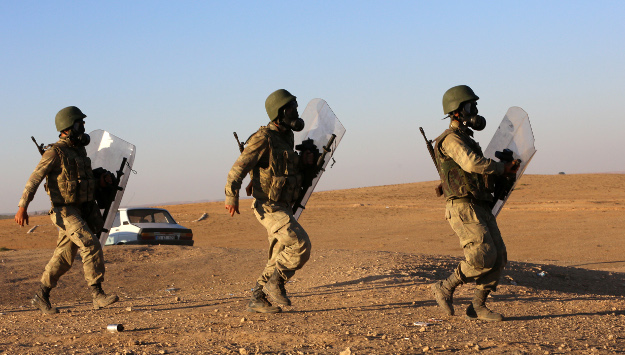
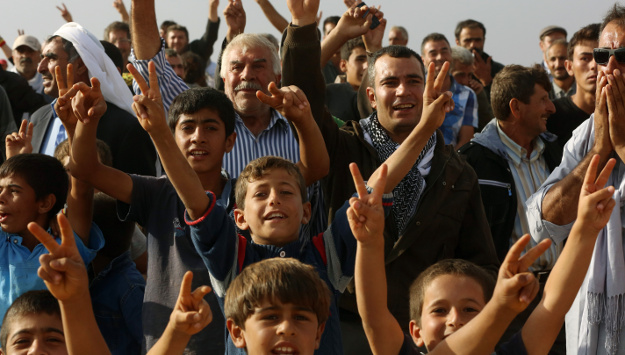
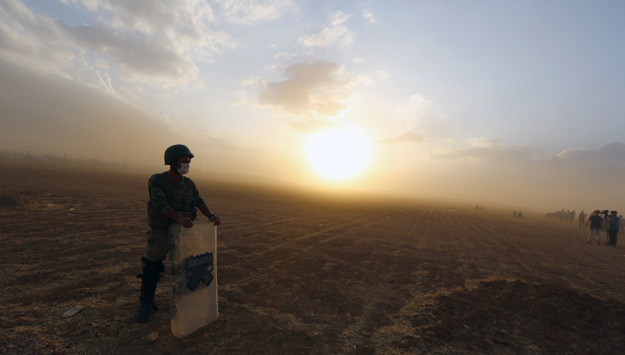
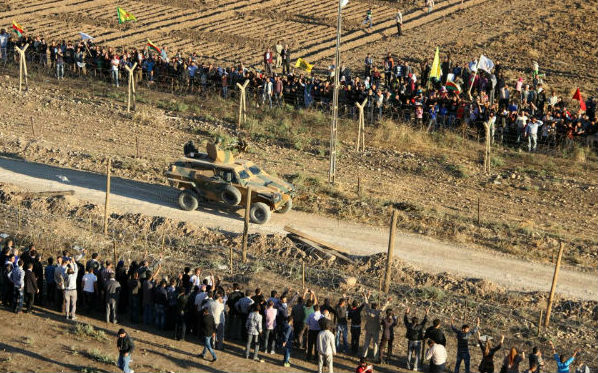
Turkey is in a tough spot. It has ISIS militants threatening the Syrian border town of Kobani, inching ever closer to confronting Turkish security forces. In addition thousands of Syrian Kurds, fleeing ISIS attacks, have massed along its border, adding further to Ankara’s troubles.
President Obama made the right decision to boost military aid to moderate Syrian rebels last year, but today America’s approach to attacking Islamic State fighters risks undermining the moderate opposition and alienating support among the Syrian public.
Defeating the Islamic State Militarily is Only Half the Battle
In his speech on September 10 President Obama characterized the Islamic State (ISIS) as a terrorist group.[1] There were clear political benefits to using this label, not the least of which was to facilitate the formation of a broad-based military coalition against the organization.
Alongside the wave of Syrian Kurdish refugees into Turkey this month is an equally unsettling story: alarming gains by the Islamic State in an offensive against a potential ally. Syria’s Kurds carved out their own regional bastion extending west from their main base in the extreme northeast corner of Syria. For two years they have fiercely defended their lands against the Islamic State and other extremists, employing many thousands of veteran Kurdish fighters.
Turkey, a key U.S. ally and a NATO member that borders the territory captured by ISIS, which now calls itself the Islamic State, in Syria and Iraq, could play a critical role in the U.S.-led military assault against the jihadist group.
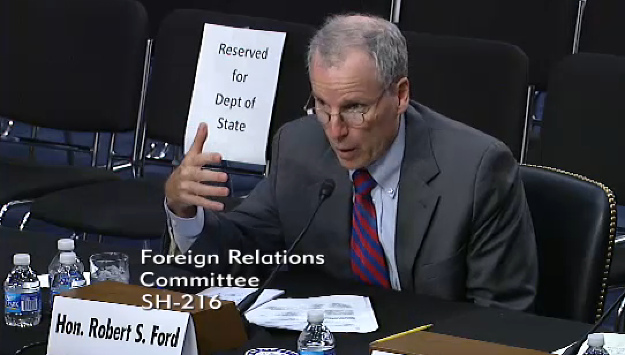
The following is the written testimony prepared and delivered by Amb (ret) Robert S. Ford for the Senate Foreign Relations Committee hearing held on September 17, 2014. Click here to watch video of the full hearing (Amb. Ford’s testimony begins at the 3 hours and 26 minutes mark).
The forces of globalization have not erased national boundaries. Nor have they shortened the physical distances between countries. Tel Aviv and Tokyo still lie more than 9,000 kilometers apart. The direct flight time between Ben Gurion Airport and Beijing Capital Airport remains just over nine hours.
Israel and Indonesia are two nations whose relations―due to political circumstances―have yet to fulfill their enormous potential. Were there to be progress in peace negotiations between Israelis and Palestinians, a window of opportunity could open for Indonesia’s new president to take practical steps that would begin to unlock this potential.
One way to grasp the immense difficulty facing President Obama as he tries to forge an effective international coalition to oppose the Islamic State is to examine the difference between this effort and the last time the United States led a diverse group of countries to take on a conflict in the Middle East: Operation Desert Storm, in 1991.
Turkey: A Reluctant Partner in the Fight against the Islamic State
Last week, President Obama laid out his strategy to fight the Islamic State (also known as ISIS or ISIL). The strategy includes a systematic campaign of airstrikes; support to forces fighting ISIS on the ground, including Iraqi Security forces and the Peshmerga (the Kurdish armed forces); redoubling U.S. efforts to cut off ISIS funding; improving intelligence; strengthening defenses; and stemming the flow of foreign fighters into and out of the Middle East.
The oldest peer-reviewed publication dedicated to the study of the modern Middle East, MEI’s flagship journal covers politics, society, and culture in the region.