From the Middle East to Middle America: Engineering Better Policy with Andrew J. Tabler
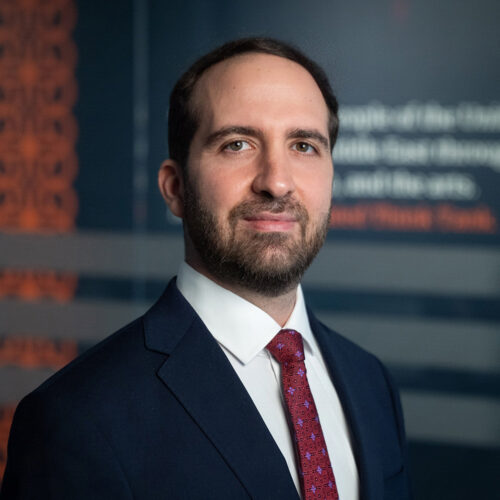
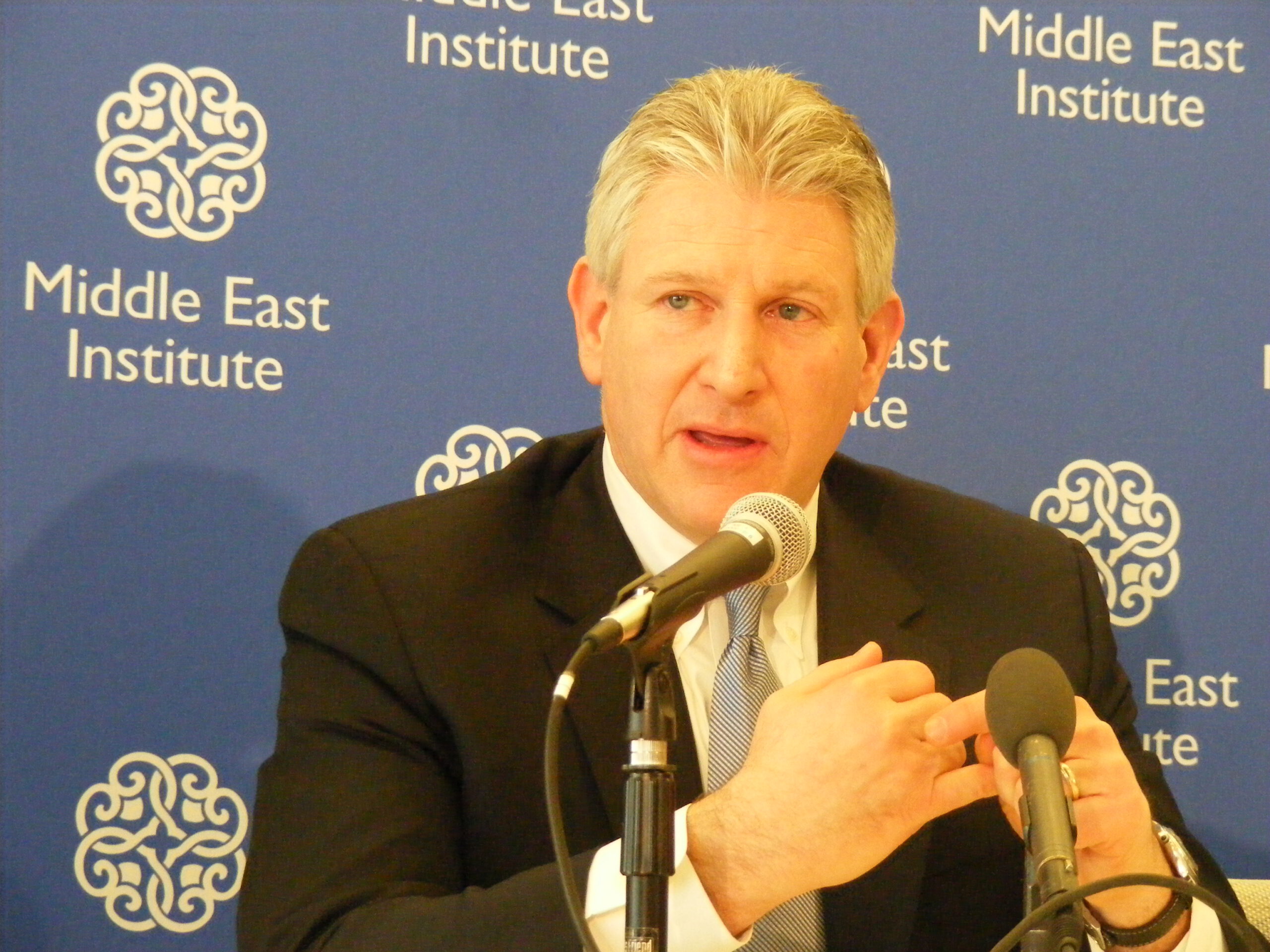
Brian sits down with Andrew J. Tabler, the Martin J. Gross Senior Fellow in the Linda and Tony Rubin Program on Arab Politics at The Washington Institute, to trace his unique and distinctive path from Oil City, Pennsylvania, to fourteen years living and working in the Middle East. Tabler discusses his time in Syria under the Assad regime, his service as director for Syria at the National Security Council and as senior advisor to the Special Envoy for Syria Engagement at the US State Department’s Bureau of Near Eastern Affairs in the first Trump administration, and explains how these experiences shaped his perspective and inspired him to found the Drake Energy Forum.
The Mecca alliance meets the Red Sea – Saudi Arabia’s new defense pact faces its first major test
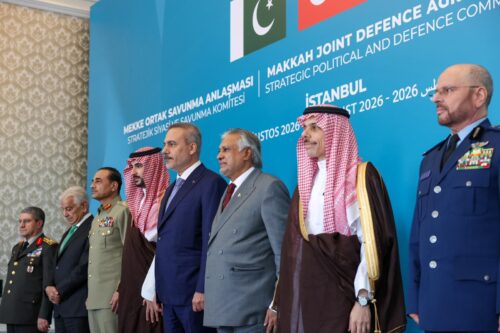
When Saudi Arabia, Turkey and Pakistan agreed to a mutual defense pact in August, it was principally seen as a political commitment. The “Mecca alliance,” as it was dubbed, stipulated that an armed attack on one would be treated as an attack on all three, accompanied by deeper military cooperation.
This article is part of a collection of short essays written by the Fellows of the Middle East Institute to explore aspects of the ongoing war with Iran. The intent of the collection is to help readers see new and unexpected elements of the dynamics and impact of the ongoing hostilities and to think harder, deeper, and broader about the implications of the conflict.
Turkey as an Alternative Democratization Model for the Middle East
The popular uprisings against authoritarian regimes in Tunisia, Yemen, Jordan and Egypt herald the beginning of a new political era in the Middle East. At the center of this new political order is a generation of young Arabs, educated, highly marginalized, and numerous. The members of the so-called Arab “youth bulge” are demanding neither the unification of the Arab world as espoused by the pan-Arabists of the 1960s, nor an Islamic state of the 1980s, but rather a dignified life, social justice, and freedom.
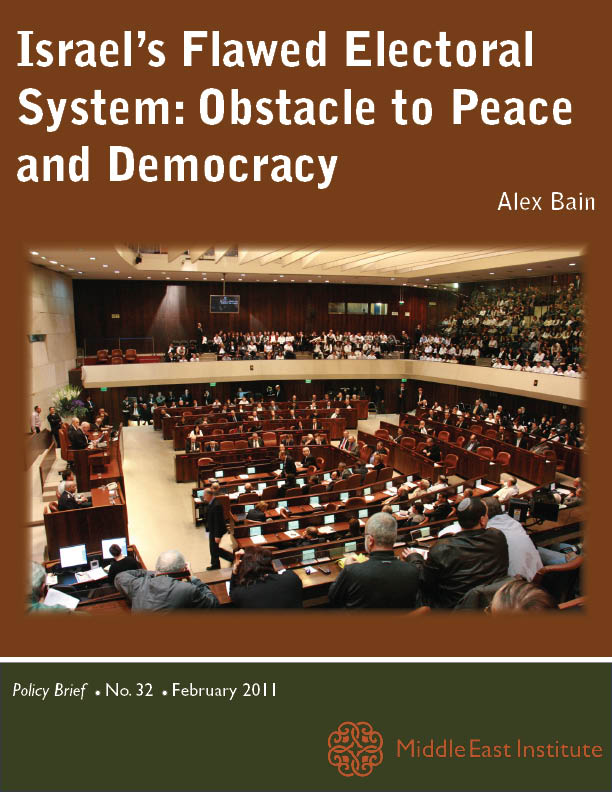
Israel's Flawed Electoral System: Obstacle to Peace and Democracy
Israeli politics is notable for its wide array of parties and unstable coalition governments. The main institutional cause of this chronic instability is the system of nationwide proportional representation, which gives disproportionate influence to minor parties. This instability limits the ability of Israeli governments to pursue coherent long-term strategies and leads to policies that address the concerns of minority groups at the expense of the national interest.
External and Internal Partnerships in Israeli Education
Educational reform in Israel has repeatedly shifted from expecting individual excellence to expecting access for all. Excellence and access reflects the early history of the country when Jewish funders from France, England, and Germany established educational systems for Jewish children. The Zionist organizations that structured much of the curriculum and the external funding streams insured the Jewish schools were far better funded than the British-supported schools during the Mandate.
Internationalization of Higher Education in Jordan
There is a growing need in Jordan for universities to establish joint programs with overseas universities in countries such as the United Kingdom and to uphold partnerships with universities in the United States, Europe, and the Gulf states. Public universities are already highly regarded. Private universities are also seeking partnerships or joint programs with foreign institutions.
Benefitting from the Knowledge Economy? Examining Secondary Education Reform in Jordan
Jordan today, in spite of the scarcity of its natural resources, is at the forefront of the region’s states in several areas, primary among them are education, economic growth rates, and the qualifications of the Jordanian youth who have always proved their excellence nationally and abroad.
Travelogue of a Nigerian Codesria Laureate in Lebanon (January–July 2006, July–November 2008)
On December 18th 2004, I discovered the Lebanese Emigration Research Centre (LERC), Notre Dame University, Zouk over the internet while searching for a post-doctoral research fellowship program on Lebanese studies in either Australia or New Zealand. I contacted the Director, Guita Hourani, who was instrumental in my winning the Codesria post-doctoral fellowship award. Elated, I departed for Beirut, Lebanon on February 21, 2006.
Turkey's Dual Track Approach Toward the Kurdistan Regional Government
Turkey’s policy toward the Kurdistan Regional Government (KRG) in northern Iraq has undergone an important shift since 2009. Only a few years ago, Turkey did not recognize Iraq’s Kurdish Regional Government and refused to meet with its representatives in any official capacity due to its fear that recognition would embolden Turkey's own Kurdish minority to demand similar home-rule status.
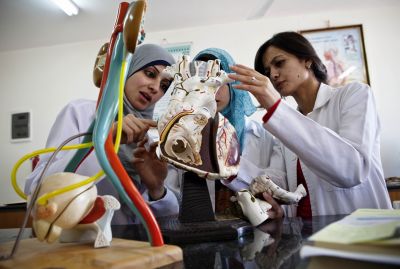
Struggling for the Center: Teacher-Centered vs. Learner-Centered Practices in Palestinian Higher Education
Alongside the struggle for an independent Palestine, not to mention the internal power struggles between the rival Fatah and Hamas movements, another struggle — largely absent from local news headlines and talk on the streets — is unfolding in classrooms in Palestinian higher education. Faculty are pushing back against the hegemony of teacher-centered instruction and embracing, in principle if not in practice, the global movement toward learner-centered pedagogy.
The oldest peer-reviewed publication dedicated to the study of the modern Middle East, MEI’s flagship journal covers politics, society, and culture in the region.