Is Turkey the New Iran — Or Is that the Wrong Question?
The balance of power in the Middle East is shifting. Iran is on the defensive — its military capabilities were badly degraded by last year’s 12 days of Israeli and US strikes, and growing protests at home have made the regime look more vulnerable than it has in years.
Putting Trump on paper: What the new US strategy documents say about the Middle East
Trying to capture US President Donald Trump’s proudly unpredictable approach to foreign policy in fixed policy documents is inherently difficult. Surprise, leverage and improvisation are not bugs in Mr Trump’s world view; they are features. Yet the administration has now attempted this exercise twice: with the release of the National Security Strategy last December and the National Defence Strategy this January.
US Policy in the Middle East in the First Year of Trump 2.0: A Report Card
In the first year of his second term in office, US President Donald Trump focused considerable time and energy on the Middle East, but the results so far have been uneven. This report assesses the US government’s actions in the region over the past 12 months, from January 2025 through January 2026.
Media and politicians on both sides of the Atlantic are hyping the idea that President Trump’s attempt to gain sovereign control of Greenland has caused unprecedented and irreparable damage to the over 75 year-old Transatlantic Alliance. This “analysis” stems from multiple sources. On both sides of the ocean, there are those who pounce on any deviation from the norm by Trump as evidence the world as we know it is ending. And in Europe, there is the human but unattractive reaction of weak, dependent states against their one powerful ally when it rejects Europe’s preferred script. Much of the US media criticism is summarized by the concept that our other NATO allies can never again “trust” the US.
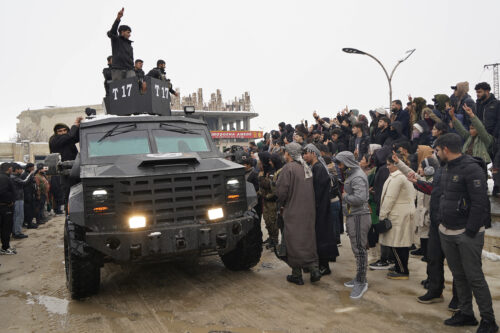
Ankara’s double win: Kurds, Israel, and the new Syria
Whether the truce between Damascus and the Kurdish-led Syrian Democratic Forces holds or collapses will have major implications for neighboring Turkey, which has long-standing interests in Syria, but recent developments already point to a win for Ankara.
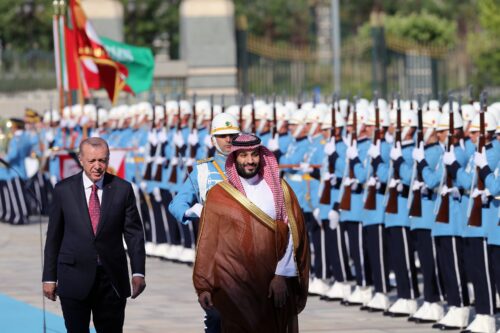
What Ankara sees in Riyadh — and why it still needs Abu Dhabi
As the rivalry between Riyadh and Abu Dhabi sharpens in Yemen and beyond, Turkey has begun edging closer to Saudi Arabia, sparking claims that a new regional order is taking shape: a Turkey-Saudi axis backed by a NATO-like defense architecture, implicitly aligned against Israel and the United Arab Emirates. This reading overstates the case.
How Damascus and the SDF came to blows in Aleppo — and what might come next
After months of building tensions, full-blown hostilities erupted between Syria’s transitional government and militia fighters linked to the Syrian Democratic Forces (SDF) in Aleppo on January 6. Through four days of fighting, government forces have now assumed full control of Syria’s second city, after expelling SDF-linked forces from its northwestern districts.
Iran’s Axis of Resistance after the 12-day war: Adaptation, restructuring, and reconstitution
Since Israel’s 12-day war against Iran, Tehran and its network of regional proxies and non-state allies, the so-called Axis of Resistance, have entered a phase of strategic dormancy — an outward calm concealing rearmament, financial adaptation, and ideological renewal.
US President Donald Trump is scheduled to deliver a prime time address to the nation this evening at a moment when public support for his second term has hit new lows. No matter the topic Trump chooses to frame the national conversation as America heads into the holiday season, it is worth taking a step back and reflecting on the bigger story of what has occurred in the United States in 2025 and how these dynamics affect America’s relations with the rest of the world, including the Middle East.
Unfinished business will drive the Mideast agenda in 2026
Following another year of pivotal developments and transformational change, the Middle East could be poised to turn the page on many of its long-running conflicts and sources of instability. But lasting fruits of the processes begun in 2025 will require a determined, intentional focus by regional actors and the United States. Given current trends, MEI experts weigh in on where the region may be headed in 2026.
The Trump administration has released its new National Security Strategy—and analysts say it signals a decisive break from America’s role as the leader of the free world. Instead, the document advances an openly illiberal, strongman-centered vision of power. One former U.S. official goes further, arguing the strategy doesn’t merely abandon democracy promotion—it puts Washington in the business of promoting autocracy.