From the Middle East to West Asia: Redefining America’s Global Strategy
MEI Senior Fellow Mohammed Soliman joins hosts Alistair Taylor and Matthew Czekaj to discuss his new book, West Asia: A New American Grand Strategy in the Middle East. The book argues that it is time for the United States to move decisively away from nation-building and focus instead on order-building, outlining a framework for a new regional order that links Europe to the Indo-Pacific. Soliman also shares how he conceived of the core ideas behind his book and explains why his thesis is especially relevant in today’s geopolitical, economic, and technological landscape.
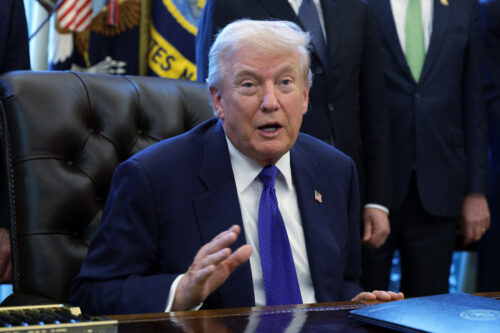
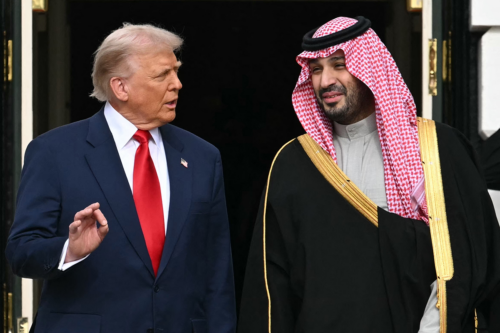
What Trump’s 2026 Mideast approach could look like
Donald Trump’s first year of his second presidential term has been a roller coaster of twists and turns both at home and abroad—particularly in the Middle East. His regional focus was driven by two main factors: first, Trump’s own ego and sense of possible place in history; and second, the volatile, dynamic events driven by actors in the region.
Integration or conflict in northeastern Syria? Ten key points to consider
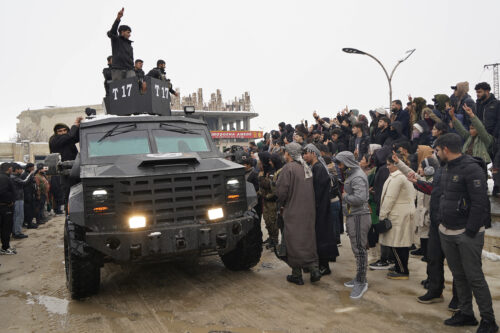
After 10 months of US-mediated talks failed to achieve an integration of the Syrian Democratic Forces into Syria’s transitional state, hostilities erupted in early January. US diplomacy stepped in to try to calm tensions and force through the integration of the SDF’s Kurdish core into the Syrian state. Here are 10 key takeaways and indications of where things could go next.
Ankara’s double win: Kurds, Israel, and the new Syria
Whether the truce between Damascus and the Kurdish-led Syrian Democratic Forces holds or collapses will have major implications for neighboring Turkey, which has long-standing interests in Syria, but recent developments already point to a win for Ankara.
This bonus episode of Middle East Focus features an excerpt from a recent MEI Virtual Briefing recorded on January 20. Director of Communications Zeina Al-Shaib is joined by MEI Affiliate Fatima Abo Alasrar and Associate Fellow F. Gregory Gause III to discuss the dramatically changing dynamics in Yemen’s civil war. Last month, Yemen emerged as a focal point of rising tensions between Saudi Arabia and the United Arab Emirates. The Southern Transitional Council, a UAE-backed southern separatist movement, has disbanded in recent weeks, following fierce clashes with Saudi-backed forces. In the conversation, Alasrar and Gause analyze the political, security, and socio-economic shifts affecting Yemen’s internal dynamics and what all this means for regional stability.
Breaking News Brief: Damascus and the Syrian Kurds Come to Blows
MEI Senior Fellow Charles Lister joins hosts Alistair Taylor and Matthew Czekaj to unpack the latest developments in Syria, as a tenuous cease-fire takes hold after several days of intense fighting between the Syrian army and the Kurdish-led Syrian Democratic Forces (SDF). Their discussion explores the drivers of the conflict, the prospects for a lasting deal that would integrate the SDF into the Syrian military, as well as the role and perspective of key external actors, including the US, Turkey, and Israel.
What Ankara sees in Riyadh — and why it still needs Abu Dhabi
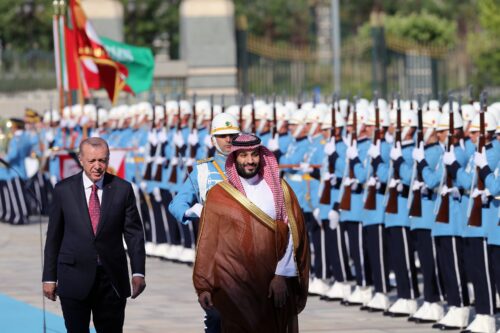
As the rivalry between Riyadh and Abu Dhabi sharpens in Yemen and beyond, Turkey has begun edging closer to Saudi Arabia, sparking claims that a new regional order is taking shape: a Turkey-Saudi axis backed by a NATO-like defense architecture, implicitly aligned against Israel and the United Arab Emirates. This reading overstates the case.
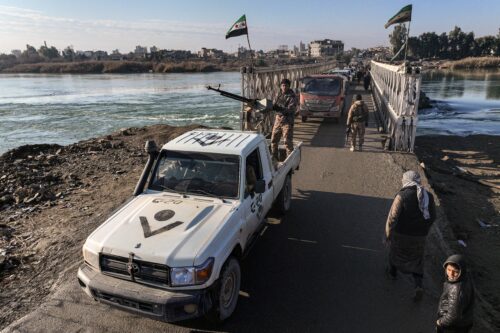
How Damascus and the SDF came to blows in Aleppo — and what might come next
After months of building tensions, full-blown hostilities erupted between Syria’s transitional government and militia fighters linked to the Syrian Democratic Forces (SDF) in Aleppo on January 6. Through four days of fighting, government forces have now assumed full control of Syria’s second city, after expelling SDF-linked forces from its northwestern districts.
A New Phase in Vision 2030: From Strategic Exemptions to Broad Ownership
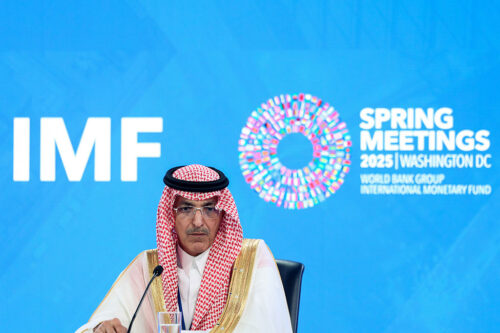
Saudi Arabia is making a bold push to rewire the rules of the game for foreign investment within the Kingdom. The proposed lifting of the 49 percent foreign‐ownership cap in publicly listed companies is emerging as the next frontier of that effort. This reform, scheduled to take effect on February 1, could change the calculus for active and passive global capital, drive fresh scrutiny of regulatory constraints, and test the Kingdom’s ability to follow through in what may prove to be a tight balance between opening up and preserving sovereign control.
From coalition to confrontation: Saudi-UAE rivalry in Yemen and its regional implications
The final days of 2025 marked a turning point in the Middle East, as competition between Saudi Arabia and the United Arab Emirates in Yemen spilled out into the open. Tensions between the two coalition partners, which jointly launched a military intervention in Yemen in 2015, have simmered for years and are now rapidly escalating, with far-reaching implications for both Yemen and regional security more broadly.
Brian sits down with Robert Malley, a former US official best known for his role as the lead negotiator of the 2015 Joint Comprehensive Plan of Action. Malley discusses the motivations behind his new book, Tomorrow Is Yesterday: Life, Death, and the Pursuit of Peace in Israel/Palestine, and offers his assessment of American perspectives on the war in Gaza. The conversation also explores his personal background as the son of an Egyptian Jewish father and an American Jewish mother—both outspoken on the political left—and how that upbringing shaped his worldview, alongside a career spanning the Clinton, Obama, and Biden administrations.
A year after Assad’s fall, Syria faces a pivotal moment. Washington must lead.
One year after the fall of the Assad regime, Syria is still in very fragile phase of its transition to a new political order. The country faces monumental reconstruction challenges, estimated in the hundreds of billions of dollars, well beyond the capabilities of the new Syrian government. Without sustained American leadership and investment, Syria’s transition will be slow, fragile, and dangerously reversible.
Admiral Brad Cooper, Commander of US Central Command, Addresses MEI
Admiral Brad Cooper, USN, Commander of US Central Command, gave opening remarks at MEI’s conference titled “Assessing US Policy on Post-Assad Syria & Its International Integration.”
“Today, one year since Syria’s transition began, we remain laser focused on the work ahead. We will continue to work with our Syrian partners to pursue ISIS and support SDF integration. A Syria at peace with itself and its neighbors can lead to a more peaceful and prosperous Middle East.”
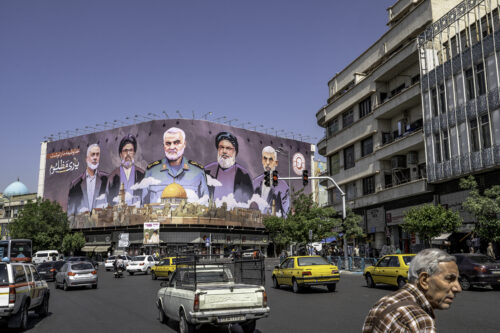
This backgrounder provides an overview of the Axis of Resistance, a loosely aligned network of armed groups and state actors led and supported by Iran to project its influence and military strength across the Middle East.