China’s power in the Middle East has hard limits
China is becoming harder to ignore in the Middle East. Yet the gap between economic presence and strategic power remains wide, even as American policy swings, argues US academic John Calabrese.
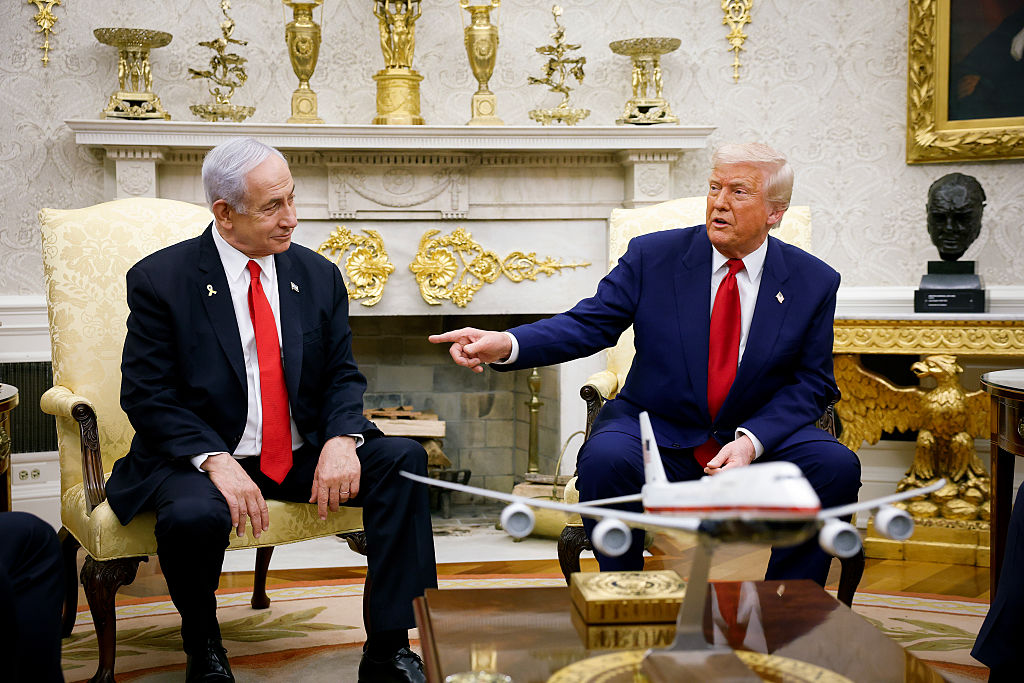
The United States is Israel’s closest ally, and its support is a central pillar of Israel’s national security. The US provides Israel access to purchase advanced weapon systems, ammunition and weapon emergency supplies in times of war, intelligence sharing, opportunities for cooperation in defense technology, and crucial diplomatic cover at the UN Security Council and elsewhere. It also provides Israel with regular security aid, to be spent in the United States, currently at an annual rate of $3.8bn (under an MOU that expires in 2028). Since October 2023, the US also offered active military support, in a break from the historical norm. It contributed substantially to Israel’s defense against Iranian ballistic missiles, in conjunction with Arab regional partners, and bombed nuclear sites in Iran in support of Israel’s campaign in the “12 Day War” of June 2025.
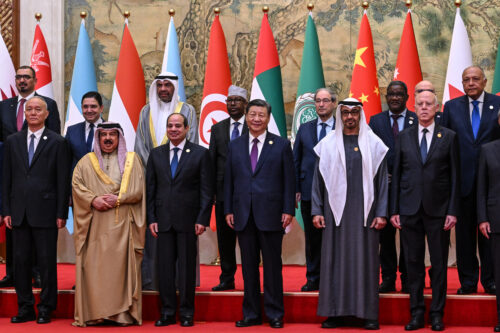
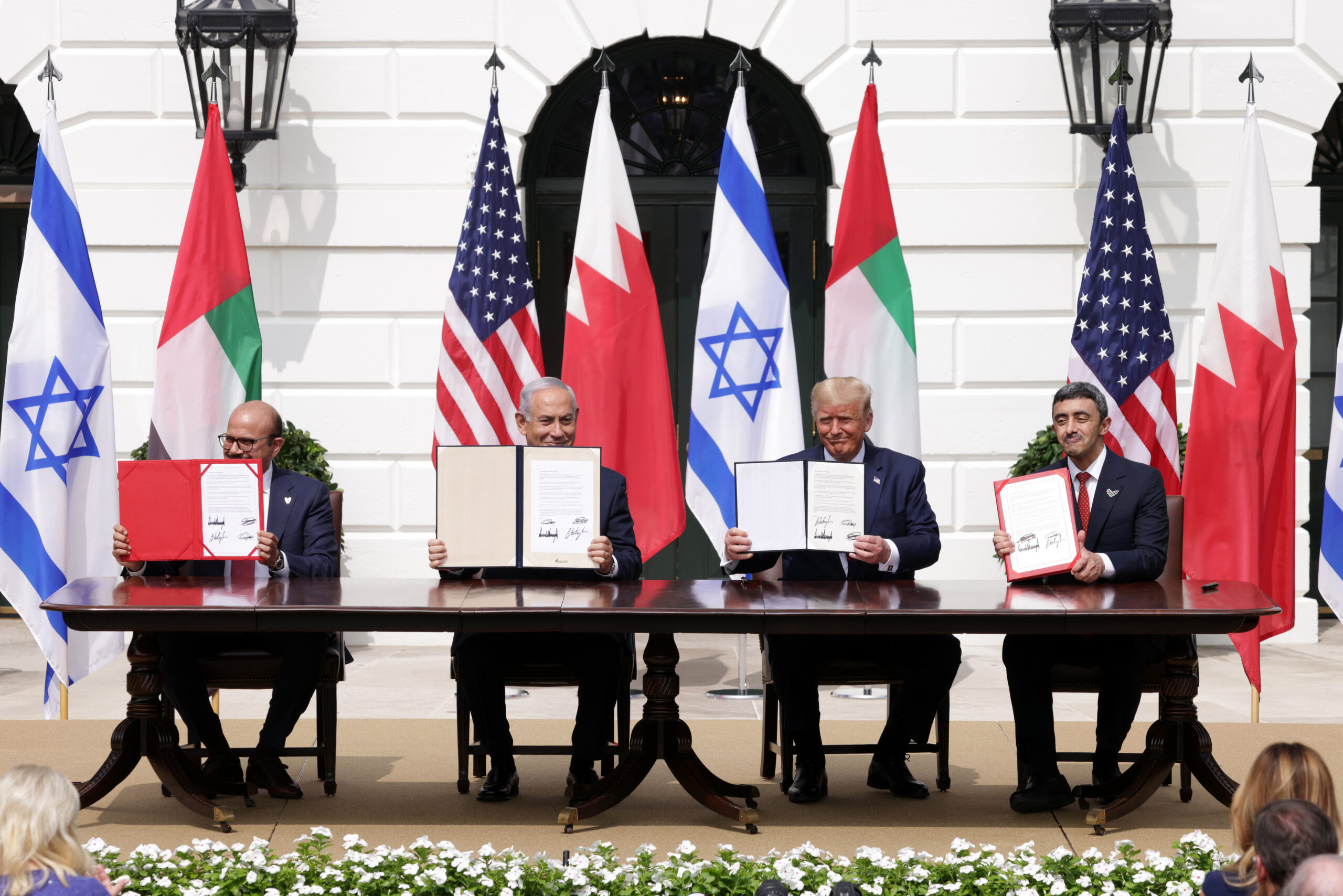
The Abraham Accords have represented a remarkable shift in U.S. Middle East policy. They reframed Arab-Israeli normalization as a result of shared interests – within the Middle East and directly with the US, rather than as a byproduct of Israeli-Palestinian peace. Signed in September 2020, on the last leg of the first Trump administration, the Accords brokered by Washington normalized relations between Israel and the United Arab Emirates (UAE) and Bahrain, followed by framework agreements with Morocco and Sudan. From the American perspective, the Accords were intended to break decades of diplomatic stagnation in the Middle East in order to establish a regional framework aligned with American strategic objectives.
Freedom’s arrival in Syria remains deeply fragile. Even as the country’s new rulers gain diplomatic recognition, goodwill, and early relief from Western sanctions, Syria itself is still fractured—geographically, socially, and institutionally.
In November 2025, the United States sought and obtained approval for a United Nations Security Council Resolution (UNSCR 2803) endorsing the formation of a Board of Peace (BoP) and International Stabilization Force (ISF) to support the implementation of the 20-point peace plan agreed to by Israel and Hamas the previous month. The ISF’s stated role is to help secure and demilitarize the Gaza Strip, primarily by facilitating the decommissioning of weapons, protecting civilians, and training and advising burgeoning Palestinian police forces. In the intervening months, however, progress on standing up the ISF has stalled, and conflicting messaging from US officials provides more questions than answers.
Hosts Alistair Taylor and Matthew Czekaj are joined by MEI Distinguished Military Fellow Mick Mulroy to discuss the Trump administration’s new National Defense Strategy (NDS) and its implications for the Middle East. While serving as the Deputy Assistant Secretary of Defense (DASD) for the Middle East from 2017 to 2019, Mulroy helped prepare the 2018 NDS, giving him an insider perspective on US defense planning. Together, Taylor, Czekaj, and Mulroy unpack what the new strategy means for US priorities globally and for the Middle East in particular, including how it could be reflected in a potentially looming military strike on Iran.
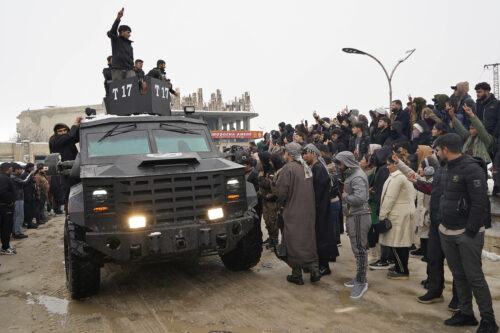
Whether the truce between Damascus and the Kurdish-led Syrian Democratic Forces holds or collapses will have major implications for neighboring Turkey, which has long-standing interests in Syria, but recent developments already point to a win for Ankara.
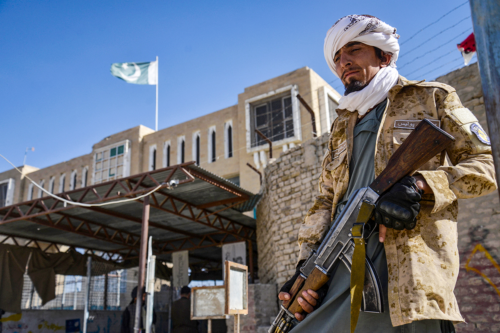
Pakistan’s relationship with the Afghan Taliban has shifted from open sponsorship in the 1990s to a silent partnership following 2001 to alienation and belligerence since 2021. Their current conflict, which comes at great cost to both countries and seems to have no easy military or political resolution, also poses a threat to the stability and prosperity of neighboring states. Although American strategic interests in the region greatly diminished following the United States’ military withdrawal from Afghanistan in August 2021, the region’s altered political dynamics have prompted a growing American engagement with Pakistan and tentatively with Afghanistan. At the same time, the US has become a factor in how both Islamabad and Kabul have come to form their national security strategies.
One of Donald Trump’s achievements was to bring about a ceasefire in Gaza, even if an imperfect one.
As the rivalry between Riyadh and Abu Dhabi sharpens in Yemen and beyond, Turkey has begun edging closer to Saudi Arabia, sparking claims that a new regional order is taking shape: a Turkey-Saudi axis backed by a NATO-like defense architecture, implicitly aligned against Israel and the United Arab Emirates. This reading overstates the case.