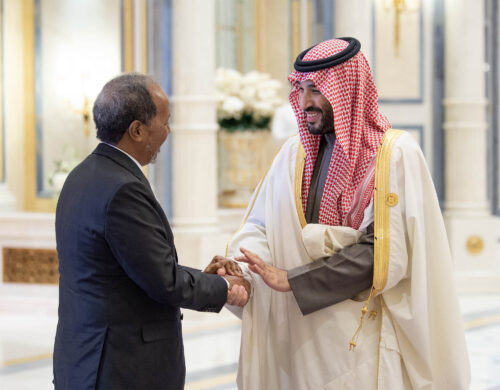
Riyadh’s deepening engagement in Somalia reflects a calculated strategy to shape the emerging Red Sea security order, counter UAE and Iranian influence, hedge against U.S. uncertainty, and safeguard alternative energy export routes following the Strait of Hormuz closure.
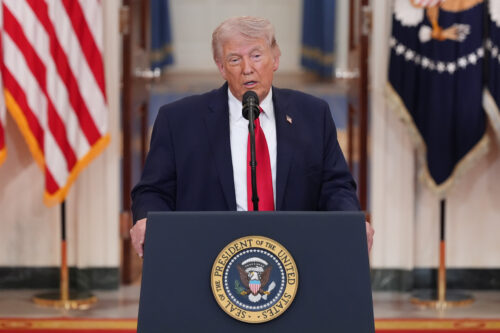
Iran’s leadership did not take long to respond to President Donald Trump’s latest address on the war. Regime-linked media dismissed the April 1 White House speech as a repetition of earlier claims, while officials and commentators close to the Iranian government framed it as further evidence that Washington remains uncertain about its own course. In the battle over messaging, Trump’s ambiguity is giving Iran’s narrative the edge.
This special episode of Middle East Focus features a conversation from MEI’s Virtual Briefing Series. Host Alistair Taylor is joined by former National Security Council Senior Director Stephen Flanagan and MEI Senior Fellow Iulia-Sabina Joja to discuss the impacts of the Iran war on US-European relations. The conflict has hit Europe’s economy hard and created deep divisions across the continent, even as some European countries play a quiet supporting role to the US. President Donald Trump has called for NATO member states to help secure shipping through the Iranian-blocked Strait of Hormuz, a critical chokepoint for international maritime trade. Flanagan and Joja explore the prospects for stepped-up European military involvement, the knock-on effects on the war in Ukraine, and the potential longer-term impact on the future of the US-European alliance.
Suspended Between Escalation and Exit: The U.S.–Iran War’s Strategic Deadlock
Entering the second month of the war with Iran, the United States has delivered substantial military effects without articulating a viable political end state—a familiar pattern in which battlefield success fails to produce strategic clarity and increasingly risks an exit without resolution.
Lebanon at the Brink: War, Hizballah, and the Fate of Democracy
Israel’s escalating campaign against Iran-backed Hezbollah is rapidly turning Lebanon into one of the most unstable fronts in the wider US-Israel confrontation with Iran — pushing an already fragile state to the brink. The war is tearing at Lebanon’s sectarian and political fabric, displacing Shiite communities and deepening polarization between Hezbollah and its rivals.
China’s Model of Power Projection in the Middle East
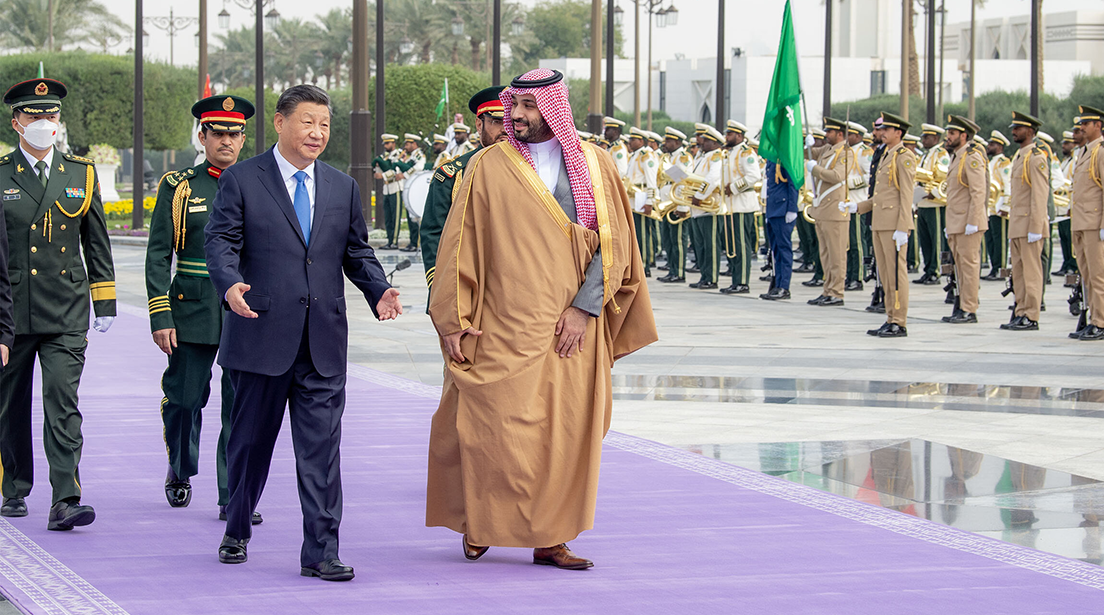
China’s expanding role in the Middle East is often framed as geopolitical rivalry with other global powers, including the United States, Russia, India, and others; but this lens obscures the strategic subtlety of Beijing’s approach.
Strikes (and Now Boots?) Without Strategy as Iran War Escalates
“Tactics without strategy is the noise before defeat” is a well-known axiom attributed to the ancient Chinese military general and strategist, Sun Tzu. With the Iran war now at the one-month mark, it is evident that the Trump administration failed to outline a clear end state or devise a workable war termination strategy before initiating Operation Epic Fury on February 28.
MEI Senior Fellow Jaser AbuMousa joins hosts Alistair Taylor and Matthew Czekaj to unpack how Hamas is navigating the US-Israel conflict with Iran and its impact on Gaza. Nearly two and a half years after the start of the Gaza war, international attention has shifted away from the humanitarian crisis in the devastated coastal strip. Meanwhile, Hamas’ primary state sponsor, Iran, has been severely weakened by US-Israeli military strikes and the death of former Supreme Leader Ayatollah Ali Khamenei. AbuMousa examines how this could affect Hamas’ trajectory moving forward and its place within the Axis of Resistance, as well as what it all means for the Palestinian people.
Post-Saddam Iraq at 23: The War It Never Wanted Is Back
On the anniversary of the 2003 invasion, Iraq finds itself trapped between the same external powers that have defined — and destroyed — its last quarter-century.
The decision U.S. President Donald Trump made to attack Iran was a high-stakes gamble. The gamble is not really in the military campaign itself. It is whether a massive air campaign can trigger a popular rebellion that takes down the regime in Tehran. This could pay off brilliantly, but it could also fail miserably.
The Kurdish Card: Can Iranian Kurds Shape the War’s Endgame?
The war against Iran has entered its third week with no clear endgame—and no clear strategy from Washington.
At one point President Trump appeared to encourage Iranian Kurdish groups to rise up against the regime, before quickly walking it back. Meanwhile, some exiled Kurdish opposition figures say they already have an invasion plan and only need US air cover.
The Kurdish question is once again at the center of regional politics. In this episode, we examine the role of Iranian Kurds in the opposition—and what this moment could mean for their future.
If the Regime Survives: Iran War Raises the Ante for US, Israel
The United States and Israel both hope for the grand prize: the emergence of a new regime in Iran to replace the Islamic Republic. For the US, this would close the chapter on a hostile and at times violent relationship that has endured since 1979. For Israel, this would see the end not only of a regime with a deep ideological commitment against it but also the foe that Israel sees as behind all fronts of the war it has fought since October 7, 2023.
How the US and Israel Can Stave off Strategic Failure in Iran
Despite a dazzling military onslaught, an Iranian regime that faces a threat to its very existence is demonstrating an entirely predictable willingness to stay the course at all costs. As things stand now, the joint US-Israeli war risks ending in military victory but becoming a strategic failure.