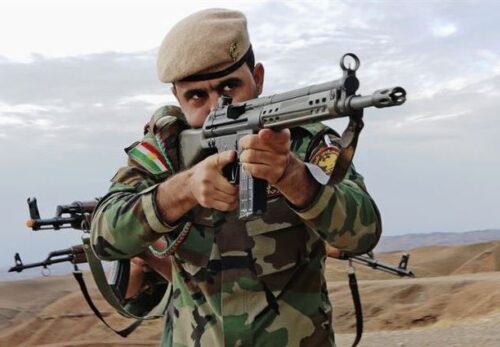
The Kurdish Card: Can Iranian Kurds Shape the War’s Endgame?
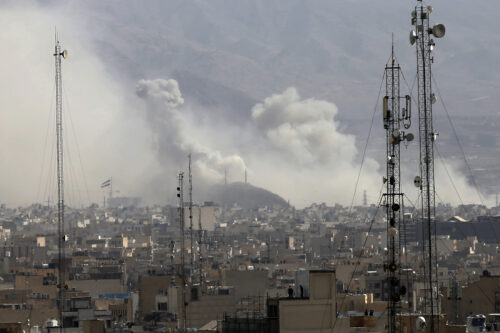
The war against Iran has entered its third week with no clear endgame—and no clear strategy from Washington.
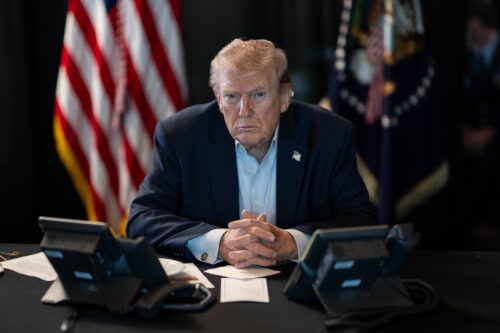
At one point President Trump appeared to encourage Iranian Kurdish groups to rise up against the regime, before quickly walking it back. Meanwhile, some exiled Kurdish opposition figures say they already have an invasion plan and only need US air cover.
The Kurdish question is once again at the center of regional politics. In this episode, we examine the role of Iranian Kurds in the opposition—and what this moment could mean for their future.
If the Regime Survives: Iran War Raises the Ante for US, Israel
The United States and Israel both hope for the grand prize: the emergence of a new regime in Iran to replace the Islamic Republic. For the US, this would close the chapter on a hostile and at times violent relationship that has endured since 1979. For Israel, this would see the end not only of a regime with a deep ideological commitment against it but also the foe that Israel sees as behind all fronts of the war it has fought since October 7, 2023.
How the US and Israel Can Stave off Strategic Failure in Iran
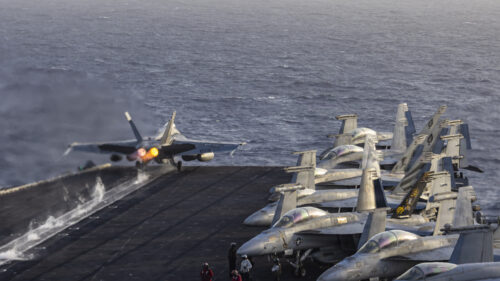
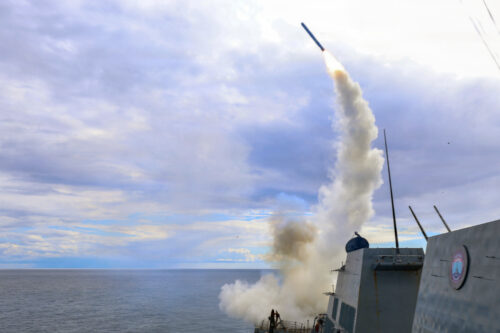
Despite a dazzling military onslaught, an Iranian regime that faces a threat to its very existence is demonstrating an entirely predictable willingness to stay the course at all costs. As things stand now, the joint US-Israeli war risks ending in military victory but becoming a strategic failure.
Shockwaves Across Asia: The Iran War’s Strategic Fallout
The Israeli-U.S. military strikes on Iran that began on February 28 have done more than ignite a Middle Eastern war. They have sent shockwaves rolling across Asia, from the Strait of Hormuz to the Sea of Japan, exposing the brittle underpinnings of regional energy systems, straining diplomatic balancing acts, and forcing governments to make hard choices they have long deferred.
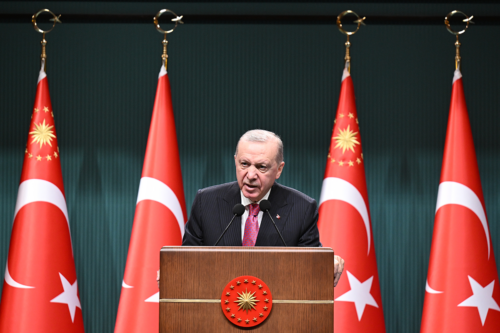
Nearly two weeks into the US and Israel’s war with Iran, MEI Senior Fellow Gönül Tol joins hosts Alistair Taylor and Matthew Czekaj to explore the impact of the widening regional conflict on Turkey. On March 9, Ankara announced that NATO air defenses shot down a second Iranian ballistic missile that had entered Turkish airspace since the start of the war and stated it would take all necessary defensive measures. Turkey is now caught in the middle of an escalating conflict that could pose risks to the country’s security, economy, and foreign policy. Tol, Taylor, and Czekaj discuss what a prolonged regional conflict could mean for Turkish President Recep Tayyip Erdoğan, his regional political objectives, and Turkey’s relationship with key Middle Eastern neighbors.
Iran’s Insurance Policy: Why the Houthis Have Stayed out of the Fight
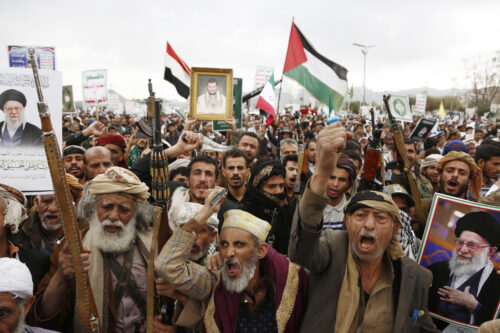
Nearly two weeks into the Iran war, one of Tehran’s most capable and disruptive regional allies, Yemen’s Houthi movement, has not entered the fight. The Houthis’ restraint reflects a strategic calculation by Iran’s Islamic Revolutionary Guard Corps.
Known Unknowns and Unknown Unknowns: The US-Israeli War on Iran
Modern wars are fought not only with weapons but with assumptions—and the most dangerous assumptions are often invisible to those making them. Donald Rumsfeld’s distinction between known unknowns (questions we recognize but cannot answer) and unknown unknowns (risks we have not even framed as questions) captures something essential about the current confrontation between the United States, Israel, and Iran.
Turkey caught in the vortex of a widening Iran war
After months of trying to head off a US-Israeli war with Iran, Turkey now finds itself caught in the middle of it — and deeply concerned that a prolonged, regionalized conflict could pose serious security, economic, and political risks.
Intelligence questions as the war with Iran enters a more uncertain phase
Following the tactical surprise of US-Israeli strikes on Iran, a crucial next step is the assessment of judgments about Iranian military sustainability, regime cohesion, escalation dynamics, regional spillover, allied responses, and plausible end states, and how those judgments interact with allied positioning, diplomatic activity, and economic constraints.
How to prevent the Iran war from becoming a vortex that draws in more countries
By attacking Iran without clear objectives or an exit strategy, the US and Israel turned what was the greatest strategic and chronic threat to regional security into an unpredictable set of imminent dangers. A fundamental task for US national security is to prevent this conflict from becoming a vortex that increasingly pulls in other powers.
Arming a Kurdish insurgency would be a risky endeavor – for both the US and Iran’s minority Kurds
With the Iranian regime weakened by relentless American and Israeli missiles, Washington is eyeing a familiar U.S. ally in the Middle East to help push the Islamic Republic over the edge: the Kurds.
Partners at war: Pakistan-Afghanistan conflict tests China’s westward strategy
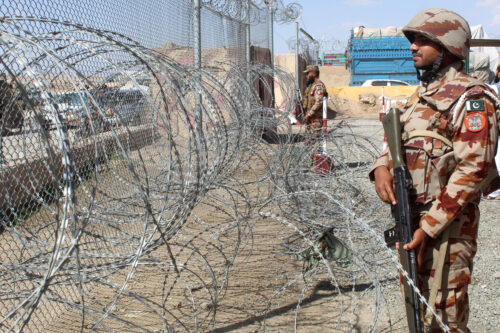
The recent escalation of the Pakistan-Afghanistan conflict upends China’s westward economic expansion. With neither Pakistan nor Afghanistan willing to subordinate their core security objectives to Beijing’s connectivity agenda, will China find itself unable to push forward on its regional strategy? US academic John Calabrese ponders this quandary.