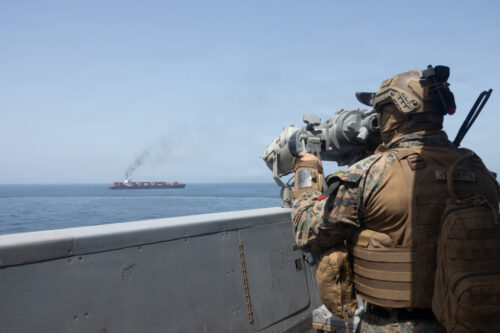
United States Central Command (CENTCOM), one of the US Department of Defense’s (DoD) six geographical combatant commands, is responsible for countering threats, responding to crises, and strengthening regional stability in the Middle East, Central Asia, and parts of South Asia.
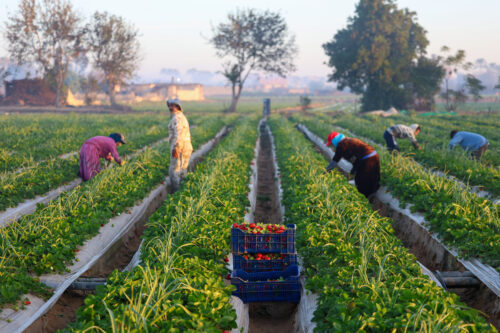
This summer, brutally hot temperatures, deepening water scarcity, and spiking fertilizer costs have put North Africa’s agricultural sector under intense pressure. Host Alistair Taylor is joined by Mohammed Mahmoud, CEO and founder of the Climate and Water Initiative and lead for Middle East Climate and Water Policy at the United Nations University Institute for Water, Environment, and Health, to unpack the region’s food and water security challenges. Drawing on Mahmoud’s new report card on agricultural sustainability in North Africa, they explore the diverging picture across the region, why some countries have weathered the strain better than others, and what it will take to build a more resilient and secure food system.
Lebanon is America’s next foreign policy win — if Washington acts now. The US has committed blood and treasure to neutralize Iran’s ability to project power and destabilize the Middle East. Lebanon is now the clearest opening to convert those investments into strategic gains and permanently dislodge the Islamic Republic from its most important regional foothold. Securing a sovereign Lebanon, achieving a lasting Israel-Lebanon peace, and dismantling Hizballah — the blueprint of Iran’s proxy model — would irreversibly weaken Tehran’s threat and consolidate a new regional order led by America’s partners before Iran has a chance to reverse its losses.
Outlook for Sustainable Agriculture in North Africa: Report Card Assessment
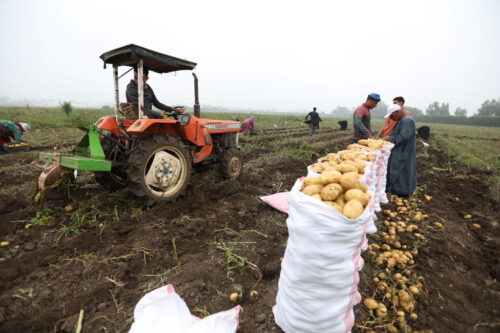
This report assesses the future sustainability of agriculture across North Africa using a multidimensional approach that considers the dynamics of water, climate, land, and economics. To enable this assessment of sustainable agriculture across the region, the author evaluates water resources reliability, water use efficiency, agricultural land sustainability, and the food sector economy for Egypt, Sudan, Libya, Tunisia, Algeria, Morocco, and Mauritania, and provides recommendations for action.
When the Strait of Hormuz closed in March, fertilizer prices spiked within weeks, triggering a food security crisis across North Africa and the Sahel. Host Alistair Taylor is joined by MEI Senior Fellow Intissar Fakir to explore what it means for the region, unpack the link between food security and regional stability, and assess how the strait’s reopening could impact those affected.
A Strategic Conundrum: Pakistan’s Transit Corridor to Iran as Lifeline or Liability
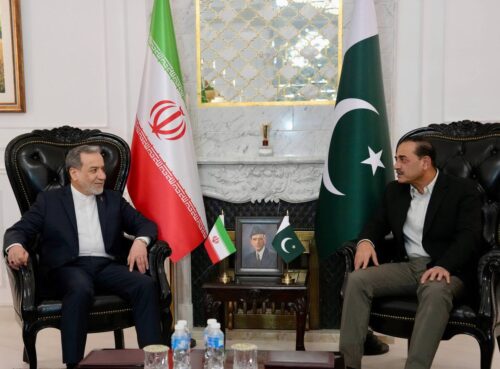
The US-Iran standoff over the Strait of Hormuz — disruptive to global trade and energy flows, and devastating for debt-burdened economies — has handed Pakistan an unexpected geoeconomic opportunity, one that may persist even if the framework agreement announced on June 14 results in a lasting peace and permanent reopening of the strait. But seizing it will have interlocking consequences for Islamabad’s ties with Tehran, Washington, and the Gulf states.
The India-Middle East-Europe Economic Corridor (IMEC) is a proposed multinational infrastructure initiative aimed at upgrading connectivity between the three regions through integrated trade, energy, and digital networks. Announced at the G20 summit in New Delhi in September 2023, IMEC is envisioned partially as a counterweight to China’s international infrastructure project, the Belt and Road Initiative.
Syria’s New Investment Law and the Return of State-Mediated Market Access
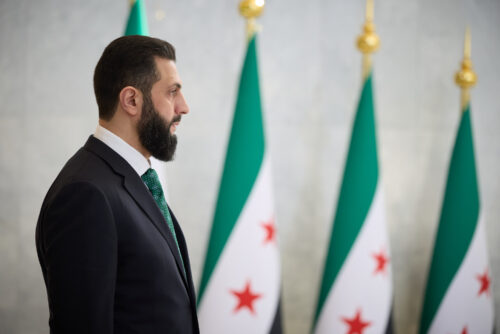
As Syria moves toward reconstruction, the country’s new authorities have already made a consequential decision about who will control the postwar economy. Last June, President Ahmed al-Sharaa enacted Investment Law 114 by presidential decree, granting sweeping and permanent concessions to investors. Yet rather than make those incentives broadly accessible, the law preserves the country’s longstanding model of state-mediated market access.
MENA Energy Recap, Q1-2026: Four Lessons From the Return of Tail Risk
This is a special edition of the MENA Energy Recap — a quarterly review of key energy developments that took place in the region from January through March of 2026 and what they signal in the months ahead. For Q1-26, the recap considers some of the long-term implications of the ongoing war in the region, which have caused the largest energy supply disruption in history, and what lessons these events hold for both near- and long-term energy dynamics in both the Middle East and the wider world.
The Far Reach of the Iran War: Food Insecurity from North Africa to the Sahel
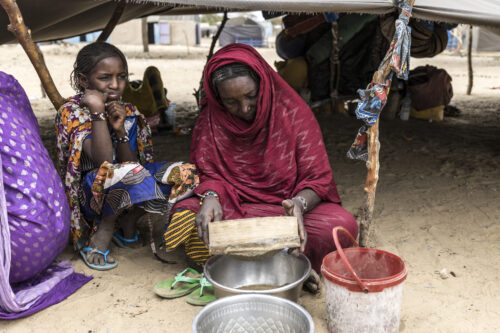
Within weeks of the Strait of Hormuz closure, fertilizer prices began to rise sharply. Tanker traffic through the strait, which handles one-third of the global fertilizer trade, fell by 90%. Across North Africa the impacts are multiplying, and this is having ripple effects for the Sahel in the south, adding to food price inflation, migration pressures, and the erosion of state legitimacy. The situation underscores how food security is a governance issue compounded by geopolitical crisis.
Fixing America’s Failed Strategies in the Middle East
The Middle East is both central to key United States interests and prone to instability. Yet US national security and defense strategic guidance has struggled to account for the unique demands of the region. Calls for strategic divestiture from the region have grown in prominence among analysts and policymakers alike in recent years.
From Hormuz to the Sahel: A Fertilizer Shock, and a Maghreb Solution
The war-time disruptions of international shipping passing through the Strait of Hormuz are spreading through the fertilizer market and affecting supply chains encompassing regions that have no margins to absorb the impact. The Sahel is one such region and now faces a severe threat of widespread hunger.
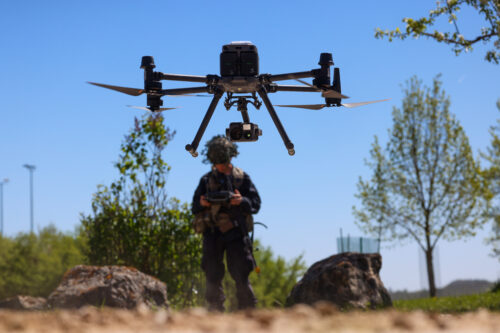
For two decades, US drones hunting terrorists across the mountains of South Asia were the symbol of American military power: precise, lethal, and unmatched. That era is now over. Drones are no longer exquisite tools of counterterrorism and have evolved into something far more common and destabilizing: cheap, expendable, and mass-produced tools of attrition.
China’s Model of Power Projection in the Middle East
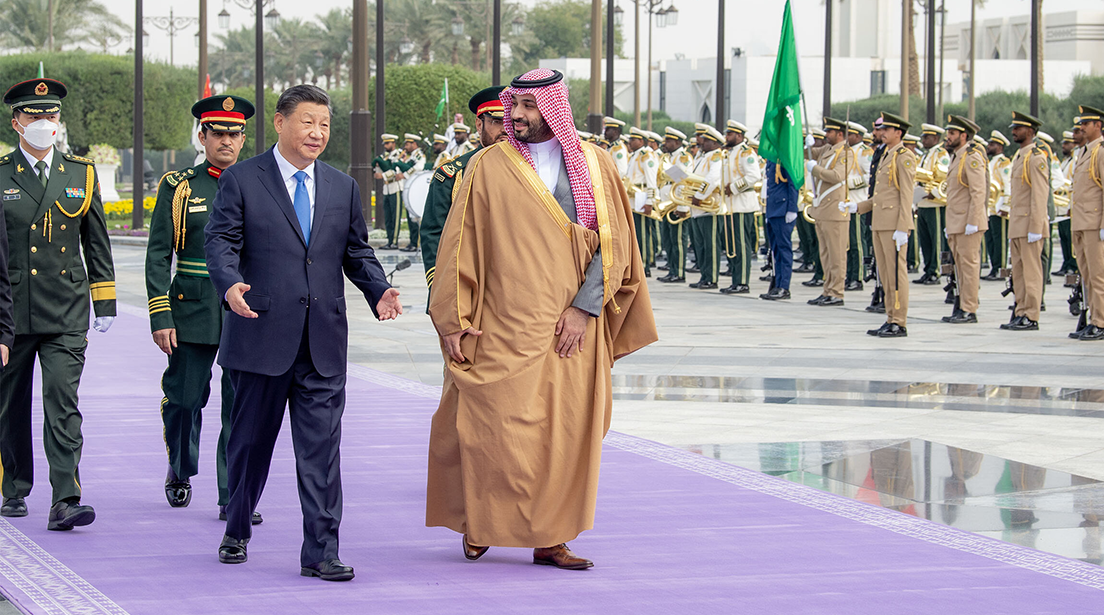
China’s expanding role in the Middle East is often framed as geopolitical rivalry with other global powers, including the United States, Russia, India, and others; but this lens obscures the strategic subtlety of Beijing’s approach.