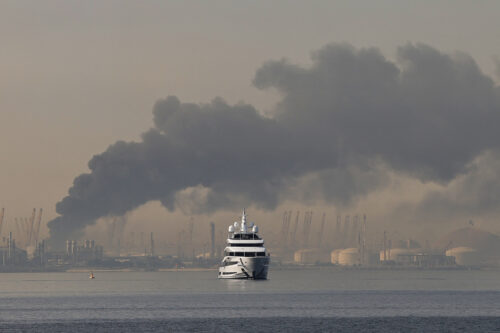
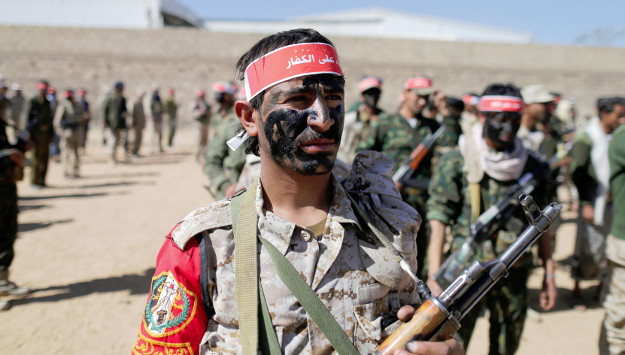
In recent weeks, the Iran-backed Houthis have fired missiles and drones deep into Saudi Arabia, striking high-profile targets, including Riyadh’s airport and Aramco’s headquarters. The attacks follow a rapid Houthi offensive in September to seize key parts of Yemen’s Red Sea coast, which Saudi-backed government forces are now trying to roll back. Fatima Abo Alasrar, an affiliated scholar at MEI and non-resident scholar at the Arab Gulf States Institute, joins hosts Alistair Taylor and Matthew Czekaj to unpack the latest phase of the conflict. They discuss what the Houthis want, Riyadh’s calculus and search for allies, and how this campaign ties into Iran’s confrontation with the United States.
Geopolitical influence over trade increasingly rests on controlling the systems that make them work. The Middle East illustrates the stakes. US ports, cable corridors, cloud facilities, artificial intelligence (AI) investments, and maritime routes connect regional economies to global commerce while exposing them to external decisions and disruptions. For the United States, the challenge is to translate technological advantage into resilient networks rather than rely on centrality that can itself become a source of vulnerability and coercion.
Bonus Episode: Previewing Israel’s First Post-October 7 Election
Israel is preparing to hold what may be its most consequential election in decades. On October 27, Prime Minister Benjamin Netanyahu will face his first electoral test since October 7, 2023. In this bonus episode of Middle East Focus, we present the audio from a recent MEI webinar, hosted in Israel on the eve of the vote. Senior Fellow Natan Sachs is joined by Dr. Shira Efron, Distinguished Chair for Israel Policy and senior fellow at the RAND Corporation, and Neri Zilber, veteran journalist and Financial Times correspondent. They explore what’s at stake in this historic election and how different outcomes could reshape Israel’s domestic politics and the wider region.
Since 1967, Israeli settlements in the West Bank have been a contested feature of the Israeli-Palestinian conflict. The ultimate disposition of the settlements and ongoing activity related to their growth have repeatedly defied agreement in negotiations over a resolution to the conflict.
The Houthis are a political-military faction and Zaydi religious movement founded in northwestern Yemen in the 1980s. A key member of Iran’s Axis of Resistance with links to other militant organizations in the Arabian Peninsula and the Horn of Africa, the group has continued to pose a threat to Western interests on a global scale.
The India-Middle East-Europe Economic Corridor (IMEC) is a proposed multinational infrastructure initiative aimed at upgrading connectivity between the three regions through integrated trade, energy, and digital networks. Announced at the G20 summit in New Delhi in September 2023, IMEC is envisioned partially as a counterweight to China’s international infrastructure project, the Belt and Road Initiative.
After a decade of post-Arab Spring isolation, Turkey’s leaders have recognized that their ambition to position the country as an agenda-setter on the world stage requires active engagement in all directions. President Recep Tayyip Erdoğan’s consolidation of executive authority has centralized foreign policy decision-making and tied it to his domestic political priorities, transforming the country’s revisionist approach to one shaped primarily by personal and pragmatic interests.
MEI Senior Fellow Brian Katulis engages friends, colleagues, and policy experts in casual conversations on the most important happenings in the Middle East.
Saudi Arabia jails two on charges of working with Iran and Iraqi Hezbollah to attack Eastern Province
The Criminal Court of Riyadh today sentenced two Saudi citizens on charges of engaging in acts of terrorism and conspiring with Iran and its regional proxies to destabilize Saudi Arabia, the Arab press reported.
Domestic and International Considerations in China's “Halalification” (清真乏化)
This article explores Chinese eagerness to join and dominate the global Halal market via the Belt and Road Initiative (BRI). Secondly, it examines why the state selected the Hui Muslims of Ningxia, rather than the larger community of Uyghurs in Xinjiang, to lead Sino-Muslim world trade. This section introduces model minority theory to assess Chinese government policy. Third, the article assesses the potential conflict between the Chinese export strategy with growing domestic resentment toward increasingly visible Halal segregation.
A rare prospect for peace has come into sight in Afghanistan in the wake of Afghan President Ashraf Ghani’s bold offer to the Taliban. In a sweeping proposal, and for perhaps the first since the U.S.-led invasion of Afghanistan in 2001, Ghani suggested a cease-fire, removal of sanctions, prisoner release, recognition of the Taliban as a political party, fresh elections and a constitutional review. Speaking at the Kabul Process, a two-day Western-backed peace conference, Ghani has demonstrated remarkable boldness and vision.
Iranian clerics in Qom feel insecure amid rising popular anger
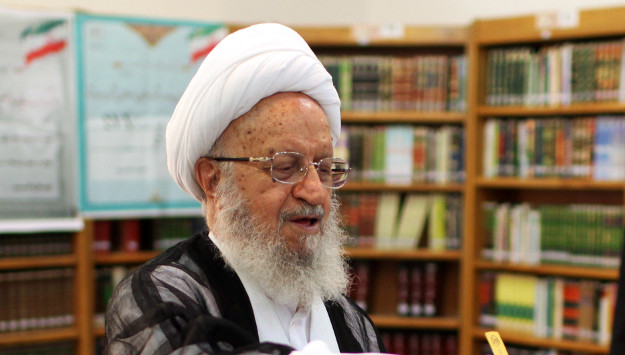
Ayatollah Naser Makarem Shirazi, a prominent Iranian Shiite religious leader, has called on authorities to prevent “infiltrators” from entering Iran’s holy city of Qom, Radio Fardo reported today. Shirazi, who is based in Qom and had requested a “special budget” for the city a few months ago, said on Monday that the govenrment needs to pay more attention to Qom than any other city in the country.
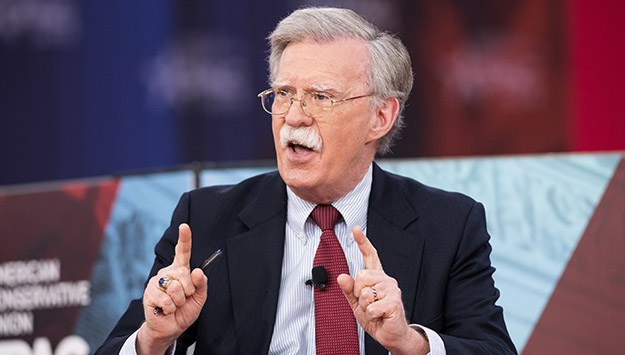
In this week’s Monday Briefing, MEI experts Paul Salem, Bilal Y. Saab, Gerald Feierstein, Gonul Tol, and Ibrahim al-Assil provide analysis on recent and upcoming events including the appointment of John Bolton to national security advisor, the Houthi missile attack on Riyadh, Egypt’s regressive referendum, the Yemeni war’s third anniversary, EU-Turkey diplomacy, and the worsening crisis in Ghouta.
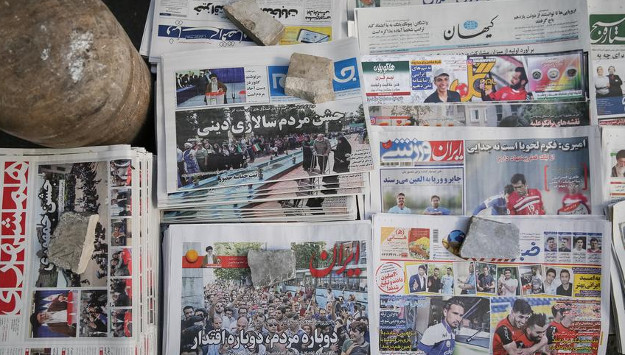
Mashregh News, a conservative Iranian outlet, quotes Mozahem al-Havit, a spokesman of the Arab Bedouins in Nineveh Governorate in Iraq, as saying that the United States has established its “largest” military base in Iraq and plans to install four mo
Tehran’s ambassador to Baghdad meets with militia leader to discuss Iraq and Syria
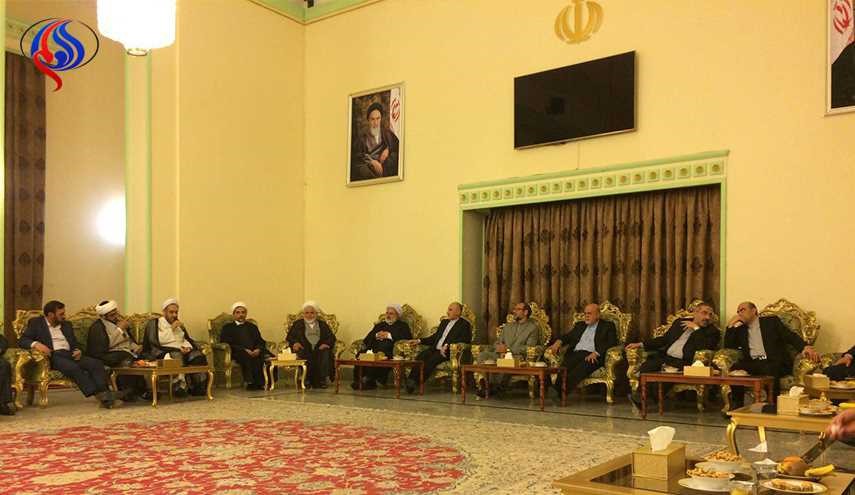
Tehran’s Ambassador to Baghdad Iraj Masjedi held a meeting with the leader of Harakat al-Nujaba, an Iraqi militia group fighting in Iraq and Syria, to discuss Iraqi and regional issues,
IRGC outlet backs latest Houth missile attacks against Saudi Arabia
emen’s Houthi rebels fired at least seven missiles into Saudi Arabia on Sunday, hitting different targets including the capital city of Riyadh, according to
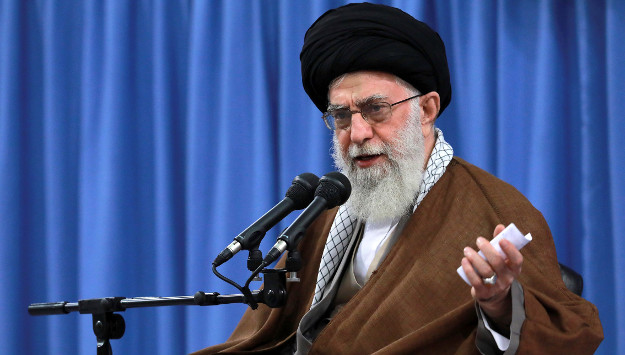
Khamenei defends Iran’s regional military interventions in New Year speech
Supreme Leader Ali Khamenei’s March 21st New Year address mostly dwelt on domestic political issues. But the Iranian leader also made a few references to the most pressing foreign and security issues, none of which bode well for Iran’s relations with the United States. Moreover, Khamenei tried to calm growing public anger amongst Iranians about the country’s costly military interventions in the Middle East.
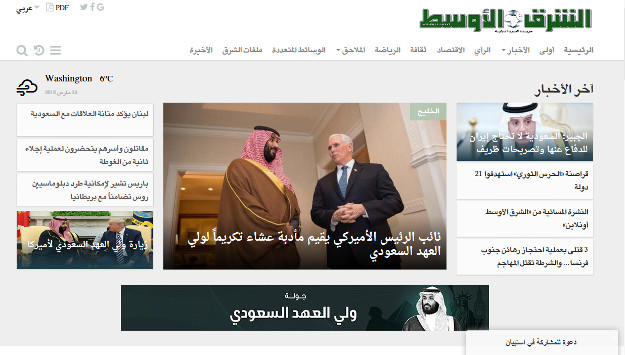
Iran-Backed Iraqi militia group calls for closure of Arab daily Asharq al-Awsat
A commander of the Iraqi paramilitary forces known as Hashd al-Shaabi has called for suspension of Asharq al-Awsat in Iraq, accusing the pan-Arab daily of propagating against the paramilitary forces. According Iran’s Fars News Agency, Karim al-Nouri, a commander of the Iranian-backed Badr Organization and a spokesman for Hashd al-Shaabi, was reacting to an article in the newspaper which warned about Hashd al-Shaabi turning into a Shiite-only organization in Iraq.
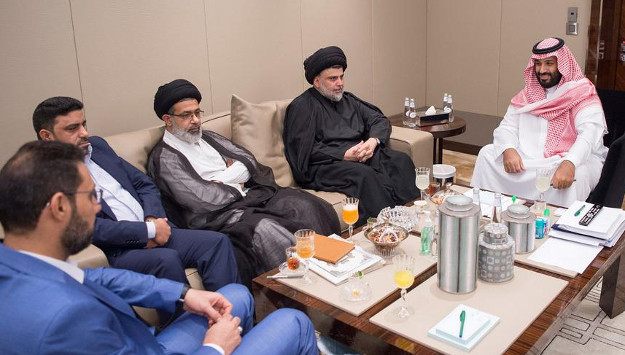
Saudi Crown Prince’s potential Iraq visit alarms Tehran and its allies
Recent media reports suggesting that Saudi Crown Prince Mohammad bin Salman plan to pay a historic visit to Iraq has alarmed Iran and its Iraqi allies. Baghdad and Riyadh have not confirmed the reports, but Iranian-backed politicians and militia commanders in Iraq have launched a campaign against the Crown Prince’s potential visit, rejecting latest steps by the Baghdad government to improve ties with Riyadh and questioning the timing of bin Salman’s trip ahead of the country’s parliamentary elections.
Mohammed bin Salman in Washington: Impact on U.S.-Saudi relations
Saudi Crown Prince Mohammed bin Salman passed through D.C. this week to sell his Vision 2030 roadmap for transforming the Saudi economy. Karen Young, senior resident scholar Arab Gulf States Institute in Washington, and Gerald Feierstein join host Paul Salem to discuss this, as well as other key policy issues affecting U.S.-Saudi relations, from the war in Yemen to the Kingdom’s internal crackdown on corruption.
Turkey-China Relations: From “Strategic Cooperation” to “Strategic Partnership”?
The blossoming of Turkey’s relations with China has occurred against the backdrop of Turkey’s apparent strategic estrangement from the West. But have Turkey and China succeeded in developing the full-blown “strategic partnership” envisaged in their 2010 joint communiqué? Relatedly, is Turkey on the verge of shedding its strategic links with the West in favor of consolidating them with China? This article aims to shed light on these two questions.
The oldest peer-reviewed publication dedicated to the study of the modern Middle East, MEI’s flagship journal covers politics, society, and culture in the region.