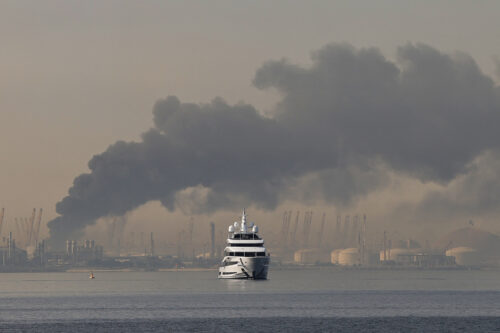
In recent weeks, the Iran-backed Houthis have fired missiles and drones deep into Saudi Arabia, striking high-profile targets, including Riyadh’s airport and Aramco’s headquarters. The attacks follow a rapid Houthi offensive in September to seize key parts of Yemen’s Red Sea coast, which Saudi-backed government forces are now trying to roll back. Fatima Abo Alasrar, an affiliated scholar at MEI and non-resident scholar at the Arab Gulf States Institute, joins hosts Alistair Taylor and Matthew Czekaj to unpack the latest phase of the conflict. They discuss what the Houthis want, Riyadh’s calculus and search for allies, and how this campaign ties into Iran’s confrontation with the United States.
Geopolitical influence over trade increasingly rests on controlling the systems that make them work. The Middle East illustrates the stakes. US ports, cable corridors, cloud facilities, artificial intelligence (AI) investments, and maritime routes connect regional economies to global commerce while exposing them to external decisions and disruptions. For the United States, the challenge is to translate technological advantage into resilient networks rather than rely on centrality that can itself become a source of vulnerability and coercion.
Bonus Episode: Previewing Israel’s First Post-October 7 Election
Israel is preparing to hold what may be its most consequential election in decades. On October 27, Prime Minister Benjamin Netanyahu will face his first electoral test since October 7, 2023. In this bonus episode of Middle East Focus, we present the audio from a recent MEI webinar, hosted in Israel on the eve of the vote. Senior Fellow Natan Sachs is joined by Dr. Shira Efron, Distinguished Chair for Israel Policy and senior fellow at the RAND Corporation, and Neri Zilber, veteran journalist and Financial Times correspondent. They explore what’s at stake in this historic election and how different outcomes could reshape Israel’s domestic politics and the wider region.
Since 1967, Israeli settlements in the West Bank have been a contested feature of the Israeli-Palestinian conflict. The ultimate disposition of the settlements and ongoing activity related to their growth have repeatedly defied agreement in negotiations over a resolution to the conflict.
The Houthis are a political-military faction and Zaydi religious movement founded in northwestern Yemen in the 1980s. A key member of Iran’s Axis of Resistance with links to other militant organizations in the Arabian Peninsula and the Horn of Africa, the group has continued to pose a threat to Western interests on a global scale.
The India-Middle East-Europe Economic Corridor (IMEC) is a proposed multinational infrastructure initiative aimed at upgrading connectivity between the three regions through integrated trade, energy, and digital networks. Announced at the G20 summit in New Delhi in September 2023, IMEC is envisioned partially as a counterweight to China’s international infrastructure project, the Belt and Road Initiative.
After a decade of post-Arab Spring isolation, Turkey’s leaders have recognized that their ambition to position the country as an agenda-setter on the world stage requires active engagement in all directions. President Recep Tayyip Erdoğan’s consolidation of executive authority has centralized foreign policy decision-making and tied it to his domestic political priorities, transforming the country’s revisionist approach to one shaped primarily by personal and pragmatic interests.
MEI Senior Fellow Brian Katulis engages friends, colleagues, and policy experts in casual conversations on the most important happenings in the Middle East.
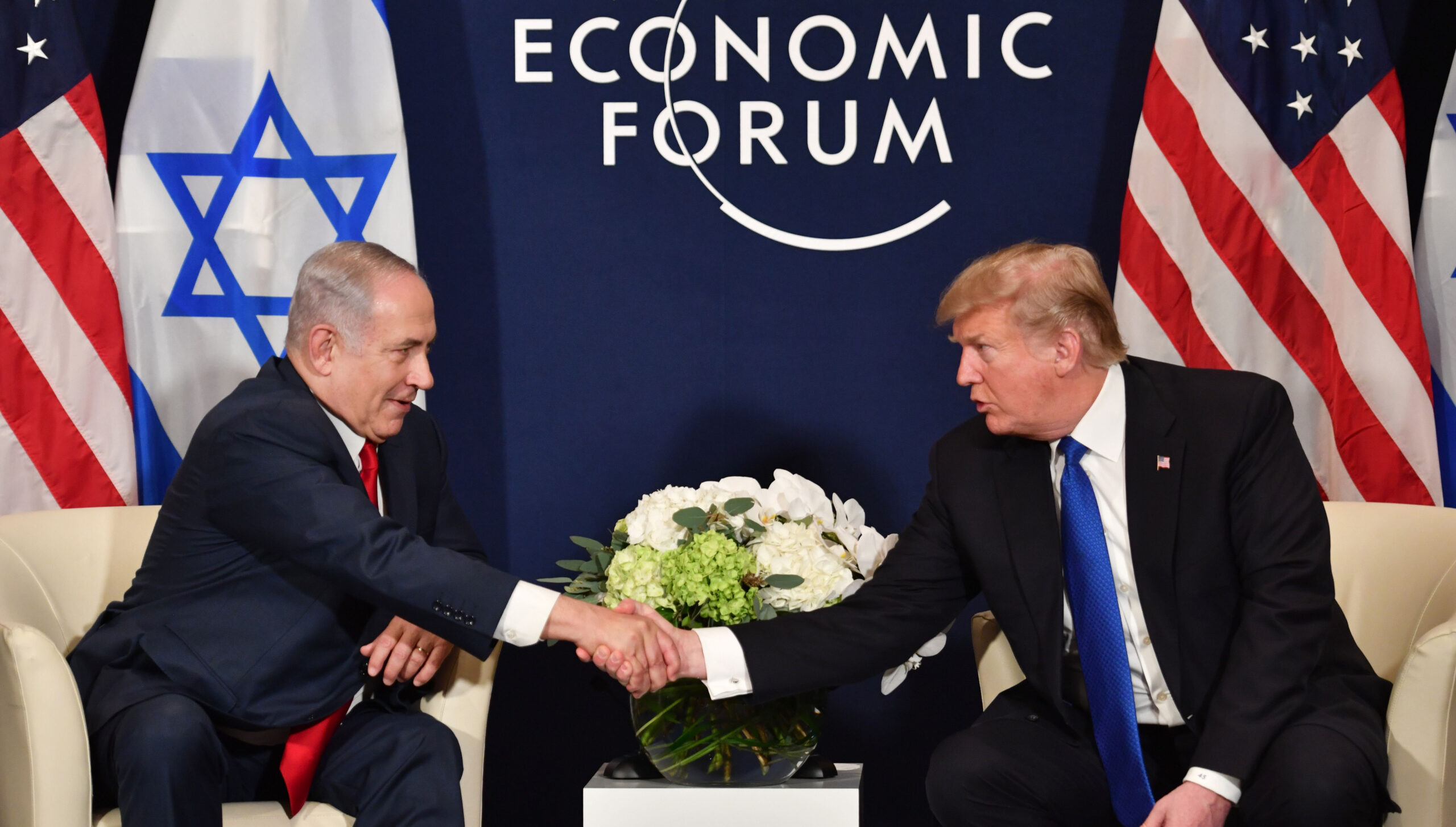
Monday Briefing: Trump and Netanyahu's ultimate deal
In this week’s Monday Briefing, MEI experts Eran Etzion, Gerald Feierstein, Marvin G. Weinbaum, and Gonul Tol provide analysis on recent and upcoming events including Netanyahu’s meeting with Trump, the Saudi Crown Prince’s first extended travel abroad, the Taliban’s call for peace negotiations with the U.S., and Turkey’s pivot to Africa.
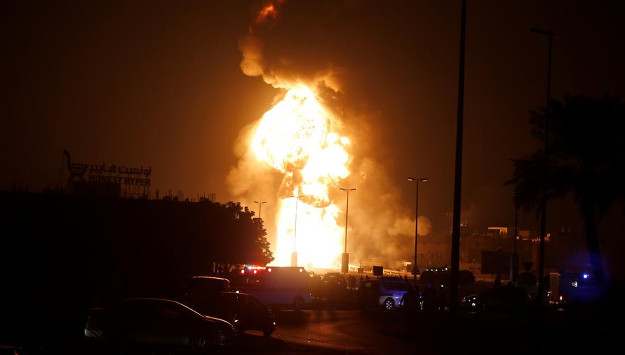
Bahrain says arrested 116 members of IRGC-established “terror cell”
The Bahraini government said on Saturday that its security forces had foiled a number of terrorist plots and arrested 116 people who were allegedly members of an armed group run by Iran’s Islamic Revolution Guards Corps (IRGC). “The Revolutionary Guards formed several terrorist organizations and brought them together under one umbrella,” a statement released by the Bahraini Interior Ministry said.
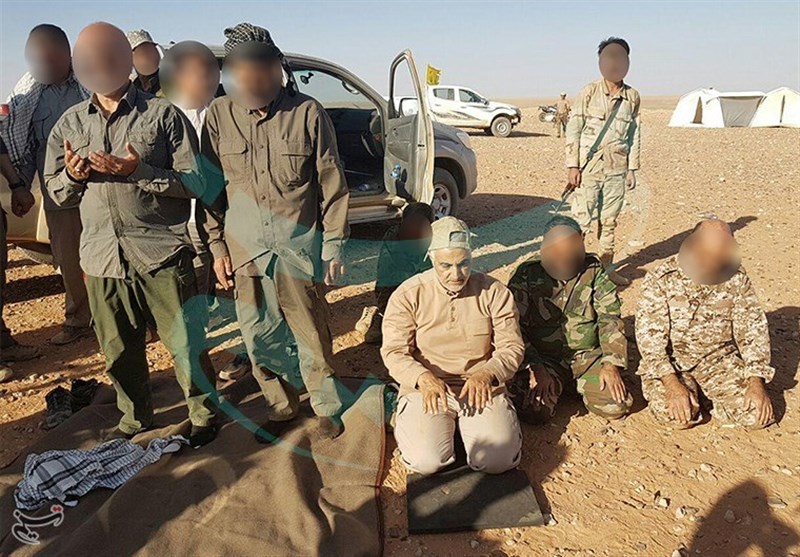
Afghans fear IRGC may deploy Fatemiyoun fighters to Afghanistan
On March 2, Mohammad-Hashem Esmat-Allahi, who served as a senior adviser to former President of Afghanistan Hamid Karzai, praised Afghan Shiite militiamen fighting in Syria.
The humanitarian disaster in Syria’s eastern Ghouta
The Damascus suburb of eastern Ghouta is the site of a humanitarian disaster unfolding day by day as the Syrian regime and its Russian and Iranian backers have maintained a massive aerial assault that has killed hundreds. MEI Fellows Ibrahim al-Assil and Charles Lister join host Paul Salem to discuss the conditions on the ground and what led to the campaign that has turned Ghouta into a “Hell on Earth.”
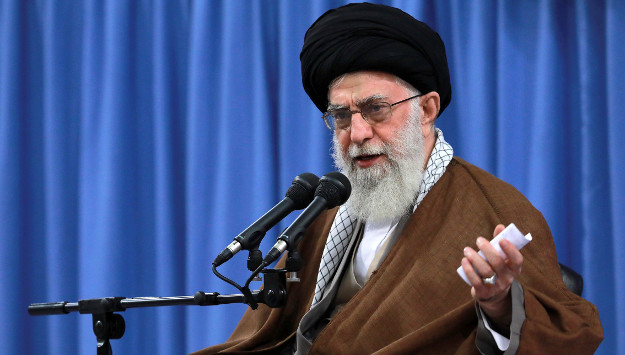
Khamenei praises Assad and vows “resistance front” will soon pray in Jerusalem
Iran’s Supreme Leader Ali Khamenei praised Syrian President Bahsar al-Assad as a “great fighter” and reiterated Tehran’s support for Syria as a “front line” state against the United States and Israel, the Iranian media reported. “Today, Syria is the front line. Therefore, it is our duty to support the Syrian resistance. Indeed, Mr. Bashar al-Assad emerged as a great fighter and stood up firmly and without hesitation.
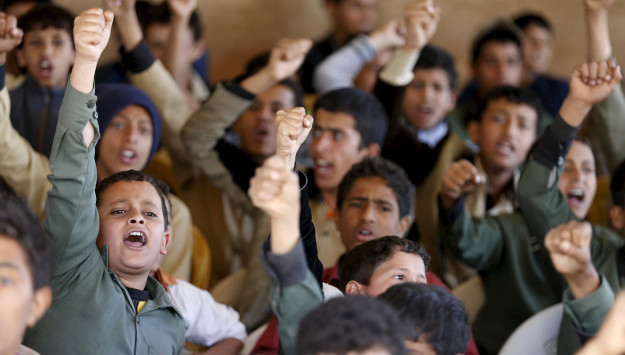
New Houthi-imposed university curriculum reportedly glorifies Iran, promotes sectarianism
A new academic curriculum introduced by the Houthi rebels in Yemen’s Sana’a University promotes sectarianism and glorifies the Houthis and their foreign allies in Iran, Lebanon and Syria, according to reports published in Al-Arabiya,
Revitalized coffee economy provides Yemen a boost amid conflict
Yemen’s national emblem depicts a relief of the Marib Dam, Yemen’s greatest manmade feature—and a coffee plant, Yemen’s most storied natural resource. This is no coincidence. Coffee drinking, as we know it today, originated in Yemen in the 15th century when Sufis discovered red coffee berries in the country’s mountain highlands.
Water crisis fueling tension between Iran and its neighbors
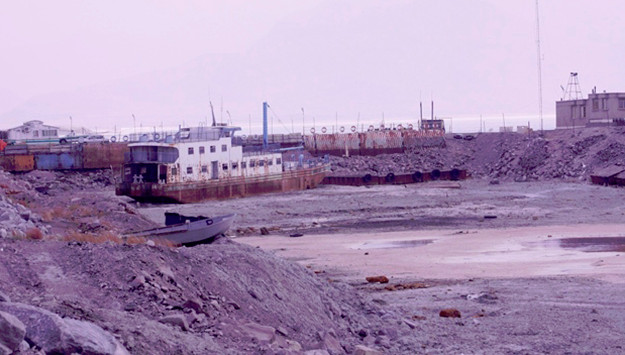
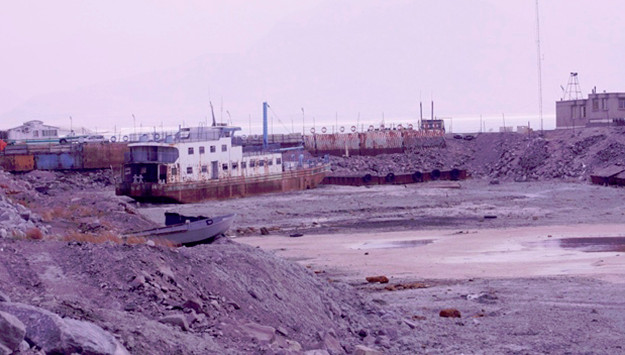
Iran’s growing water shortage and other environmental challenges have recently reached crisis point. Water scarcity and air pollution have not only triggered sociopolitical and security problems inside the country but have also caused tension between Iran and its neighbors. With the collapse of ISIS, Iran and Turkey are stepping up competition for the control of water in the region, while a potential effort by Tehran to severely restrict the flow of water into Iraq could create more problems for the war-torn country.
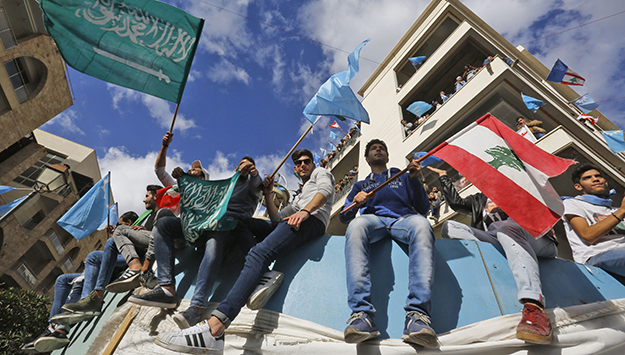
Reversing months of troubled relations, Saudi royal envoy Nizar al-Aloula arrived in Lebanon on Monday with messages of strong support for the country. He emphasized that Saudi Arabia sought strong and supportive relations with the Lebanese state and people, saying, “You will see a new approach from Saudi Arabia.” Aloula also extended an official invitation to Prime Minister Saad Hariri to visit Riyadh. Today Hariri is in Riyadh, where he met with King Salman and is due to meet with the crown prince.
“Iran has shared water [resources] with 12 neighboring countries. Drought can become a source of cooperation or friction,” Major General Yahya-Rahim Safavi, military adviser to Supreme Leader Ali Khamenei, said at the Water Diplomacy and Hydro-politics Conference on Tuesday.
The gravity of Safavi’s statement is best understood against the background of the water crisis in Iran and the country’s existing water disputes with neighboring countries.
Hizbut Tahrir in Indonesia: Riding the Wave of the Islamization Agenda
Over the past 20 years, Indonesia — the world’s fourth most-populous country and the largest Muslim-majority nation — has evolved into a democracy based on tolerance and a moderate interpretation of Islam, and has emerged as one of Asia’s fastest-growing economies. This essay is part of a series on “Indonesia and the Middle East: Exploring Connections,” which examines the nature, scope, and implications of Indonesia’s ties with the MENA region.
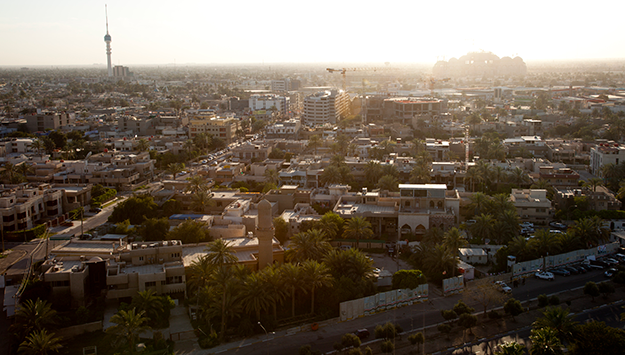
The Baghdad Declaration: good neighborhood principles for the Middle East
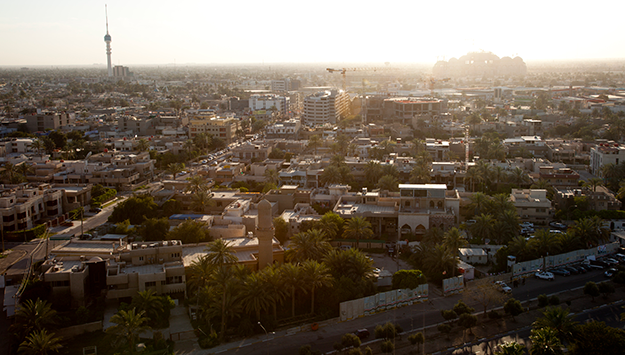
Over the course of the last three years, the Middle East Institute convened a regional dialogue involving participants acting in their personal capacities from Egypt, Iraq, Iran, Jordan, Lebanon, Saudi Arabia, Syria, United Arab Emirates and Turkey. The dialogue also involved participants from China, Europe, Russia and the United States. The discussions resulted in the following declaration of good neighborhood principles for the Middle East agreed in Baghdad 15-16 December 2017.
…….
The Middle East dialogue, which began its twice-a-year meetings in October 2012, convened its eleventh meeting in Baghdad 15-16 December. Participants included current and former officials and senior experts from Egypt, Iraq, Iran, Jordan, Lebanon, Saudi Arabia, Syria and United Arab Emirates as well as China, Europe, Russia, and the United States.
The oldest peer-reviewed publication dedicated to the study of the modern Middle East, MEI’s flagship journal covers politics, society, and culture in the region.