Curb Your Enthusiasm: Why the Midterms Might Not Change Much in US Middle East Policy
With less than a week before the midterm elections in the United States, the spotlight is on the economy and cultural divides. US foreign policy remains mostly on the sidelines, but this year’s inconclusive Iran war and its effect on America’s economy have shaped the broader political environment in this electoral cycle.
The Multiple Costs of the US–Iran War – From Hormuz to Europe and South Asia: The Widening Economic and Political Geography of the Conflict
Wars are decided by those who hold military power, but their costs are increasingly borne by those who have little or no voice in the decisions that start them. The US–Iran war shows this imbalance very clearly. Its economic consequences have gone far beyond the battlefield and have disrupted energy markets, trade routes, food supplies, public finances and investment in the Gulf, Europe, Africa and Asia. The most striking feature of the conflict, however, is not only the size of the damage but its very unequal distribution.
In recent weeks, the Iran-backed Houthis have fired missiles and drones deep into Saudi Arabia, striking high-profile targets, including Riyadh’s airport and Aramco’s headquarters. The attacks follow a rapid Houthi offensive in September to seize key parts of Yemen’s Red Sea coast, which Saudi-backed government forces are now trying to roll back. Fatima Abo Alasrar, an affiliated scholar at MEI and non-resident scholar at the Arab Gulf States Institute, joins hosts Alistair Taylor and Matthew Czekaj to unpack the latest phase of the conflict. They discuss what the Houthis want, Riyadh’s calculus and search for allies, and how this campaign ties into Iran’s confrontation with the United States.
Since 1967, Israeli settlements in the West Bank have been a contested feature of the Israeli-Palestinian conflict. The ultimate disposition of the settlements and ongoing activity related to their growth have repeatedly defied agreement in negotiations over a resolution to the conflict.
The Houthis are a political-military faction and Zaydi religious movement founded in northwestern Yemen in the 1980s. A key member of Iran’s Axis of Resistance with links to other militant organizations in the Arabian Peninsula and the Horn of Africa, the group has continued to pose a threat to Western interests on a global scale.
The India-Middle East-Europe Economic Corridor (IMEC) is a proposed multinational infrastructure initiative aimed at upgrading connectivity between the three regions through integrated trade, energy, and digital networks. Announced at the G20 summit in New Delhi in September 2023, IMEC is envisioned partially as a counterweight to China’s international infrastructure project, the Belt and Road Initiative.
After a decade of post-Arab Spring isolation, Turkey’s leaders have recognized that their ambition to position the country as an agenda-setter on the world stage requires active engagement in all directions. President Recep Tayyip Erdoğan’s consolidation of executive authority has centralized foreign policy decision-making and tied it to his domestic political priorities, transforming the country’s revisionist approach to one shaped primarily by personal and pragmatic interests.
MEI Senior Fellow Brian Katulis engages friends, colleagues, and policy experts in casual conversations on the most important happenings in the Middle East.
Top Iranian Military Official: It's Time to Teach America New Lessons
The deputy chief of staff of Iran’s armed forces has warned that his country will confront the Trump administration’s “aggressive policies” by “teaching America new lessons.” Hinting that Iran may take action against U.S. interests in the region, Brigadier General Massoud Jazzayeri emphasized that it is essential for Tehran to confront America’s “destabilizing behavior” in the region. “The era of America’s presence and domination in West Asia has come to an end,” he stressed, adding that the U.S.
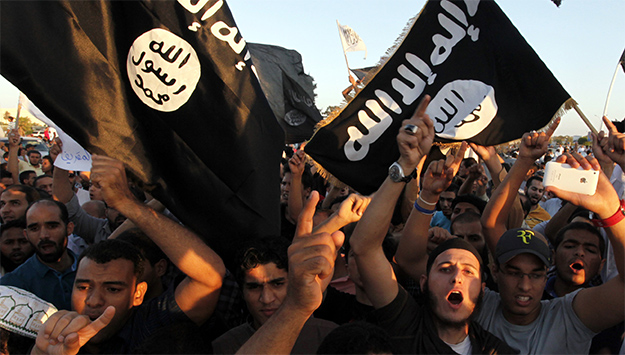
Killing in the Name of Air Time? Global Mass Media’s Representation of ISIS
The relationship between the mass media and terrorist outfits, particularly ISIS, as symbiotic; that is, terrorists provide bloody emotional news, which the mass media uses to sell their products. Another, less convincing but prevalent criticism of the press, is that the attention they accord terrorist groups fuels further violence. Still others argue that globalization of the mass media, in a sense, contributes to the spread and enhancement of terrorist outfits’ ability to extend their reach, even to countries as far afield as Southeast Asia. This essay shows that, on the contrary, global media’s skewed reporting of terrorism serves to manufacture popular revulsion of terrorist acts and opposition to jihadists’ agendas.
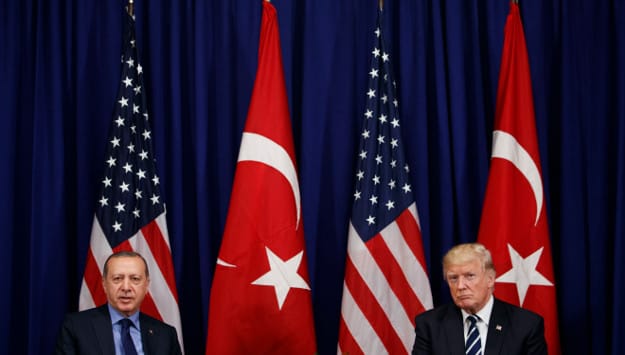
U.S.-Turkey Relations Hit All-Time Low | Weekly Briefing
In this week’s Monday Briefing, MEI experts Gonul Tol, Ibrahim al-Assil, Amal Kandeel, and Jonathan M. Winer provide analysis on recent and upcoming events including the diplomatic row between Turkey and the United States, the arrival of Turkish troops in Idlib, Morocco’s establishment of a national water security strategy amid climate concerns, and the resumption of talks on the Libya Political Agreement in Tunis.
The Trump administration has decided to lift most sanctions on Sudan, according to a report in the Washington Post, October 6. The move reflects a range of administration priorities, including a desire to isolate North Korea further as well as to use sanctions relief rather than the sanctions themselves to leverage additional Sudanese reforms.
The view from El Gouna, the luxury Red Sea resort constructed in the late 1980s by Egyptian business tycoon Samih Sawiris, can be misleading. The plush yachts, pricey food menus and grand parties present an alternative reality to the financially-strapped, religiously conservative one of the capital. In other words, El Gouna is not Egypt. The industry’s muted, skeptic reaction to the establishment of an international film festival in Hurghada’s most affluent town this year was thus quite expected.
Iran Rejects Reports on Possible Talks over Its Missile Program
Iran’s Foreign Ministry rejected media reports on Iran’s willingness to negotiate its missile program with the United States. Baharm Ghassemi, the ministry’s spokesman, said the Iranian government vehemently refutes claims made in a Reuters report that Tehran was ready to negotiate parts of its controversial missile activities.
An article in state-run Islamic Republic News Agency (I.R.N.A.) analyzes Tehran’s options if the United States unilaterally abandons the Joint Comprehensive Plan of Action – the nuclear agreement Iran signed with world powers in July 2015. It points out that the Trump administration appears to be refusing to certify Iran’s compliance with the J.C.P.O.A. despite objections from the other signatories of the deal – Germany, France, Britain, Russia and China.
Debate in Iran over Europe as Reliable Partner in Nuclear Standoff
As the Trump administration is threatening to walk away from the Iran nuclear agreement, an intense debate is taking place inside Iran about whether the Islamic Republic can count on Europe as a reliable partner against Washington’s “unilateralism.” During Friday prayers in Tehran today, Ayatollah Ahmad Khatami, a member of Iran’s Assembly of Experts, called on the Rouhani government “not to rely on European support because if Europe has to choose between Iran and America, it will choose America.” He accused Washington of
Zarif: Iran Will Always Be Iraqi Kurds’ Friend despite “Strategic Mistake”
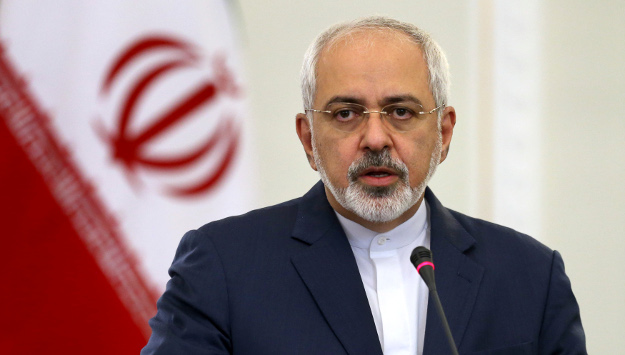
Iranian Foreign Minister Mohammad Javad Zarif today attended the funeral procession of Jalal Talabani, Iraqi Kurdish leader and former President, in the Sulaymaniyah city of Iraqi Kurdistan.
On September 25 Iraq’s Kurdish region pressed ahead with a controversial independence referendum. It had a high voter turnout of 73%, 93% of whom voted in favor of independence. The referendum is technically non-binding but it has sparked a political crisis with threats of action against the Kurdish region from its neighbors, Turkey and Iran, as well as Iraq’s central government. The United States also opposed the vote. MEI experts Randa Slim, Gonul Tol, and Ahmad Majidyar join host Paul Salem to discuss the implications of the vote and what happens next.
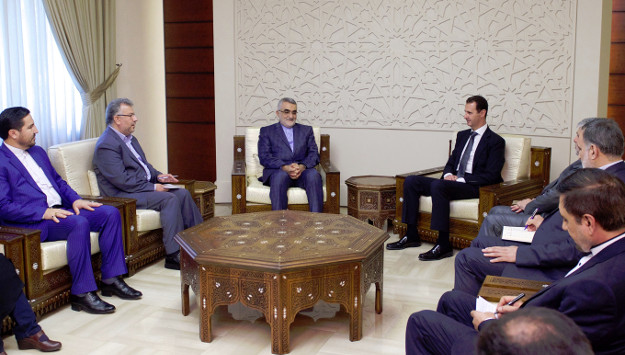
Iranian Lawmakers Praise Assad for "Defeating" U.S. and Israel in Syria
A senior Iranian parliamentary delegation visited Damascus and held talks with Syrian President Bashar al-Assad earlier today, the Iranian media reported. Alaeddin Boroujerdi, the chairman of the parliament’s national security and foreign policy committee, described Syria as a key pillar of the so-called “resistance front” against the United States and congratulated the Syrian president for the latest territorial gains by the Syrian Army and its foreign allies.
Top Iranian Nuclear Official: Tehran Won’t Renegotiate Nuclear Deal
Ali Akbar Salehi, the head of the Atomic Energy Organization of Iran, said today that Tehran will not renegotiate the Joint Comprehensive Plan of Action – the nuclear accord Iran signed with world powers in July 2015. “Some want to have J.C.P.O.A.’s technical dimensions renegotiated, but this agreement is not open for negotiation,” he said in an interview with an Iranian state-run news agency.
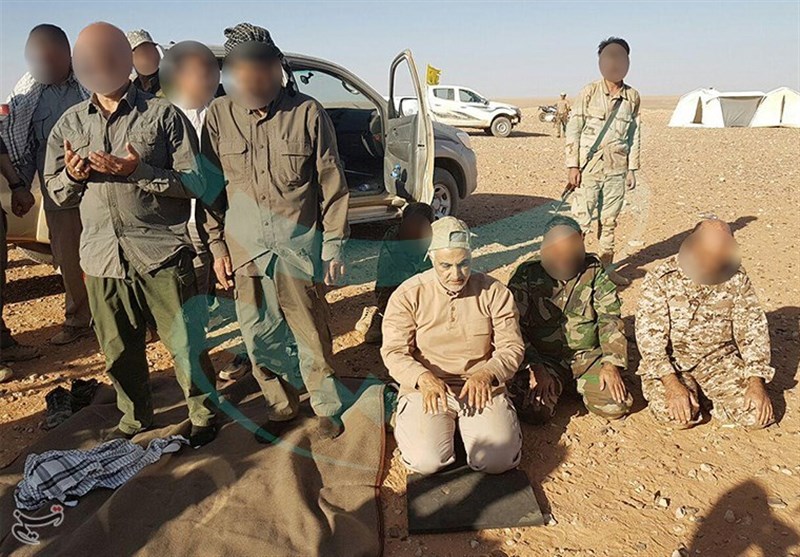
Fatemiyoun: We’ll Capture Al-Mayadin and Abu Kamal to Fulfill Soleimani’s Promise
Afghan Shiite militias fighting in Syria have made significant gains in military operations against the Islamic State in Deir Ezzor Province, the Iranian media reports.
Kurdish Vote Brings Iran, Turkey Closer as Erdogan Visits Tehran
When Turkish President Recep Tayyip Erdogan held “strategic talks” with his Iranian counterpart Hassan Rouhani and Supreme Leader Ali Khamenei in Tehran today, three topics topped the agenda: Iraq, Syria and trade. The two sides agreed to assist the Baghdad government in preventing Iraqi Kurdistan from declaring independence, continue to cooperate closely in Syria to reduce violence and fight terrorism, and triple the current volume of trade between the two countries in the near future.
The oldest peer-reviewed publication dedicated to the study of the modern Middle East, MEI’s flagship journal covers politics, society, and culture in the region.