Curb Your Enthusiasm: Why the Midterms Might Not Change Much in US Middle East Policy
With less than a week before the midterm elections in the United States, the spotlight is on the economy and cultural divides. US foreign policy remains mostly on the sidelines, but this year’s inconclusive Iran war and its effect on America’s economy have shaped the broader political environment in this electoral cycle.
The Multiple Costs of the US–Iran War – From Hormuz to Europe and South Asia: The Widening Economic and Political Geography of the Conflict
Wars are decided by those who hold military power, but their costs are increasingly borne by those who have little or no voice in the decisions that start them. The US–Iran war shows this imbalance very clearly. Its economic consequences have gone far beyond the battlefield and have disrupted energy markets, trade routes, food supplies, public finances and investment in the Gulf, Europe, Africa and Asia. The most striking feature of the conflict, however, is not only the size of the damage but its very unequal distribution.
In recent weeks, the Iran-backed Houthis have fired missiles and drones deep into Saudi Arabia, striking high-profile targets, including Riyadh’s airport and Aramco’s headquarters. The attacks follow a rapid Houthi offensive in September to seize key parts of Yemen’s Red Sea coast, which Saudi-backed government forces are now trying to roll back. Fatima Abo Alasrar, an affiliated scholar at MEI and non-resident scholar at the Arab Gulf States Institute, joins hosts Alistair Taylor and Matthew Czekaj to unpack the latest phase of the conflict. They discuss what the Houthis want, Riyadh’s calculus and search for allies, and how this campaign ties into Iran’s confrontation with the United States.
Since 1967, Israeli settlements in the West Bank have been a contested feature of the Israeli-Palestinian conflict. The ultimate disposition of the settlements and ongoing activity related to their growth have repeatedly defied agreement in negotiations over a resolution to the conflict.
The Houthis are a political-military faction and Zaydi religious movement founded in northwestern Yemen in the 1980s. A key member of Iran’s Axis of Resistance with links to other militant organizations in the Arabian Peninsula and the Horn of Africa, the group has continued to pose a threat to Western interests on a global scale.
The India-Middle East-Europe Economic Corridor (IMEC) is a proposed multinational infrastructure initiative aimed at upgrading connectivity between the three regions through integrated trade, energy, and digital networks. Announced at the G20 summit in New Delhi in September 2023, IMEC is envisioned partially as a counterweight to China’s international infrastructure project, the Belt and Road Initiative.
After a decade of post-Arab Spring isolation, Turkey’s leaders have recognized that their ambition to position the country as an agenda-setter on the world stage requires active engagement in all directions. President Recep Tayyip Erdoğan’s consolidation of executive authority has centralized foreign policy decision-making and tied it to his domestic political priorities, transforming the country’s revisionist approach to one shaped primarily by personal and pragmatic interests.
MEI Senior Fellow Brian Katulis engages friends, colleagues, and policy experts in casual conversations on the most important happenings in the Middle East.
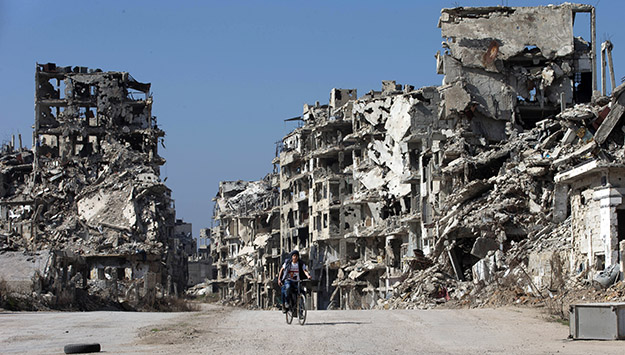
Debt-Ridden and Broke: The Syrian Regime’s Colossal Reconstruction Challenge
As the Syrian civil war—at least from Damascus’s point of view—enters its final stages, the Assad regime will likely begin looking beyond narrow military goals, and focus more on the socio-economic stability and viability of its captured statelet. After six years of war, the Syrian regime finds itself in a disastrous fiscal situation, unable to shift funds to meet humanitarian and stabilization needs.
Mosul Turning Ugly, Raqqa Front Slows | Monday Briefing
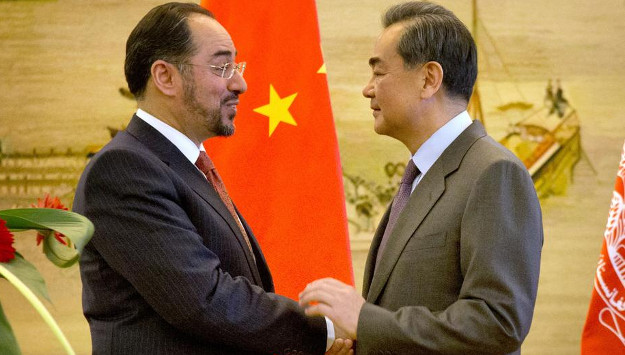
In this week’s Monday Briefing, MEI experts Charles Lister, Marvin G. Weinbaum, Yousef Munayyer, and Alex Vatanka provide analysis on recent events including the battle for Mosul, corruption in Pakistan, Mahmoud Abbas’s trip to China, and Rouhani’s difficult second presidential term.
Senior Cleric: No American Place in World Will Remain Safe If U.S. Commits Mistake
A senior Iranian cleric warned today that “no American place in the world will remain safe if the United States commits a mistake against Iran.” Ayatollah Mohammad Ali Movahedi Kermani, an interim Friday prayer leader of Tehran, told a large gathering of worshippers today that the United States aims to weaken the will of the Iranian people through economic pressure in order to get them to oppose the regime.
Iran-Backed Iraqi Group Seizes “Large” Areas in Southeastern Syria
The leadership of Harakat al-Nujaba, an Iranian-supported militia group fighting in Syria and Iraq, has announced that its forces have launched an operation to seize territory from the the Islamic State in southeast Syria near the shared border point with Iraq and Jordan. The statement released by the group said the paramilitary forces had captured “large parts” of southeastern desert in Syria, including “important” villages of Um al-Raheel, Abu Khashaba, and Berket al-Miyah.
With the Islamic State ousted from Mosul, several Iraqi parliamentarians and media outlets affiliated with the Islamic Revolution Guards Corps (I.R.G.C.) have called on the Rouhani government to “prepare the ground” for Iranian companies to play a larger role in the Iraqi city’s reconstruction process. “Iran must make efforts to actively participate in the rebuilding of Mosul and other war-ravaged cities of Iraq and export Iran’s technological and engineering services and other goods needed in Iraq.
Art has long been both an instrument for openly engaging in dialogue as well as an agent to force an overdue conversation. The installations of international artists, such as Dawn Weleski, Jon Rubin, Ai Weiwei, and Theaster Gates, all engage with social issues and help introduce new perspectives or dialogue. The fusion of art and socio-political commentary thrives especially in the Middle East, where unrestricted criticism of both government and cultural norms can be seen as heresy.
Egyptian Copts Under Attack: The Frailty of a National Unity Discourse
This essay discusses the recent spate of attacks upon and heightened sense of insecurity felt by Egyptian Coptic Christians. The essay focuses on Copts’ growing frustration with state authorities’ responses to their grievances.
Iran’s Islamic Azad University Plans to Open New Branches in Lebanon and Iraq
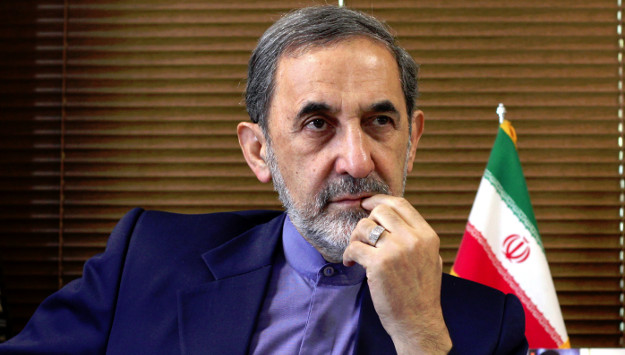
Iran’s Islamic Azad University (IAU) plans to open new branches in Lebanon and Iraq, according to Ali Akbar Velayati, the head of the university’s board of founders and an influential political figure in the Islamic Republic.
I.R.G.C. Asks Rouhani for Larger Role in Iran’s Economy
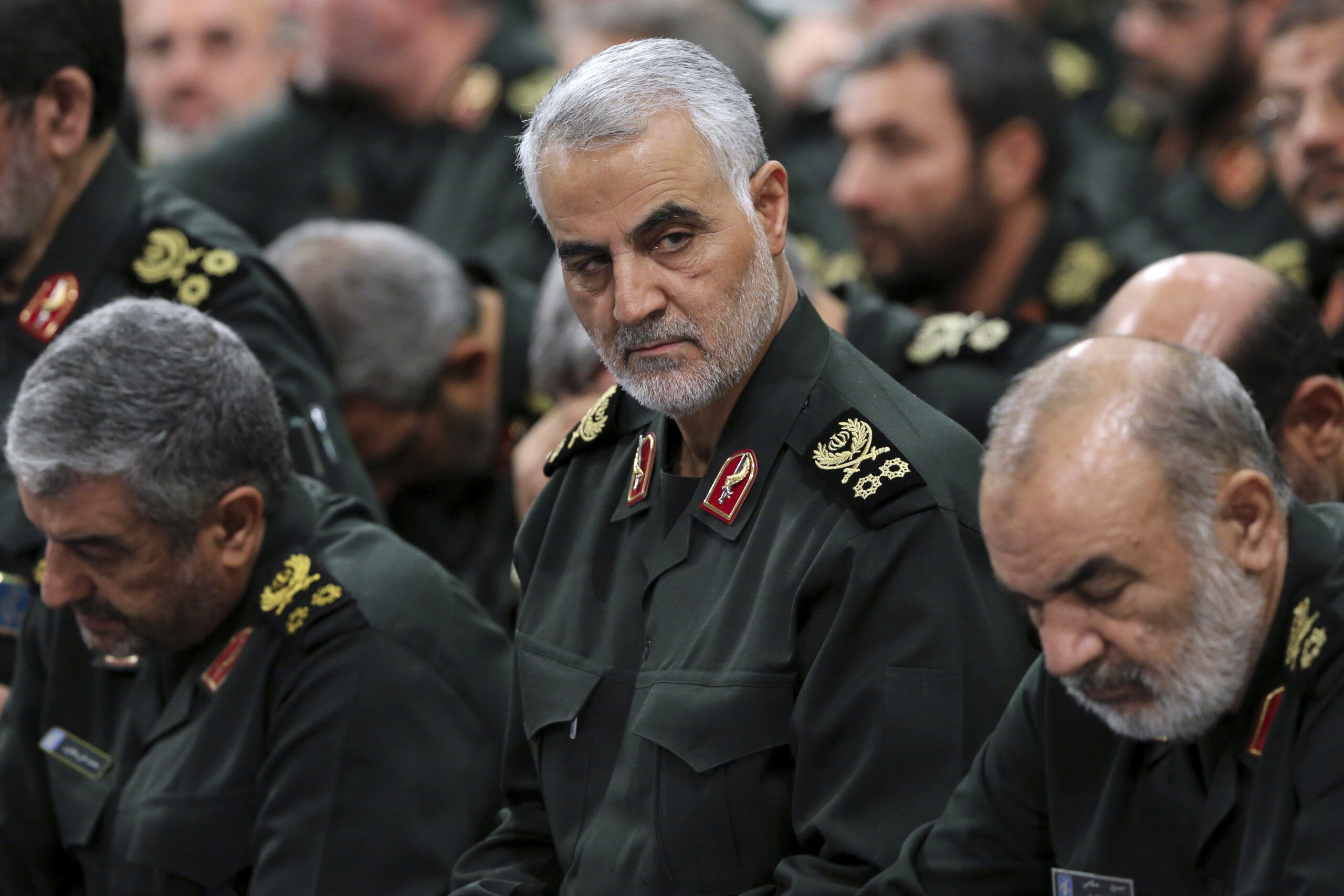
The chief commander of the Islamic Revolution Guards Corps (I.R.G.C.) has said that his forces are actively involved in economic and developmental projects across the country and stressed that the I.R.G.C. is keen to further expand its role in the Iranian economy to create jobs and fight poverty.
Iran Vows to Respond to Trump Administration’s Regime Change Remarks
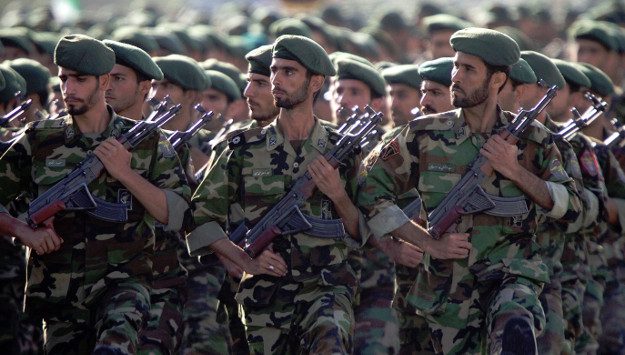
The deputy chief of Iran’s armed forces has warned that the Islamic Republic will take action against U.S. interests in the Middle Eastern region in retaliation to the Trump administration’s regime change remarks.
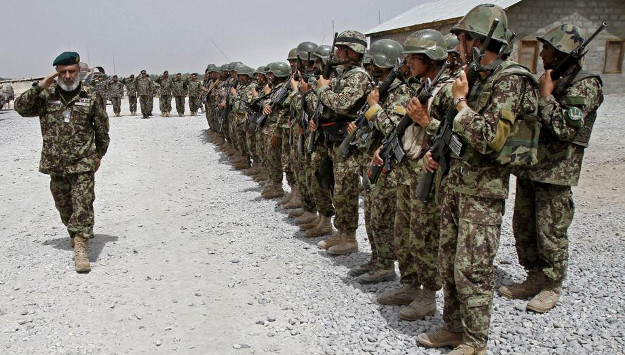
Geopolitical maneuvering, political disunity, endemic corruption, rudderless security apparatus and, most importantly, a confident Taliban movement supported by the Pakistani “deep state” make Afghanistan the most persistent trouble spot. Recent events in the country are dominated by increasing terrorist attacks against security forces and hapless citizens.
Rouhani Takes Credit for Enhancing Iran’s Military Capabilities, Aiding Iraq and Syria
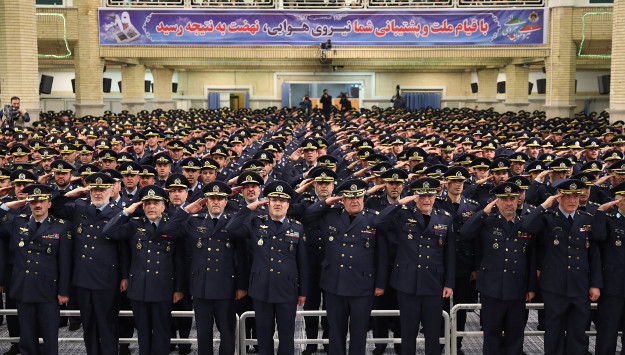
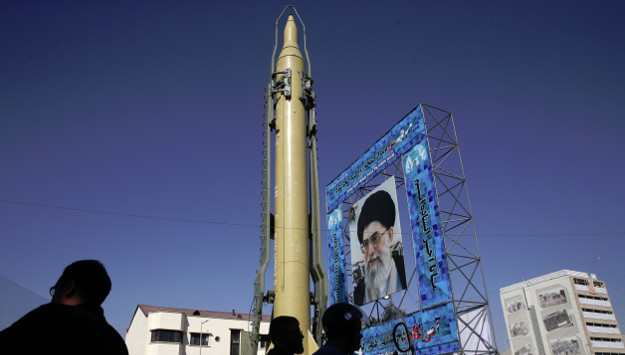
Iran’s President Hassan Rouhani has said that upgrading the country’s missiles and accelerating the production of “strategic weapons” have been among the greatest achievements of his government in the past four years.
The oldest peer-reviewed publication dedicated to the study of the modern Middle East, MEI’s flagship journal covers politics, society, and culture in the region.