Curb Your Enthusiasm: Why the Midterms Might Not Change Much in US Middle East Policy
With less than a week before the midterm elections in the United States, the spotlight is on the economy and cultural divides. US foreign policy remains mostly on the sidelines, but this year’s inconclusive Iran war and its effect on America’s economy have shaped the broader political environment in this electoral cycle.
The Multiple Costs of the US–Iran War – From Hormuz to Europe and South Asia: The Widening Economic and Political Geography of the Conflict
Wars are decided by those who hold military power, but their costs are increasingly borne by those who have little or no voice in the decisions that start them. The US–Iran war shows this imbalance very clearly. Its economic consequences have gone far beyond the battlefield and have disrupted energy markets, trade routes, food supplies, public finances and investment in the Gulf, Europe, Africa and Asia. The most striking feature of the conflict, however, is not only the size of the damage but its very unequal distribution.
In recent weeks, the Iran-backed Houthis have fired missiles and drones deep into Saudi Arabia, striking high-profile targets, including Riyadh’s airport and Aramco’s headquarters. The attacks follow a rapid Houthi offensive in September to seize key parts of Yemen’s Red Sea coast, which Saudi-backed government forces are now trying to roll back. Fatima Abo Alasrar, an affiliated scholar at MEI and non-resident scholar at the Arab Gulf States Institute, joins hosts Alistair Taylor and Matthew Czekaj to unpack the latest phase of the conflict. They discuss what the Houthis want, Riyadh’s calculus and search for allies, and how this campaign ties into Iran’s confrontation with the United States.
Since 1967, Israeli settlements in the West Bank have been a contested feature of the Israeli-Palestinian conflict. The ultimate disposition of the settlements and ongoing activity related to their growth have repeatedly defied agreement in negotiations over a resolution to the conflict.
The Houthis are a political-military faction and Zaydi religious movement founded in northwestern Yemen in the 1980s. A key member of Iran’s Axis of Resistance with links to other militant organizations in the Arabian Peninsula and the Horn of Africa, the group has continued to pose a threat to Western interests on a global scale.
The India-Middle East-Europe Economic Corridor (IMEC) is a proposed multinational infrastructure initiative aimed at upgrading connectivity between the three regions through integrated trade, energy, and digital networks. Announced at the G20 summit in New Delhi in September 2023, IMEC is envisioned partially as a counterweight to China’s international infrastructure project, the Belt and Road Initiative.
After a decade of post-Arab Spring isolation, Turkey’s leaders have recognized that their ambition to position the country as an agenda-setter on the world stage requires active engagement in all directions. President Recep Tayyip Erdoğan’s consolidation of executive authority has centralized foreign policy decision-making and tied it to his domestic political priorities, transforming the country’s revisionist approach to one shaped primarily by personal and pragmatic interests.
MEI Senior Fellow Brian Katulis engages friends, colleagues, and policy experts in casual conversations on the most important happenings in the Middle East.
Iran-Controlled Militia Group Says U.S. Strike Won’t Alter War Trajectory in Syria
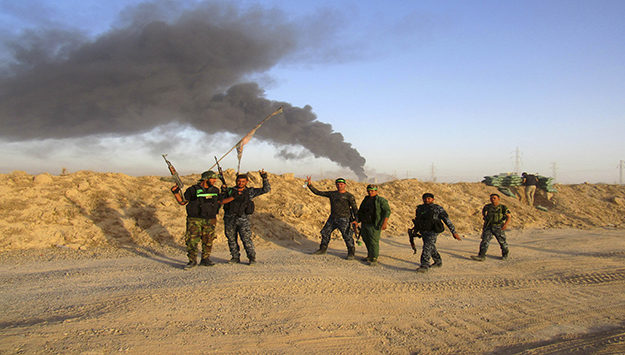
A prominent Iran-backed Iraqi militia group fighting in Syria has announced that the U.S. military strike will not change the trajectory of the Syrian war, the Iranian media reports.
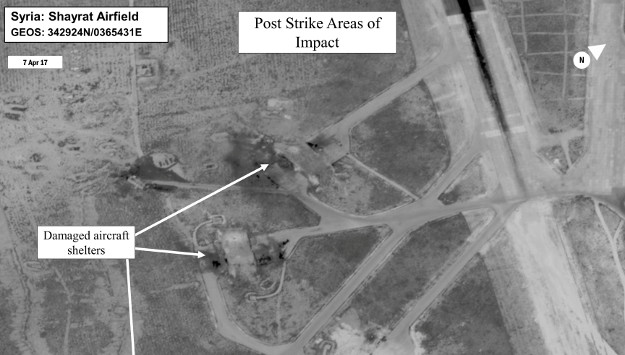
April 6, 2017 – Paul Salem explains three ways that the Syrian government’s use of chemical weapons against civilians is already impacting the Trump administration’s policy toward Syria.
While Iraq’s efforts to dislodge the Islamic State (ISIS) from Mosul have proceeded better than expected, the Iraqi political class must now face the complicated and divisive matters that it has failed to address for years. While the battle to liberate all of Iraq from ISIS is not over, three issues remain sources of tension: decentralization, the presence of foreign troops in the north, and the status of disputed territories such as Kirkuk, between the Kurds and the central government.
I.R.G.C. Media Defends Assad as U.S. Mulls Military Responses to Syrian Chemical Attack
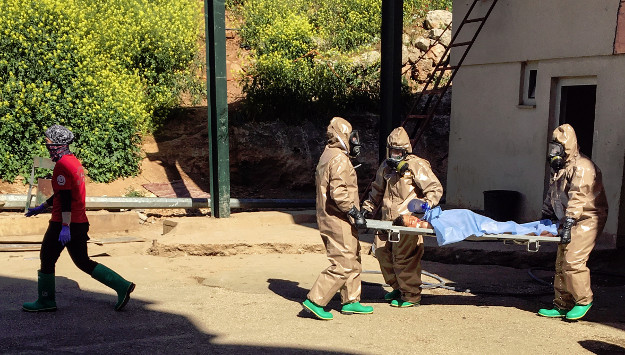
While more evidence is surfacing that suggests the Syrian army may have been behind the chemical attack that killed scores of civilians in Syria, Iranian media outlets affiliated with the Islamic Revolution Guards Corps (I.R.G.C.) continue to defend the regime of Bashar al-Assad. They argue that Damascus was not responsible for the killings. “Without doubt, the claims by Syrian opposition groups and some western and Arab countries that the Syrian army has used chemical weapons in Idlib can be categorically rejected.
Protecting India’s Interests in the Middle East: Militancy and Non-state Actors
This essay discusses the threat that ISIS has posed to India, which has significant stakes in the Gulf but remains an ambivalent presence in the region. The future trajectory of the world’s largest democracy’s relations with the Middle East remains a grey area, but one that in the future, could become a defining relationship for global security.
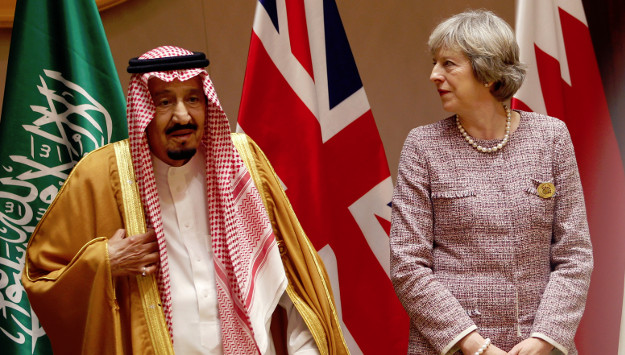
British Premier’s Remarks in Riyadh Prompt Angry Reaction from Tehran
The Iranian Foreign Ministry has reacted angrily to British Prime Minister Theresa May’s latest comments about Tehran’s destabilizing role in the Middle East, the ministry’s official website re
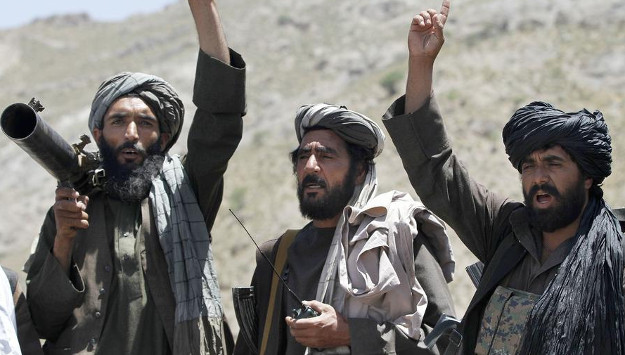
Afghan, Iranian Officials Spar over Tehran’s Support for Taliban
The Iranian and Afghan delegations to the 136th assembly of the Inter-Parliamentary Union have had acrimonious exchanges over Tehran’s support for the Taliban, the Iranian media reports.
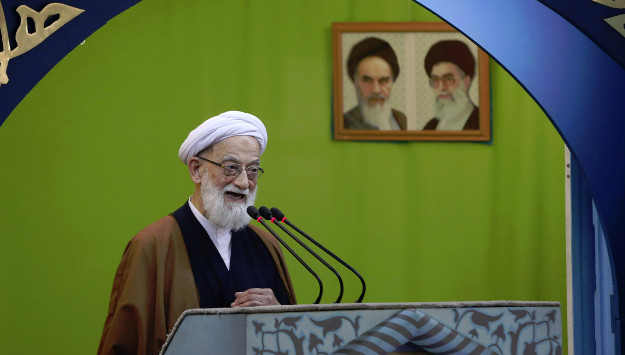
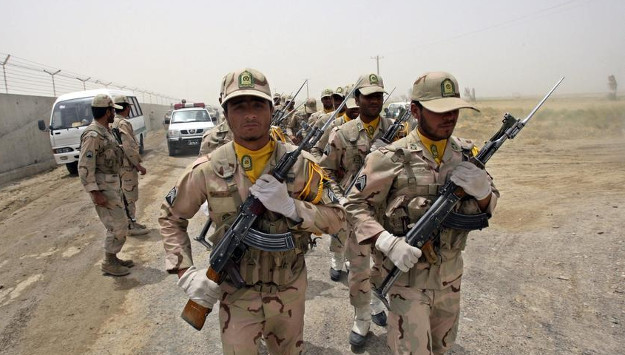
Authorities in Iran Detain Sunni Leader for Opposing I.R.G.C.’s Role in Syria
Scores of Sunni Balochs demonstrated in Iran’s southeastern Sistan and Baluchestan Province on Tuesday to protest the detention of a Sunni religious leader, the Iranian media reports.
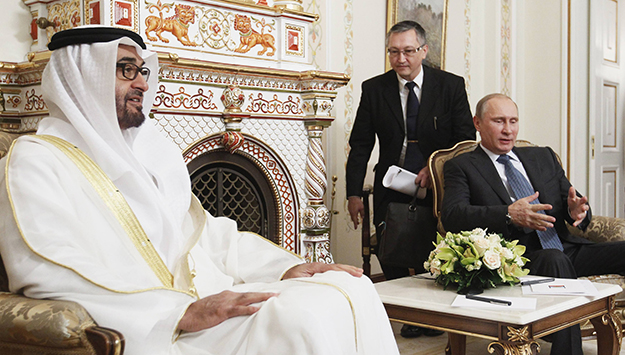
Russia and the United Arab Emirates (U.A.E.) are developing a unique bilateral relationship. The latest manifestation of growing ties occurred at the biennial International Defense Exhibition & Conference (IDEX) in February when Russia and the U.A.E. announced a deal to co-produce a fifth-generation jet fighter in the Emirates. Although Moscow and Abu Dhabi have been cooperating on a range of economic and security issues for years, this was an unprecedented move.
India has become Israel’s largest arms export market in the world over the last decade (replacing China); and Israel has become one of India’s largest arms supplier. Why did India develop a strong military partnership with a country it had ignored for 42 years? What can explain the development of defense ties in spite of limited political leadership involvement over the past decade? Finally, what are the prospects for defense relations as India grows to become one of the world’s largest defense importer? This essay answers these questions by providing an account of the evolution of Indo-Israeli defense cooperation over the past 25 years.
The oldest peer-reviewed publication dedicated to the study of the modern Middle East, MEI’s flagship journal covers politics, society, and culture in the region.