Israelis turned out in their highest numbers in decades on October 27 for the country’s first election since the Hamas attacks of October 7, 2023. Prime Minister Benjamin Netanyahu’s bloc lost 15 seats and its Knesset majority, but Gadi Eisenkot’s opposition bloc also fell short, leaving Arab parties, with a record 19 seats, potentially decisive in forming the next government. MEI Senior Fellow Natan Sachs joins hosts Alistair Taylor and Matthew Czekaj to unpack the results, the coalition math, and what comes next for Israel’s security policy, the wider region, and US-Israeli relations.
Recent Elections and What They May Mean for the Middle East
Recent elections for the Israeli Knesset and American Congress may make less of a difference in the Middle East than some people think. Elections are significant indicators of national political trends, but do not always translate into changes in national security strategies. That is likely the case now in both nations.
The Coming Debate Over the US Military Presence in the Gulf
The war with Iran is hardly over, but the debate over the shape and nature of the post-conflict American posture in the Gulf region is just beginning. Undoubtedly, how the war ends will affect how the United States adjusts its role. While this debate is still in its early stages, something of a conventional wisdom is already developing in policy circles that could seriously compromise American influence in the Middle East.
Since 1967, Israeli settlements in the West Bank have been a contested feature of the Israeli-Palestinian conflict. The ultimate disposition of the settlements and ongoing activity related to their growth have repeatedly defied agreement in negotiations over a resolution to the conflict.
The Houthis are a political-military faction and Zaydi religious movement founded in northwestern Yemen in the 1980s. A key member of Iran’s Axis of Resistance with links to other militant organizations in the Arabian Peninsula and the Horn of Africa, the group has continued to pose a threat to Western interests on a global scale.
The India-Middle East-Europe Economic Corridor (IMEC) is a proposed multinational infrastructure initiative aimed at upgrading connectivity between the three regions through integrated trade, energy, and digital networks. Announced at the G20 summit in New Delhi in September 2023, IMEC is envisioned partially as a counterweight to China’s international infrastructure project, the Belt and Road Initiative.
After a decade of post-Arab Spring isolation, Turkey’s leaders have recognized that their ambition to position the country as an agenda-setter on the world stage requires active engagement in all directions. President Recep Tayyip Erdoğan’s consolidation of executive authority has centralized foreign policy decision-making and tied it to his domestic political priorities, transforming the country’s revisionist approach to one shaped primarily by personal and pragmatic interests.
MEI Senior Fellow Brian Katulis engages friends, colleagues, and policy experts in casual conversations on the most important happenings in the Middle East.
With a major push from the U.S., a new Syrian peace conference opened Wednesday in Switzerland, the first such effort since the middle of 2012. It wasn’t easy getting everyone there, and it will be harder still to achieve a breakthrough.
Qanats and Water Cooperation for a Sustainable Future
This essay is part of the Middle East-Asia Project (MAP) series on “Harvesting Water and Harnessing Cooperation: Qanat Systems in the Middle East and Asia.”
Harvesting Water and Harnessing Cooperation: Qanat Systems in the Middle East and Asia
For centuries, human societies in drylands have overcome the challenge of water scarcity through traditional methods of water harvesting. The utilization of qanat technology is one of them.
Qanat is the generic term for an ancient environmentally sustainable water harvesting and conveyance technique believed to have originated in Persia in the early first millennium B.C.
The Necessity of Karez Water Systems in Balochistan
Land is infinite in Balochistan. It is the one place in South Asia where if you ask someone how much land they have, they will generally have no idea. Instead, it is water that matters. In Balochistan, social station is not determined by landholdings but by the size of one’s share of water in a karez. These manmade underground channels passively tap groundwater and provide the lifeblood of villages at the valley floor.
The water harvesting and underground transmission system called a karez in the Uygur language, or kan er jing in Mandarin, has provided sustainable water supplies in some communities of the Xinjiang Uygur Autonomous Region (Xinjiang), China for over 2,000 years. These water systems have also been used in countries in North Africa and West Asia, as well as other Asian countries, including Afghanistan, Iran, and Pakistan.
The Problem of Transitional Justice in Post-Suharto Indonesia
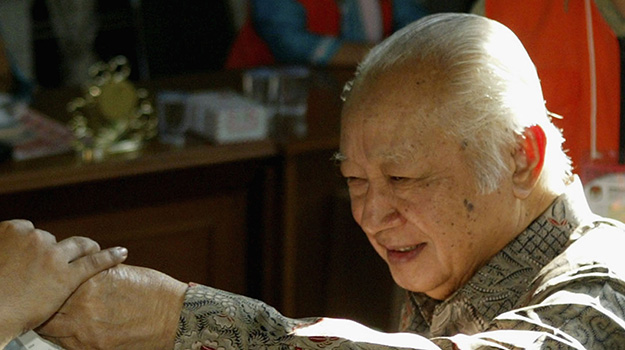
Transitional justice in Indonesia has largely failed. While exact definitions vary, transitional justice here refers loosely to the righting of past wrongs by holding perpetrators accountable for their actions. In Indonesia, neither Suharto nor any of the high-ranking officials of the New Order era have ever been put on trial or held accountable for human rights abuses during 32 years of authoritarian rule. In fact, no Indonesian has been successfully convicted for past abuses despite numerous attempts to do so.
The removal of Yemeni President Ali Abdullah Saleh in 2011 has created an existential crisis for Yemen’s Houthis. Like many other armed political groups in Yemen and elsewhere, the Houthis’ survival depends on the continued existence of an enemy. With Saleh gone, their raison d’être has become difficult to define and their armed opposition hard to defend.
Whereas many observers are lamenting the failure of the “Arab Spring,” Tunisia has proven once again that it is on a march toward democracy. On January 3, the National Constituent Assembly (NCA) began voting on the country’s new constitution. Lawmakers have approved many of the chapters and articles, and the final vote on the entire document should take place within a few days. Surprisingly, many of the controversial articles on state identity, the relationship between religion and politics, and gender equality have passed with a clear majority.
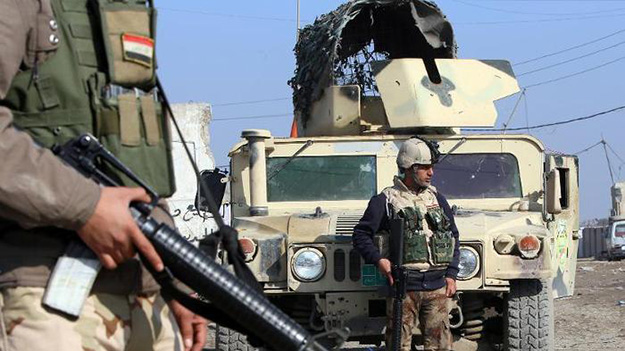
Since the departure of U.S. ground forces from Iraq in 2011 in the wake of failed negotiations to extend the 2008 Status of Forces Agreement, the security situation in Iraq has steadily declined. To many, the situation was predictable, as the absence of a residual U.S. force to mature the Iraqi security forces and moderate long-standing political tensions among the sects led to a security vacuum filled by extremists and terrorists. To others, 10 years of investment and over 4,000 troops lost was enough, and it was time for the Iraqis to resolve their own internal conflicts.
This article was first published on Al Jazeera on December 24, 2013.
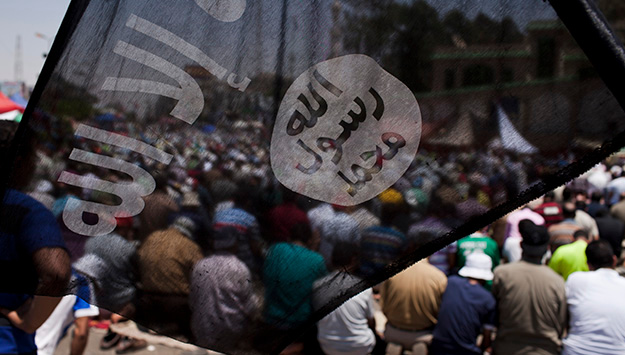
The downfall of Egypt’s Muslim Brotherhood (MB) has put political Islam at a crossroads. Not only has it shown that ideology per se is not a guarantor of political success, but also that Islamists need to rethink their strategy and tactics in order to deal with the new environment following the Arab Spring.
Cambodia’s traumatic history has often been used as a tool for power among rival politicians in the country, particularly when elections are approaching. This article, however, argues that due to the passage of time, such tactics in relation to the Khmer Rouge have started to lose ground, in particular owing to demographic redistribution, social media outreach, and changes in perception.
The following is an excerpt from “Iraq’s Tangled Foreign Interests and Relations,” written by MEI Vice President Paul Salem and published by the Carnegie Middle East Center on December 24, 2013. Click here to view the full report.
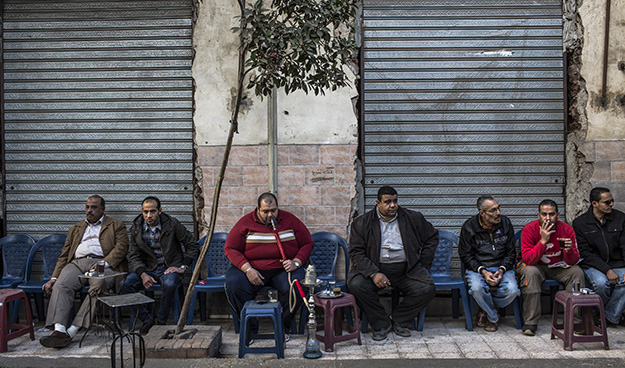
Samy M. has been providing currency exchange services on the black market in Cairo’s hectic neighborhood of Nasr City for nearly a decade. He does this from the crammed office of his other, formal business, which offers real estate services.
“Money exchange has always been lucrative, but it was even busier last year,” he says. With the Egyptian pound weak, hovering at around 6.9 pounds to the dollar on the official market for the past few months, people are drawn to black market rates, which are sometimes as high as 7.20 pounds to the dollar.
Scenarios of Change and Possibilities of Reform in Lebanon
The recent spate of bombings in Beirut underline the degree to which Lebanon has become entangled in the wider regional conflict being fought in and around Syria, but the paralysis of Lebanon’s political institutions indicate an equally deep domestic dysfunction. There is no doubt that part of Lebanon’s problems derive from its difficult geostrategic environment and require external developments and changes, and part of them come from the weaknesses of its domestic political and socioeconomic system and require internal reform.
The oldest peer-reviewed publication dedicated to the study of the modern Middle East, MEI’s flagship journal covers politics, society, and culture in the region.