Israelis turned out in their highest numbers in decades on October 27 for the country’s first election since the Hamas attacks of October 7, 2023. Prime Minister Benjamin Netanyahu’s bloc lost 15 seats and its Knesset majority, but Gadi Eisenkot’s opposition bloc also fell short, leaving Arab parties, with a record 19 seats, potentially decisive in forming the next government. MEI Senior Fellow Natan Sachs joins hosts Alistair Taylor and Matthew Czekaj to unpack the results, the coalition math, and what comes next for Israel’s security policy, the wider region, and US-Israeli relations.
Recent Elections and What They May Mean for the Middle East
Recent elections for the Israeli Knesset and American Congress may make less of a difference in the Middle East than some people think. Elections are significant indicators of national political trends, but do not always translate into changes in national security strategies. That is likely the case now in both nations.
The Coming Debate Over the US Military Presence in the Gulf
The war with Iran is hardly over, but the debate over the shape and nature of the post-conflict American posture in the Gulf region is just beginning. Undoubtedly, how the war ends will affect how the United States adjusts its role. While this debate is still in its early stages, something of a conventional wisdom is already developing in policy circles that could seriously compromise American influence in the Middle East.
Since 1967, Israeli settlements in the West Bank have been a contested feature of the Israeli-Palestinian conflict. The ultimate disposition of the settlements and ongoing activity related to their growth have repeatedly defied agreement in negotiations over a resolution to the conflict.
The Houthis are a political-military faction and Zaydi religious movement founded in northwestern Yemen in the 1980s. A key member of Iran’s Axis of Resistance with links to other militant organizations in the Arabian Peninsula and the Horn of Africa, the group has continued to pose a threat to Western interests on a global scale.
The India-Middle East-Europe Economic Corridor (IMEC) is a proposed multinational infrastructure initiative aimed at upgrading connectivity between the three regions through integrated trade, energy, and digital networks. Announced at the G20 summit in New Delhi in September 2023, IMEC is envisioned partially as a counterweight to China’s international infrastructure project, the Belt and Road Initiative.
After a decade of post-Arab Spring isolation, Turkey’s leaders have recognized that their ambition to position the country as an agenda-setter on the world stage requires active engagement in all directions. President Recep Tayyip Erdoğan’s consolidation of executive authority has centralized foreign policy decision-making and tied it to his domestic political priorities, transforming the country’s revisionist approach to one shaped primarily by personal and pragmatic interests.
MEI Senior Fellow Brian Katulis engages friends, colleagues, and policy experts in casual conversations on the most important happenings in the Middle East.
“What’s interesting about the Christians is that when they elect Shafik, they comprise half the population; when they go down to Ittihadiya [Palace] they are most of the population; when it comes to building churches they are five percent; and right before the elections they are partners in the nation.”
–Egyptian satirist Bassem Youssef, December 14, 2012[1]
The fact that millions of Egyptians welcomed back the military and the police in order to depose Morsi and his Muslim Brotherhood in early July has given the police a regained sense of control and authority. As such, they have returned to the streets in large numbers and, moreover, have been implicated in the shooting deaths of protestors calling for Morsi’s reinstatement.
Significant numbers of Egyptians again poured into the streets on July 26 in response to Defense Minister Abdul-Fattah el-Sisi’s call to demonstrate “against terrorism.” While some may argue over the merit of el-Sisi’s call, the deluge of people into the streets reflects a rejection of what they believe is a Brotherhood campaign of political violence waged not just against security forces but against civilians.
The Artistic Activities of Iranian Immigrants in Malaysia
Popular art produced by immigrant artists reflects their special circumstances, namely the challenges and limitations associated with navigating two cultures. Such is the case for many Iranian artists in Malaysia who have nonetheless overcome these obstacles to create art.
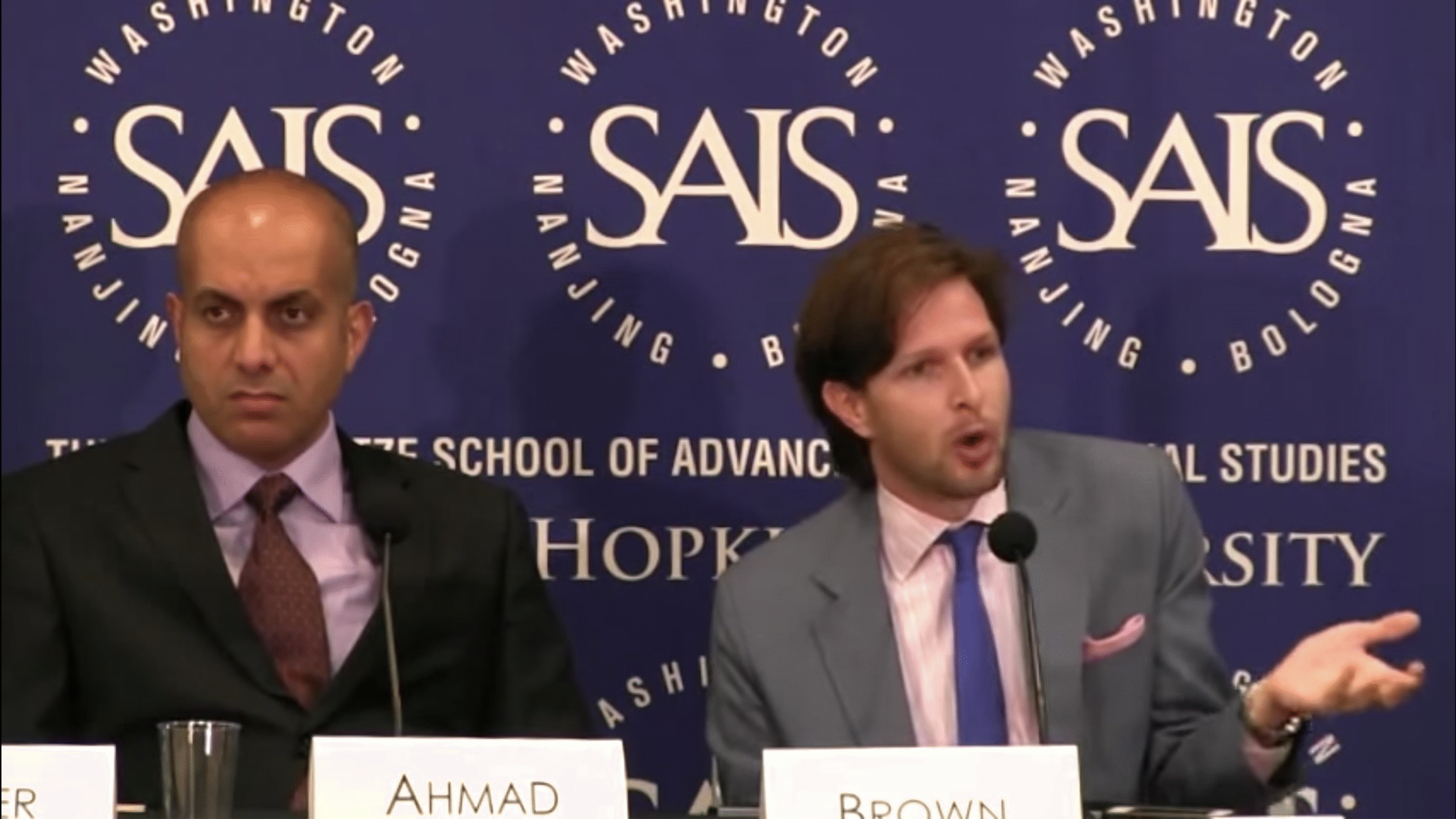
The Middle East Institute, in conjunction with the Conflict Management Program at SAIS, is pleased to welcome Dr. Ahmad Atif Ahmad, Professor of Religious Studies at the University of California, Santa Barbara, and Dr. Jonathan A. Brown, Associate Professor of Islam and Muslim-Christian Understanding at the Edmund A. Walsh School of Foreign Service, for a discussion about the thinking and strategy of Islamist actors in Egypt in the wake of Egyptian president Mohamed Morsi’s ouster.
The Middle East Institute, in conjunction with the Conflict Management Program at SAIS, is pleased to welcome Dr. Ahmad Atif Ahmad, Professor of Religious Studies at the University of California, Santa Barbara, and Dr. Jonathan A. Brown, Associate Professor of Islam and Muslim-Christian Understanding at the Edmund A. Walsh School of Foreign Service, for a discussion about the thinking and strategy of Islamist actors in Egypt in the wake of Egyptian president Mohamed Morsi’s ouster.
The Middle East Institute, in conjunction with the Conflict Management Program at SAIS, is pleased to welcome Dr. Ahmad Atif Ahmad, Professor of Religious Studies at the University of California, Santa Barbara, and Dr. Jonathan A. Brown, Associate Professor of Islam and Muslim-Christian Understanding at the Edmund A. Walsh School of Foreign Service, for a discussion about the thinking and strategy of Islamist actors in Egypt in the wake of Egyptian president Mohamed Morsi’s ouster.
The Middle East Institute, in conjunction with the Conflict Management Program at SAIS, is pleased to welcome Dr. Ahmad Atif Ahmad, Professor of Religious Studies at the University of California, Santa Barbara, and Dr. Jonathan A. Brown, Associate Professor of Islam and Muslim-Christian Understanding at the Edmund A. Walsh School of Foreign Service, for a discussion about the thinking and strategy of Islamist actors in Egypt in the wake of Egyptian president Mohamed Morsi’s ouster.
The Middle East Institute, in conjunction with the Conflict Management Program at SAIS, is pleased to welcome Dr. Ahmad Atif Ahmad, Professor of Religious Studies at the University of California, Santa Barbara, and Dr. Jonathan A. Brown, Associate Professor of Islam and Muslim-Christian Understanding at the Edmund A. Walsh School of Foreign Service, for a discussion about the thinking and strategy of Islamist actors in Egypt in the wake of Egyptian president Mohamed Morsi’s ouster.
Al-Qa’ida is not simply the terrorist organization responsible for the 9/11 attacks; it is a violent manifestation of a social movement that rejects the current international order.
The United States government announced last week that it would not, after all, make a determination as to whether the ouster of Egypt’s Mohamed Morsi constituted a “coup.”[1] This decision has both important strategic and financial implications for the United States. By not designating Morsi’s expulsion as a military coup, U.S. law allows the United States to continue its $1.5 billion in annual aid to Egypt.
The oldest peer-reviewed publication dedicated to the study of the modern Middle East, MEI’s flagship journal covers politics, society, and culture in the region.