Bonus Episode: Previewing Israel’s First Post-October 7 Election
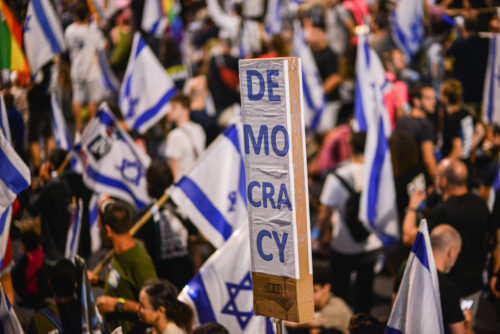
Israel is preparing to hold what may be its most consequential election in decades. On October 27, Prime Minister Benjamin Netanyahu will face his first electoral test since October 7, 2023. In this bonus episode of Middle East Focus, we present the audio from a recent MEI webinar, hosted in Israel on the eve of the vote. Senior Fellow Natan Sachs is joined by Dr. Shira Efron, Distinguished Chair for Israel Policy and senior fellow at the RAND Corporation, and Neri Zilber, veteran journalist and Financial Times correspondent. They explore what’s at stake in this historic election and how different outcomes could reshape Israel’s domestic politics and the wider region.
Israel Was Built on Hope. This Election May Be Our Last Chance to Save It
Israel’s national anthem, Hatikva, means “the hope.” Israel is not just another country, but the culmination of a 2,000-year-old dream of national redemption. The rebirth of the Jewish people’s ancestral homeland, just three years after the Holocaust, was a miraculous triumph of hope over all odds.
Today, that hope has been shattered and the elections on October 27 have become the most consequential in Israel’s history.
Washington says it doesn’t know who runs Iran. Tehran insists its leadership is united. MEI Senior Fellow Alex Vatanka joins hosts Alistair Taylor and Matthew Czekaj to sort out where the truth lies. They look at the small circle of political and military figures now steering the war effort in Tehran: who they are, how they make decisions, and how unified they really are. They also discuss the current state of US-Iran negotiations, the role of the upcoming midterm elections in the United States, and how the Islamic Republic is preparing for a potential renewal of conflict afterward.
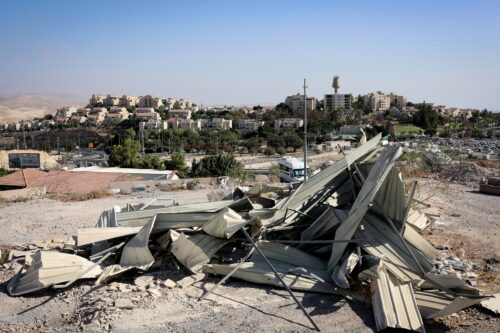
Since 1967, Israeli settlements in the West Bank have been a contested feature of the Israeli-Palestinian conflict. The ultimate disposition of the settlements and ongoing activity related to their growth have repeatedly defied agreement in negotiations over a resolution to the conflict.
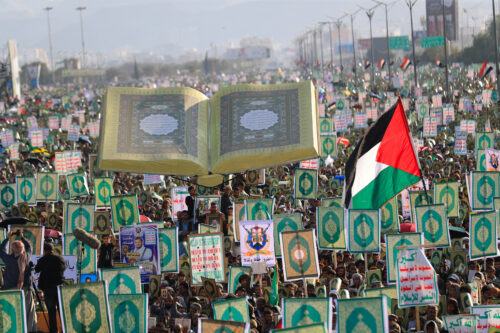
The Houthis are a political-military faction and Zaydi religious movement founded in northwestern Yemen in the 1980s. A key member of Iran’s Axis of Resistance with links to other militant organizations in the Arabian Peninsula and the Horn of Africa, the group has continued to pose a threat to Western interests on a global scale.
The India-Middle East-Europe Economic Corridor (IMEC) is a proposed multinational infrastructure initiative aimed at upgrading connectivity between the three regions through integrated trade, energy, and digital networks. Announced at the G20 summit in New Delhi in September 2023, IMEC is envisioned partially as a counterweight to China’s international infrastructure project, the Belt and Road Initiative.
After a decade of post-Arab Spring isolation, Turkey’s leaders have recognized that their ambition to position the country as an agenda-setter on the world stage requires active engagement in all directions. President Recep Tayyip Erdoğan’s consolidation of executive authority has centralized foreign policy decision-making and tied it to his domestic political priorities, transforming the country’s revisionist approach to one shaped primarily by personal and pragmatic interests.
MEI Senior Fellow Brian Katulis engages friends, colleagues, and policy experts in casual conversations on the most important happenings in the Middle East.
Video Shows Protesters Tearing up Posters of Khamenei, Pro-Iran Iraqi Leaders in Najaf
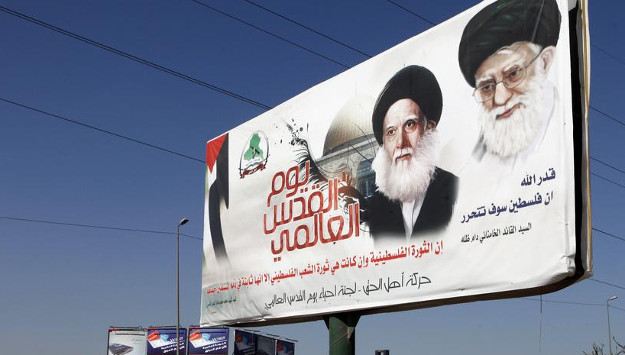
Iraqis in the city of Kufa of Najaf Province held a protest rally against Iran and its Iraqi proxies and attacked the offices of the Badr Organization, according a video clip circulating in social media and published in some Arab outlets. It is not clear when the protest occurred. In the video, protesters are seen ripping up images of Iran’s Supreme Leader Ali Khamenei and Hadi al-Amiri, the leader of the Badr Organization, a powerful group within Iraq’s Popular Mobilization Forces (P.M.F.) and with close to Tehran.
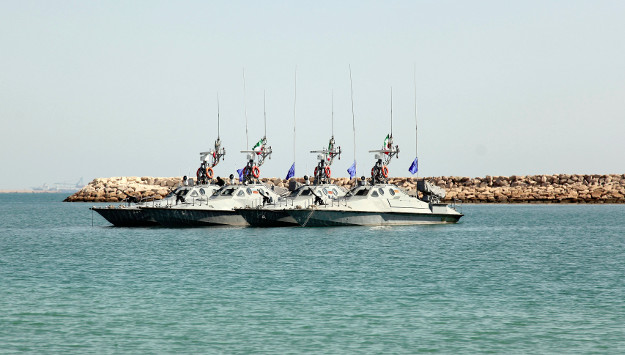
Iranian Navy Adds New Warship to Caspian Sea Fleet
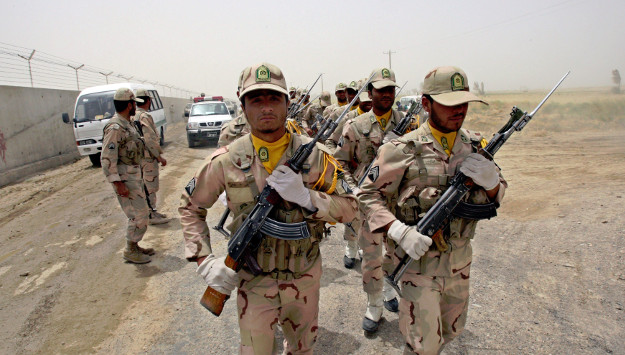
The Iranian Navy today added a new missile-launching corvette to its fleet in the Caspian Sea, the Iranian media reported. Iranian Defense Minister Brigadier General Amir Hatami participated in the inauguration ceremony of the homegrown vessel called Separ (shield). According to Tasnim News Agency, the new ship can sail at a maximum speed of 35 knots and is equipped with surface-to-surface missile systems, naval guns and radar systems.
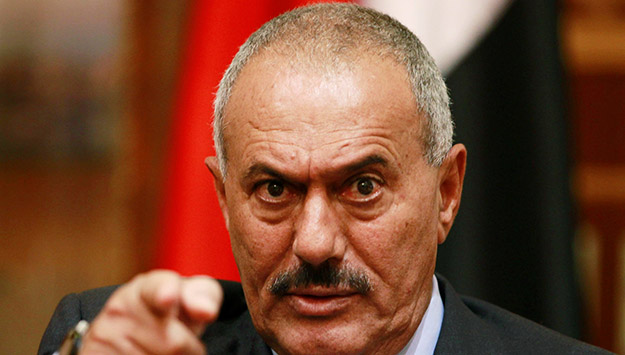
Ali Abdullah Saleh Killed in Yemen | Monday Briefing
In this week’s Monday Briefing, MEI experts Gerald Feierstein, Yousef Munayyer, Bilal Y. Saab, Marvin G. Weinbaum, Charles Lister, and W. Robert Pearson provide analysis on the death of fmr. Yemen President Ali Abdullah Saleh, the Trump administration’s plan to recognize Jerusalem as Israel’s capital, an Israeli airstrike on an Iranian target in Syria, Sec. James Mattis’s upcoming trip to Pakistan, the collapse of Geneva talks on Syria, and Turkish President Erdogan’s visit to Greece.
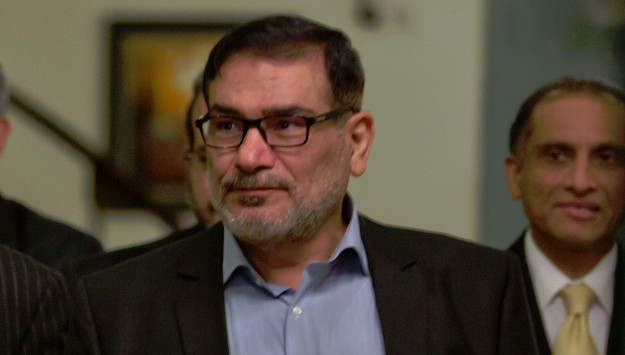
Tehran Pressures Baghdad not to Disband P.M.F. despite Mounting Concerns
Ali Shamkhani, the secretary of Iran’s Supreme National Security Council, has said that a “new foreign plot” is underway to dismantle Tehran-backed Popular Mobilization Forces (P.M.F.) in neighboring Iraq, the Iranian media reported. In a meeting with Deputy Speaker of the Iraqi Parliament Hammam Hamoudi in
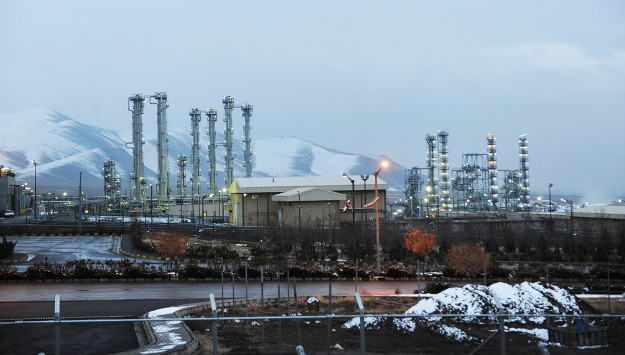
Of all the calamities that have caused mass death and destruction in the Middle East in recent years—including civil war, terrorism, ethnic cleansing, cholera, and famine—none is more potentially threatening to human life than the danger of nuclear power.
From mixed signals over U.S. policy toward Syria’s Kurds, to an alleged kidnapping plot involving Michael Flynn, to the implication of President Erdogan in an international corruption scheme, U.S.-Turkey relations have struggled to find solid ground. Nicholas Danforth, senior policy analyst at the Bipartisan Policy Center, and Gonul Tol, director of Turkish studies at the Middle East Institute, join host Paul Salem to explain these stories and what they mean for both countries.
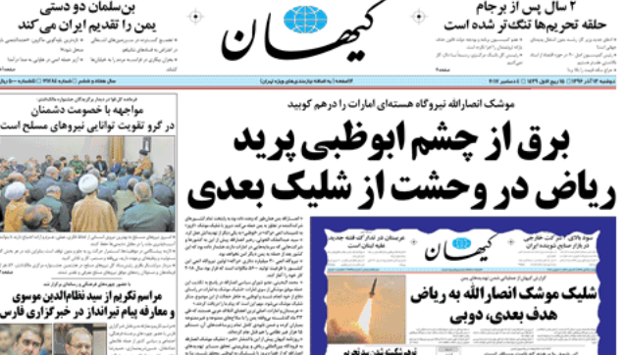
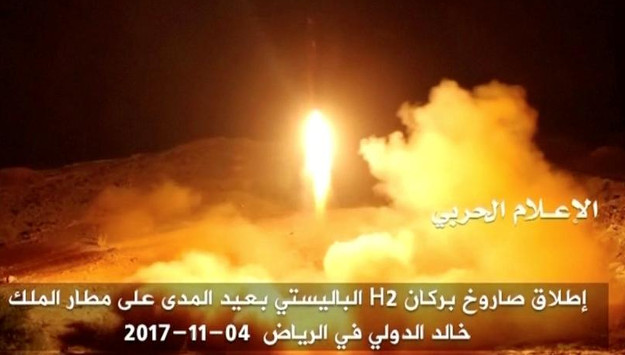
Saudi Arabia Intercepts another Houthi Missile as U.N. Monitors Suggest Iran Link
The Saudi security forces have intercepted and destroyed another ballistic missile launched from Yemen targeting the Saudi mainland, according to Saudi military officials.
Iran Rejects France’s Proposal for Missile Talks, Threatens Europe
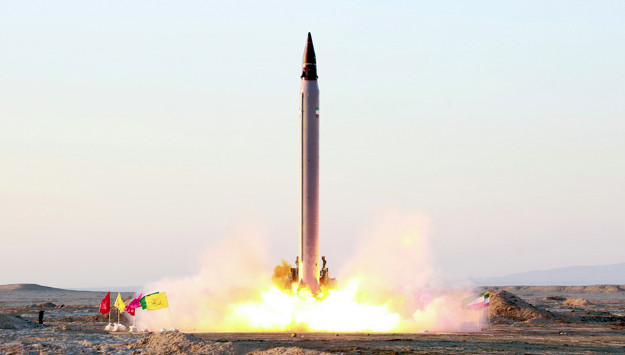
Senior Iranian officials have reiterated that the country will not negotiate with the United States and Europe powers over its missile program, the Iranian media reported.
Rouhani Government Tasks I.R.G.C. to Spearhead Reconstruction Projects in Syria
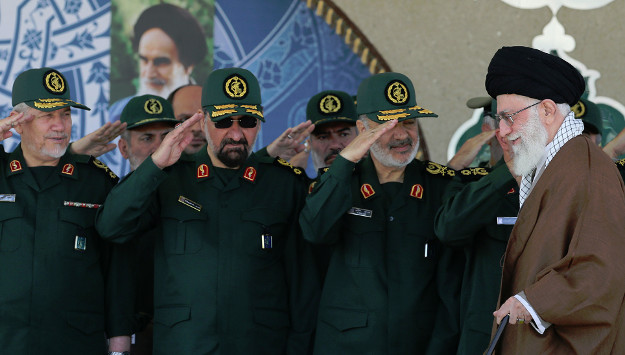
The chief commander of Iran’s Islamic Revolution Guards corps (I.R.G.C.) has revealed that the Guards, rather than the Iranian private sector or other state-run companies, will spearhead Syria’s reconstruction efforts, Tasnim News Agency reported.
Iran-Backed Groups Form “The Mujahideen Alliance” to Contest Next Iraqi Elections
With the fight against ISIS in Iraq almost over, Iran’s allies within the Iraqi Popular Mobilization Forces (P.M.F.) are gearing up for next year’s parliamentary elections. In the latest effort, several Iranian-backed P.M.F.
November 29, 2017- Syrian protest art served as a critical form of non-violent expression during the uprisings against the Assad government starting in 2011. Recognizing the work’s historic significance, the British Museum recently acquired a collection of posters, prints drawings and photographs produced during the conflict, and turned them into a unique exhibit, “Living Histories.”
Public Opinion in a Conflicted Middle East (Livestream)
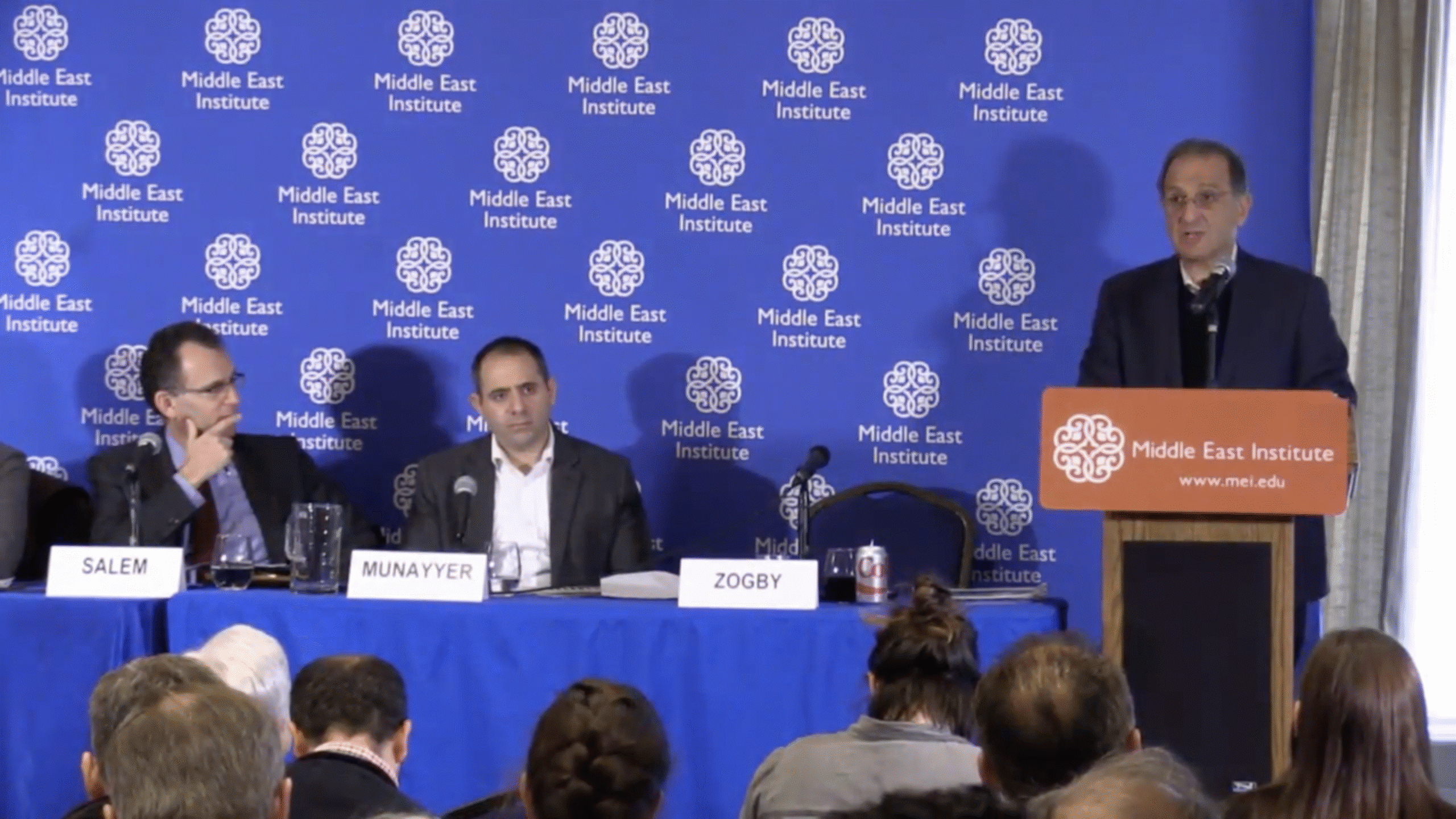
The Middle East Institute (MEI) and the Arab American Institute (AAI) are pleased to host James Zogby (AAI and Zogby Research Services) for the presentation of fresh polling results from across Egypt, Lebanon, Jordan, Palestine, Iraq, Saudi Arabia, the UAE, Iran, and Turkey. The report examines opinions from 7,800 respondents about the U.S. and other regional states’ roles in Syria, Iraq, and Yemen. It also looks at Trump Administration policy, political Islam, prospects for Israeli-Palestinian peace, the Iran nuclear deal, and the region’s refugee crisis.
The oldest peer-reviewed publication dedicated to the study of the modern Middle East, MEI’s flagship journal covers politics, society, and culture in the region.