Bonus Episode: Previewing Israel’s First Post-October 7 Election
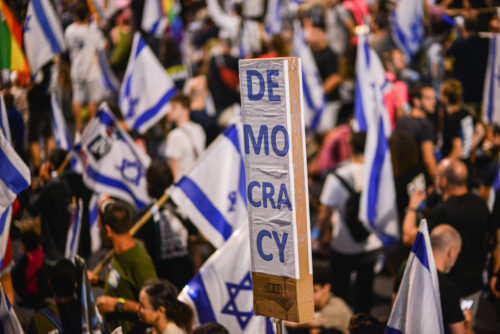
Israel is preparing to hold what may be its most consequential election in decades. On October 27, Prime Minister Benjamin Netanyahu will face his first electoral test since October 7, 2023. In this bonus episode of Middle East Focus, we present the audio from a recent MEI webinar, hosted in Israel on the eve of the vote. Senior Fellow Natan Sachs is joined by Dr. Shira Efron, Distinguished Chair for Israel Policy and senior fellow at the RAND Corporation, and Neri Zilber, veteran journalist and Financial Times correspondent. They explore what’s at stake in this historic election and how different outcomes could reshape Israel’s domestic politics and the wider region.
Israel Was Built on Hope. This Election May Be Our Last Chance to Save It
Israel’s national anthem, Hatikva, means “the hope.” Israel is not just another country, but the culmination of a 2,000-year-old dream of national redemption. The rebirth of the Jewish people’s ancestral homeland, just three years after the Holocaust, was a miraculous triumph of hope over all odds.
Today, that hope has been shattered and the elections on October 27 have become the most consequential in Israel’s history.
Washington says it doesn’t know who runs Iran. Tehran insists its leadership is united. MEI Senior Fellow Alex Vatanka joins hosts Alistair Taylor and Matthew Czekaj to sort out where the truth lies. They look at the small circle of political and military figures now steering the war effort in Tehran: who they are, how they make decisions, and how unified they really are. They also discuss the current state of US-Iran negotiations, the role of the upcoming midterm elections in the United States, and how the Islamic Republic is preparing for a potential renewal of conflict afterward.
Since 1967, Israeli settlements in the West Bank have been a contested feature of the Israeli-Palestinian conflict. The ultimate disposition of the settlements and ongoing activity related to their growth have repeatedly defied agreement in negotiations over a resolution to the conflict.
The Houthis are a political-military faction and Zaydi religious movement founded in northwestern Yemen in the 1980s. A key member of Iran’s Axis of Resistance with links to other militant organizations in the Arabian Peninsula and the Horn of Africa, the group has continued to pose a threat to Western interests on a global scale.
The India-Middle East-Europe Economic Corridor (IMEC) is a proposed multinational infrastructure initiative aimed at upgrading connectivity between the three regions through integrated trade, energy, and digital networks. Announced at the G20 summit in New Delhi in September 2023, IMEC is envisioned partially as a counterweight to China’s international infrastructure project, the Belt and Road Initiative.
After a decade of post-Arab Spring isolation, Turkey’s leaders have recognized that their ambition to position the country as an agenda-setter on the world stage requires active engagement in all directions. President Recep Tayyip Erdoğan’s consolidation of executive authority has centralized foreign policy decision-making and tied it to his domestic political priorities, transforming the country’s revisionist approach to one shaped primarily by personal and pragmatic interests.
MEI Senior Fellow Brian Katulis engages friends, colleagues, and policy experts in casual conversations on the most important happenings in the Middle East.
Transitioning to Inclusive Green Growth in the Middle East and Asia
In 1987 the United Nations World Commission on Environment and Development released Our Common Future, commonly known as the Brundtland Report. This publication contained the most widely recognized definition of the concept of “sustainable development.” As defined in the document, “Sustainable development is development that meets the needs of the present without compromising the ability of future generations to meet their own needs.”
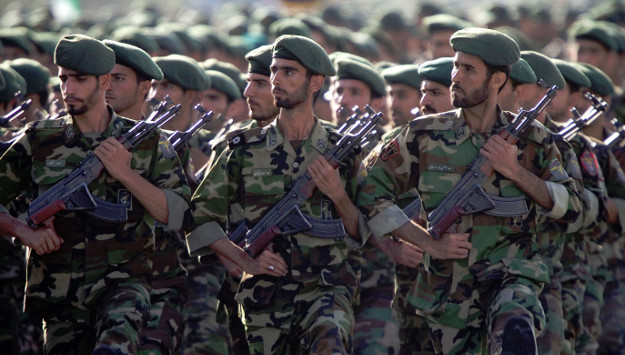
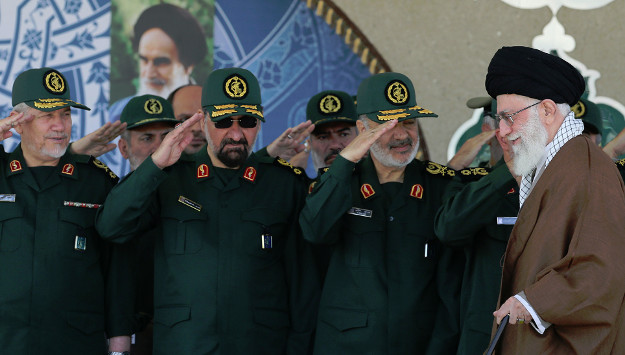
I.R.G.C. University Deploys Trainers to “Resistance Front” for Asymmetrical Warfare Experience
Imam Hossein University, a U.S.-designated Iranian military institution affiliated with the Islamic Revolution Guards Corps (I.R.G.C.), sends its commanders and
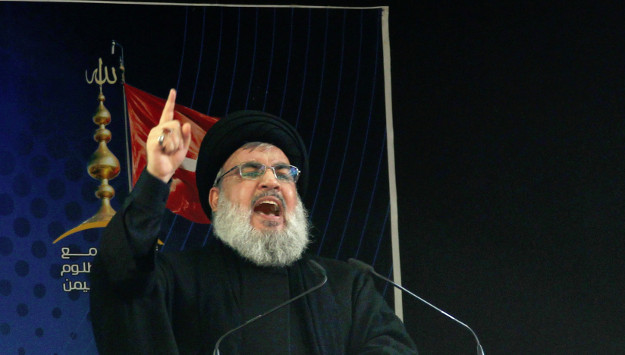
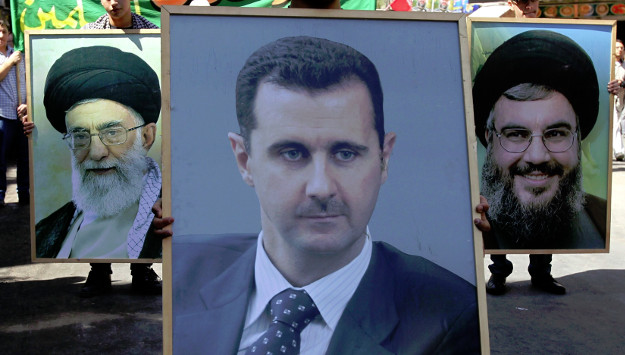
Hezbollah Leader Declares Victory in Syria, Recalls Meeting with Khamenei
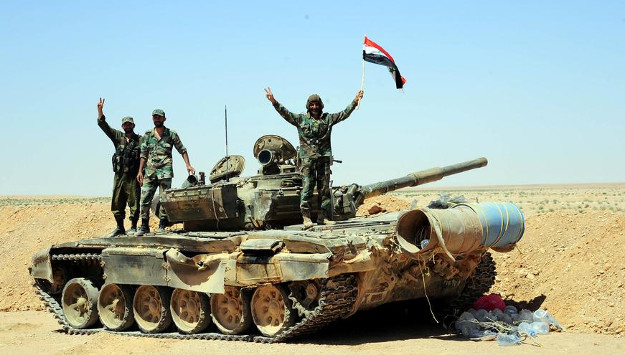
Lebanese Hezbollah’s Leader Hassan Nasrallah has declared victory in the Syrian war, Iranian and Lebanese media reported today. According to Lebanon’s al-Akhbar daily, Nasrallah said at a religious gathering in Lebanon that Hezbollah and its allies have won the war in Syria and what remains are only scattered battles. “Our martyrs, wounded and prisoners are changing equations and writing the history of the entire region, not just Lebanon’s,” he was quoted as saying.
Iran Rejects I.A.E.A. Chief’s Claim about Inspection of Military Sites
Iranian officials have reiterated that the country would not allow any foreign inspectors to visit its military sites, rejecting International Atomic Energy Agency (I.A.E.A.) head’s Monday remarks that the watchdog makes no distinction between civilian and military sites in its inspect
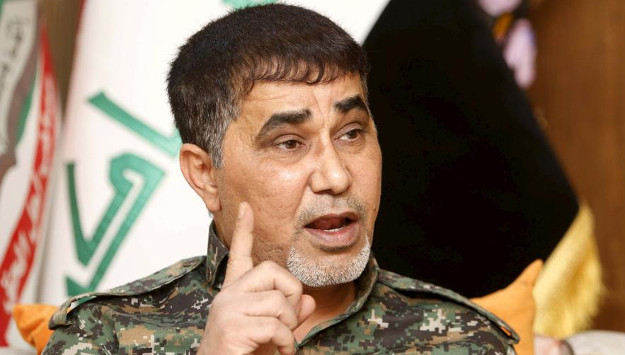
Iranian-Backed Iraqi Group: Our Forces Are Ready to Recapture al-Qa'im near Syrian Border
A commander of Iraqi Popular Mobilization Forces (P.M.F.) has announced that the paramilitary forces have taken complete preparations to recapture remaining areas under the Islamic State control in western parts of al-Anbar Province close to the Syrian border. According to Fars News Agency, an Iranian outlet affiliated with the Islamic Revolution Guards Corps (I.R.G.C.), Jawad al-Talibawi, the spokesperson for the armed wing of Iranian-supported Asaib Ahl al-Haq, said P.M.F.
Iraqi Forces Turn Attention to Hawija | Monday Briefing
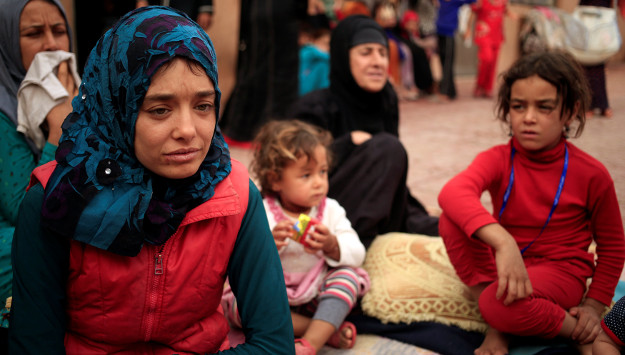
In this week’s Monday Briefing, MEI experts Paul Salem, Robert S. Ford, Alex Vatanka, and Bilal Y. Saab provide analysis on recent and upcoming events including the Iraqi military’s new operation to take back the town of Hawija from ISIS, the operation by the Syrian regime and U.S.-backed forces in Deir Ezzor, the Pakistani foreign minister’s visit to Iran, and the resumption of U.S. and Egyptian war games after being suspended since the 2011.
Tehran Organizes al-Ghadeer Shiite Religious Event in Damascus
Senior Iranian officials attended a public gathering in Damascus over the weekend to commemorate the Shiite religious event of Eid al-Ghadeer. According to the Iranian media, Abolfazl Tabatabai, Supreme Leader Ali Khamenei’s special representative to Syria, and Javad Torkabadi, Tehran’s ambassador to Damascus, were among keynote speakers at the event. Hundreds of people attended the celebration at the historic Sayyidah Zaynab Mosque in southern Damascus.
Tehran, Proxies Warn against U.S. Military Presence in Post-ISIS Iraq, Syria
The United States is seeking to keep a significant military presence in Iraq and the broader region after the fall of the Islamic State, warns an article in the Islamic Republic News Agency. The author points out that pro-Syrian regime forces have made important territorial gains against the Islamic State recently and claims that the lifting of a siege over the eastern city of Deir Ezzor marks the beginning of the terrorist group’s end.
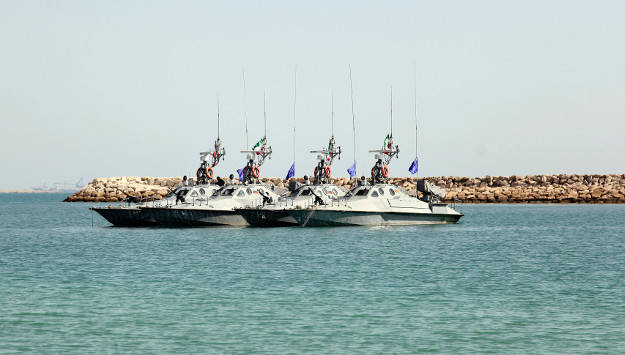
Iran Says Might Release Evidence It Warned off U.S. Warship in Sea of Oman
A senior commander of the Iranian Navy reiterated that the country’s naval forces had warned an American military vessel to avoid approaching a drowning Ira
Rouhani Urged to Boost “Resistance Economy” to Counter New U.S. Sanctions
An article in Fars News Agency rejects President Hassan Rouhani’s recent claim that anti-Iran sanctions are irreversible and calls on the government to strengthen Iran’s “resistance economy” to counter new U.S. sanctions. Fars is affiliated with the Islamic Revolution Guards Corps (I.R.G.C.). The author argues that if Washington walks away from the nuclear agreement, the U.S. Treasury and Congress will re-impose all pre-deal sanctions – which will deter international companies and banks from doing business with Iran.
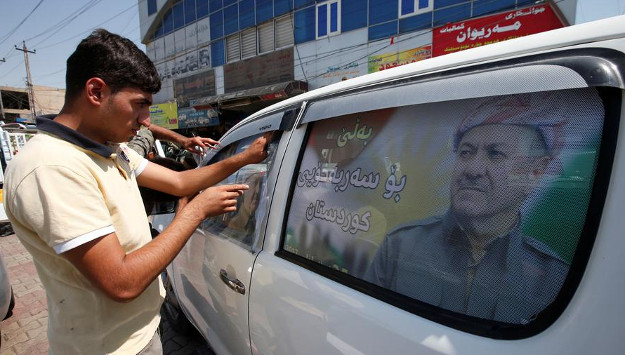
Iran Warns K.R.G.’s Independence Plan Could Thrust Iraq back into Chaos
As the Iraqi Kurdistan is set to hold an independence referendum on September 25, Iranian leaders and media outlets continue to warn against the consequences of such a move.
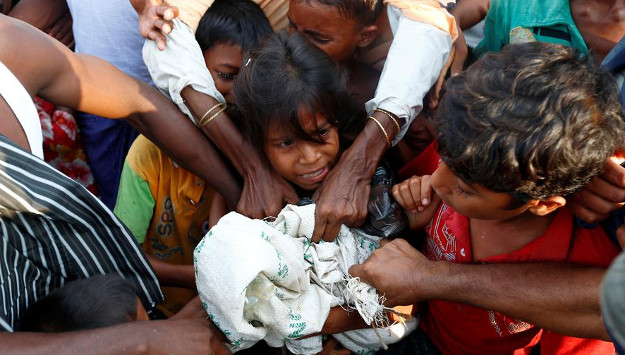
Iranian Leaders Call for Forming “Joint Islamic Army” to Defend Myanmar Muslims
The deputy head of the Iranian Parliament has called for the creation of a joint military forces by Muslim countries to stop violence against Rohingya Muslims in Myanmar.
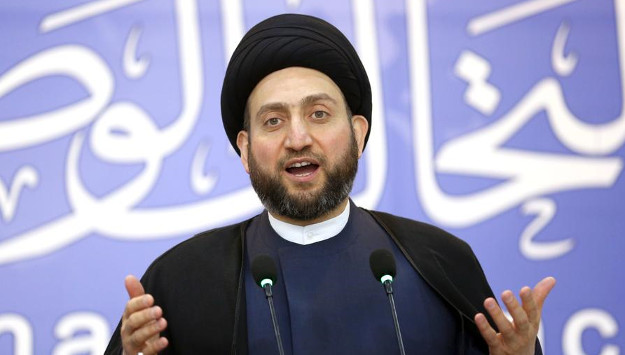
Senior Iraqi Shiite Leader Says Ties with Tehran Remain Strong
Ammar al-Hakim, a senior Iraqi Shiite politician and cleric, has rejected reports that relations between Tehran and Iraqi Shiite leaders have been souring lately.
I.R.G.C. Outlet: U.S. to Hand Over al-Tanf’s Control to Syrian Government
According to an agreement between the United States, Jordan, Russia and Syria, armed opposition groups will voluntarily leave eastern Damascus for Jordan, from where they will ultimately be transferred al-Hasakah Governorate in northeastern Syria, Fars News Agency reports. The Iranian outlet adds that two U.S.-backed rebel groups have reached an agreement in southeastern Damascus to surrender their weapons to the Syrian government in exchange for a safe passage to Jordan.
Iran-Backed Militia Group Threatens to Attack U.S. Troops in Iraq
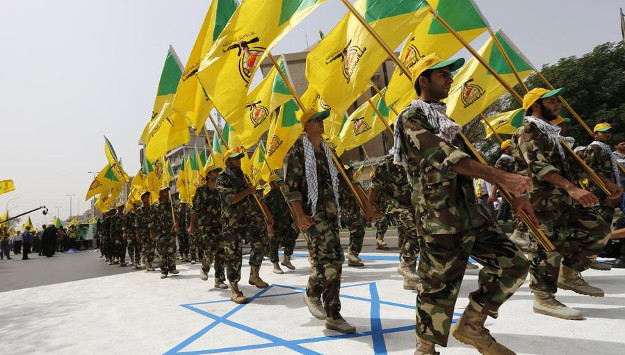
A commander of Iranian-backed Iraqi militia group has warned that his forces will target American troops in Iraq if they do not leave the country after the battle against the Islamic State is over, the Iranian media reported. Jafar al-Hussaini, the spokesman for Kata’ib Hezbollah (Hezbollah Brigades), also accused the United States and the leadership of the Iraqi Kurdistan of assisting Islamic State militants to safely withdraw from Tal Afar, an Iraqi city west of Mosul recently liberated from the Islamic State.
The oldest peer-reviewed publication dedicated to the study of the modern Middle East, MEI’s flagship journal covers politics, society, and culture in the region.