Bonus Episode: Previewing Israel’s First Post-October 7 Election
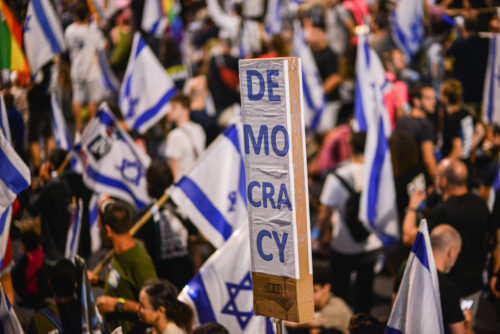
Israel is preparing to hold what may be its most consequential election in decades. On October 27, Prime Minister Benjamin Netanyahu will face his first electoral test since October 7, 2023. In this bonus episode of Middle East Focus, we present the audio from a recent MEI webinar, hosted in Israel on the eve of the vote. Senior Fellow Natan Sachs is joined by Dr. Shira Efron, Distinguished Chair for Israel Policy and senior fellow at the RAND Corporation, and Neri Zilber, veteran journalist and Financial Times correspondent. They explore what’s at stake in this historic election and how different outcomes could reshape Israel’s domestic politics and the wider region.
Israel Was Built on Hope. This Election May Be Our Last Chance to Save It
Israel’s national anthem, Hatikva, means “the hope.” Israel is not just another country, but the culmination of a 2,000-year-old dream of national redemption. The rebirth of the Jewish people’s ancestral homeland, just three years after the Holocaust, was a miraculous triumph of hope over all odds.
Today, that hope has been shattered and the elections on October 27 have become the most consequential in Israel’s history.
Washington says it doesn’t know who runs Iran. Tehran insists its leadership is united. MEI Senior Fellow Alex Vatanka joins hosts Alistair Taylor and Matthew Czekaj to sort out where the truth lies. They look at the small circle of political and military figures now steering the war effort in Tehran: who they are, how they make decisions, and how unified they really are. They also discuss the current state of US-Iran negotiations, the role of the upcoming midterm elections in the United States, and how the Islamic Republic is preparing for a potential renewal of conflict afterward.
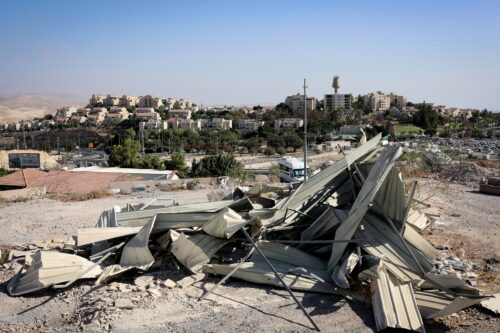
Since 1967, Israeli settlements in the West Bank have been a contested feature of the Israeli-Palestinian conflict. The ultimate disposition of the settlements and ongoing activity related to their growth have repeatedly defied agreement in negotiations over a resolution to the conflict.
The Houthis are a political-military faction and Zaydi religious movement founded in northwestern Yemen in the 1980s. A key member of Iran’s Axis of Resistance with links to other militant organizations in the Arabian Peninsula and the Horn of Africa, the group has continued to pose a threat to Western interests on a global scale.
The India-Middle East-Europe Economic Corridor (IMEC) is a proposed multinational infrastructure initiative aimed at upgrading connectivity between the three regions through integrated trade, energy, and digital networks. Announced at the G20 summit in New Delhi in September 2023, IMEC is envisioned partially as a counterweight to China’s international infrastructure project, the Belt and Road Initiative.
After a decade of post-Arab Spring isolation, Turkey’s leaders have recognized that their ambition to position the country as an agenda-setter on the world stage requires active engagement in all directions. President Recep Tayyip Erdoğan’s consolidation of executive authority has centralized foreign policy decision-making and tied it to his domestic political priorities, transforming the country’s revisionist approach to one shaped primarily by personal and pragmatic interests.
MEI Senior Fellow Brian Katulis engages friends, colleagues, and policy experts in casual conversations on the most important happenings in the Middle East.
The Malaysian State Responds to IS: Force, Discourse, and Dilemma
This essay critically examines the Malaysian state’s responses to IS, which, while having proven relatively successful in maintaining public safety (as compared to Thailand, Indonesia, and the Philippines), have not slowed the pace of radicalization among the Malaysian populace. The essay highlights the operational dimension in the post-Internal Security Act (ISA) era, as well as the active discursive campaign to denounce, discredit and diminish IS. The essay then discusses the dilemma faced by self-proclaimed “Islamic” states such as Malaysia in countering Islamist militancy.
Rouhani to Trump: Iran Could Restart Nuclear Program within Hours
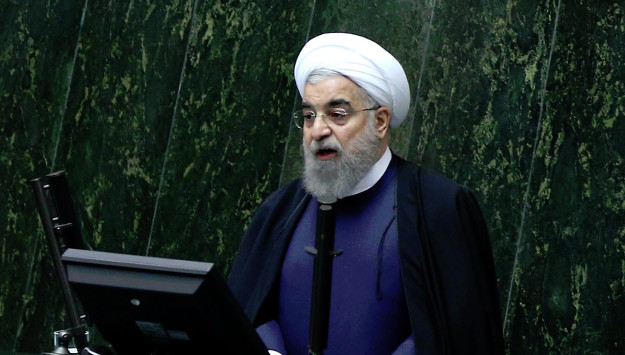
Iranian President Hassan Rouhani has warned that Tehran would restart the country’s nuclear program within hours if the U.S. government imposes additional sanctions on the Islamic Republic, the Iranian media reported. “America’s new statesmen should know that the failed experience of sanction and coercion brought their previous administrations to the negotiating table.
Iran Creates 10 Rapid Reaction Brigades to Fight Terrorism at Home
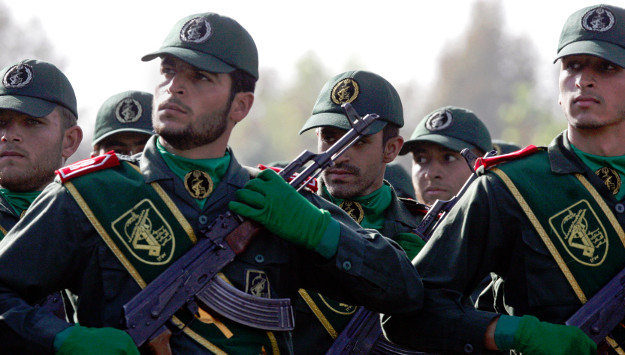
Iran has set up 10 new rapid reaction brigades and plans to create more units to bolster its counterterrorism efforts, President Hassan Rouhani’s defense minister nominee has told the country’s parliament. Introducing his plans for the Defense Ministry, Brigadier General Amir Hatami added that five of the new brigades have been established within the country’s Artesh (regular army), whereas the remainder consisted Islamic Revolution Guards Force (I.R.G.C.) Ground Force units.
I.R.G.C. Rejects U.S. Claim of Unsafe Drone Flight, Says Drone Mission Will Continue in Gulf
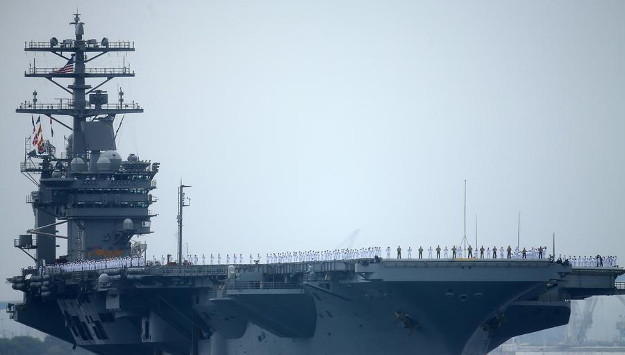
The Islamic Revolution Guards Corps (I.R.G.C.) rejected U.S. claim that an Iranian drone came dangerously close to a U.S. aircraft carrier in the Persian Gulf, and stressed that it will continue its “routine” air patrol in the region despite U.S. warnings.
Iran Navy to Unveil New Vessels and Dispatch Fleets to Atlantic Ocean
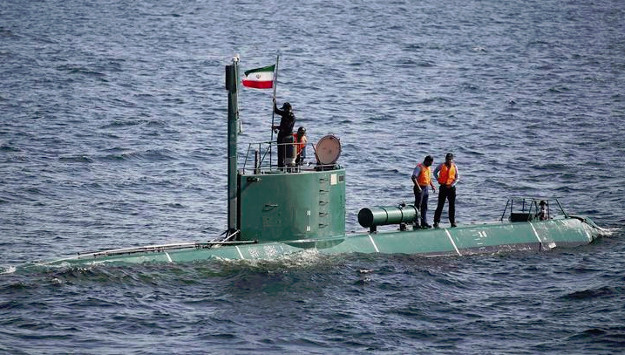
The commander of the Iranian Navy announced today that the country will unveil new home-made vessels and a missile launching warship, Fars News Agency reported. “New equipment, including surface and subsurface vessels units, and other equipment made in the country will be unveiled in the Northern and Southern parts (waters) of the country,” Rear Admiral Sayyari said, addressing a ceremony in the Northern port city of Bandar Anzali.
Monday Briefing | Is the Middle East Tilting toward De-Escalation?
In this week’s Monday Briefing, MEI experts Paul Salem, Gonul Tol, Alex Vatanka, and Jonathan M. Winer provide analysis on recent and upcoming events including Saudi Arabia’s diplomatic engagements in the region, Turkey’s consideration of military operations in northern Syria, Iranian President Rouhani’s centrist cabinet nominations, and Libyan leaders’ decision between greater cooperation or renewed confrontation.
Tehran Sees Saudi Outreach to Iraqi Shiites as "New Project" to Roll Back Iran's Regional Influence
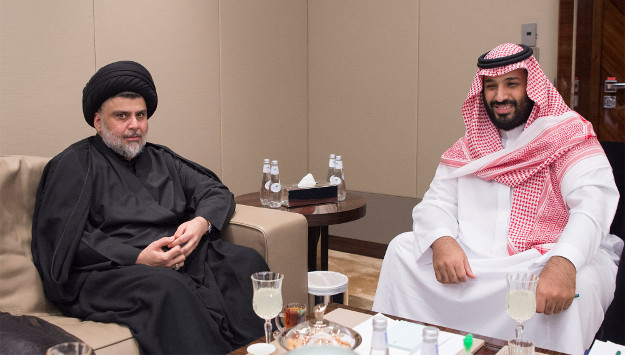
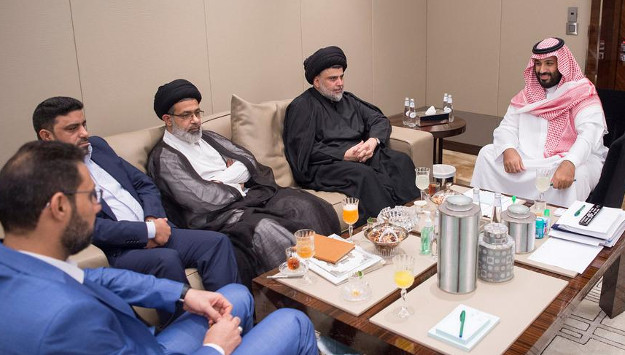
Iranian media outlets, analysts and politicians warn that Saudi Arabia and its regional allies are cultivating close ties with Muqtada al-Sadr and other Iraqi Shiite clerics and political leaders to roll back Iran’s influence in post-Islamic State Iraq and the broader region. While some suggest that Riyadh’s outreach to Iraqi Shiites is part of the kingdom’s efforts to defuse tension with Tehran, others see it as a plot to isolate Iran. At the center of this debate is al-Sadr, who recently visited Saudi Arabia and the United Arab Emirates and is scheduled to travel to Egypt soon.
Iranian Drone Comes “Dangerously” Close to U.S. Aircraft Carrier in Persian Gulf
Iran sent another drone close to a U.S. Navy aircraft carried in the Persian Gulf on Sunday, the media reported today. Last week, an Iranian drone had an “unsafe” encounter with a U.S. Navy F-18 Hornet as it was landing aboard the U.S.S. Nimitz in the Persian Gulf. Navy Lt.
Rouhani Asks Putin for More Russian Investment in Iran’s Energy Sector
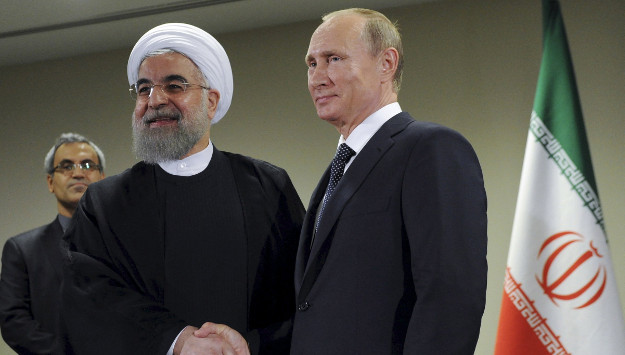
Iranian President Hassan Rouhani and his Russian counterpart Vladimir Putin discussed ways to expand bilateral relations between the two countries in a telephone call today, the Iranian and Russia
Tehran Celebrates Arsal "Victory" as Sign of Hezbollah’s Growing Power
From Tehran’s view, Hezbollah’s military operation against Nusra Front militants on the outskirts of the Lebanese town of Arsal near the Syrian border signifies Hezbollah’s growing political and military influence in Lebanon and the broader region. “There was more cooperation between Hezbollah and the Lebanese Army in the battle of Arsal than at any time in the past. And this cooperation signifies fundamental changes in Lebanon’s political sphere.
Iran Vows Revenge against Islamic State, U.S. after I.R.G.C. Soldier's Beheading
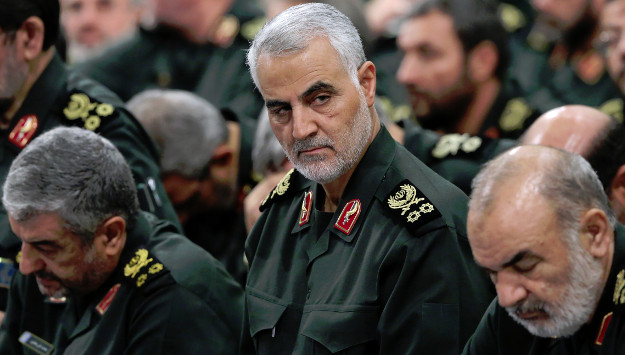
Iranian leaders have reacted angrily to the beheading of an Islamic Revolution Guards Corps (I.R.G.C.) officer by the Islamic State in Syria. Major General Qassem Soleimani, the commander of Iran’s Quds Force, condemned the “savage act” and vowed revenge.
Iranian Clerics Say New U.S. Sanctions Violate Nuclear Deal
Senior Iranian clerics today blasted the latest U.S. sanctions against Tehran and called on the Rouhani government to take strong retaliatory measures against Washington.
I.R.G.C. Outlet: Seizure of al-Sukhnah Helps Regime Operations in Raqqa and Deir Ezzor
The recent seizure of al-Sukhnah region in Syria’s Homs Governorate has prepared the ground for the Syrian Army and its foreign allies to advance toward and capture the oil-rich Deir Ezzor Governorate, according to
The oldest peer-reviewed publication dedicated to the study of the modern Middle East, MEI’s flagship journal covers politics, society, and culture in the region.