Bonus Episode: Previewing Israel’s First Post-October 7 Election
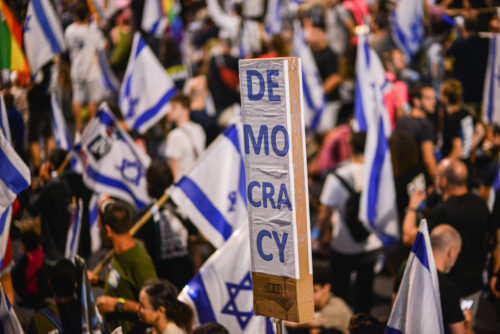
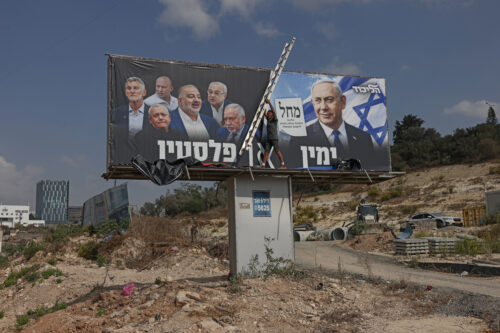
Israel is preparing to hold what may be its most consequential election in decades. On October 27, Prime Minister Benjamin Netanyahu will face his first electoral test since October 7, 2023. In this bonus episode of Middle East Focus, we present the audio from a recent MEI webinar, hosted in Israel on the eve of the vote. Senior Fellow Natan Sachs is joined by Dr. Shira Efron, Distinguished Chair for Israel Policy and senior fellow at the RAND Corporation, and Neri Zilber, veteran journalist and Financial Times correspondent. They explore what’s at stake in this historic election and how different outcomes could reshape Israel’s domestic politics and the wider region.
Israel Was Built on Hope. This Election May Be Our Last Chance to Save It
Israel’s national anthem, Hatikva, means “the hope.” Israel is not just another country, but the culmination of a 2,000-year-old dream of national redemption. The rebirth of the Jewish people’s ancestral homeland, just three years after the Holocaust, was a miraculous triumph of hope over all odds.
Today, that hope has been shattered and the elections on October 27 have become the most consequential in Israel’s history.
One striking thing about US President Donald Trump’s endorsement of Israeli Prime Minister Benjamin Netanyahu this past week is how isolated he was in making this call. The Israeli Prime Minister has become a widely detested figure worldwide following Israel’s war in Gaza—where Israel committed war crimes. This disdain was clearly on display in New York in September when dozens of diplomats streamed out of the hall during Netanyahu’s speech.
Since 1967, Israeli settlements in the West Bank have been a contested feature of the Israeli-Palestinian conflict. The ultimate disposition of the settlements and ongoing activity related to their growth have repeatedly defied agreement in negotiations over a resolution to the conflict.
The Houthis are a political-military faction and Zaydi religious movement founded in northwestern Yemen in the 1980s. A key member of Iran’s Axis of Resistance with links to other militant organizations in the Arabian Peninsula and the Horn of Africa, the group has continued to pose a threat to Western interests on a global scale.
The India-Middle East-Europe Economic Corridor (IMEC) is a proposed multinational infrastructure initiative aimed at upgrading connectivity between the three regions through integrated trade, energy, and digital networks. Announced at the G20 summit in New Delhi in September 2023, IMEC is envisioned partially as a counterweight to China’s international infrastructure project, the Belt and Road Initiative.
After a decade of post-Arab Spring isolation, Turkey’s leaders have recognized that their ambition to position the country as an agenda-setter on the world stage requires active engagement in all directions. President Recep Tayyip Erdoğan’s consolidation of executive authority has centralized foreign policy decision-making and tied it to his domestic political priorities, transforming the country’s revisionist approach to one shaped primarily by personal and pragmatic interests.
MEI Senior Fellow Brian Katulis engages friends, colleagues, and policy experts in casual conversations on the most important happenings in the Middle East.
Iran Steps up Efforts to Oust U.S. Military from Middle East
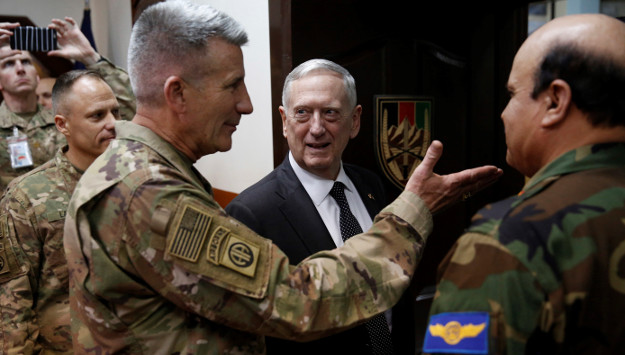
With the Islamic State collapsing in Iraq and losing ground in Syria, Iran and its regional proxies see the United States as the primary threat to their influence and ambitions and have stepped up efforts to oust the U.S. military from the region. Through diplomatic outreach – and at times veiled threats – Iranian leaders have been urging the Afghan and Iraqi governments to expel American forces from their countries. Tehran has also deepened its ties with the Taliban and has reportedly teamed up with Moscow to undermine U.S.-led stabilization efforts in war-torn Afghanistan.
The Influence of North African Militaries in Foreign Policy-Making
This essay looks at five North African states, arguing that the armed forces — for a variety of often case-specific reasons — are actually not as politically powerful and thus influential in foreign policy-making as one might expect. It first discusses the political strength of the military establishments of five North African states — Morocco, Algeria, Tunisia, Libya, and Egypt — and then investigates the difference, if any, that the recent Arab upheavals have made in their involvement in foreign policy-making.
The Durand Line: A British Legacy Plaguing Afghan-Pakistani Relations
The Durand Line issue has continued to complicate the unpredictable nature of the Afghan-Pakistani relationship since the birth of Pakistan. Constant tension haunts their neighborly relations, as apprehensions and suspicions co-exist with some affable gestures. No Afghan government, including the present one headed by President Ashraf Ghani, has ever recognized the legitimacy of the Durand Line, which runs through mountainous terrain and remains largely unpoliced.
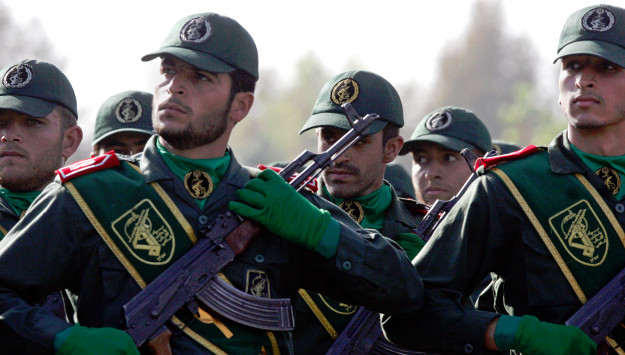
I.R.G.C. Commander Rejects Rouhani’s Criticism about Guards' Role in Iran’s Economy
The chief commander of the Islamic Revolution Guards Corps has rejected President Hassan Rouhani’s criticism of the I.R.G.C.’s involvement in Iran’s economy and defended his forces’ track record, the
Tehran Seeks International Support to Mitigate Impact of U.S. Sanctions
Iran’s Parliament Speaker Ali Larijani said the latest U.S. Senate legislation that would impose new sanctions on Iran was a violation of international law and U.N. conventions, the Iranian media reported. He made the remarks in a speech at the meeting of the Eurasia’s parliament speakers in South Korea on Tuesday.
Iran’s Parliament Finalizing Bill to Counter U.S. Actions in Middle East
A top Iranian lawmaker said that the parliament’s National Security and Foreign Policy Commission has finalized a legislation that would counter the U.S. “adventurous and terrorist” actions in the region, state-run Islamic Republic News Agency reported today. “This bill has set some obligations for the government and the government is obliged to implement them,” Alaeddin Boroujerdi emphasized. He further noted that the bill is a reaction to the latest U.S.
I.R.G.C. Outlet Accuses U.S. Military of Aiding Islamic State in Iraq and Syria
The U.S. military is taking measures in the Iraqi province of al-Anbar close to the Syrian border to counter the growing influence of the Popular Mobilization Forces (P.M.F.), reports Fars News Agency, which is affiliated with the Islamic Revolution Guards Corps (I.R.G.C.). According to the Iranian outlet, the U.S. military seeks to push back against the P.M.F.’s territorial gains because Washington and its allies see the Iraqi paramilitary forces as “Iran’s operational arm” in Iraq and Syria. According to Fars, the U.S.
Monday Briefing: ISIS losing territory, President Erdogan visits Sudan
In this week’s Monday Briefing, MEI experts Charles Lister, W. Robert Pearson, and Yousef Munayyer provide analysis on ISIS’ continued threat to security despite losing territory, President Erdogan’s upcoming visit to Sudan as a political calculation, and Mohammed Dahlan’s effort to return to Palestinian politics.
Rouhani to Qatari Leader: Iran Stands with Doha, Rejects “Unacceptable Siege”
On Sunday, Iran’s President Hassan Rouhani pledged support for Qatar in its latest standoff with Saudi Arabia and its regional allies and called for the expansion of bilateral ties between Tehran and Doha, the Iranian media reported.
Iran Seeks Role in Syria's Reconstruction, Economy
Iranian Ambassador to Damascus Javad Torkabadi has said that the Islamic Republic is ready to help Syria’s reconstruction after the defeat of the Islamic State in the war-ravaged country, Iranian media reported. “Many companies in Iran are ready to help Syria in the housing and reconstruction fields rendering their best services now that victory is in sight in Syria after a protracted battle,” he was quoted as telling Syrian Minister of Housing Hussein Arnus at a meeting in Damascus.
Rouhani Lauds I.R.G.C. for Developing and Using Missiles
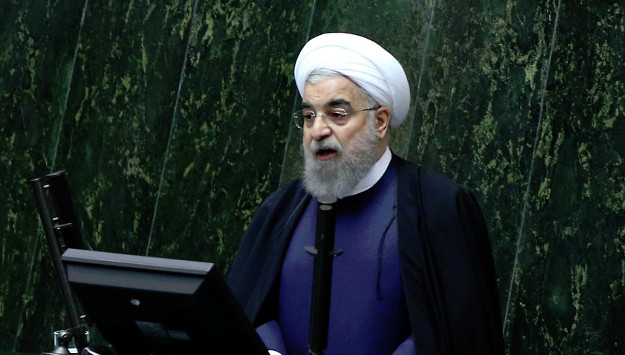
Iran’s President Hassan Rouhani hailed efforts by the Islamic Revolution Guards Corps (I.R.G.C.) to develop and employ advanced weapons to protect the country, Iranian media reported. “I’d like to thank the ones that manufacture strategic arms for the country and the ones that employ such strategic weapons very well,” Rouhani said in a meeting of top Iranian officials and ambassadors of Islamic nations on the occasion of Eid in Tehran.
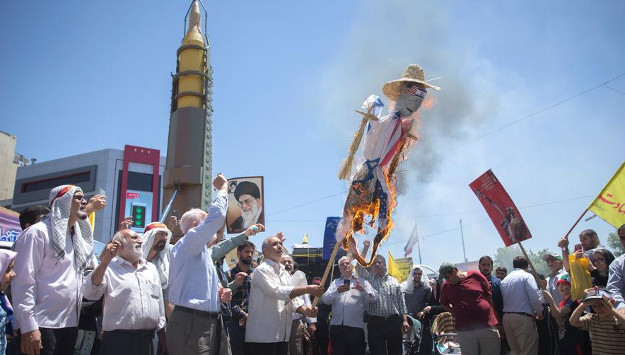
Iranian Demonstrators Chant Slogans against U.S. and Saudi Arabia during anti-Israel “Quds Day” Rallies
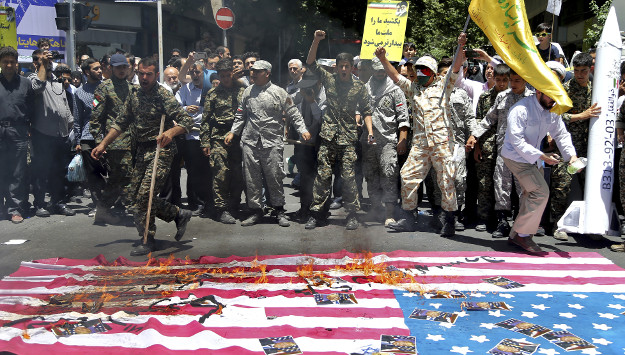
Hundreds of thousands of Iranians today marched the streets of Tehran and across the country to mark the International Quds Day, Iranian media reported. The demonstrators voiced support to the plight of Palestinians and chanted slogans against Israel and the United States. Senior political and military leaders, including President Hassan Rouhani and Islamic Revolution Guards Commander Mohammad Ali Jafari, attended the anti-Israeli rallies.
I.R.G.C. Displays Ballistic Missiles at anti-Israel Rallies in Tehran
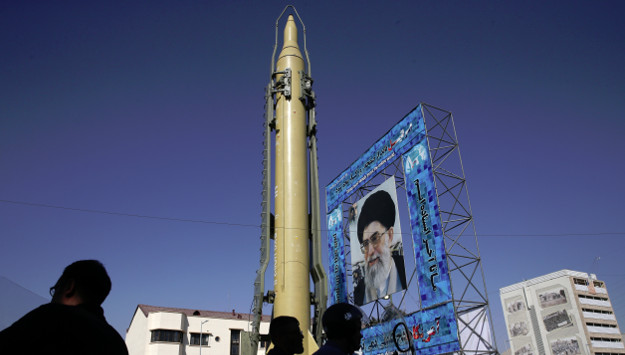
During the annual “International Quds Day” rallies in Tehran today, the Islamic Revolution Guards Corps (I.R.G.C.) showcased its ballistic missiles to send a message to Israel. At Valiasr Street in Tehran, three ballistic missiles were displayed, including Zolfighar missiles that the I.R.G.C. launched against Islamic State positions in Syria recently. Hundreds of people, including government officials, gathering near the missile exhibition and a number of them wrote anti-Israel slogans on the missiles.
The oldest peer-reviewed publication dedicated to the study of the modern Middle East, MEI’s flagship journal covers politics, society, and culture in the region.