Bonus Episode: Previewing Israel’s First Post-October 7 Election
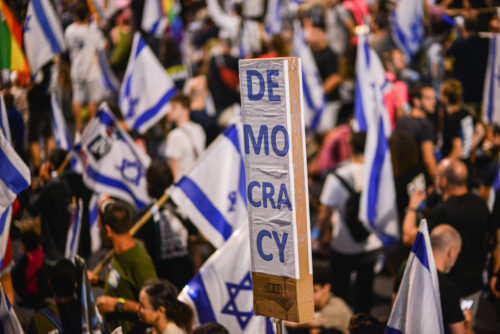
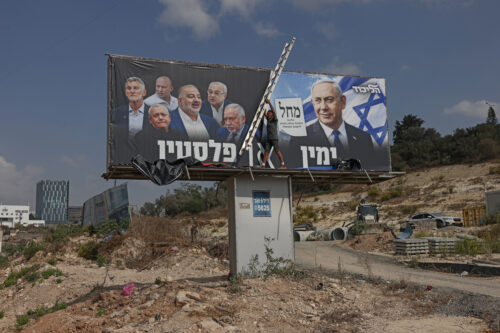
Israel is preparing to hold what may be its most consequential election in decades. On October 27, Prime Minister Benjamin Netanyahu will face his first electoral test since October 7, 2023. In this bonus episode of Middle East Focus, we present the audio from a recent MEI webinar, hosted in Israel on the eve of the vote. Senior Fellow Natan Sachs is joined by Dr. Shira Efron, Distinguished Chair for Israel Policy and senior fellow at the RAND Corporation, and Neri Zilber, veteran journalist and Financial Times correspondent. They explore what’s at stake in this historic election and how different outcomes could reshape Israel’s domestic politics and the wider region.
Israel Was Built on Hope. This Election May Be Our Last Chance to Save It
Israel’s national anthem, Hatikva, means “the hope.” Israel is not just another country, but the culmination of a 2,000-year-old dream of national redemption. The rebirth of the Jewish people’s ancestral homeland, just three years after the Holocaust, was a miraculous triumph of hope over all odds.
Today, that hope has been shattered and the elections on October 27 have become the most consequential in Israel’s history.
One striking thing about US President Donald Trump’s endorsement of Israeli Prime Minister Benjamin Netanyahu this past week is how isolated he was in making this call. The Israeli Prime Minister has become a widely detested figure worldwide following Israel’s war in Gaza—where Israel committed war crimes. This disdain was clearly on display in New York in September when dozens of diplomats streamed out of the hall during Netanyahu’s speech.
Since 1967, Israeli settlements in the West Bank have been a contested feature of the Israeli-Palestinian conflict. The ultimate disposition of the settlements and ongoing activity related to their growth have repeatedly defied agreement in negotiations over a resolution to the conflict.
The Houthis are a political-military faction and Zaydi religious movement founded in northwestern Yemen in the 1980s. A key member of Iran’s Axis of Resistance with links to other militant organizations in the Arabian Peninsula and the Horn of Africa, the group has continued to pose a threat to Western interests on a global scale.
The India-Middle East-Europe Economic Corridor (IMEC) is a proposed multinational infrastructure initiative aimed at upgrading connectivity between the three regions through integrated trade, energy, and digital networks. Announced at the G20 summit in New Delhi in September 2023, IMEC is envisioned partially as a counterweight to China’s international infrastructure project, the Belt and Road Initiative.
After a decade of post-Arab Spring isolation, Turkey’s leaders have recognized that their ambition to position the country as an agenda-setter on the world stage requires active engagement in all directions. President Recep Tayyip Erdoğan’s consolidation of executive authority has centralized foreign policy decision-making and tied it to his domestic political priorities, transforming the country’s revisionist approach to one shaped primarily by personal and pragmatic interests.
MEI Senior Fellow Brian Katulis engages friends, colleagues, and policy experts in casual conversations on the most important happenings in the Middle East.
Iranian Kurdish Group Vows to Continue Fighting Islamic Republic
The Democratic Party of Iranian Kurdistan (PDKI) will continue armed resistance against the Iranian regime, the group’s leader said in an exclusive interview with the BBC Persian published on January 30.
Ali Tayyeb-Nia, Iran’s Minister of Economy, appeared in front the parliamentarians and defended the Rouhani government’s policies to combat large-scale smuggling operations that hurt the Iranian economy. Tayyeb-Nia claimed that the value of smuggled good into Iran has decreased from “$25 billion to $15 billion.”
Iran-Backed Shiite Militias Ready to Take West Mosul
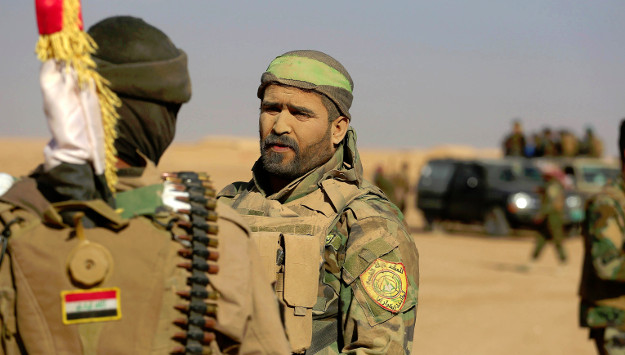
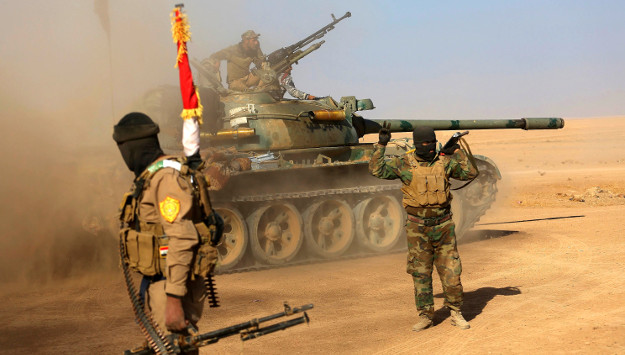
Fars News, an outlet affiliated with Iran’s Islamic Revolution Guards Corps (I.R.G.C.), has published an interview with the spokesperson of the Hashd al-Shaabi (Popular Mobilization Force), on the question of the military campaign to free the Iraqi city of Mosul from the Islamic State. Ahmad al-Assadi, the spokesperson of the Shiite-dominated Iraqi paramilitary organization, claimed in the interview that the next phase of operations to liberate west of Mosul from the Islamic State is underway.
Monday Briefing: Trump Scores a Ruinous ‘Own Goal’ in the Middle East
In this week’s Monday Briefing, MEI experts Paul Salem, Robert S. Ford, and W. Robert Pearson provide analysis on recent and upcoming events including the Trump administration’s controversial travel ban, the Syrian regime’s dismissal of calls for a cease-fire, and the upcoming meeting between German Chancellor Angela Merkel and Turkish President Recep Tayyip Erdogan.
Iranian Officials React Angrily to Trump’s Visa Ban
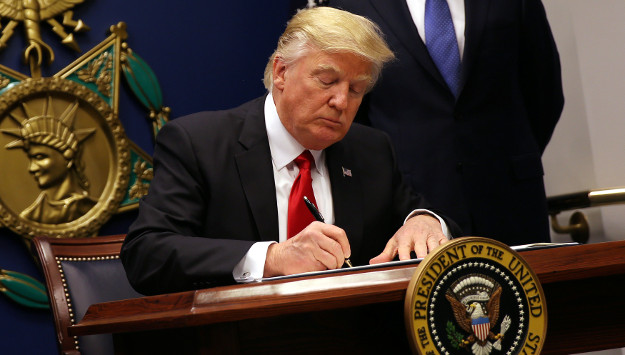
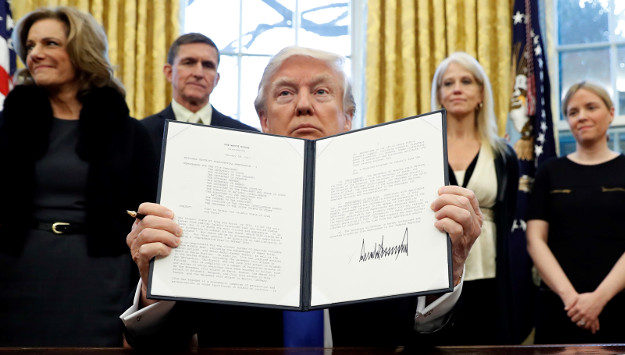
Iranian officials and state-run media have reacted angrily to President Donald Trump’s executive order that bans the entry of the citizens of Iran and six other Muslim-majority countries.
IRGC-Controlled Media Continue to Glorify Iraqi Shiite Militias
Tasnim News, an outlet that is affiliated with Iran’s Islamic Revolution Guards Corps (IRGC), has published a rare video footage of its correspondent’s account of Shiite militia operations in Iraq. In what the outlet calls “exclusive” video, the correspondent is seen accompanying fighters from Hashd al-Shaabi (Popular Mobilization Force) in the battle for Mosul against fighters from the Islamic State.
Warning about US Attempts to Attack Iran via Cyberspace
Brigadier General Gholam Reza Jalali, the head of Iran’s Civil Defense Organization, warned on January 29 that Tehran’s foreign adversaries are increasingly tapping into “social media and personal smart phones to carry out espionage operations against people.” According to Jalali, the latest smart phone technologies are so sophisticated that unsuspecting citizens in Iran can become collectors of information for foreign intelligence services.
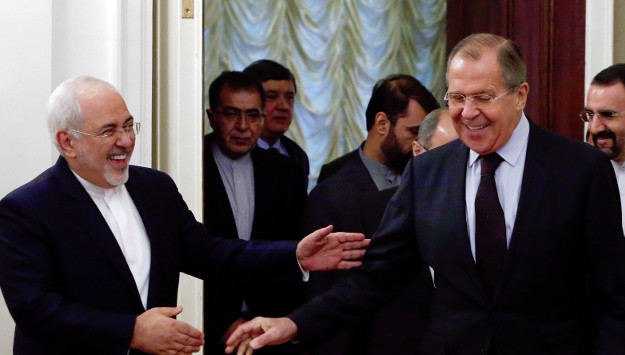
Iranian media quoted Foreign Minister Javad Zarif as stating that Iran and Russia “need to have far more extensive relations” and that “few countries in the world have as deep and historical relations as Iran and Russia.” Zarif’s unusually warm remarks about Russia were delivered on the occasion of 515 years of Iranian-Russian ties. Zarif was quick to point out that closer cooperation between Iran and Russia will be a major stabilizing factor for the future of the Middle East and Central Asia.
Iran, North Korea Call for Closer Partnership to “Resist” US
Iranian and North Korean officials have discussed ways to strengthen bilateral ties and jointly “resist” the United States and its allies, the Iranian media reports.
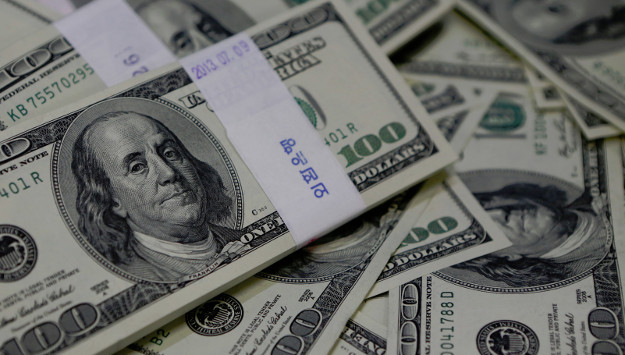
The head of the Iranian Central Bank, Valiollah Seif, has announced that Iran will stop using the American dollar as its currency of choice in its financial and foreign exchange reports from the new Iranian fiscal year that begins in March 2017. According to Iranian press reports, Tehran might opt to use the euro instead.
The oldest peer-reviewed publication dedicated to the study of the modern Middle East, MEI’s flagship journal covers politics, society, and culture in the region.