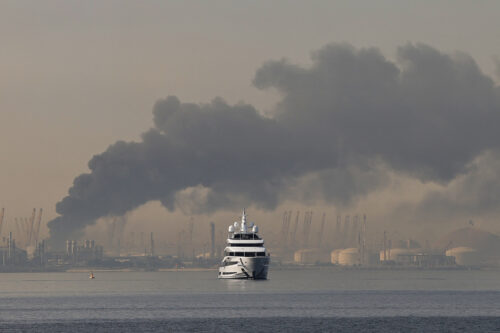
Geopolitical influence over trade increasingly rests on controlling the systems that make them work. The Middle East illustrates the stakes. US ports, cable corridors, cloud facilities, artificial intelligence (AI) investments, and maritime routes connect regional economies to global commerce while exposing them to external decisions and disruptions. For the United States, the challenge is to translate technological advantage into resilient networks rather than rely on centrality that can itself become a source of vulnerability and coercion.
Bonus Episode: Previewing Israel’s First Post-October 7 Election
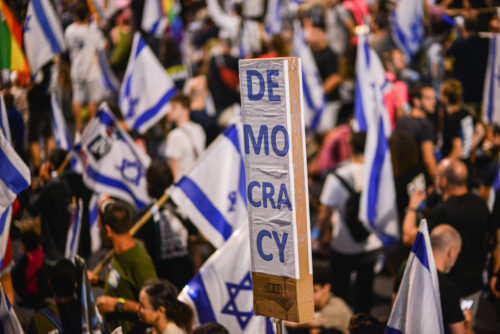
Israel is preparing to hold what may be its most consequential election in decades. On October 27, Prime Minister Benjamin Netanyahu will face his first electoral test since October 7, 2023. In this bonus episode of Middle East Focus, we present the audio from a recent MEI webinar, hosted in Israel on the eve of the vote. Senior Fellow Natan Sachs is joined by Dr. Shira Efron, Distinguished Chair for Israel Policy and senior fellow at the RAND Corporation, and Neri Zilber, veteran journalist and Financial Times correspondent. They explore what’s at stake in this historic election and how different outcomes could reshape Israel’s domestic politics and the wider region.
Israel Was Built on Hope. This Election May Be Our Last Chance to Save It
Israel’s national anthem, Hatikva, means “the hope.” Israel is not just another country, but the culmination of a 2,000-year-old dream of national redemption. The rebirth of the Jewish people’s ancestral homeland, just three years after the Holocaust, was a miraculous triumph of hope over all odds.
Today, that hope has been shattered and the elections on October 27 have become the most consequential in Israel’s history.
Since 1967, Israeli settlements in the West Bank have been a contested feature of the Israeli-Palestinian conflict. The ultimate disposition of the settlements and ongoing activity related to their growth have repeatedly defied agreement in negotiations over a resolution to the conflict.
The Houthis are a political-military faction and Zaydi religious movement founded in northwestern Yemen in the 1980s. A key member of Iran’s Axis of Resistance with links to other militant organizations in the Arabian Peninsula and the Horn of Africa, the group has continued to pose a threat to Western interests on a global scale.
The India-Middle East-Europe Economic Corridor (IMEC) is a proposed multinational infrastructure initiative aimed at upgrading connectivity between the three regions through integrated trade, energy, and digital networks. Announced at the G20 summit in New Delhi in September 2023, IMEC is envisioned partially as a counterweight to China’s international infrastructure project, the Belt and Road Initiative.
After a decade of post-Arab Spring isolation, Turkey’s leaders have recognized that their ambition to position the country as an agenda-setter on the world stage requires active engagement in all directions. President Recep Tayyip Erdoğan’s consolidation of executive authority has centralized foreign policy decision-making and tied it to his domestic political priorities, transforming the country’s revisionist approach to one shaped primarily by personal and pragmatic interests.
MEI Senior Fellow Brian Katulis engages friends, colleagues, and policy experts in casual conversations on the most important happenings in the Middle East.
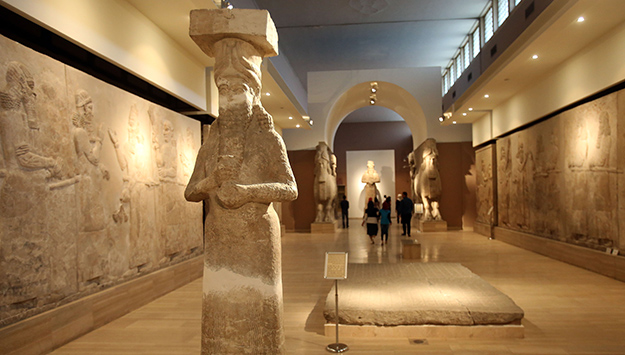
Ongoing conflict is robbing Iraq of both its future and its past by stripping the country of its tangible cultural heritage.[1] The Islamic State, as part of its strategy, is deliberately seeking to erase all aspects of Iraqi identity which compete with its own dogma. Iraq’s cultural heritage faces additional threats in the form of illicit looting, vandalism, government neglect, and political infighting.
Unregistered Women's Organizations in Turkey: Preliminary Insights
The omission of unregistered and informal organizations/groups means that the research and analysis of civil society to date has excluded a whole area of civil society organizations (CSOs). This essay discusses the findings from structured interviews with a small cohort of (mostly Kurdish) unregistered women’s organizations in Turkey regarding their sources of funding and their engagement with the political system.
Monday Briefing: Cessation of Hostilities Deal in Syria Reached … Now What?
[Oops!: If our weekly e-mail sent you here by mistake, please click here for the Sept. 19 Monday Briefing.]
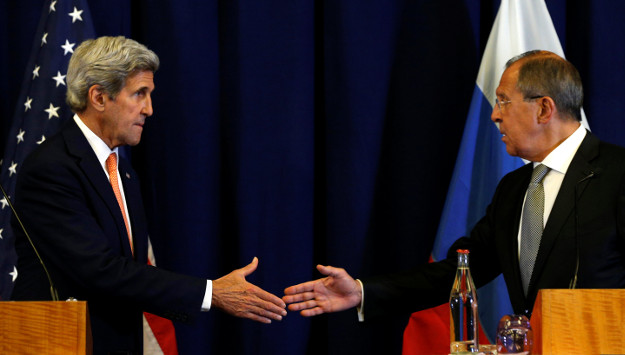
In this week’s Monday Briefing, MEI experts Robert S. Ford, Charles Lister, and Marvin G. Weinbaum provide analysis events including the announced cessation of hostilities in Syria, the Syrian rebels’ resonse to the deal, and the Afghan president’s upcoming visit to India.
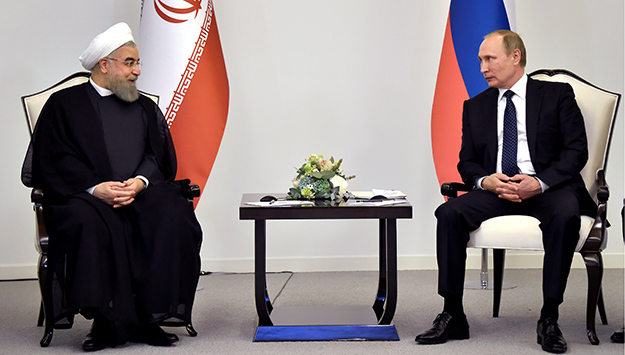
The relationship between Iran and Russia has been characterized more by competition than by cooperation in modern political history. Military incidents during the Soviet era created an atmosphere of distrust, but Russia has become an increasingly prominent economic and political partner of Iran as both countries have been targeted by Western sanctions regimes. More recently, upheaval in global energy markets and the deteriorating security situation in Syria have led to the forging of stronger commercial and political bonds between the two countries.
Middle East and North African Countries Unite to Fight Antiquities Looting, the Destruction of Cultural Heritage, and Terrorist Financing
Amman, Jordan – Seventeen countries from the Middle East and North Africa (MENA) and the League of Arab States convened today to launch an aggressive action plan to combat antiquities looting and the illicit trade in cultural heritage.
In the days after the attacks of 9/11, Americans asked fundamental questions such as “Who did this?” and “Why do they hate us?” As a nation, we were eager for a fight, for revenge, but some had another question: “How long will this war go on?”
Informal Activism and New Subjectivity in Authoritarian Settings: Iran’s “New Activists”
In times of repression, informal networks are useful to keep activism alive as they offer a way to activists for organizing. This short piece examines the background of informal activism in Iran and its possible implications.
Varieties and Dilemmas of Activism in Informal Spaces of Resistance: The Case of Burma under Military Rule
Activism in informal spaces of resistance in Burma took a large variety of forms, which often differed from horizontal, inclusive and democratic modes of mobilization. This essay sketches three of the most relevant examples of such informal activism and shares some of the lessons these examples might hold for the MENA region and beyond.
Weekly Briefing: Syria Talks at G20 Summit, Russian Moves on Israel-Palestine, and Iran Energy Policy
In this issues of MEI’s weekly briefing, contributors Daniel Serwer, Randa Slim, Eran Etzion, and Alex Vatanka provide analysis on recent and upcoming events including discussions between the United States, Russia and Turkey on Syria policy at the G20 Summit, the Syrian opposition’s transition plans, Russian moves on Israel-Palestine, and Iran’s energy policy.
Informal Networks and Political Transitions in the MENA and Southeast Asia
This collection of essays, inspired by Sean Yom’s piece “Arab Civil Society: Weaker but Deeper,” seeks to “peer into hidden spaces of resistance not captured by the formal sector” and is thus intended to complement the MAP series on
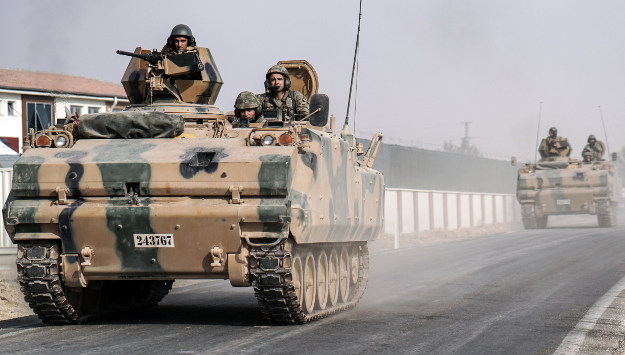
Turkey’s intervention in the Syrian conflict signals a new milestone in the five-year-old Syrian crisis, with its insertion as a new direct player certain to further complicate the dynamics of this already complicated conflict. Turkey’s Operation Euphrates Shield in northern Syria wasn’t a surprise with respect to the concept—the Turks have been advocating a safe zone for several years—but it was so in terms of timing, just six weeks after the failed coup attempt.
The Middle East Institute Denounces Fabrications and False Accusations Against one of its Scholars
It has come to our attention that unknown fabricators have created and distributed an article in Turkish and Russian outlets concerning the Patriarch of Constantinople and the events of the recent failed coup in Turkey, and they have fraudulently attributed that article to one of our scholars, Arthur H. Hughes.
“[Food insecurity has] the potential to amplify destabilization, engender violence, and even accelerate state failure processes in an already geopolitically charged region”
– Andy Spiess in Food Security in the GCC Economies (2012)
The oldest peer-reviewed publication dedicated to the study of the modern Middle East, MEI’s flagship journal covers politics, society, and culture in the region.