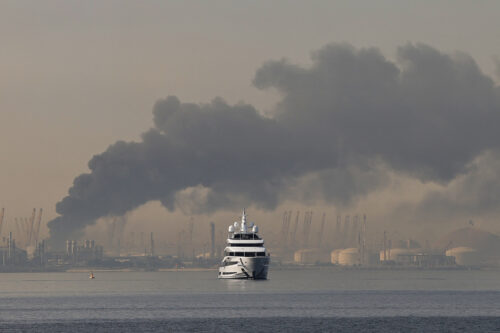
Geopolitical influence over trade increasingly rests on controlling the systems that make them work. The Middle East illustrates the stakes. US ports, cable corridors, cloud facilities, artificial intelligence (AI) investments, and maritime routes connect regional economies to global commerce while exposing them to external decisions and disruptions. For the United States, the challenge is to translate technological advantage into resilient networks rather than rely on centrality that can itself become a source of vulnerability and coercion.
Bonus Episode: Previewing Israel’s First Post-October 7 Election
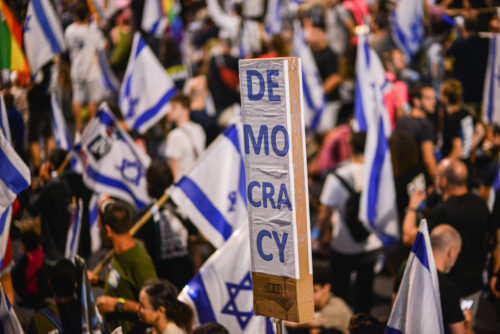
Israel is preparing to hold what may be its most consequential election in decades. On October 27, Prime Minister Benjamin Netanyahu will face his first electoral test since October 7, 2023. In this bonus episode of Middle East Focus, we present the audio from a recent MEI webinar, hosted in Israel on the eve of the vote. Senior Fellow Natan Sachs is joined by Dr. Shira Efron, Distinguished Chair for Israel Policy and senior fellow at the RAND Corporation, and Neri Zilber, veteran journalist and Financial Times correspondent. They explore what’s at stake in this historic election and how different outcomes could reshape Israel’s domestic politics and the wider region.
Israel Was Built on Hope. This Election May Be Our Last Chance to Save It
Israel’s national anthem, Hatikva, means “the hope.” Israel is not just another country, but the culmination of a 2,000-year-old dream of national redemption. The rebirth of the Jewish people’s ancestral homeland, just three years after the Holocaust, was a miraculous triumph of hope over all odds.
Today, that hope has been shattered and the elections on October 27 have become the most consequential in Israel’s history.
Since 1967, Israeli settlements in the West Bank have been a contested feature of the Israeli-Palestinian conflict. The ultimate disposition of the settlements and ongoing activity related to their growth have repeatedly defied agreement in negotiations over a resolution to the conflict.
The Houthis are a political-military faction and Zaydi religious movement founded in northwestern Yemen in the 1980s. A key member of Iran’s Axis of Resistance with links to other militant organizations in the Arabian Peninsula and the Horn of Africa, the group has continued to pose a threat to Western interests on a global scale.
The India-Middle East-Europe Economic Corridor (IMEC) is a proposed multinational infrastructure initiative aimed at upgrading connectivity between the three regions through integrated trade, energy, and digital networks. Announced at the G20 summit in New Delhi in September 2023, IMEC is envisioned partially as a counterweight to China’s international infrastructure project, the Belt and Road Initiative.
After a decade of post-Arab Spring isolation, Turkey’s leaders have recognized that their ambition to position the country as an agenda-setter on the world stage requires active engagement in all directions. President Recep Tayyip Erdoğan’s consolidation of executive authority has centralized foreign policy decision-making and tied it to his domestic political priorities, transforming the country’s revisionist approach to one shaped primarily by personal and pragmatic interests.
MEI Senior Fellow Brian Katulis engages friends, colleagues, and policy experts in casual conversations on the most important happenings in the Middle East.
This essay examines the need to understand and quantify natural hazards and the associated risks and their inter-connectedness so that societies are better positioned to guard against and bounce back from these potentially catastrophic events. The essay describes the genesis, objectives and goals of the South East Asia Risk Collaboration Hub (SEARCH), a knowledge-driven enterprise that provides a platform for the private sector and academia to discuss these crucial issues.
Monday Briefing: After Turkey's Failed Coup, How Far Will the Crackdown Go?
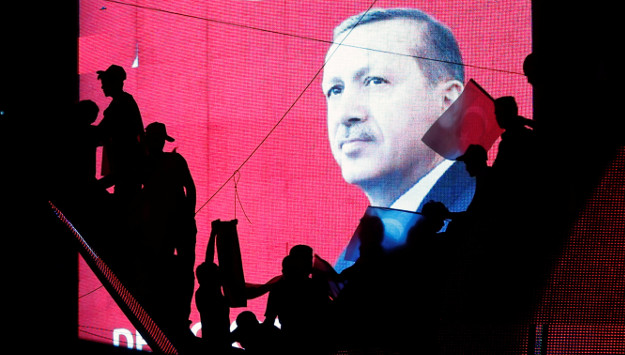
In this week’s Monday Briefing, MEI expert W. Robert Pearson provides analysis on the failed coup in Turkey and the impending crackdown on opposition. Marvin Weinbaum considers whether the unpopularity of Pakistan’s government could put it at risk of a military coup of its own. And Charles Lister looks at how ISIS is adapting in the face of territorial losses in Iraq and Syria.
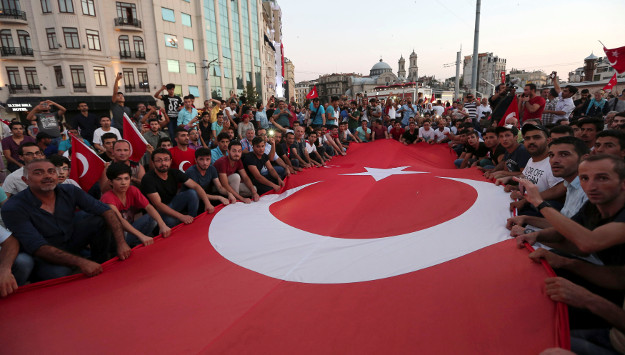
A military coup succeeds or fails quickly. The July 15 attempt in Turkey now is over with thousands arrested, hundreds killed and Turkey in traumatic shock. The reasons behind a coup attempt, however, do not rise or disappear as quickly.
The Role of Emotional Intelligence in Humanitarian Response
Emotional intelligence (E.I.) emerged from the premise that emotions have an impact on almost every aspect of human experience. E.I. refers to the ability to use emotions effectively and productively. Drawing mainly upon Daniel Goleman’s five-component model of E.I. at work, this essay considers how the qualities of emotional intelligence might be integrated into disaster response thinking, planning, and operations.
Disaster Law: The Rubric of Institutional Preparedness in Disaster Risk Reduction
In this essay, Amita Singh relates what disaster law (D.L.) is, why it is needed, and how it can help make communities safer from disasters. The essay examines the earthquake that struck Manipur, India in January 2016, highlighting the many institutional shortcomings of the response to this calamity. In order to address these problems, the author urges that considerably more research be conducted so as to accelerate the development of disaster law.
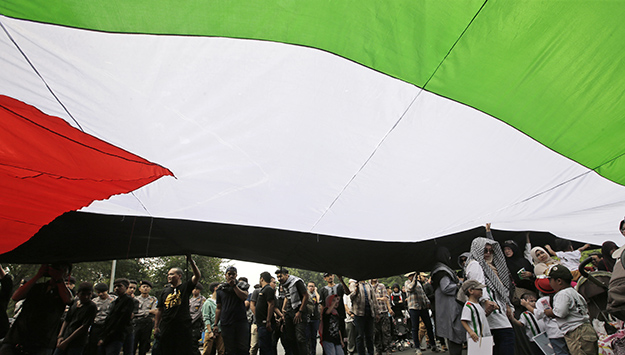
The current Palestinian leadership does not appear ready for sudden independence. Despite the push for Palestinian statehood, there remains weaknesses in the Palestinian political establishment that undermine this quest. Political and social fragmentation, a lack of representative leadership and an inability to apply the rule of law seem to indicate that if Palestine were to become an independent state tomorrow, it would falter.
Monday Briefing: Chilcot Report, French FM in Lebanon, Iran Economy
In this week’s Monday Briefing, MEI experts Daniel Serwer, Alex Vatanka, and Paul Salem provide analysis on recent and upcoming events including the recent Chilcot Report, European trade delegations visit to Iran, and France’s push to end the Lebanon stalemate.
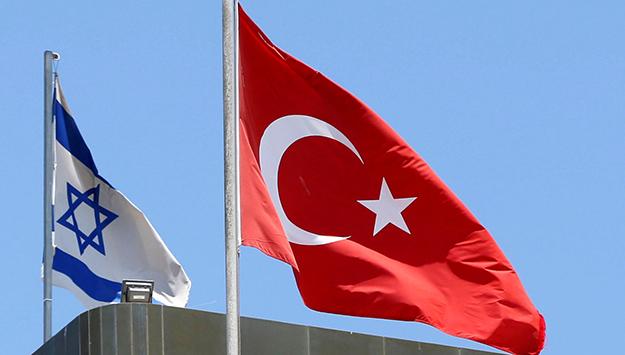
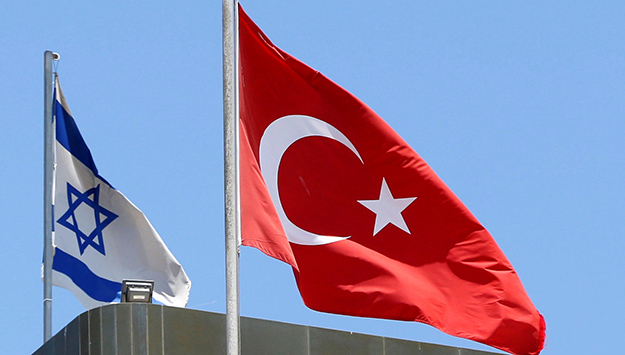
After years of negotiations that produced sporadic headlines but few results, Israel and Turkey finally reached terms for reconciliation on June 27. While relations will not return to the “love affair” of the 1990s, there is reason for cautious optimism. Rapprochement will serve to create the foundation for a stronger dialogue between two of the Middle East’s most important actors.
The walls of the Oman Library are decorated with delicate painted eyes, colored in hazel and warm greys. After only a few steps, their discreet, and grief-stricken nature gives way to boldness and haunting certainty. They are eyes that refuse to be ignored.
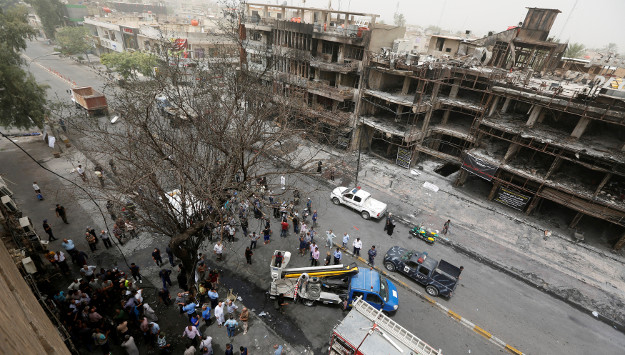
Weekly Briefing: Baghdad Bombing, NATO Summit, Israel’s Africa Outreach, and Saudi Embassy Trial in Iran
In this week’s briefing, MEI experts Hassan Mneimneh, Daniel Serwer, Paul Scham, and Alex Vatanka provide analysis on recent and upcoming events including the ISIS bombing in Baghdad, this week’s NATO summit in Warsaw, Israel’s outreach to Africa, and the trial in Iran over the ransacking of the Saudi embassy.
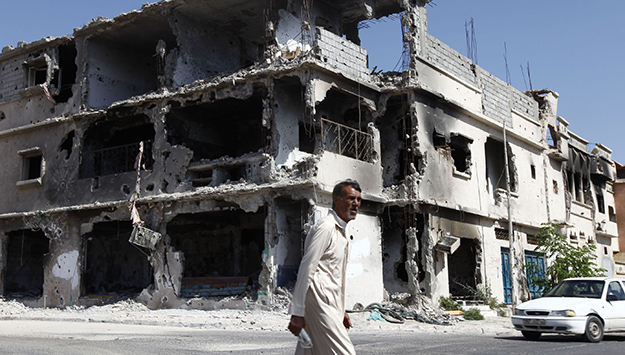
After the liberation of Sirte from ISIS, now the really hard work begins. The nine-member Presidential Council (P.C.) and the Government of National Accord (G.N.A.) that it named under Prime Minister Fayez Serraj have yet to receive an affirmative vote from the House of Representatives (H.O.R.) in Tobruk. Although a majority of H.O.R. members were prepared many weeks ago to confirm Serraj and his cabinet, speaker Aquila Saleh declined to bring the matter to a vote.
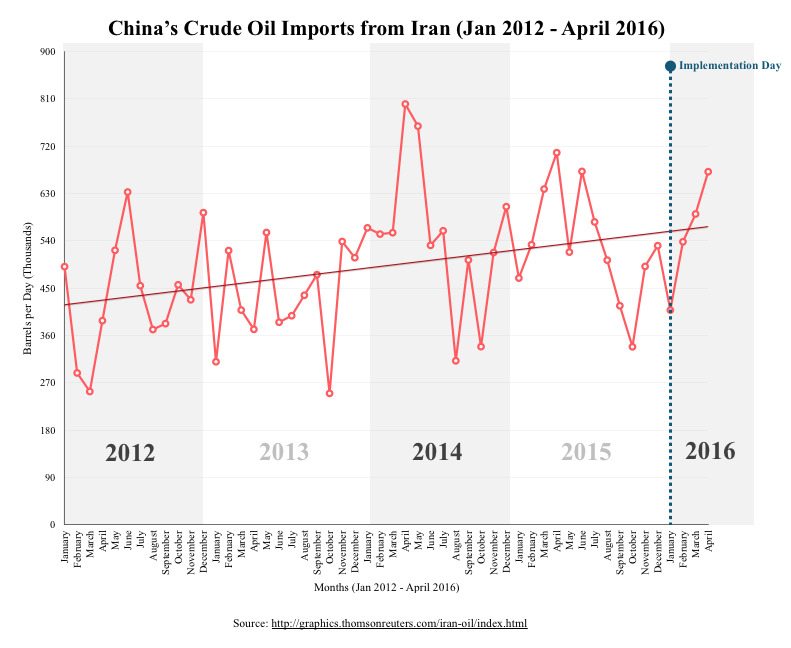
In 2011, China purchased 550,000 b/d, or 11% of its total crude oil imports, from Iran. However, the next year, China’s crude oil imports from Iran plummeted by 20% due to the imposition of nuclear-related sanctions on Iran by the U.S. and European countries. In 2012 and 2013 China’s purchases from Iran fell to just 8% of its total crude oil imports. Progress in the negotiations between Iran and the P-5+1 countries at the end of 2013 permitted China to restore crude imports from Iran to pre-sanction levels.
The oldest peer-reviewed publication dedicated to the study of the modern Middle East, MEI’s flagship journal covers politics, society, and culture in the region.