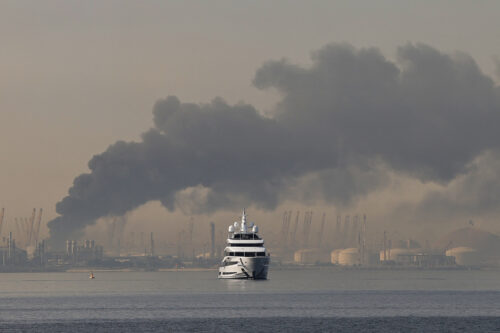
Geopolitical influence over trade increasingly rests on controlling the systems that make them work. The Middle East illustrates the stakes. US ports, cable corridors, cloud facilities, artificial intelligence (AI) investments, and maritime routes connect regional economies to global commerce while exposing them to external decisions and disruptions. For the United States, the challenge is to translate technological advantage into resilient networks rather than rely on centrality that can itself become a source of vulnerability and coercion.
Bonus Episode: Previewing Israel’s First Post-October 7 Election
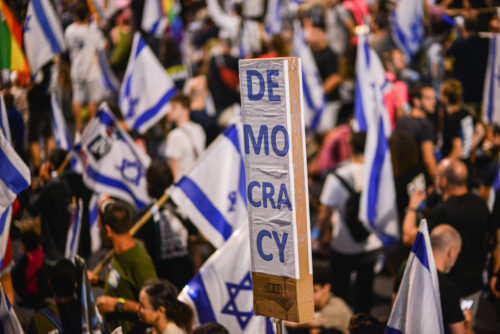
Israel is preparing to hold what may be its most consequential election in decades. On October 27, Prime Minister Benjamin Netanyahu will face his first electoral test since October 7, 2023. In this bonus episode of Middle East Focus, we present the audio from a recent MEI webinar, hosted in Israel on the eve of the vote. Senior Fellow Natan Sachs is joined by Dr. Shira Efron, Distinguished Chair for Israel Policy and senior fellow at the RAND Corporation, and Neri Zilber, veteran journalist and Financial Times correspondent. They explore what’s at stake in this historic election and how different outcomes could reshape Israel’s domestic politics and the wider region.
Israel Was Built on Hope. This Election May Be Our Last Chance to Save It
Israel’s national anthem, Hatikva, means “the hope.” Israel is not just another country, but the culmination of a 2,000-year-old dream of national redemption. The rebirth of the Jewish people’s ancestral homeland, just three years after the Holocaust, was a miraculous triumph of hope over all odds.
Today, that hope has been shattered and the elections on October 27 have become the most consequential in Israel’s history.
Since 1967, Israeli settlements in the West Bank have been a contested feature of the Israeli-Palestinian conflict. The ultimate disposition of the settlements and ongoing activity related to their growth have repeatedly defied agreement in negotiations over a resolution to the conflict.
The Houthis are a political-military faction and Zaydi religious movement founded in northwestern Yemen in the 1980s. A key member of Iran’s Axis of Resistance with links to other militant organizations in the Arabian Peninsula and the Horn of Africa, the group has continued to pose a threat to Western interests on a global scale.
The India-Middle East-Europe Economic Corridor (IMEC) is a proposed multinational infrastructure initiative aimed at upgrading connectivity between the three regions through integrated trade, energy, and digital networks. Announced at the G20 summit in New Delhi in September 2023, IMEC is envisioned partially as a counterweight to China’s international infrastructure project, the Belt and Road Initiative.
After a decade of post-Arab Spring isolation, Turkey’s leaders have recognized that their ambition to position the country as an agenda-setter on the world stage requires active engagement in all directions. President Recep Tayyip Erdoğan’s consolidation of executive authority has centralized foreign policy decision-making and tied it to his domestic political priorities, transforming the country’s revisionist approach to one shaped primarily by personal and pragmatic interests.
MEI Senior Fellow Brian Katulis engages friends, colleagues, and policy experts in casual conversations on the most important happenings in the Middle East.
Ensuring More Effective Responses to Natural Disasters: Pakistan in Perspective
This essay draws on recent examples of efforts to respond to natural disasters in order to shed light on some of the main reasons such efforts often fall short of their desired outcome. To address these shortcomings, the author advocates, above all, the adoption of a long-term, holistic approach to disasters that could mitigate the risks associated with “slow burn” crises.
Governance Framework for Humanitarian Assistance and Disaster Response in ASEAN
This essay discusses the steps taken and progress made by the Association of Southeast Asian Nations (ASEAN) to address issues of humanitarian action and disaster response (HA/DR) in the region. The essay outlines ASEAN’s evolving governance framework for humanitarian and disaster relief (HA/DR), focusing on 1) the regulatory foundation, 2) key sectors and actors, 3) instruments to mobilize resources, and 4) coordination mechanisms. The essay also offers some thoughts about which principles and actions adopted by ASEAN member states aimed at strengthening their collective preparedness to respond to large-scale disasters might be applicable to the Middle East.
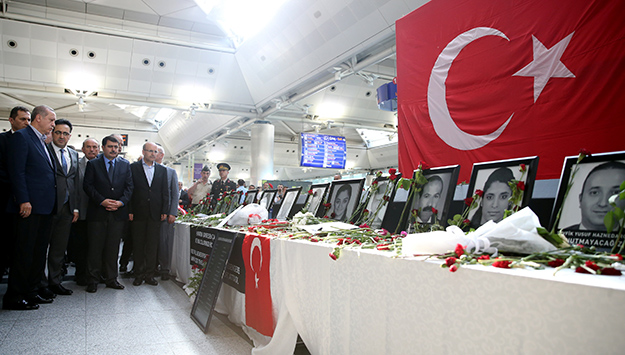
The gut-wrenching tragedy at Istanbul’s Ataturk Airport offers a chance now to strike more damaging blows against ISIS. The cold-blooded massacre of June 28 reveals key facts that call for a rapid and comprehensive response. Recognizing the truth of this massacre opens the door to a new start in Turkey’s own war policy to complement its recent diplomatic efforts to improve its international ties.
Private Sector Engagement in Disaster Response: Opportunity and Lessons
Public officials and other stakeholders in the Asia Pacific and MENA regions face the challenge of finding ways to strengthen their capacity to respond to natural disasters, and thereby reduce the loss of life and economic damage caused by them. This essay examines the opportunities for private sector engagement in disaster response and humanitarian assistance and the potential contribution of such engagement to mitigating disaster impacts in the MENA region.
Having begun to turn the corner in the fight against ISIS earlier this year, it’s safe to say that we have now secured significant momentum in dissolving the terrorist group’s “state” project.
Although more victories have been won in Iraq, Syria too has witnessed ISIS lose a great deal more territory than it has won since mid-2014. It would seem therefore, that we have much to celebrate.
An “All-Hazards” Approach to Resilience: Benefits and Building Blocks
What could be done to guard against the possibility of a multi-disaster incident? Drawing upon the experience of the Great East Japan Earthquake of 2011, this essay discusses the need for, value of, and prerequisites for instituting an “All-Hazards” emergency management strategy.
The Next Challenge: Governing Liberated Cities after ISIS
Lieutenant General Abdulwahab al-Saadi, the Iraqi commander of the Iraqi forces fighting to retake Fallujah, said June 23 that his units held 80 percent of the city. This contrasts with the estimate from the U.S. military spokesman in Iraq on June 22, who said that Iraqi forces held only a third of the city. Whatever the exact figure, after heavy fighting, often street-by-street, the Islamic State will lose the city.
The Libyan Presidential Council (P.C.), representing a rough consensus of Libyan political forces, is making slow but promising gains in several key areas. There will probably be setbacks on the road to the kind of progress that will generate wider support from both key Libyan factions and the general populace. Signs are encouraging, however, in areas such as security and legitimacy. It is too early to say that the Government of National Accord (G.N.A.) appointed by the P.C. is truly governing, but it is taking steps that provide more confidence to the international community.
Monday Briefing: Brexit’s Impact on the Middle East; Syria File Changes Hands in Iran
In this week’s Monday Briefing, MEI experts Daniel Serwer, Paul Scham, and Alex Vatanka provide analysis on recent and upcoming events including Brexit’s impact on the Middle East, how Brexit is distracting the E.U. from Israel-Palestine issues, and Iran’s more moderate reshuffling of officials focusing on Syria.
Information Filtering in Social Media During Disasters
Disaster relief systems are built upon the assumption that information provided by volunteers is accurate. In recent years, social media have become widely used tools to assist in disaster relief. This essay brings to light the various types of unwanted data and their characteristics. Drawing on the case of the 2011 earthquake and tsunami in Japan, the essay shows how social media can support as well as impede relief efforts. The essay concludes with suggestions regarding how to ‘filter’ information so as to help make social media a more effective disaster relief tool.
A small, darkened theater in Hackney was transformed this month into a portal for Palestine, Bradford, New York City, and a London suburb. But the quartet of monologues by Hassan Abdulrazzak—performed admirably by Asif Khan—traversed these disparate landscapes using humor as subversion, providing a unique window into otherwise humorless subjects.
Blanket Approaches in Humanitarian Response: Reflections from the 2015 Nepal Earthquake
In April and May 2015, two large-scale earthquakes struck Nepal, killing almost 9,000 people, damaging over half a million houses and displacing hundreds of thousands of people from their homes. This essay focuses on a particular aspect of the response to this disaster—namely, the use of the ‘blanket’ approach as a basis for the distribution of relief. It suggests that while blanket approaches are commonly used in the immediate aftermath of rapid onset disasters, unless replaced as soon as feasible with approaches that target vulnerability, they can very easily result in the exclusion of those most desperately in need.
The oldest peer-reviewed publication dedicated to the study of the modern Middle East, MEI’s flagship journal covers politics, society, and culture in the region.