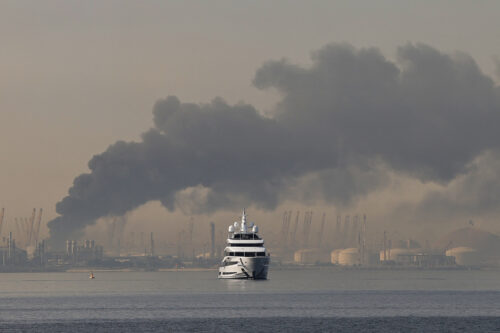
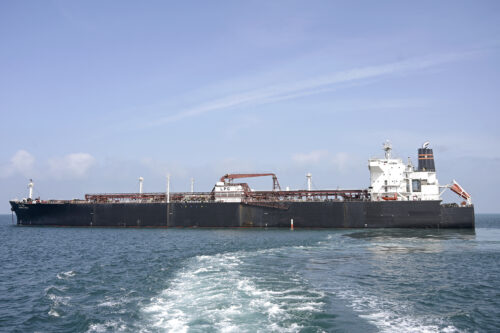
Geopolitical influence over trade increasingly rests on controlling the systems that make them work. The Middle East illustrates the stakes. US ports, cable corridors, cloud facilities, artificial intelligence (AI) investments, and maritime routes connect regional economies to global commerce while exposing them to external decisions and disruptions. For the United States, the challenge is to translate technological advantage into resilient networks rather than rely on centrality that can itself become a source of vulnerability and coercion.
Bonus Episode: Previewing Israel’s First Post-October 7 Election
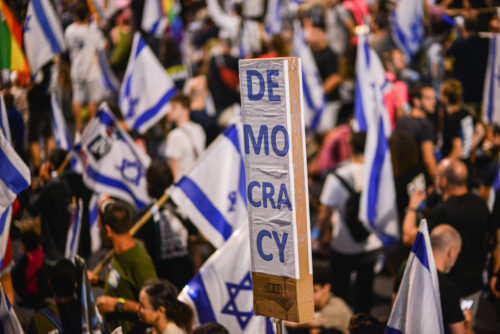
Israel is preparing to hold what may be its most consequential election in decades. On October 27, Prime Minister Benjamin Netanyahu will face his first electoral test since October 7, 2023. In this bonus episode of Middle East Focus, we present the audio from a recent MEI webinar, hosted in Israel on the eve of the vote. Senior Fellow Natan Sachs is joined by Dr. Shira Efron, Distinguished Chair for Israel Policy and senior fellow at the RAND Corporation, and Neri Zilber, veteran journalist and Financial Times correspondent. They explore what’s at stake in this historic election and how different outcomes could reshape Israel’s domestic politics and the wider region.
Israel Was Built on Hope. This Election May Be Our Last Chance to Save It
Israel’s national anthem, Hatikva, means “the hope.” Israel is not just another country, but the culmination of a 2,000-year-old dream of national redemption. The rebirth of the Jewish people’s ancestral homeland, just three years after the Holocaust, was a miraculous triumph of hope over all odds.
Today, that hope has been shattered and the elections on October 27 have become the most consequential in Israel’s history.
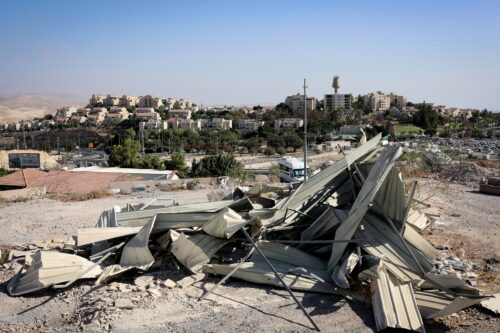
Since 1967, Israeli settlements in the West Bank have been a contested feature of the Israeli-Palestinian conflict. The ultimate disposition of the settlements and ongoing activity related to their growth have repeatedly defied agreement in negotiations over a resolution to the conflict.
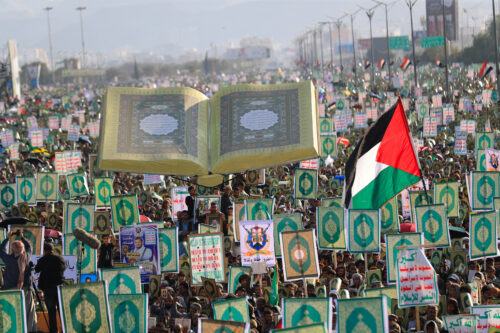
The Houthis are a political-military faction and Zaydi religious movement founded in northwestern Yemen in the 1980s. A key member of Iran’s Axis of Resistance with links to other militant organizations in the Arabian Peninsula and the Horn of Africa, the group has continued to pose a threat to Western interests on a global scale.
The India-Middle East-Europe Economic Corridor (IMEC) is a proposed multinational infrastructure initiative aimed at upgrading connectivity between the three regions through integrated trade, energy, and digital networks. Announced at the G20 summit in New Delhi in September 2023, IMEC is envisioned partially as a counterweight to China’s international infrastructure project, the Belt and Road Initiative.
After a decade of post-Arab Spring isolation, Turkey’s leaders have recognized that their ambition to position the country as an agenda-setter on the world stage requires active engagement in all directions. President Recep Tayyip Erdoğan’s consolidation of executive authority has centralized foreign policy decision-making and tied it to his domestic political priorities, transforming the country’s revisionist approach to one shaped primarily by personal and pragmatic interests.
MEI Senior Fellow Brian Katulis engages friends, colleagues, and policy experts in casual conversations on the most important happenings in the Middle East.
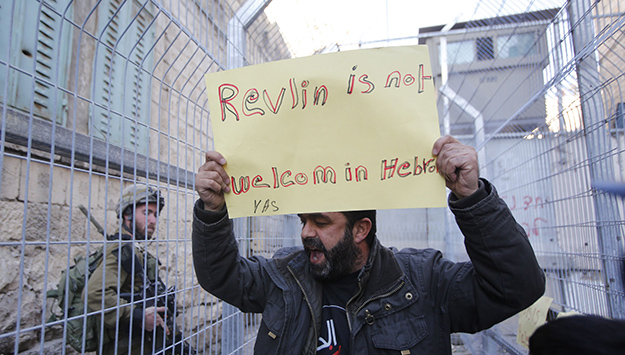
Israeli President Reuven “Ruby” Rivlin was recently asked about the prospects for a two-state solution to Israel’s long conflict with the Palestinians. He described this concept for building a future between Israel and its neighbor as “irrelevant.” Indeed, he claims to have said as much to President Barack Obama when they last met.
What does “irrelevant” mean in this context? The dictionary lists as its synonyms “immaterial” or “beside the point.”
Monday Briefing: ISIS to Lose Fallujah; Pakistan to Join S.C.O.
In this week’s Monday Briefing, MEI experts Robert S. Ford, Paul Scham, and Marvin G. Weinbaum provide analysis on recent events including the battle against ISIS for Fallujah, Israel’s upcoming address to the EU Parliament, and Pakistan’s upcoming accession to the Shanghai Cooperation Organization.
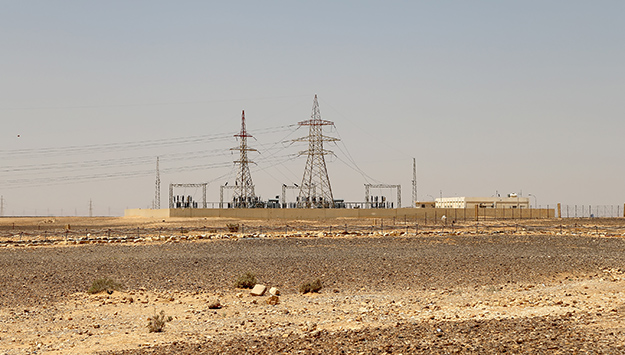
Amidst great excitement, Jordan signed a $10 billion agreement with Russia to construct the country’s first nuclear power plant in March 2015. Chairman of Jordan’s Atomic Energy Commission (JAEC) Khalid Toukan confidently asserted, “We aim to build a state of the art nuclear power plant that will be a showcase for the region.” Promising cheap energy, Toukan assured that nuclear power is the optimal way forward.
This essay provides a brief look at the Philippines experience as a means of highlighting the interplay between disaster risk reduction and politics with regard to disaster diplomacy across the Asia-Pacific and Middle East and North Africa (MENA) regions and beyond.
Egypt, which enjoys friendly relations with both the Palestinian Authority and Israel, understands that it must normalize relations with Hamas to be able to act as a mediator between the three parties. The Egyptian government, which has yet to achieve convincing results in the fight against terrorist groups in Sinai, is also in need of Hamas’ cooperation in this area.
Violence and the Contradictory Coexistence of Peace and Conflict in the Asia Pacific Region
This essay explores the making of a “dominant identity,” a political mechanism that serves only one purpose: maintaining a state’s hegemony. Discussing the current crisis in the South China Sea and reflecting on the 1956 Suez crisis, it explores strategies used by “mighty” states to build coalitions, and asks why some international actors cannot submit to the standard of a peaceful social life they claim to support.
Monday Briefing: Responding to Orlando, ISIS in Libya, and Hamas-Fatah Meeting
In this week’s Monday Briefing, MEI chairman Richard A. Clarke responds to the mass shooting in Orlando, and Charles Lister and Antoun Issa provide analysis on events including the pushing back of ISIS in Libya and the upcoming meeting of Hamas and Fatah.
For several years, Israeli-Saudi collaboration over regional geostrategy to check Iranian influence has been the worst kept secret in the Middle East since the advent of Israel’s robust nuclear arsenal. Still, public coordination has been taboo, and while indirect, and even direct, coordination may be taking place behind closed doors, no official relationships can develop. This, of course, is due to the history between the state of Israel and the Arab world.
Learning from Deaths in Disasters: The Case of Odisha, India
In 1999, Odisha, India was struck by a super cyclone featuring an unprecedented storm surge and torrential rainfall that resulted in widespread devastation and a substantial loss of life. Fourteen years later, the same area was hit by Cyclone Phailin, which despite its severity, claimed relatively few lives. This essay examines the reasons for the starkly different death tolls and considers what lessons could be drawn from the responses to these two disasters.
The oldest peer-reviewed publication dedicated to the study of the modern Middle East, MEI’s flagship journal covers politics, society, and culture in the region.