Skip to Content

Research & Commentary

Read in-depth research, analysis, and commentary from MEI’s fellows and experts on the Middle East. 

Trump’s Family Business Deals Risk Further Undermining the Credibility of US Middle East Policy
  • Analysis
  • Trump’s Family Business Deals Risk Further Undermining the Credibility of US Middle East Policy

    President Trump’s family businesses are once again in the spotlight as a new financial disclosure showed they earned $2 billion in income in 2025 — a dramatic increase on the year before, with much of it coming from Gulf entities, raising emoluments concerns. Mounting perceptions of corruption, combined with unresolved crises in Iran and Israel-Palestine, are eroding trust among key partners in the Middle East. With the 2026 midterms approaching, these entanglements could represent a major political vulnerability and further undermine America’s already-strained standing in the region.

    Do the Gulf States Need a New Playbook?
  • Podcast
  • Do the Gulf States Need a New Playbook?

    After the US-Israel-Iran war — and the strikes that followed the cease-fire — the Gulf states find themselves dangerously exposed. Host Alistair Taylor is joined by MEI Associate Fellow Gregory Gause to discuss the war’s impact on the Gulf, their partnership with the United States, and whether the turmoil of recent months will push Gulf leaders to reassess their alliances and international engagement.

    July 2, 2026

    Additional Research & Commentary

    Backgrounders

    The Houthis
  • Backgrounder
  • The Houthis

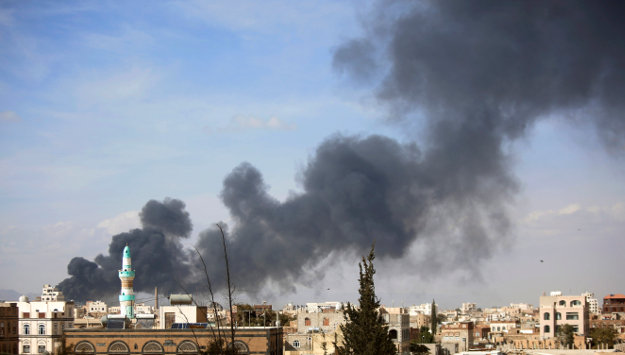
    The Houthis are a political-military faction and Zaydi religious movement founded in northwestern Yemen in the 1980s. A key member of Iran’s Axis of Resistance with links to other militant organizations in the Arabian Peninsula and the Horn of Africa, the group has continued to pose a threat to Western interests on a global scale.

    May 15, 2026

    The Abraham Accords
    Photo by Alex Wong/Getty Images
  • Backgrounder
  • The Abraham Accords

    This backgrounder provides an overview of how the Abraham Accords came about, the US interests involved, their economic and strategic consequences, and the prospects for further enlargement going forward.

    November 17, 2025

    Turkish Foreign Policy
  • Backgrounder
  • Turkish Foreign Policy

    After a decade of post-Arab Spring isolation, Turkey’s leaders have recognized that their ambition to position the country as an agenda-setter on the world stage requires active engagement in all directions. President Recep Tayyip Erdoğan’s consolidation of executive authority has centralized foreign policy decision-making and tied it to his domestic political priorities, transforming the country’s revisionist approach to one shaped primarily by personal and pragmatic interests.

    April 23, 2026

    Western Sahara: Why the conflict still matters
  • Video
  • Western Sahara: Why the conflict still matters

    As the Western Sahara conflict reaches its fifth decade, the territorial dispute remains unresolved and largely unknown. MEI’s Intissar Fakir unpacks the Western Sahara’s complex history and the rival claims by Morocco and the Sahrawi Arab Democratic Republic. She examines recent developments, such as President Trump’s recognition of Moroccan sovereignty over the territory and the collapse of a 30-year cease-fire, as well as the core questions that remain unanswered after half a century.

    August 7, 2025

    Podcasts

    Middle East Focus

    MEI’s flagship weekly podcast on US foreign policy and contemporary political and social issues in the Middle East.

    Taking the Edge Off the Middle East

    MEI Senior Fellow Brian Katulis engages friends, colleagues, and policy experts in casual conversations on the most important happenings in the Middle East. 

    Rethinking Democracy

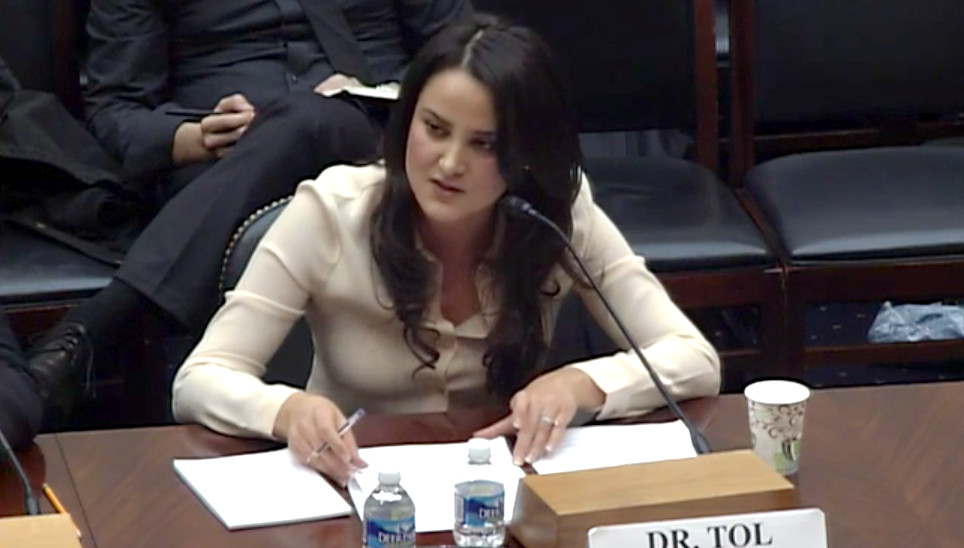
    MEI Senior Fellow Gonul Tol hosts leading scholars and thought leaders on global democracy trends and the state of the liberal international order. 

    Filter by
    8748 Results
    Turkey Should Avoid Getting Involved in the Saudi-Iran Row
  • Analysis
  • Turkey Should Avoid Getting Involved in the Saudi-Iran Row

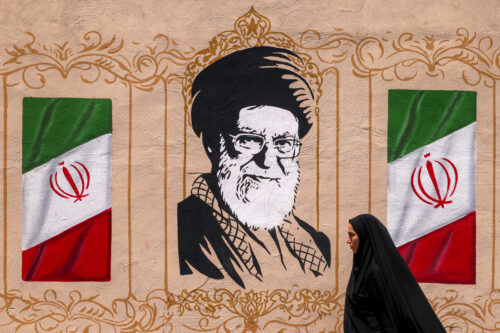
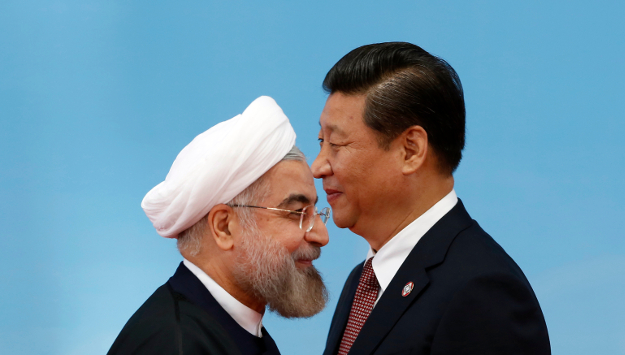
    Turkey’s reaction to the latest spat between Saudi Arabia and Iran spells more trouble for Ankara at a time when it is already at loggerheads with many of its neighbors. Initial remarks by Deputy Prime Minister Numan Kurtulmus criticizing both sides were an attempt to keep Turkey out of the rift. He was upstaged, however, by Turkey’s foreign ministry, which followed up with a statement singling out Iran for condemnation.

    Sold Overnight: Istanbul’s Gecekondu Housing and the Challenge of Ownership
    Middle East Institute
  • Analysis
  • Sold Overnight: Istanbul’s Gecekondu Housing and the Challenge of Ownership

    Contrary to neoliberalist conceptualizations of the role of the state (or its absence) in urban development, in the case of Istanbul, the state’s absence, or at the very least its silent laissez-faire attitude, actually produced an opening for poor, rural migrants to create their own (informal) housing in and around the city. With the increasing desirability of urban land to domestic and international developers, however, it was precisely the advent of state regulation that led to the increasing displacement of Istanbul’s gecekondu residents.

    January 12, 2016

    Middle Eastern Cinema in the Spotlight at Palm Springs
  • Analysis
  • Middle Eastern Cinema in the Spotlight at Palm Springs

    Palm Springs is not a place normally associated with cutting edge Middle Eastern cinema.

    In fact, the obvious connections to the region are more about geography and agriculture—desert scenes reminiscent of Palestine or Iraq, date palms from North Africa—than film.

    January 11, 2016

    Saudi-Iran Tensions Place Pressure on Smaller GCC States
  • Analysis
  • Saudi-Iran Tensions Place Pressure on Smaller GCC States

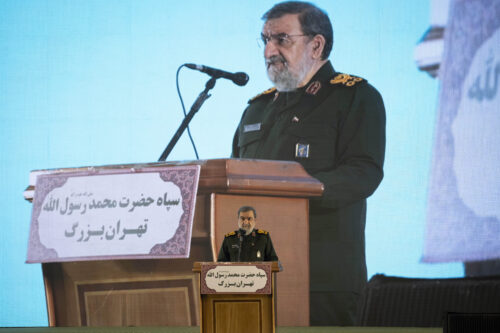
    The recent escalation in tension between Saudi Arabia and Iran is throwing the GCC into a crisis of unity. Riyadh’s actions in particular are built on the frustration of the Yemen war and the perception of Iranian encroachment in Arab lands that the Saudi kingdom believes is its domain. King Salman and his son, Deputy Crown Prince Mohammad bin Salman, feel the kingdom is being ignored by the international community in other hot zones, namely Syria, where the outcome of the war is being determined by Washington and Moscow.

    January 11, 2016

    Economic Integration Can Ease Regional Tensions
  • Analysis
  • Economic Integration Can Ease Regional Tensions

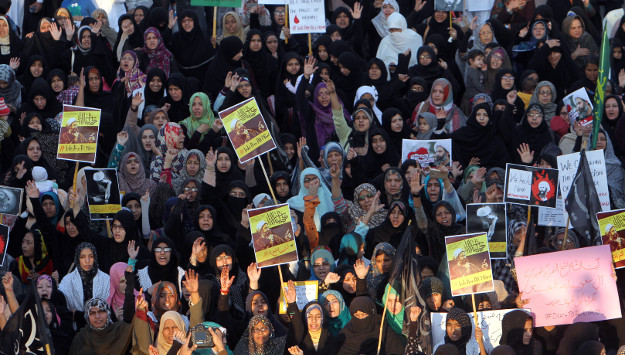
    The New Year has seen relations in the region spiral out of control with Saudi Arabia cutting off diplomatic ties with the Islamic Republic of Iran. Sectarian tensions mounted following the execution of prominent Saudi Shi’a cleric Nimr al-Nimr and the subsequent attack on the Saudi embassy in Tehran. The immediate impacts of this escalation will likely be felt in Yemen, with the latest ceasefire collapsing over the New Year, and in Syria where U.N.-sponsored peace talks are set to begin later this month.

    January 8, 2016

    Flood Governance in Jakarta: The Role of CBOs in Mitigating Annual Floods
    Middle East Institute
  • Analysis
  • Flood Governance in Jakarta: The Role of CBOs in Mitigating Annual Floods

    An effective flood mitigation and management in Indonesia particularly in megacities such as Jakarta requires a strong community participation particularly from the riverbank residents. The residents of slums and squatter settlements in riverbanks are the players of the informal sector who play an important role in the process of urban transformation in Indonesian cities including Jakarta.

    January 7, 2016

    The Three Faces of Turkey
  • Analysis
  • The Three Faces of Turkey

    Washington and Ankara are in yet another difficult phase in a relationship cycle that runs from very good to very bad. American public opinion about another country forms slowly, but persists through time once set. As Turkey changes, we keep trying to fit new evidence into the old paradigm. At some point, the contradictions are too obvious to explain away, and the new narrative emerges. Right now, Americans are caught in that dilemma regarding Turkey. Unless we have a better idea of which Turkey we are dealing with, we are certain to make bad choices.

    The Iran-Saudi Feud: Impact and Next Steps
    Middle East Institute
  • Analysis
  • The Iran-Saudi Feud: Impact and Next Steps


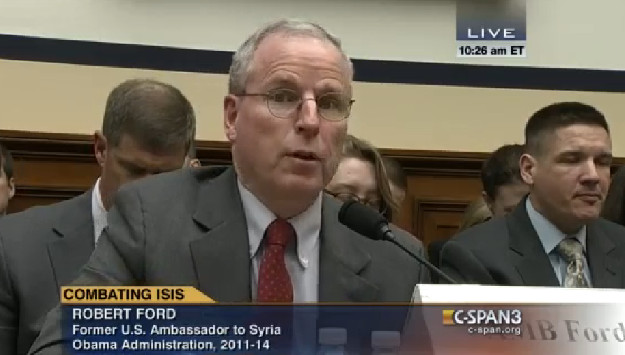
    Paul Salem, Vice President for Policy and Research at MEI, explains the drivers behind the recent flare-up of the Iran-Saudi feud, how it will impact regional issues including Syria, Yemen, and the fight against ISIS, and what the United States can do to help get diplomacy back on track.


    January 6, 2016

    Challenges Ahead for Algeria in 2016
  • Analysis
  • Challenges Ahead for Algeria in 2016

    Many used to say that unlike other countries that have an army, Algeria is an army that has a country. As 2016 begins, President Abdelaziz Bouteflika—no mere client of the army—has consolidated his authority and empowered his allies in Africa’s largest nation. However, questions about Algeria’s political and economic stability loom large in the new year.

    Egyptian Civil Society in Transition—Reflections on Cairo’s Governance
    Middle East Institute
  • Analysis
  • Egyptian Civil Society in Transition—Reflections on Cairo’s Governance

    This essay discusses the various barriers that inhibit local communities in densely populated, poor quarters in Cairo from taking action in order to improve the provision of basic services and the overall conditions in these neighborhoods.

    January 5, 2016

    A Shared Dream for a 'Happy Middle East'
  • Analysis
  • A Shared Dream for a 'Happy Middle East'

    This is an English translation of an article that appeared in Al Hayat newspaper on December 19: http://www.alhayat.com/m/opinion/12875824

    We were together in Beirut as part of a group of experts, ambassadors, and possibly even former intelligence officers, representing nations “implicated” in the Syria crisis.

    Syria was the subject of our discussions over two days, along with the disastrous situation in the Middle East, both presently and the situation to be expected in the future.

    December 22, 2015

    The United States Should Prevent an Egyptian Shift to Russia
  • Analysis
  • The United States Should Prevent an Egyptian Shift to Russia

    Roughly five decades since the Soviet foray into the Middle East vis-à-vis the Czech arms deal with Egypt in September 1955, Russia is reasserting its influence in Egypt. The deal marked the beginning of a brief period that saw Moscow serve as the primary military supplier for a number of regional countries that formed an ‘anti-imperialist front’, such as Egypt, Iraq, and Syria.

    December 18, 2015

    Civic Associations and Urban Governance in Tehran
    Middle East Institute
  • Analysis
  • Civic Associations and Urban Governance in Tehran

    The impact of civic associations on urban governance in Iran may be limited as they do not possess an official capacity in a highly bureaucratic and centralized system, and have been suspected of advocating a liberal political agenda. Nevertheless, they have, among other things, succeeded in democratizing the urban agenda.

    December 17, 2015

    Read the Middle East Journal

    The oldest peer-reviewed publication dedicated to the study of the modern Middle East, MEI’s flagship journal covers politics, society, and culture in the region.