Skip to Content

Research & Commentary

Read in-depth research, analysis, and commentary from MEI’s fellows and experts on the Middle East. 

Trump’s Family Business Deals Risk Further Undermining the Credibility of US Middle East Policy
  • Analysis
  • Trump’s Family Business Deals Risk Further Undermining the Credibility of US Middle East Policy

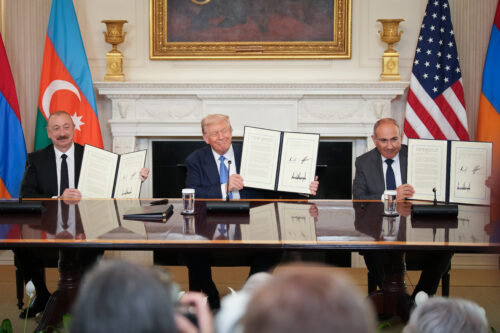
    President Trump’s family businesses are once again in the spotlight as a new financial disclosure showed they earned $2 billion in income in 2025 — a dramatic increase on the year before, with much of it coming from Gulf entities, raising emoluments concerns. Mounting perceptions of corruption, combined with unresolved crises in Iran and Israel-Palestine, are eroding trust among key partners in the Middle East. With the 2026 midterms approaching, these entanglements could represent a major political vulnerability and further undermine America’s already-strained standing in the region.

    Do the Gulf States Need a New Playbook?
  • Podcast
  • Do the Gulf States Need a New Playbook?

    After the US-Israel-Iran war — and the strikes that followed the cease-fire — the Gulf states find themselves dangerously exposed. Host Alistair Taylor is joined by MEI Associate Fellow Gregory Gause to discuss the war’s impact on the Gulf, their partnership with the United States, and whether the turmoil of recent months will push Gulf leaders to reassess their alliances and international engagement.

    July 2, 2026

    Additional Research & Commentary

    Backgrounders

    The Houthis
  • Backgrounder
  • The Houthis

    The Houthis are a political-military faction and Zaydi religious movement founded in northwestern Yemen in the 1980s. A key member of Iran’s Axis of Resistance with links to other militant organizations in the Arabian Peninsula and the Horn of Africa, the group has continued to pose a threat to Western interests on a global scale.

    May 15, 2026

    The Abraham Accords
    Photo by Alex Wong/Getty Images
  • Backgrounder
  • The Abraham Accords

    This backgrounder provides an overview of how the Abraham Accords came about, the US interests involved, their economic and strategic consequences, and the prospects for further enlargement going forward.

    November 17, 2025

    Turkish Foreign Policy
  • Backgrounder
  • Turkish Foreign Policy

    After a decade of post-Arab Spring isolation, Turkey’s leaders have recognized that their ambition to position the country as an agenda-setter on the world stage requires active engagement in all directions. President Recep Tayyip Erdoğan’s consolidation of executive authority has centralized foreign policy decision-making and tied it to his domestic political priorities, transforming the country’s revisionist approach to one shaped primarily by personal and pragmatic interests.

    April 23, 2026

    Western Sahara: Why the conflict still matters
  • Video
  • Western Sahara: Why the conflict still matters

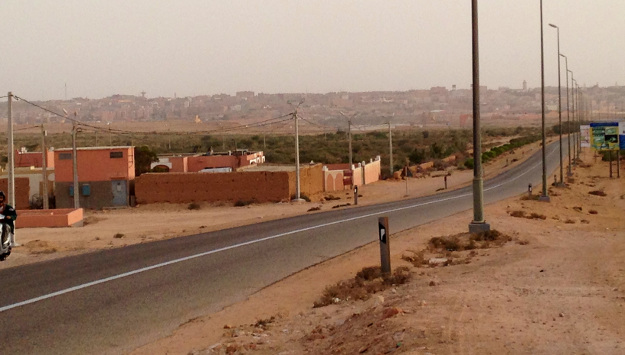
    As the Western Sahara conflict reaches its fifth decade, the territorial dispute remains unresolved and largely unknown. MEI’s Intissar Fakir unpacks the Western Sahara’s complex history and the rival claims by Morocco and the Sahrawi Arab Democratic Republic. She examines recent developments, such as President Trump’s recognition of Moroccan sovereignty over the territory and the collapse of a 30-year cease-fire, as well as the core questions that remain unanswered after half a century.

    August 7, 2025

    Podcasts

    Middle East Focus

    MEI’s flagship weekly podcast on US foreign policy and contemporary political and social issues in the Middle East.

    Taking the Edge Off the Middle East

    MEI Senior Fellow Brian Katulis engages friends, colleagues, and policy experts in casual conversations on the most important happenings in the Middle East. 

    Rethinking Democracy

    MEI Senior Fellow Gonul Tol hosts leading scholars and thought leaders on global democracy trends and the state of the liberal international order. 

    Filter by
    8748 Results
    Yes, Talk with Syria’s Ahrar al-Sham
  • Analysis
  • Yes, Talk with Syria’s Ahrar al-Sham

    Probably the most important group fighting the Syrian regime now is Ahrar al-Sham (Free Men of the Levant), a Salafi group fighting mainly in the north but also in central and southern Syria. Contrary to Western reports suggesting that the al-Qa‘ida-linked Nusra Front led the battle to capture the northwestern Syrian provincial capital of Idlib last March, Ahrar had more fighters in the battle—a fact demonstrated by its predominance in the subsequent military oversight council established for Idlib.

    From Nonintervention to What?: Analyzing the Change in China’s Middle East Policy
    Middle East Institute
  • Analysis
  • From Nonintervention to What?: Analyzing the Change in China’s Middle East Policy

    Though China still adheres to the principle of nonintervention, its unprecedented proactivity and break from its position to “pursue friendly, cooperative relations with all Middle Eastern countries” has already distinguished its behavior in the Syria crisis from its traditional stance.

    July 15, 2015

    Iran Nuclear Deal: A Platform for Future Cooperation?
  • Analysis
  • Iran Nuclear Deal: A Platform for Future Cooperation?

    MEI interviewed Senior Fellow Alex Vatanka about the historic nuclear agreement between Iran and the P5+1 that was reached on July 14, 2015, and how it may impact regional dynamics and the long-term relationship between Iran and the West.

    What has been the reaction to the nuclear deal?

    Arab Armed Forces: State Makers or State Breakers?
  • Analysis
  • Arab Armed Forces: State Makers or State Breakers?

    Proliferation and intensification of coercive force in the Arab world since 2011, combined with apparent decay of Arab states, seems at first glance to run counter to the implicit predictions of two relevant bodies of literature.

    July 14, 2015

    The Syrian Druze at a Crossroads
  • Analysis
  • The Syrian Druze at a Crossroads

    In the last few weeks, the Syrian Druze have been a focal point in significant fighting on the ground. If their role in the fighting continues, or even if it changes, the Druze will likely have a profound impact on the trajectory of the Syrian conflict.

    July 13, 2015

    Activism and Engagement: Envisioning a Possible New Doctrine for Indonesia’s Middle East Policy
  • Analysis
  • Activism and Engagement: Envisioning a Possible New Doctrine for Indonesia’s Middle East Policy

    The Asia-Pacific region, exemplified by the Association of Southeast Asian Nations (ASEAN) countries, has been the cornerstone of Indonesia’s foreign policy, with relationships in the Middle East being of secondary importance. Nevertheless, Indonesia has worked for years to develop fruitful bilateral relations with Arab countries in the economic, religious, and educational spheres.

    July 9, 2015

    The Humanitarian Crisis in the Middle East: Highlights from the MEI Conference
  • Analysis
  • The Humanitarian Crisis in the Middle East: Highlights from the MEI Conference

    For decades, most refugee crises followed a pattern: A war erupted, usually in a poor country, and beleaguered civilians staggered across the nearest border. The United Nations organized a response, rich nations footed the bill, and aid groups sent in workers to tend to the needy. Even in extreme cases, such as the mass exodus from Afghanistan during the Soviet invasion in the 1980s, the crisis was largely confined to the country at war and a few immediate neighbors.

    July 9, 2015

    The Promise of Arab Youth: Gone Today, Here Tomorrow
  • Analysis
  • The Promise of Arab Youth: Gone Today, Here Tomorrow

    After the latest attacks in Tunisia, Kuwait, Paris, and Sinai, attention is focused once again on the threat posed by the radicalization of youth. Indeed, Arab youth do represent a threat—to the established order. They came out in their millions in 2011 to demand freedom, dignity, and jobs, and these demands will not go away. They have been pushed back out of the public space by older institutions reviving fights between state authoritarianism and dreams of a caliphate, and indeed some youth, out of frustration, will radicalize and turn to violence.

    July 7, 2015

    Egypt’s Mahragan: Music of the Masses
  • Analysis
  • Egypt’s Mahragan: Music of the Masses

    For Egypt’s low-income majority, weddings are the prime source of group entertainment, celebrated like block parties in cramped streets decorated with arabesque tapestries and drenched in colored lights and sound. You won’t hear romantic crooning at these gatherings; in Cairo’s densely-inhabited popular quarters, wedding parties are more akin to raves. The music is raw synthetic beat embroidered with syncopated tabla (Egyptian drum) samples and queasy electronic loops.

    July 7, 2015

    Collection Spotlight: Water in the Middle East
  • Analysis
  • Collection Spotlight: Water in the Middle East

    For many, an interest in the natural resources of the Middle East begins and ends with oil. However, in a region where systems of agriculture and manufacturing are threatened by increasing desertification and pervasive aridity, the amount, distribution, and control of water is drawing increased international attention.

    July 1, 2015

    Tweeting Terrorist Attacks in the U.S. and Europe
  • Analysis
  • Tweeting Terrorist Attacks in the U.S. and Europe

    Social globalization has brought groups with different values and worldviews into contact with each other—in a physical and institutional sense to be sure, but also in the sense that the international exchange of ideas, information, and images has increased. This exchange occurs in both directions; American readers can reflect on the fervor in U.S.

    July 1, 2015

    Keynote Address: Countering Violent Extremism
  • Analysis
  • Keynote Address: Countering Violent Extremism

    Thank you. It’s a pleasure to be here to open this important event.

    As I started to think about what I wanted to say today, a series of events came to mind: Fort Hood, Texas, 2009; Times Square, New York City, 2010; Boston, 2013; Paris last January; Madrid 2004; and London 2005. I also thought of Oklahoma City in 1995, Oslo and Utoya Island in 2011, and the Sikh Temple in Oak Creek, Wisconsin in 2012. Each involved citizens or residents of the country concerned.

    July 1, 2015

    Read the Middle East Journal

    The oldest peer-reviewed publication dedicated to the study of the modern Middle East, MEI’s flagship journal covers politics, society, and culture in the region.