Skip to Content

Research & Commentary

Read in-depth research, analysis, and commentary from MEI’s fellows and experts on the Middle East. 

Trump’s South Caucasus Peacemaking Is His Most Successful, but It Remains Unfinished
  • Commentary
  • Trump’s South Caucasus Peacemaking Is His Most Successful, but It Remains Unfinished

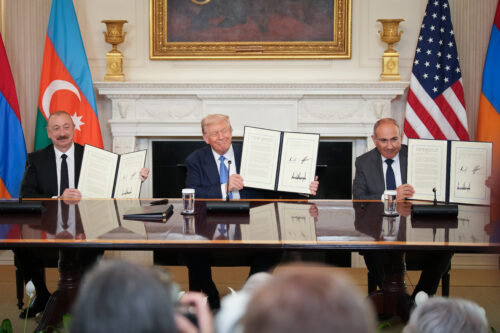
    Of all the fronts in President Trump’s peacemaking agenda, the South Caucasus has delivered the most concrete results. The August 2025 Washington Declaration, signed between Armenia and Azerbaijan and witnessed by Trump, marked an important step toward peace in the region. The two sides initialed a peace agreement and advanced plans to unblock regional connectivity, including through the establishment of the Trump Route for International Peace and Prosperity (TRIPP), which would connect Azerbaijan to its Nakhijevan exclave through southern Armenia. Implementation of TRIPP has since made notable progress, but construction has yet to start. A breakthrough on those two tracks would, in turn, unlock Armenia–Türkiye normalization, transforming a long-fractured region into an area of trade and interdependence.
    The Iran War Was Always About Regime Change
  • Commentary
  • The Iran War Was Always About Regime Change

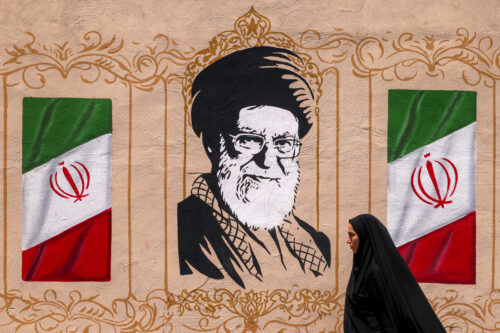
    Wars don’t just end. They get interpreted, reinterpreted, and turned into strategic doctrine. That is what happened after the Iran-Iraq War of the 1980s, a conflict that saw the United States back Tehran’s Iraqi adversaries. The war taught Tehran three lessons it never unlearned: that Washington wants the Islamic Republic gone, that Iran stands essentially alone in the world, and that it cannot survive a direct, overt fight with the U.S. and Israel.

    Iran’s New War Cabinet Is Really an Old One
  • Analysis
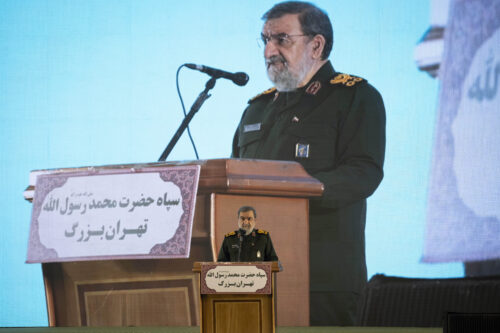
  • Iran’s New War Cabinet Is Really an Old One

    Within 48 hours this week, Iran filled six of the most important posts in its battered military and security establishment. Read together with the biographies and mandates behind them, the appointments show how Tehran is drawing lessons from successive wars and preparing for a prolonged period of insecurity, without proving it has abandoned negotiation.

    Additional Research & Commentary

    Backgrounders

    Israeli Settlements in the West Bank
  • Backgrounder
  • Israeli Settlements in the West Bank

    Since 1967, Israeli settlements in the West Bank have been a contested feature of the Israeli-Palestinian conflict. The ultimate disposition of the settlements and ongoing activity related to their growth have repeatedly defied agreement in negotiations over a resolution to the conflict.

    June 9, 2026

    The Houthis
  • Backgrounder
  • The Houthis

    The Houthis are a political-military faction and Zaydi religious movement founded in northwestern Yemen in the 1980s. A key member of Iran’s Axis of Resistance with links to other militant organizations in the Arabian Peninsula and the Horn of Africa, the group has continued to pose a threat to Western interests on a global scale.

    May 15, 2026

    The India-Middle East-Europe Economic Corridor
  • Backgrounder
  • The India-Middle East-Europe Economic Corridor

    The India-Middle East-Europe Economic Corridor (IMEC) is a proposed multinational infrastructure initiative aimed at upgrading connectivity between the three regions through integrated trade, energy, and digital networks. Announced at the G20 summit in New Delhi in September 2023, IMEC is envisioned partially as a counterweight to China’s international infrastructure project, the Belt and Road Initiative.

    June 3, 2026

    Turkish Foreign Policy
  • Backgrounder
  • Turkish Foreign Policy

    After a decade of post-Arab Spring isolation, Turkey’s leaders have recognized that their ambition to position the country as an agenda-setter on the world stage requires active engagement in all directions. President Recep Tayyip Erdoğan’s consolidation of executive authority has centralized foreign policy decision-making and tied it to his domestic political priorities, transforming the country’s revisionist approach to one shaped primarily by personal and pragmatic interests.

    April 23, 2026

    Podcasts

    Middle East Focus

    MEI’s flagship weekly podcast on US foreign policy and contemporary political and social issues in the Middle East.

    Taking the Edge Off the Middle East

    MEI Senior Fellow Brian Katulis engages friends, colleagues, and policy experts in casual conversations on the most important happenings in the Middle East. 

    Rethinking Democracy

    MEI Senior Fellow Gonul Tol hosts leading scholars and thought leaders on global democracy trends and the state of the liberal international order. 

    Filter by
    8783 Results
    Erdogan’s High-Risk Strategy
  • Analysis
  • Erdogan’s High-Risk Strategy

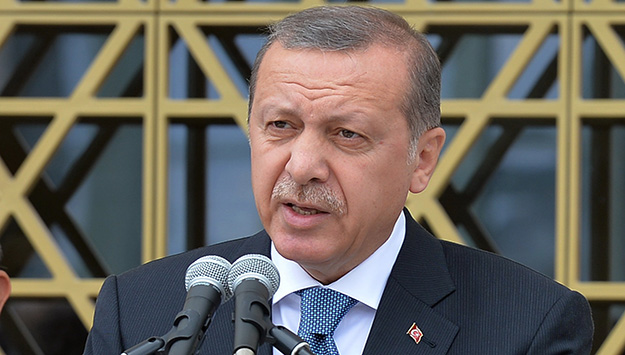
    After months of hesitation to take action against the Islamic State (ISIS) and almost two years of quiet since a 2013 truce with the Kurdistan Workers’ Party (PKK), Turkey decided to pick a fight with both. It has been pounding Islamic State targets in Syria and PKK positions in northern Iraq.

    The Failure of ISIS’s Ramadan Offensive
  • Analysis
  • The Failure of ISIS’s Ramadan Offensive

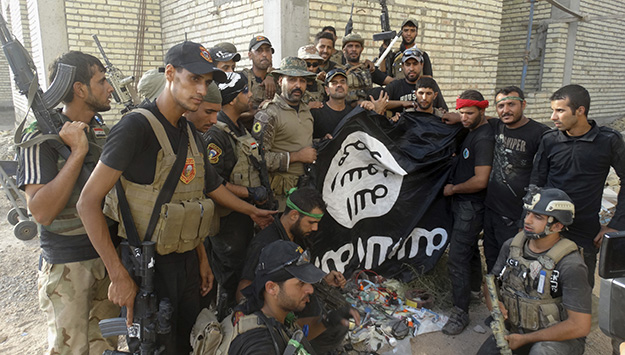
    If the hallmark of al-Qa‘ida was to execute simultaneous spectacular attacks to advance its strategic momentum, the month of Ramadan in June and July showed that the Islamic State (ISIS) is taking this tactic to a new level. Yet the extreme amounts of blood shed during the holy month will likely ultimately weaken ISIS, as tribes and other groups in Syria and Iraq, even more appalled by the organization’s barbarism, unite against it.

    August 6, 2015

    Rising Chinese Waves in the UAE
    Middle East Institute
  • Analysis
  • Rising Chinese Waves in the UAE

    The flow of oil and gas from the Persian Gulf to East Asia has rejuvenated the ancient Silk Road, refashioning new networks of collaboration. The energy trade―the backbone of Sino-Middle Eastern ties―has provided the foundation for an increasingly diversified and robust set of relationships between China and the Gulf monarchies. The multidimensional strategic partnership between China and the UAE, in particular, is illustrative of this broader pattern.

    August 5, 2015

    Why the Iran Deal is Good for Israel
  • Analysis
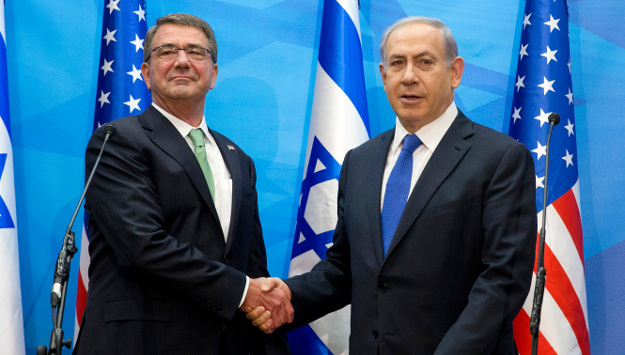
  • Why the Iran Deal is Good for Israel

    Read the full op-ed on CNN.com.

    Few states face the kind of complex, sustained security challenges that Israel does.

    Israel has not enjoyed one day of peace with its neighbors since its independence in 1948. Many Arab and Muslim states have maintained an economic and political boycott against Israel for decades.

    August 5, 2015

    Another Palestinian Uprising?
    Middle East Institute
  • Analysis
  • Another Palestinian Uprising?

    Predictions of a new Palestinian intifada in the occupied territories tend to accompany every breakdown in the diplomatic process, announcement of a new colonial expansion project, and Israeli violence against Palestinian life—such as the recent horrific murder of Palestinian infant Ali Dawabsheh by settler terrorists who set fire to his West Bank family home.

    August 5, 2015

    25 Years In Iraq, With No End In Sight
  • Analysis
  • 25 Years In Iraq, With No End In Sight

    This article was first published on NPR’s Parallels blog.

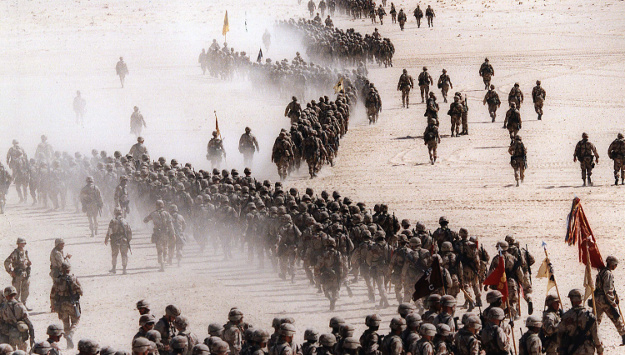
    It started so well. When Saddam Hussein’s Iraq invaded Kuwait on Aug. 2, 1990, the United States swiftly cobbled together a broad coalition, unleashed a stunning new generation of air power and waged a lightning ground offensive that lasted all of four days. Iraqi troops were so desperate to quit that some surrendered to Western journalists armed only with notebooks.

    August 4, 2015

    Middle East Dialogue Report: Beirut
  • Analysis
  • Middle East Dialogue Report: Beirut

    The Middle East Dialogue on New Political and Security Dynamics Shaping the Arab Region met in Beirut May 30-31 to consider the situation in Syria, which has deteriorated further since the last meeting of the Dialogue in Berlin last December. Violence has risen, government-controlled territory has been lost to both opposition and extremist forces, Syrians are suffering and the Syrian government is reaching the limits of its military and civilian capabilities.

    July 30, 2015

    Education: The Key to Women’s Empowerment in Saudi Arabia?
    Middle East Institute
  • Analysis
  • Education: The Key to Women’s Empowerment in Saudi Arabia?

    In recent news from Saudi Arabia: religious police filmed berating a fully veiled woman for not wearing gloves; a cleric’s fatwa against women watching football to prevent them from staring at men’s thighs; and a woman sentenced to 70 lashes for insulting her husband on WhatsApp.[1] At the same time, the Saudi education ministry released statistics showing that women constitute almost 52 percent of university graduates inside the kingdom, while more than 35,000 female Saudis studied abroad in 2014.

    July 30, 2015

    The Military Muzzling of Thailand and the Quandary of Demilitarization
    Middle East Institute
  • Analysis
  • The Military Muzzling of Thailand and the Quandary of Demilitarization

    Over a year has passed since the latest military coup in Thailand. On May 22, 2014, then-Army Commander Gen. Prayuth Chan-ocha led a putsch against civilian Prime Minister Yingluck Shinawatra. The coup followed six months of demonstrations against Yingluck and her brother, fugitive ex-Prime Minister Thaksin Shinawatra. The protests, centered in Bangkok, were reportedly protected by military elements.

    July 29, 2015

    The Truth in Criticisms of the Iran Deal
  • Analysis
  • The Truth in Criticisms of the Iran Deal

    This article was first published on Peacefare.net.

    Here are some criticisms of the Iran deal that contain at least a kernel of truth; they are worth addressing for the sake of clarifying some of the arguments pro and con.

    July 29, 2015

    Responding to Assaults on Health Care in the Middle East
    Middle East Institute
  • Analysis
  • Responding to Assaults on Health Care in the Middle East

    The conflicts and political crises in the Middle East have brought anguish, suffering, and severe declines in health to people throughout the region. The most catastrophic case by far is Syria, where more than a million people have experienced traumatic injuries, once-rare infectious diseases have returned, chronic disease goes untreated, and the health system has collapsed. In Yemen, Libya, Gaza, and Iraq as well, violence has limited access to health care and grievously harmed the population.

    July 28, 2015

    Improved Egypt-Israel Relations through Sinai Crisis: Will They Last?
  • Analysis
  • Improved Egypt-Israel Relations through Sinai Crisis: Will They Last?

    Egyptian diplomats rarely have a good word to say about U.S. policies these days. In contrast, they are enthusiastic in their praise of the close relations between Cairo and Jerusalem—centered on counterterror security and intelligence cooperation in Sinai—and effusive in their acknowledgement of Israel’s response to the bloody insurgency there, led by Egypt’s ISIS affiliate in the “Sinai Province,” Ansar Beit al-Maqdis.

    “Relations with Israel are great,” observed an Egyptian official recently.[1]

    July 24, 2015

    Read the Middle East Journal

    The oldest peer-reviewed publication dedicated to the study of the modern Middle East, MEI’s flagship journal covers politics, society, and culture in the region.