Skip to Content

Research & Commentary

Read in-depth research, analysis, and commentary from MEI’s fellows and experts on the Middle East. 

Trump’s Family Business Deals Risk Further Undermining the Credibility of US Middle East Policy
  • Analysis
  • Trump’s Family Business Deals Risk Further Undermining the Credibility of US Middle East Policy

    President Trump’s family businesses are once again in the spotlight as a new financial disclosure showed they earned $2 billion in income in 2025 — a dramatic increase on the year before, with much of it coming from Gulf entities, raising emoluments concerns. Mounting perceptions of corruption, combined with unresolved crises in Iran and Israel-Palestine, are eroding trust among key partners in the Middle East. With the 2026 midterms approaching, these entanglements could represent a major political vulnerability and further undermine America’s already-strained standing in the region.

    Do the Gulf States Need a New Playbook?
  • Podcast
  • Do the Gulf States Need a New Playbook?

    After the US-Israel-Iran war — and the strikes that followed the cease-fire — the Gulf states find themselves dangerously exposed. Host Alistair Taylor is joined by MEI Associate Fellow Gregory Gause to discuss the war’s impact on the Gulf, their partnership with the United States, and whether the turmoil of recent months will push Gulf leaders to reassess their alliances and international engagement.

    July 2, 2026

    Additional Research & Commentary

    Backgrounders

    The Houthis
  • Backgrounder
  • The Houthis

    The Houthis are a political-military faction and Zaydi religious movement founded in northwestern Yemen in the 1980s. A key member of Iran’s Axis of Resistance with links to other militant organizations in the Arabian Peninsula and the Horn of Africa, the group has continued to pose a threat to Western interests on a global scale.

    May 15, 2026

    The Abraham Accords
    Photo by Alex Wong/Getty Images
  • Backgrounder
  • The Abraham Accords

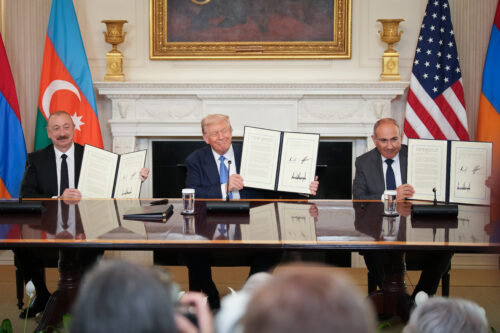
    This backgrounder provides an overview of how the Abraham Accords came about, the US interests involved, their economic and strategic consequences, and the prospects for further enlargement going forward.

    November 17, 2025

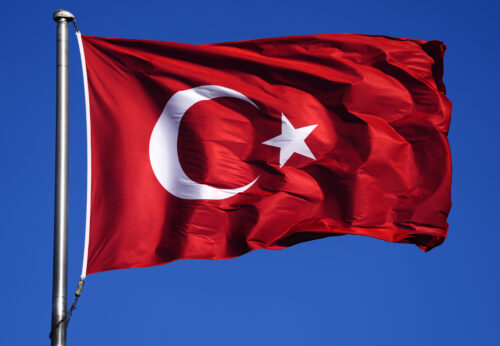
    Turkish Foreign Policy
  • Backgrounder
  • Turkish Foreign Policy

    After a decade of post-Arab Spring isolation, Turkey’s leaders have recognized that their ambition to position the country as an agenda-setter on the world stage requires active engagement in all directions. President Recep Tayyip Erdoğan’s consolidation of executive authority has centralized foreign policy decision-making and tied it to his domestic political priorities, transforming the country’s revisionist approach to one shaped primarily by personal and pragmatic interests.

    April 23, 2026

    Western Sahara: Why the conflict still matters
  • Video
  • Western Sahara: Why the conflict still matters

    As the Western Sahara conflict reaches its fifth decade, the territorial dispute remains unresolved and largely unknown. MEI’s Intissar Fakir unpacks the Western Sahara’s complex history and the rival claims by Morocco and the Sahrawi Arab Democratic Republic. She examines recent developments, such as President Trump’s recognition of Moroccan sovereignty over the territory and the collapse of a 30-year cease-fire, as well as the core questions that remain unanswered after half a century.

    August 7, 2025

    Podcasts

    Middle East Focus

    MEI’s flagship weekly podcast on US foreign policy and contemporary political and social issues in the Middle East.

    Taking the Edge Off the Middle East

    MEI Senior Fellow Brian Katulis engages friends, colleagues, and policy experts in casual conversations on the most important happenings in the Middle East. 

    Rethinking Democracy

    MEI Senior Fellow Gonul Tol hosts leading scholars and thought leaders on global democracy trends and the state of the liberal international order. 

    Filter by
    8748 Results
    How Iranians are Debating the Nuclear Deal
  • Analysis
  • How Iranians are Debating the Nuclear Deal

    Read the full article on the Washington Post’s Monkey Cage blog.

    An intense public debate is unfolding in Iran over the details of the ongoing nuclear negotiations. For a country that has been largely deprived of informed, open and critical discussions on the merits of this costly program, this is highly unusual. Even more striking, it is the hard-liners who are spearheading this dialogue in the run-up to the June 30 deadline for the final agreement.

    April 21, 2015

    Will Saudi Arabia and Iran Take Fight Into the Open?
  • Analysis
  • Will Saudi Arabia and Iran Take Fight Into the Open?

    Read the full article on CNN.

    Relations between Iran and Saudi Arabia have always been thorny, but rarely has the state of affairs been as venomous as it is today.

    Tehran and Riyadh each point to the other as the main reason for much of the turmoil in the Middle East. In its most recent incarnation, the Iranian-Saudi conflict by proxy has reached Yemen in a spiral that both sides portray as climatic.

    Na Zhong: The Complex Perspective of a Patriotic Muslim Scholar
    Middle East Institute
  • Analysis
  • Na Zhong: The Complex Perspective of a Patriotic Muslim Scholar

    When Na Zhong, Professor of Arabic at Beijing Foreign Studies University, passed away in 2008, his funeral at the headquarters of China’s Islamic Association was attended by many notable Muslims and scholars of Islam. Biographies and reminiscences characterize him as both an accomplished Muslim scholar and a Chinese patriot. Indeed, Na Zhong’s accomplishments are impressive. He was among the founders of Arabic programs at National Central University (later Nanjing University), Yunnan University, and Foreign Affairs University (which later merged with Beijing Foreign Studies University). During his lifetime, he published dozens of volumes of original and translated works on Islamic civilization, the history of the Arab world, and the Arabic language. He was also patriotic, participating in many activities seen as advancing Chinese national interests in the Islamic world.

    April 21, 2015

    Turkey and Armenia: Make History Instead of Repeating It
    Middle East Institute
  • Analysis
  • Turkey and Armenia: Make History Instead of Repeating It

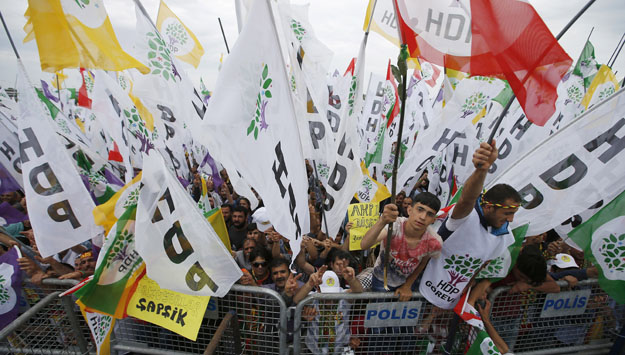
    On April 24, Turks, Armenians, and millions of others around the globe will clash again over the events that began 100 years ago in the Ottoman domains. The mass deportations and massacres of Armenians in 1915 and later years have led many to call this great tragedy a genocide. The old arguments and contested evidence are now going to be heard once more. It might also be the perfect moment for Ankara and Yerevan to take practical steps that benefit all and harm none.

    Is Iran Overstretched in Syria?
  • Analysis
  • Is Iran Overstretched in Syria?

    Read the full article on Foreign Policy.

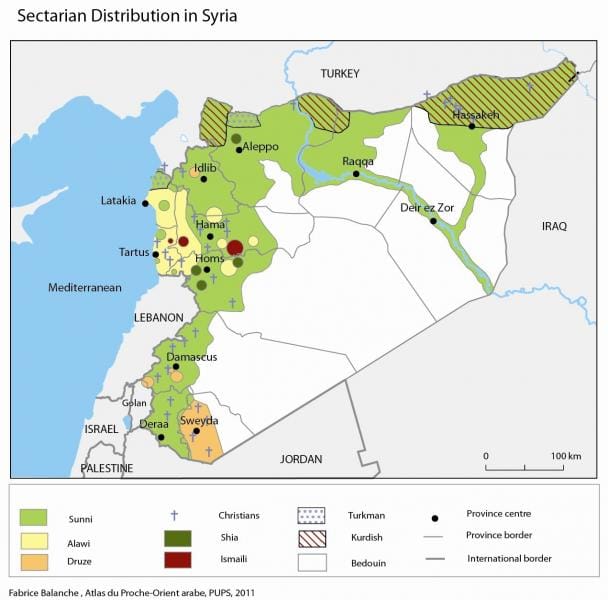
    For the majority of Arabs, Syria symbolizes all that is wrong with Iranian influence in the Middle East. Since 2011, Tehran and its regional proxies have poured men, money, and weapons into Syria to prevent President Bashar al-Assad’s military defeat. In June 2013, Hezbollah’s intervention in the western city of Qusayr single-handedly turned the tide of the war in Assad’s favor.

    April 20, 2015

    Iraq's Leader Finds Friends in Washington, but Faces Battles at Home
  • Analysis
  • Iraq's Leader Finds Friends in Washington, but Faces Battles at Home

    This article was first published by NPR.

    When Iraqi Prime Minister Haider al-Abadi weighs the pros and cons of running such a fractured country, here’s the upside: He can count on five separate military groups supporting his battle against the self-declared Islamic State.

    The downside is that he has limited control of these groups, and of much of his country.

    April 17, 2015

    Algeria: Quiet but Not Calm
  • Analysis
  • Algeria: Quiet but Not Calm

    Last week U.S. Secretary of State John Kerry and Algerian Foreign Minister Ramtane Lamamra, an experienced diplomat, concluded bilateral consultations that focused on regional security and Algerian economics. The United States endorsed Algeria’s efforts to resolve the conflict in Mali, and the two countries pledged to work closely on counterterrorism. The United States also voiced support for Algerian efforts to diversify its economy and attract new investment, and the two countries will continue to build their bilateral cooperation in education.

    Rebuilding the U.S.-Egyptian Strategic Relationship
    Middle East Institute
  • Analysis
  • Rebuilding the U.S.-Egyptian Strategic Relationship

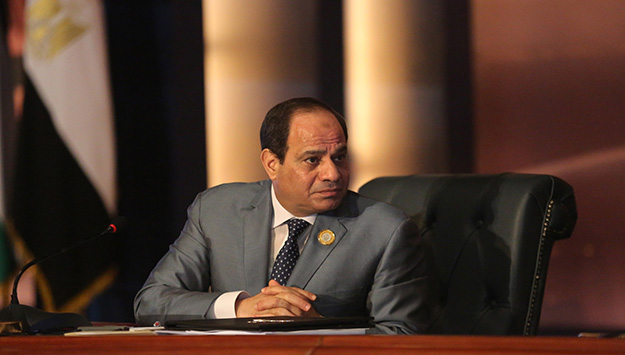
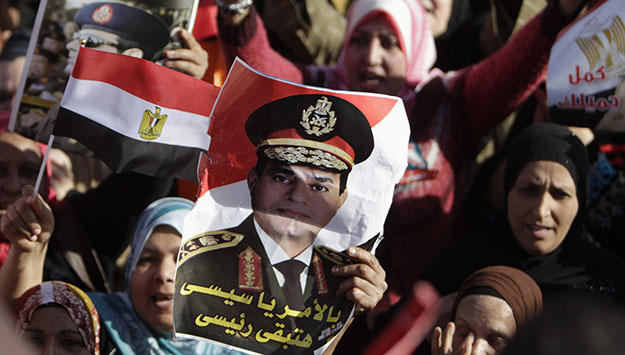
    President Obama’s decision to lift the freeze on delivery of military aid to Egypt was the right thing to do to shore up a key strategic alliance in a region where risks to U.S. security are multiplying rapidly. The United States needs Egypt’s help in confronting terrorist and conventional threats in the region, in maintaining Arab-Israeli stability, and as a key player in Arab diplomacy and coalition building.

    Turkey’s Balancing Act between Iran and Saudi Arabia
  • Analysis
  • Turkey’s Balancing Act between Iran and Saudi Arabia

    Turkish Foreign Minister Mevlut Cavusoglu, reiterating Turkey’s support for a diplomatic solution over the use of force regarding Iran’s nuclear program, welcomed the interim deal between Tehran and the world powers. Turkey’s slowing economy may be among the first to reap economic benefits from the deal, and Ankara’s longtime quest to become an energy hub could finally be realized. Yet the deal could also pose a challenge to Ankara’s Iraq and Syria policies and its recent rapprochement with the Saudis.

    Turkey’s Achilles Heel: The Economy
  • Analysis
  • Turkey’s Achilles Heel: The Economy

    In Turkey today, as President Recep Tayyip Erdogan and Prime Minister Ahmet Davutoglu wrestle over who governs, the political uncertainty they are creating may be a ground tremor about to generate an earthquake. The earthquake, however, may not only be political in nature; it may also be economic. 

    Turkey’s remarkable economic growth is now in jeopardy. Its economy is drifting, beset by contrary winds of economic policies and political wrangling. There is a clear track forward, but to reach the next level of prosperity, the government must undertake a major new effort.

    The Middle East in China’s Silk Road Visions: Business as Usual?
    Middle East Institute
  • Analysis
  • The Middle East in China’s Silk Road Visions: Business as Usual?

    Chinese President Xi Jinping’s 2013 proclamation of the Silk Road Economic Belt (“One Belt, One Road”) and Twenty-First Century Maritime Silk Road initiatives provided an overarching framework for understanding China’s strategic priorities over the coming decade. The land-based and sea-based Silk Roads will link Asia and Europe via the Middle East and Central Asia through a series of transcontinental railroads, pipelines, ports, airports, and other infrastructure projects.

    April 14, 2015

    The Hashd: Redrawing the Military and Political Map of Iraq
  • Analysis
  • The Hashd: Redrawing the Military and Political Map of Iraq

    Al-Hashd al-Sha‘bi—also known as the Popular Mobilization Units, the Shi‘i militias, or simply “the Hashd”—has joined Iraqi security forces and the Kurdish peshmerga to spearhead Iraq’s ongoing offensive against ISIS. The coordinated assault has scored significant successes in various parts of Diyala, Babil, and Salah al-Din, including the recapture of Tikrit. With this string of recent triumphs, the Hashd has provided a potent rallying point for a reinvigorated sense of Iraqi nationalism, albeit one with distinctly Shi‘i overtones.

    April 9, 2015

    Camp David, Dayton, Lausanne
  • Analysis
  • Camp David, Dayton, Lausanne

    Read the full article on LobeLog.

    In the past four decades, the greatest achievements of American diplomacy were probably the Camp David Accords and the Dayton Agreement. Camp David led to the end of the perpetual state of war between Israel and Egypt. Dayton ended the carnage of the war in the Balkans.

    April 9, 2015

    Read the Middle East Journal

    The oldest peer-reviewed publication dedicated to the study of the modern Middle East, MEI’s flagship journal covers politics, society, and culture in the region.