Skip to Content

Research & Commentary

Read in-depth research, analysis, and commentary from MEI’s fellows and experts on the Middle East. 

Trump’s Family Business Deals Risk Further Undermining the Credibility of US Middle East Policy
  • Analysis
  • Trump’s Family Business Deals Risk Further Undermining the Credibility of US Middle East Policy

    President Trump’s family businesses are once again in the spotlight as a new financial disclosure showed they earned $2 billion in income in 2025 — a dramatic increase on the year before, with much of it coming from Gulf entities, raising emoluments concerns. Mounting perceptions of corruption, combined with unresolved crises in Iran and Israel-Palestine, are eroding trust among key partners in the Middle East. With the 2026 midterms approaching, these entanglements could represent a major political vulnerability and further undermine America’s already-strained standing in the region.

    Do the Gulf States Need a New Playbook?
  • Podcast
  • Do the Gulf States Need a New Playbook?

    After the US-Israel-Iran war — and the strikes that followed the cease-fire — the Gulf states find themselves dangerously exposed. Host Alistair Taylor is joined by MEI Associate Fellow Gregory Gause to discuss the war’s impact on the Gulf, their partnership with the United States, and whether the turmoil of recent months will push Gulf leaders to reassess their alliances and international engagement.

    July 2, 2026

    Additional Research & Commentary

    Backgrounders

    The Houthis
  • Backgrounder
  • The Houthis

    The Houthis are a political-military faction and Zaydi religious movement founded in northwestern Yemen in the 1980s. A key member of Iran’s Axis of Resistance with links to other militant organizations in the Arabian Peninsula and the Horn of Africa, the group has continued to pose a threat to Western interests on a global scale.

    May 15, 2026

    The Abraham Accords
    Photo by Alex Wong/Getty Images
  • Backgrounder
  • The Abraham Accords

    This backgrounder provides an overview of how the Abraham Accords came about, the US interests involved, their economic and strategic consequences, and the prospects for further enlargement going forward.

    November 17, 2025

    Turkish Foreign Policy
  • Backgrounder
  • Turkish Foreign Policy

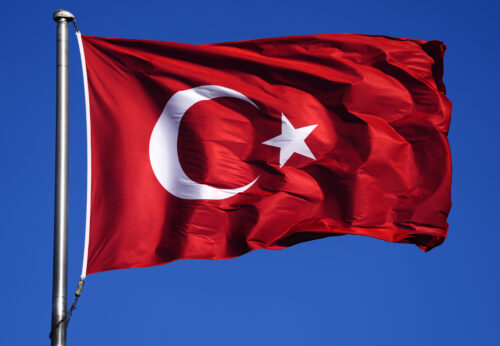
    After a decade of post-Arab Spring isolation, Turkey’s leaders have recognized that their ambition to position the country as an agenda-setter on the world stage requires active engagement in all directions. President Recep Tayyip Erdoğan’s consolidation of executive authority has centralized foreign policy decision-making and tied it to his domestic political priorities, transforming the country’s revisionist approach to one shaped primarily by personal and pragmatic interests.

    April 23, 2026

    Western Sahara: Why the conflict still matters
  • Video
  • Western Sahara: Why the conflict still matters

    As the Western Sahara conflict reaches its fifth decade, the territorial dispute remains unresolved and largely unknown. MEI’s Intissar Fakir unpacks the Western Sahara’s complex history and the rival claims by Morocco and the Sahrawi Arab Democratic Republic. She examines recent developments, such as President Trump’s recognition of Moroccan sovereignty over the territory and the collapse of a 30-year cease-fire, as well as the core questions that remain unanswered after half a century.

    August 7, 2025

    Podcasts

    Middle East Focus

    MEI’s flagship weekly podcast on US foreign policy and contemporary political and social issues in the Middle East.

    Taking the Edge Off the Middle East

    MEI Senior Fellow Brian Katulis engages friends, colleagues, and policy experts in casual conversations on the most important happenings in the Middle East. 

    Rethinking Democracy

    MEI Senior Fellow Gonul Tol hosts leading scholars and thought leaders on global democracy trends and the state of the liberal international order. 

    Filter by
    8748 Results
    Egypt’s Economy: Hanging in the Balance
    Middle East Institute
  • Analysis
  • Egypt’s Economy: Hanging in the Balance

    As 2014 drew to a close, the Egyptian economy was making international headlines. The Financial Times called Egypt the world’s best destination for stock market investment.[1] Meanwhile, the Egyptian press documented a flurry of visits by delegations of businessmen from various economic superpowers.

    March 4, 2015

    Turkey: Exhuming the Deep State
  • Analysis
  • Turkey: Exhuming the Deep State

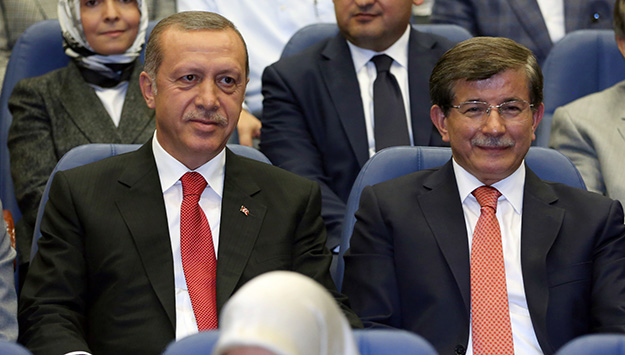
    Turkey is in an unprecedented state of political tumult. Since the ascent of Recep Tayyip Erdogan’s Justice and Development Party (AKP) to power in 2002, all Turks have struggled to support, defeat, or accommodate this party that rose suddenly in free elections to national power. Now, that contest has entered a new and more dangerous phase.

    China, Islam, and New Visions of the Old World
  • Analysis
  • China, Islam, and New Visions of the Old World

    China is steadily reshaping the world’s political and economic landscape by connecting Europe and the Pacific through a series of transcontinental and transoceanic networks that will run across the major Islamic countries of Asia and Africa. The slogan that Beijing uses to promote these projects—“One Belt, One Road”—is a shorthand reference to the Silk Road Economic Belt (the overland routes through Central Asia and the Middle East) and the Maritime Silk Road (the sea lanes joining the Pacific and Indian Oceans with the Mediterranean). In fact, even these grandiose labels understate the true magnitude of China’s ambitions; the total number of planned mega-networks is not two, but seven—and still counting.

    March 3, 2015

    The High Stakes in Israel’s Elections
  • Analysis
  • The High Stakes in Israel’s Elections

    One of the more enduring characteristics of Israel’s electoral campaigns is their ability to produce surprises, often with considerable political consequences.

    March 3, 2015

    Why Syria’s Assad Must Go – Now
  • Analysis
  • Why Syria’s Assad Must Go – Now

    In his recent National Interest blog post entitled “Assad Will Have to Stay for Awhile,” Paul Pillar advises the Obama administration to ignore regional calls to help bring down the Assad regime, for three reasons: the resilience of the regime; the need to avoid fighting it and ISIS simultaneously; and the need to preserve stability in Syria. Pillar’s three reasons are flawed.

    March 2, 2015

    Harm Reduction – What It Is and What It Is Not
    Middle East Institute
  • Analysis
  • Harm Reduction – What It Is and What It Is Not

    The often-misunderstood term “harm reduction” means simply that the paramount policy or clinical objective is reducing the harms from psychoactive drug use. In the conventional drug policy that has prevailed globally for decades, the reduction or elimination of drug consumption was considered the principal policy aim, while the harms caused by drug use or drug policies were usually an afterthought.

    February 26, 2015

    Despair and Hope for Syria: Q&A with Hind Kabawat
  • Analysis
  • Despair and Hope for Syria: Q&A with Hind Kabawat

    Hind Kabawat is a senior program officer at the United States Institute of Peace (USIP) and a senior research associate at the Center for World Religions, Diplomacy and Conflict Resolution (CRDC) at George Mason University. Since 2012, she has been conducting periodic conflict resolution and peace-building workshops for communities within Syria and for Syrian refugees living in Jordan and Turkey.

    February 26, 2015

    Four Iranian Threats That Terrorize Saudi Arabia
  • Analysis
  • Four Iranian Threats That Terrorize Saudi Arabia

    This article was first published by The National Interest.

    The Middle East is experiencing unprecedented upheaval, and by all indications the region is likely to remain in turmoil for the foreseeable future. From Yemen to Bahrain to Syria and Lebanon, the sectarian agendas and geopolitical maneuverings of the two regional heavyweights – Iran and Saudi Arabia – will likely remain the key drivers fueling the regional fire.

    Harm Reduction in Indonesia: At a Difficult Juncture
    Middle East Institute
  • Analysis
  • Harm Reduction in Indonesia: At a Difficult Juncture

    Harm reduction started in Asia about two decades ago, as a response to both the increase in injecting drug use and the spread of HIV/AIDS in the region. Most of these programs were spearheaded by community organizations and NGOs, often in conflict with the more moralistic approaches of their respective governments. Indonesia began moving toward the adoption of harm reduction policies in 1999, when various stakeholders gathered to discuss the state of AIDS and injecting drug use in the country.

    February 25, 2015

    Mohammed Dahlan's Return to Gaza
    Middle East Institute
  • Analysis
  • Mohammed Dahlan's Return to Gaza

    Mohammed Dahlan is making a comeback, and not for the first time since his ignominious ouster from Gaza almost eight years ago, when the Palestinian Authority (PA) forces he was leading as the PA’s security chief were routed by Hamas. These days, the 53-year-old, who grew up in the poorest of Gaza’s refugee camps, is seeking to do well for himself by doing good for Gaza.

    February 25, 2015

    The Rise of Harm Reduction in Morocco: Successes and Challenges
    Middle East Institute
  • Analysis
  • The Rise of Harm Reduction in Morocco: Successes and Challenges

    Morocco has become the second MENA country after Iran to implement a nationwide harm reduction strategy aimed at stopping the spread of HIV/AIDS among people who use drugs. Moroccan civil society organizations (CSOs) have worked to devise a comprehensive strategy that will disseminate a full package of harm reduction services. The longstanding HIV/AIDS community-based organization Association de Lutte Contre le Sida (ALCS) is leading these efforts to make the national drug policy less repressive and more effective. Harm reduction is based on the notion that marginalized populations are entitled to their basic human rights, but in some countries, governments have merely used it as another tool for social control. ALCS has sought to prevent this from occurring in Morocco by remaining focused on harm reduction’s core principles.

    February 23, 2015

    High Time to Stop Neglecting Libya
  • Analysis
  • High Time to Stop Neglecting Libya

    “Crises left to fester sometimes find their own way to the front burner.” Written on January 5, 2015, this sentence reflected my fear that starving Libya of high-profile international attention was increasingly risky. The beheading of 21 Egyptian Coptic Christians in Libya by Islamic State (ISIS) extremists this week appears to have placed the situation in Libya front and center.

    February 20, 2015

    Outreach Workers on the Front Lines: Malaysia’s Needle and Syringe Exchange Program
  • Analysis
  • Outreach Workers on the Front Lines: Malaysia’s Needle and Syringe Exchange Program

    Outreach workers have been the backbone of Malaysia’s Needle and Syringe Exchange Program (NSEP) since its inception in 2006. This essay examines the origins of the NSEP, the role that outreach workers play, the everyday challenges they face in providing services to people who inject drugs (PWID), and the critical importance of supporting their efforts.

    February 20, 2015

    Improving Cairo for the Many, Not the Few
  • Analysis
  • Improving Cairo for the Many, Not the Few

    This article was first published by the Atlantic.

    The government of former Egyptian President Hosni Mubarak had a vision for Cairo’s future. In 2007, it put forth a plan dubbed “Cairo 2050,” and among its objectives was to create wide avenues, green spaces, and new or revamped tourist sites, such as near the Pyramids.

    February 19, 2015

    Egypt's Security Challenge: ISIS, Sinai, and the Libyan Border
  • Analysis
  • Egypt's Security Challenge: ISIS, Sinai, and the Libyan Border

    On January 28, 2015, jihadis in Sinai launched multiple, simultaneous attacks against Egyptian security forces in the vicinity of El Arish and the nearby towns of Sheikh Zuweid and Rafah. These attacks occurred only hours after President Abdul-Fattah el-Sisi said that he would die defending the region from terror. “We will never leave Sinai,” Sisi said. “Sinai is ours.

    February 19, 2015

    Read the Middle East Journal

    The oldest peer-reviewed publication dedicated to the study of the modern Middle East, MEI’s flagship journal covers politics, society, and culture in the region.