Skip to Content

Research & Commentary

Read in-depth research, analysis, and commentary from MEI’s fellows and experts on the Middle East. 

Trump’s Family Business Deals Risk Further Undermining the Credibility of US Middle East Policy
  • Analysis
  • Trump’s Family Business Deals Risk Further Undermining the Credibility of US Middle East Policy

    President Trump’s family businesses are once again in the spotlight as a new financial disclosure showed they earned $2 billion in income in 2025 — a dramatic increase on the year before, with much of it coming from Gulf entities, raising emoluments concerns. Mounting perceptions of corruption, combined with unresolved crises in Iran and Israel-Palestine, are eroding trust among key partners in the Middle East. With the 2026 midterms approaching, these entanglements could represent a major political vulnerability and further undermine America’s already-strained standing in the region.

    Do the Gulf States Need a New Playbook?
  • Podcast
  • Do the Gulf States Need a New Playbook?

    After the US-Israel-Iran war — and the strikes that followed the cease-fire — the Gulf states find themselves dangerously exposed. Host Alistair Taylor is joined by MEI Associate Fellow Gregory Gause to discuss the war’s impact on the Gulf, their partnership with the United States, and whether the turmoil of recent months will push Gulf leaders to reassess their alliances and international engagement.

    July 2, 2026

    Additional Research & Commentary

    Backgrounders

    The Houthis
  • Backgrounder
  • The Houthis

    The Houthis are a political-military faction and Zaydi religious movement founded in northwestern Yemen in the 1980s. A key member of Iran’s Axis of Resistance with links to other militant organizations in the Arabian Peninsula and the Horn of Africa, the group has continued to pose a threat to Western interests on a global scale.

    May 15, 2026

    The Abraham Accords
    Photo by Alex Wong/Getty Images
  • Backgrounder
  • The Abraham Accords

    This backgrounder provides an overview of how the Abraham Accords came about, the US interests involved, their economic and strategic consequences, and the prospects for further enlargement going forward.

    November 17, 2025

    Turkish Foreign Policy
  • Backgrounder
  • Turkish Foreign Policy

    After a decade of post-Arab Spring isolation, Turkey’s leaders have recognized that their ambition to position the country as an agenda-setter on the world stage requires active engagement in all directions. President Recep Tayyip Erdoğan’s consolidation of executive authority has centralized foreign policy decision-making and tied it to his domestic political priorities, transforming the country’s revisionist approach to one shaped primarily by personal and pragmatic interests.

    April 23, 2026

    Western Sahara: Why the conflict still matters
  • Video
  • Western Sahara: Why the conflict still matters

    As the Western Sahara conflict reaches its fifth decade, the territorial dispute remains unresolved and largely unknown. MEI’s Intissar Fakir unpacks the Western Sahara’s complex history and the rival claims by Morocco and the Sahrawi Arab Democratic Republic. She examines recent developments, such as President Trump’s recognition of Moroccan sovereignty over the territory and the collapse of a 30-year cease-fire, as well as the core questions that remain unanswered after half a century.

    August 7, 2025

    Podcasts

    Middle East Focus

    MEI’s flagship weekly podcast on US foreign policy and contemporary political and social issues in the Middle East.

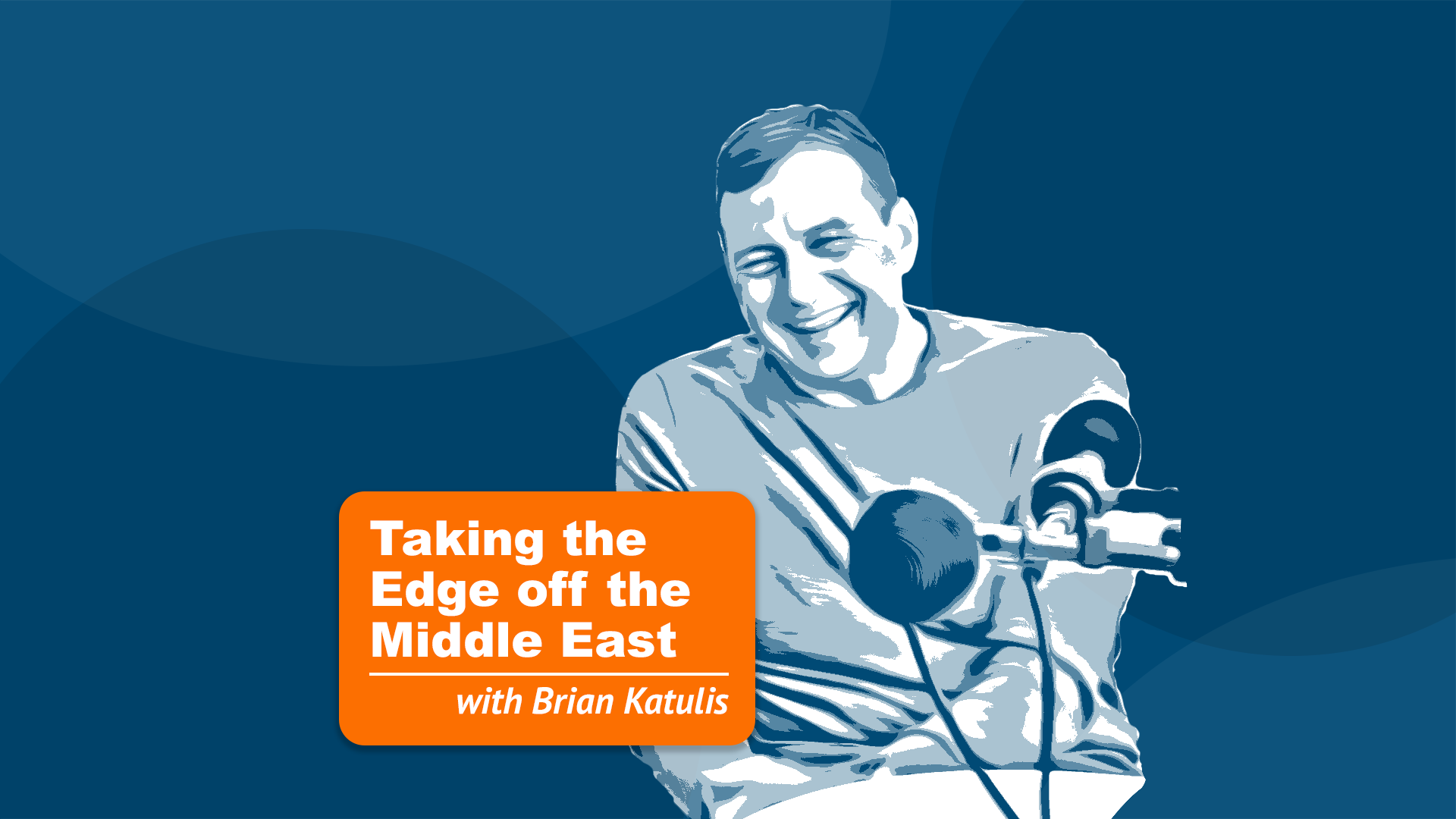
    Taking the Edge Off the Middle East

    MEI Senior Fellow Brian Katulis engages friends, colleagues, and policy experts in casual conversations on the most important happenings in the Middle East. 

    Rethinking Democracy

    MEI Senior Fellow Gonul Tol hosts leading scholars and thought leaders on global democracy trends and the state of the liberal international order. 

    Filter by
    8748 Results
    The New Suez Canal Project and Egypt’s Economic Future
  • Analysis
  • The New Suez Canal Project and Egypt’s Economic Future

    During a televised speech on August 5, 2014, President Abdul-Fattah el-Sisi announced a “surprise” he’d planned for the Egyptian people: the launch of the New Suez Canal mega-project, involving an expansion of the existing canal and the development of its environs into a global trade hub. The project is making waves in Egypt and worldwide, mobilizing equipment, contracts, and finance. But the plan to widen and deepen the existing canal to permit passage to the world’s largest container ships and to dig a parallel waterway to allow for two-way traffic was not new.

    December 19, 2014

    Iran as an Occupying Force in Syria
  • Analysis
  • Iran as an Occupying Force in Syria

    It is no longer accurate to describe the war in Syria as a conflict between Syrian rebels on the one hand and Bashar al-Assad’s regime forces “supported” by the Iranian Revolutionary Guards (IRG), Hezbollah, and Iraqi militias on the other. Most major battles in Syria—along the frontlines of regime-held areas—are now being directed and fought by the IRG and Hezbollah, along with other non-Syrian Shi‘i militias, with Assad forces in a supportive or secondary role.

    December 17, 2014

    Egypt and Israel: Sinai Heat Thaws the Cold Peace
  • Analysis
  • Egypt and Israel: Sinai Heat Thaws the Cold Peace

    Egyptian President Abdul-Fattah el-Sisi is no Zionist, as senior Israeli interlocutors like to point out, but his vision of state sovereignty and Egyptian national security often closely aligns with the interests of Israel. When Sinai’s Ansar Beit al-Maqdis, Egypt’s most lethal jihadi group, recently pledged allegiance to the Islamic State in Syria and Iraq, perhaps the most interesting response was the non-response by the governments of Egypt and Israel. From the view of both, the origins and ideologies of Islamist groups are all the same.

    December 16, 2014

    An Artistic Dialogue Shows the Absence of Cultural Exports from the Arab World
    Middle East Institute
  • Analysis
  • An Artistic Dialogue Shows the Absence of Cultural Exports from the Arab World

    The exceptionalism of Thaer Maarouf and Jason Tecson is that they reached over a cultural desert to talk to each other and to serve as catalysts of multi-contextual significance—emphasizing that beyond conflicts, it is traditions, culture, and history that define people today. The Arab world would do well to learn from their exchange. Exporting the distinguished culture of the Middle East is critical in any effort to counter the barbaric images of the region currently shaping Asia’s view of Arabs.

    December 13, 2014

    Report: Sunni Deobandi-Shi'i Sectarian Violence in Pakistan
  • Analysis
  • Report: Sunni Deobandi-Shi'i Sectarian Violence in Pakistan

    In both general and more informed discussions in Pakistan and beyond, sectarian violence in Pakistan between Sunni and Shi‘i groups is almost without exception referred to simply as Sunni-Shi‘i violence. But such a characterization is a misnomer. Two of Pakistan’s three major Sunni subsects, the Ahl-e-Hadis, and to a lesser extent, the Barelvis, may have antipathy toward the Shi‘a, but rarely express such sentiments through violent activity.

    December 11, 2014

    Iran’s Nuclear Secrets Need to be Revealed
  • Analysis
  • Iran’s Nuclear Secrets Need to be Revealed

    Expert American opinion on the outcome of last month’s nuclear negotiations with Iran is sharply divided. Those who want Iran to give up all enrichment technology are relieved that a “bad” deal was averted.

    December 10, 2014

    The American Approach in Syria and Iran: Soft and Dangerous
    Middle East Institute
  • Analysis
  • The American Approach in Syria and Iran: Soft and Dangerous

    In his pursuit of foreign policy deals with Syria and Iran, President Obama has taken a soft approach. As a result, Syria and Iran have taken advantage with aggressive opportunism.

    December 10, 2014

    A Good ‘Freeze’ in Aleppo Is Not Enough
  • Analysis
  • A Good ‘Freeze’ in Aleppo Is Not Enough

    This article was first published on Foreign Policy.

    As the Obama administration searches for a Syria policy, some officials have become intrigued by an old idea that the United Nations now hopes could help tens of thousands of civilians and perhaps even break Syria’s political logjam.

    The Current Status of Lebanon’s Sunni Islamists
  • Analysis
  • The Current Status of Lebanon’s Sunni Islamists

    As fears of an ISIS surge in northern Lebanon continue to rise, it is important to have a balanced perspective on the makeup of current Lebanese Sunni Islamist groups. I recently spent three months conducting fieldwork in Lebanon, interviewing representatives from a wide variety of Islamist groups. I present my findings below. 

    December 9, 2014

    Don’t be Fooled by Appearances, Liberal Values are Spreading in the Arab World
  • Analysis
  • Don’t be Fooled by Appearances, Liberal Values are Spreading in the Arab World

    Is there such a thing as Arab liberalism? Judging by U.S. mainstream media coverage, the answer is no. Out of ten stories on the Middle East and North Africa (MENA), chances are that nine cover terrorism and sectarian violence—and the tenth, government abuse. What is true for media is even truer for other circles of knowledge production.

    December 9, 2014

    Taiwan’s Relations with Saudi Arabia: An Interview with Ibrahim Chao
    Middle East Institute
  • Analysis
  • Taiwan’s Relations with Saudi Arabia: An Interview with Ibrahim Chao

    Over the past half century, Saudi Arabia has been the most important country for Taiwan’s Middle East diplomacy. The following interview with HE Dr. Ibrahim Chao (Hsi-lin Chao), Taiwan’s representative to the Kingdom from 2009 to 2012, sheds light on the contours of and recent developments in the bilateral relationship. Prior to joining the Ministry of Foreign Affairs of the Republic of China, or Taiwan, Ibrahim Chao earned an M.A. and a Ph.D. in Shariah (Islamic Law) from the Umm al-Qura University in Mecca, Saudi Arabia. Since retiring from the diplomatic service, he has served as an advisor to the Chinese Muslim Association in Taipei.

    December 8, 2014

    Obama: The Anti-Bush
    Middle East Institute
  • Analysis
  • Obama: The Anti-Bush

    This paper is part of an MEI scholar series, titled “Obama’s Legacy in the Middle East: Passing the Baton in 2017.” Click here to view the full project, or navigate using the table of contents to the right.

    Current Situation

    December 8, 2014

    Early Elections in Israel: A Reality Check
  • Analysis
  • Early Elections in Israel: A Reality Check

    There’s an expression in Israel along the lines of “people are scrupulously honest with pollsters, then they get into the voting booth and lie like hell.” It is important to bear this chestnut in mind as one scans survey returns regarding prospects for the major parties in the upcoming elections.

    December 5, 2014

    What Kobani Needs
  • Analysis
  • What Kobani Needs

    In the ongoing fighting in and around Kobani in northern Syria, it appears likely that the defending Kurdish forces will ultimately prevail and be able to expel the Islamic State (ISIS). However, in order to enable refugees to return, substantial aid and reconstruction efforts will be needed, and more benign Turkish border policies are essential in the meantime.

    Construction and Housing

    December 5, 2014

    Read the Middle East Journal

    The oldest peer-reviewed publication dedicated to the study of the modern Middle East, MEI’s flagship journal covers politics, society, and culture in the region.