Skip to Content

Research & Commentary

Read in-depth research, analysis, and commentary from MEI’s fellows and experts on the Middle East. 

Trump’s Family Business Deals Risk Further Undermining the Credibility of US Middle East Policy
  • Analysis
  • Trump’s Family Business Deals Risk Further Undermining the Credibility of US Middle East Policy

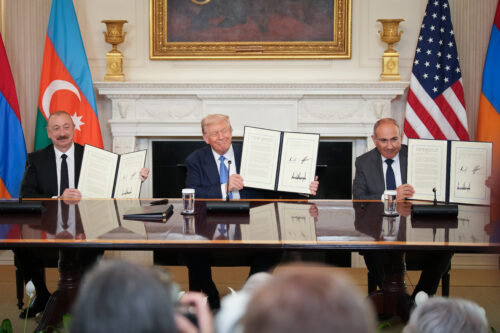
    President Trump’s family businesses are once again in the spotlight as a new financial disclosure showed they earned $2 billion in income in 2025 — a dramatic increase on the year before, with much of it coming from Gulf entities, raising emoluments concerns. Mounting perceptions of corruption, combined with unresolved crises in Iran and Israel-Palestine, are eroding trust among key partners in the Middle East. With the 2026 midterms approaching, these entanglements could represent a major political vulnerability and further undermine America’s already-strained standing in the region.

    Do the Gulf States Need a New Playbook?
  • Podcast
  • Do the Gulf States Need a New Playbook?

    After the US-Israel-Iran war — and the strikes that followed the cease-fire — the Gulf states find themselves dangerously exposed. Host Alistair Taylor is joined by MEI Associate Fellow Gregory Gause to discuss the war’s impact on the Gulf, their partnership with the United States, and whether the turmoil of recent months will push Gulf leaders to reassess their alliances and international engagement.

    July 2, 2026

    Additional Research & Commentary

    Backgrounders

    The Houthis
  • Backgrounder
  • The Houthis

    The Houthis are a political-military faction and Zaydi religious movement founded in northwestern Yemen in the 1980s. A key member of Iran’s Axis of Resistance with links to other militant organizations in the Arabian Peninsula and the Horn of Africa, the group has continued to pose a threat to Western interests on a global scale.

    May 15, 2026

    The Abraham Accords
    Photo by Alex Wong/Getty Images
  • Backgrounder
  • The Abraham Accords

    This backgrounder provides an overview of how the Abraham Accords came about, the US interests involved, their economic and strategic consequences, and the prospects for further enlargement going forward.

    November 17, 2025

    Turkish Foreign Policy
  • Backgrounder
  • Turkish Foreign Policy

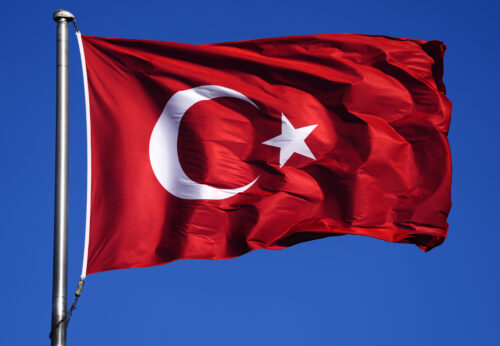
    After a decade of post-Arab Spring isolation, Turkey’s leaders have recognized that their ambition to position the country as an agenda-setter on the world stage requires active engagement in all directions. President Recep Tayyip Erdoğan’s consolidation of executive authority has centralized foreign policy decision-making and tied it to his domestic political priorities, transforming the country’s revisionist approach to one shaped primarily by personal and pragmatic interests.

    April 23, 2026

    Western Sahara: Why the conflict still matters
  • Video
  • Western Sahara: Why the conflict still matters

    As the Western Sahara conflict reaches its fifth decade, the territorial dispute remains unresolved and largely unknown. MEI’s Intissar Fakir unpacks the Western Sahara’s complex history and the rival claims by Morocco and the Sahrawi Arab Democratic Republic. She examines recent developments, such as President Trump’s recognition of Moroccan sovereignty over the territory and the collapse of a 30-year cease-fire, as well as the core questions that remain unanswered after half a century.

    August 7, 2025

    Podcasts

    Middle East Focus

    MEI’s flagship weekly podcast on US foreign policy and contemporary political and social issues in the Middle East.

    Taking the Edge Off the Middle East

    MEI Senior Fellow Brian Katulis engages friends, colleagues, and policy experts in casual conversations on the most important happenings in the Middle East. 

    Rethinking Democracy

    MEI Senior Fellow Gonul Tol hosts leading scholars and thought leaders on global democracy trends and the state of the liberal international order. 

    Filter by
    8748 Results
    Saudi Religious Influence in Indonesia
    Middle East Institute
  • Analysis
  • Saudi Religious Influence in Indonesia

    Religious interaction between the Arabian Peninsula and Indonesia has a long history. Traders and missionaries from the Peninsula were the primary sources of Islam to the archipelago. Saudi Arabia’s Islamic credentials in Indonesia have been strengthened by the fact that Mecca and Medina are part of the Kingdom.

    December 1, 2014

    Egypt and the Obama Administration
  • Analysis
  • Egypt and the Obama Administration

    This paper is part of an MEI scholar series, titled “Obama’s Legacy in the Middle East: Passing the Baton in 2017.” Click here to view the full project, or navigate using the table of contents to the right.

    November 26, 2014

    Obama and Declining U.S. Dependence on Imported Oil and Gas
  • Analysis
  • Obama and Declining U.S. Dependence on Imported Oil and Gas

    This paper is part of an MEI scholar series, titled “Obama’s Legacy in the Middle East: Passing the Baton in 2017.” Click here to view the full project, or navigate using the table of contents to the right.

    President Obama’s Energy Policy

    November 25, 2014

    The Syrian Conflict and the Ascendancy of the Lebanese Armed Forces
  • Analysis
  • The Syrian Conflict and the Ascendancy of the Lebanese Armed Forces

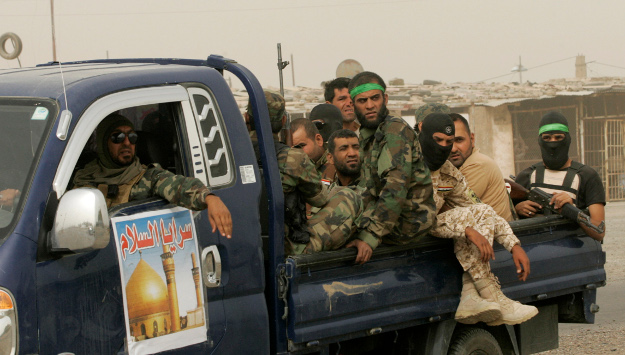
    In the past, the Lebanese Armed Forces’ (LAF) inability to confront or deter Israel was reflected as political weakness for the Lebanese government vis-à-vis Hezbollah. Israel’s withdrawal from south Lebanon in 2000 heralded a growing political role for Hezbollah. This role was further enhanced by the 2006 war with Israel, with Hezbollah claiming victory and consolidating its influence within the LAF and the government.

    November 25, 2014

    Traffic Accidents in Egypt: The Need for Reform
  • Analysis
  • Traffic Accidents in Egypt: The Need for Reform

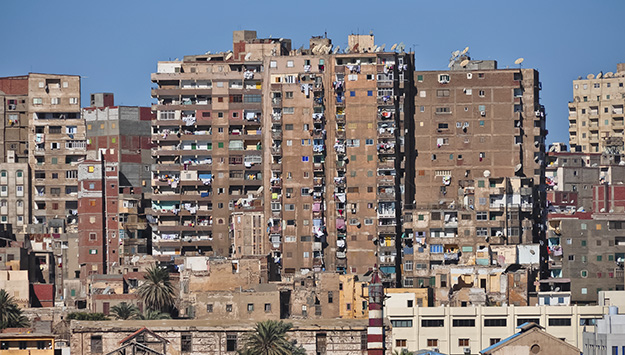
    Cairo’s Ring Road, a peripheral highway linking the city’s core to surrounding districts, is an eight-lane free-for-all, with cars, buses, and overloaded trucks weaving randomly at high speeds. “I for one consider it to be an off-road, not a highway,” says Mahmoud Mostafa Kamal, editor of the online Arabic-language automotive magazine, el-Tawkeel (The Dealership).

    November 24, 2014

    Can Nidaa Tounes Lead Tunisia?
    Middle East Institute
  • Analysis
  • Can Nidaa Tounes Lead Tunisia?

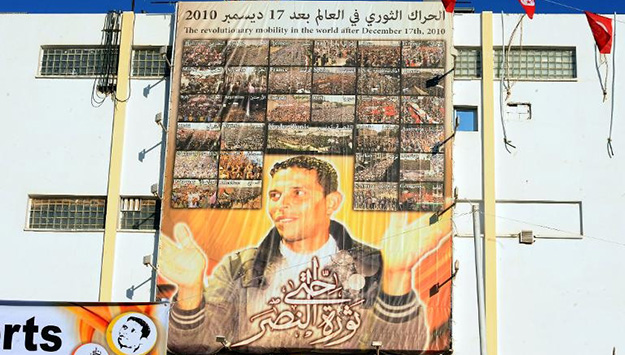
    Tunisia will hold its first presidential elections on Sunday, November 23. Main candidates include former Interim Prime Minister Beji Caid Essebsi of the Nidaa Tounes Party, Moncef Marzouki of the Congress for the Republic (CPR), and Mustapha Kamel Nabli, a former governor of the Central Bank of Tunisia. The Islamist Ennahda party did not present a candidate, wrongly assuming that it would regardless become the strongest voice in politics.

    November 21, 2014

    Islamic Politics in Indonesia: Domestic Challenges, Cross-National Inspirations
    Middle East Institute
  • Analysis
  • Islamic Politics in Indonesia: Domestic Challenges, Cross-National Inspirations

    At the height of harsh authoritarian rule of the Suharto era, Islamic political activism was often the focus of the most intense of state repression. Because the Indonesian Communist Party had been destroyed in the 1960s, only Islamic organizations possessed the potential to mobilize substantial grassroots support. Thus, they were considered a particular threat to the centralized and rigid authoritarianism of Suharto’s New Order regime.

    November 21, 2014

    Democracy Promotion: Obama's Mixed Record
  • Analysis
  • Democracy Promotion: Obama's Mixed Record

    This paper is part of an MEI scholar series, titled “Obama’s Legacy in the Middle East: Passing the Baton in 2017.” Click here to view the full project, or navigate using the table of contents to the right.

    Current Situation

    November 19, 2014

    The Middle East in 2015 and Beyond: Trends and Drivers
  • Analysis
  • The Middle East in 2015 and Beyond: Trends and Drivers

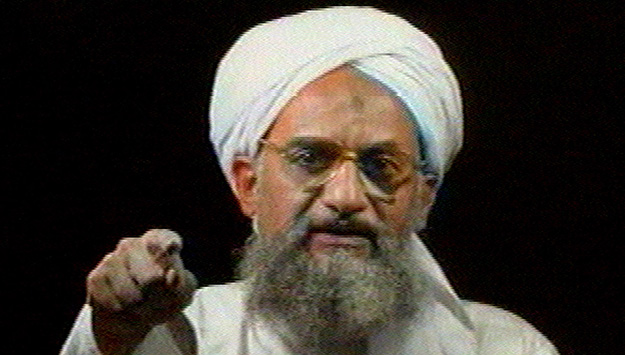
    Four years after the uprisings that broke the mold of the old Middle East, 2015 promises to be another year of tumultuous change. The eruptions of 2011 unleashed decades of pent-up tensions and dysfunction in the political, socioeconomic, and cultural spheres; these dynamics will take many years, if not decades, to play themselves out and settle into new paradigms and equilibriums.

    November 18, 2014

    Obama’s Legacy on Terror
    Middle East Institute
  • Analysis
  • Obama’s Legacy on Terror

    This paper is part of an MEI scholar series, titled “Obama’s Legacy in the Middle East: Passing the Baton in 2017.” Click here to view the full project, or navigate using the table of contents to the right.

    November 18, 2014

    Read the Middle East Journal

    The oldest peer-reviewed publication dedicated to the study of the modern Middle East, MEI’s flagship journal covers politics, society, and culture in the region.