Skip to Content

Research & Commentary

Read in-depth research, analysis, and commentary from MEI’s fellows and experts on the Middle East. 

Trump’s Family Business Deals Risk Further Undermining the Credibility of US Middle East Policy
  • Analysis
  • Trump’s Family Business Deals Risk Further Undermining the Credibility of US Middle East Policy

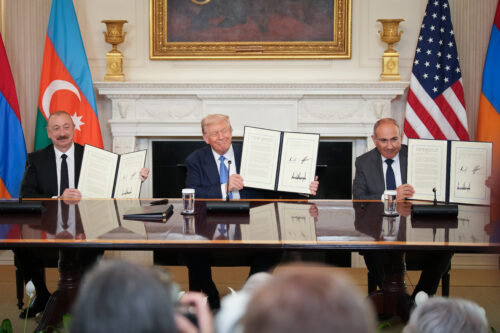
    President Trump’s family businesses are once again in the spotlight as a new financial disclosure showed they earned $2 billion in income in 2025 — a dramatic increase on the year before, with much of it coming from Gulf entities, raising emoluments concerns. Mounting perceptions of corruption, combined with unresolved crises in Iran and Israel-Palestine, are eroding trust among key partners in the Middle East. With the 2026 midterms approaching, these entanglements could represent a major political vulnerability and further undermine America’s already-strained standing in the region.

    Do the Gulf States Need a New Playbook?
  • Podcast
  • Do the Gulf States Need a New Playbook?

    After the US-Israel-Iran war — and the strikes that followed the cease-fire — the Gulf states find themselves dangerously exposed. Host Alistair Taylor is joined by MEI Associate Fellow Gregory Gause to discuss the war’s impact on the Gulf, their partnership with the United States, and whether the turmoil of recent months will push Gulf leaders to reassess their alliances and international engagement.

    July 2, 2026

    Additional Research & Commentary

    Backgrounders

    The Houthis
  • Backgrounder
  • The Houthis

    The Houthis are a political-military faction and Zaydi religious movement founded in northwestern Yemen in the 1980s. A key member of Iran’s Axis of Resistance with links to other militant organizations in the Arabian Peninsula and the Horn of Africa, the group has continued to pose a threat to Western interests on a global scale.

    May 15, 2026

    The Abraham Accords
    Photo by Alex Wong/Getty Images
  • Backgrounder
  • The Abraham Accords

    This backgrounder provides an overview of how the Abraham Accords came about, the US interests involved, their economic and strategic consequences, and the prospects for further enlargement going forward.

    November 17, 2025

    Turkish Foreign Policy
  • Backgrounder
  • Turkish Foreign Policy

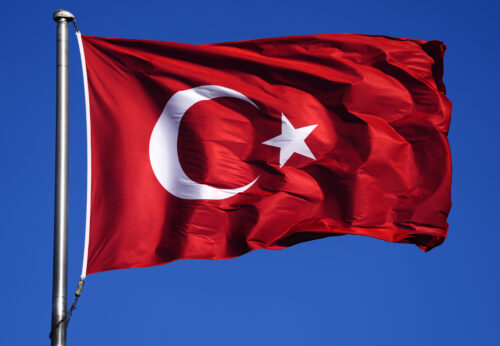
    After a decade of post-Arab Spring isolation, Turkey’s leaders have recognized that their ambition to position the country as an agenda-setter on the world stage requires active engagement in all directions. President Recep Tayyip Erdoğan’s consolidation of executive authority has centralized foreign policy decision-making and tied it to his domestic political priorities, transforming the country’s revisionist approach to one shaped primarily by personal and pragmatic interests.

    April 23, 2026

    Western Sahara: Why the conflict still matters
  • Video
  • Western Sahara: Why the conflict still matters

    As the Western Sahara conflict reaches its fifth decade, the territorial dispute remains unresolved and largely unknown. MEI’s Intissar Fakir unpacks the Western Sahara’s complex history and the rival claims by Morocco and the Sahrawi Arab Democratic Republic. She examines recent developments, such as President Trump’s recognition of Moroccan sovereignty over the territory and the collapse of a 30-year cease-fire, as well as the core questions that remain unanswered after half a century.

    August 7, 2025

    Podcasts

    Middle East Focus

    MEI’s flagship weekly podcast on US foreign policy and contemporary political and social issues in the Middle East.

    Taking the Edge Off the Middle East

    MEI Senior Fellow Brian Katulis engages friends, colleagues, and policy experts in casual conversations on the most important happenings in the Middle East. 

    Rethinking Democracy

    MEI Senior Fellow Gonul Tol hosts leading scholars and thought leaders on global democracy trends and the state of the liberal international order. 

    Filter by
    8748 Results
    Hezbollah: In Syria for the Long Haul
  • Analysis
  • Hezbollah: In Syria for the Long Haul

    As Syrian President Bashar al-Assad gazes across Damascus from his palace on Mount Qasioun, he can be grateful to his Russian, Iranian, and Hezbollah allies that he is still in a position to enjoy such a view.

    November 18, 2014

    Moving Ahead for the United States and Turkey
    Middle East Institute
  • Analysis
  • Moving Ahead for the United States and Turkey

    Ankara and Washington once again are wide apart on regional objectives. Not since 2003 and, for some, not since Cyprus in 1974 have the two capitals seen the same crisis so differently. Moving back onto the same page will require a series of concrete steps. President Obama reportedly has ordered a review. One of its main objectives should be to bring Turkey and the United States closer together on goals and tasks each will undertake. The United States cannot build a stable coalition without Turkey, and Turkey cannot accomplish its aims without the United States.

    The Israeli-Palestinian Conflict and Obama’s Legacy
  • Analysis
  • The Israeli-Palestinian Conflict and Obama’s Legacy

    This paper is part of an MEI scholar series, titled “Obama’s Legacy in the Middle East: Passing the Baton in 2017.” Click here to view the full project, or navigate using the table of contents to the right.

    The Israeli-Palestinian conflict has gone through a number of different phases in its long history. It is possible—though only time will tell—that a new phase is beginning now, but not a particularly hopeful one.[1]

    November 14, 2014

    Obama's Legacy on Iran
  • Analysis
  • Obama's Legacy on Iran

    This paper is part of an MEI scholar series, titled “Obama’s Legacy in the Middle East: Passing the Baton in 2017.” Click here to view the full project, or navigate using the table of contents to the right.

    Soft Islam: Indonesia’s Interfaith Mission for Peace in the Middle East
  • Analysis
  • Soft Islam: Indonesia’s Interfaith Mission for Peace in the Middle East

    Historians and anthropologists have focused on Muslim networks of scholars, merchants, and pilgrims that connect the Middle East with Southeast Asia. Especially with respect to the study of Islam in Indonesia, where political scientists and anthropologists approach Islam largely in terms of national politics and local cultures, this burgeoning body of literature on global Muslim networks offers both ethnographic insights into actual practices and an historical appreciation for the longue durée. The importance of this scholarship notwithstanding, much of this work focuses on formal networks of migration, trade, learning, and pilgrimage. In this respect, the cultural and political work of Islam has been largely confined to the study of either Muslim scholars or lay Muslims who participate in trade, travel, study, and migration. Here I shift the focus to a religious diplomacy tour that connected Muslims with states, citizen-believers, and global politics.

    November 12, 2014

    Obama and the Maghreb in the Wake of the Arab Spring
    Middle East Institute
  • Analysis
  • Obama and the Maghreb in the Wake of the Arab Spring

    This paper is part of an MEI scholar series, titled “Obama’s Legacy in the Middle East: Passing the Baton in 2017.” Click here to view the full project, or navigate using the table of contents to the right.

    November 7, 2014

    Egypt’s War on Terror: ISIS, President Sisi, and the U.S.-led Coalition
  • Analysis
  • Egypt’s War on Terror: ISIS, President Sisi, and the U.S.-led Coalition

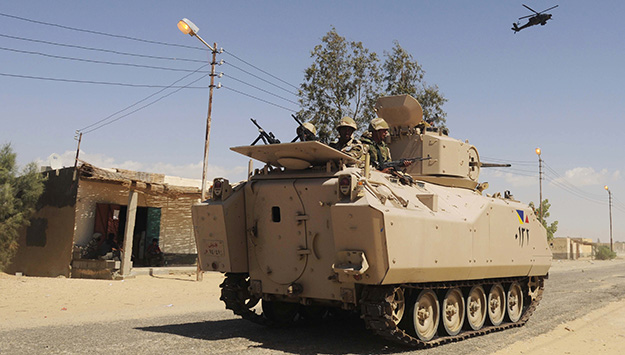
    As the war against ISIS rages in Syria and Iraq, Egypt is fighting its own war on terror. On October 24, the Sinai Peninsula witnessed the deadliest attack on Egypt’s military in years. Twenty-eight soldiers were killed and another 30 injured when a car bomb exploded at the Karm al-Qawadis security checkpoint in Sheikh Zuweid in North Sinai.

    November 6, 2014

    Obama's Legacy in Afghanistan
  • Analysis
  • Obama's Legacy in Afghanistan

    This paper is part of an MEI scholar series, titled “Obama’s Legacy in the Middle East: Passing the Baton in 2017.” Click here to view the full project, or navigate using the table of contents to the right.

    The Houthis’ Rise and Obama’s Legacy in Yemen
    Middle East Institute
  • Analysis
  • The Houthis’ Rise and Obama’s Legacy in Yemen

    This paper is part of an MEI scholar series, titled “Obama’s Legacy in the Middle East: Passing the Baton in 2017.” Click here to view the full project, or navigate using the table of contents to the right.

    November 4, 2014

    Book Review: Before the First Shots Are Fired, by Zinni and Koltz
    Middle East Institute
  • Analysis
  • Book Review: Before the First Shots Are Fired, by Zinni and Koltz

    As the United States confronts the Islamic State group in Iraq and Syria (ISIS), many Americans are asking why we should enter this war and what our strategy is. So far President Obama has indicated that he means to destroy ISIS by following the model used in Yemen and Somalia, that is, a combination of American air power and local allies on the ground with technical support from American Special Forces. At the same time, the president made a “no American boots” pledge that seems to be all-encompassing, including even Special Forces spotters to assist air strikes.

    November 4, 2014

    Iran's Headscarf Politics
  • Analysis
  • Iran's Headscarf Politics

    Iranian women have long been in a cat-and-mouse game with the interpretation and enforcement of many aspects of Islamic law, but most especially the hijab. Since 1983, when the first written law was passed, the Islamic Republic has made it officially mandatory for women to wear the headscarf and loose clothing, with punishment for failing to comply ranging from lashes to imprisonment. Even before the law was passed, just a few strands of hair outside the scarf would not be tolerated.

    November 3, 2014

    A Century After 1914
  • Analysis
  • A Century After 1914

    A version of this article appeared in Arabic in the Al-Hayat newspaper on Friday, October 31.

    As 2014 draws to a close, it is striking to reflect on the parallels between 1914 and 2014, and to consider that the global and Middle East regional orders could be in the process of undergoing changes as profound as the changes that were unleashed in 1914.

    October 31, 2014

    Read the Middle East Journal

    The oldest peer-reviewed publication dedicated to the study of the modern Middle East, MEI’s flagship journal covers politics, society, and culture in the region.