Skip to Content

Research & Commentary

Read in-depth research, analysis, and commentary from MEI’s fellows and experts on the Middle East. 

Trump’s Family Business Deals Risk Further Undermining the Credibility of US Middle East Policy
  • Analysis
  • Trump’s Family Business Deals Risk Further Undermining the Credibility of US Middle East Policy

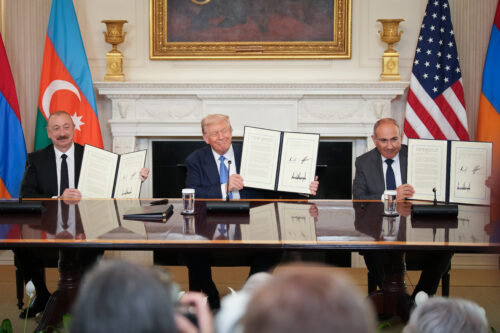
    President Trump’s family businesses are once again in the spotlight as a new financial disclosure showed they earned $2 billion in income in 2025 — a dramatic increase on the year before, with much of it coming from Gulf entities, raising emoluments concerns. Mounting perceptions of corruption, combined with unresolved crises in Iran and Israel-Palestine, are eroding trust among key partners in the Middle East. With the 2026 midterms approaching, these entanglements could represent a major political vulnerability and further undermine America’s already-strained standing in the region.

    Do the Gulf States Need a New Playbook?
  • Podcast
  • Do the Gulf States Need a New Playbook?

    After the US-Israel-Iran war — and the strikes that followed the cease-fire — the Gulf states find themselves dangerously exposed. Host Alistair Taylor is joined by MEI Associate Fellow Gregory Gause to discuss the war’s impact on the Gulf, their partnership with the United States, and whether the turmoil of recent months will push Gulf leaders to reassess their alliances and international engagement.

    July 2, 2026

    Additional Research & Commentary

    Backgrounders

    The Houthis
  • Backgrounder
  • The Houthis

    The Houthis are a political-military faction and Zaydi religious movement founded in northwestern Yemen in the 1980s. A key member of Iran’s Axis of Resistance with links to other militant organizations in the Arabian Peninsula and the Horn of Africa, the group has continued to pose a threat to Western interests on a global scale.

    May 15, 2026

    The Abraham Accords
    Photo by Alex Wong/Getty Images
  • Backgrounder
  • The Abraham Accords

    This backgrounder provides an overview of how the Abraham Accords came about, the US interests involved, their economic and strategic consequences, and the prospects for further enlargement going forward.

    November 17, 2025

    Turkish Foreign Policy
  • Backgrounder
  • Turkish Foreign Policy

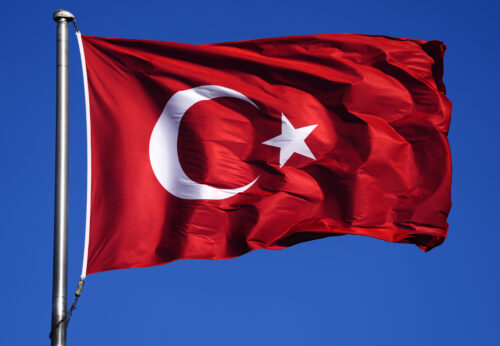
    After a decade of post-Arab Spring isolation, Turkey’s leaders have recognized that their ambition to position the country as an agenda-setter on the world stage requires active engagement in all directions. President Recep Tayyip Erdoğan’s consolidation of executive authority has centralized foreign policy decision-making and tied it to his domestic political priorities, transforming the country’s revisionist approach to one shaped primarily by personal and pragmatic interests.

    April 23, 2026

    Western Sahara: Why the conflict still matters
  • Video
  • Western Sahara: Why the conflict still matters

    As the Western Sahara conflict reaches its fifth decade, the territorial dispute remains unresolved and largely unknown. MEI’s Intissar Fakir unpacks the Western Sahara’s complex history and the rival claims by Morocco and the Sahrawi Arab Democratic Republic. She examines recent developments, such as President Trump’s recognition of Moroccan sovereignty over the territory and the collapse of a 30-year cease-fire, as well as the core questions that remain unanswered after half a century.

    August 7, 2025

    Podcasts

    Middle East Focus

    MEI’s flagship weekly podcast on US foreign policy and contemporary political and social issues in the Middle East.

    Taking the Edge Off the Middle East

    MEI Senior Fellow Brian Katulis engages friends, colleagues, and policy experts in casual conversations on the most important happenings in the Middle East. 

    Rethinking Democracy

    MEI Senior Fellow Gonul Tol hosts leading scholars and thought leaders on global democracy trends and the state of the liberal international order. 

    Filter by
    8748 Results
    Yemen's Uncharted Political Landscape
  • Analysis
  • Yemen's Uncharted Political Landscape

    A month after the Houthi conquest of Sana, Yemen’s new political landscape remains uncharted. In Sana, the Houthi leadership is trying to coax Yemen’s political elite into a coalition government, while south of Sana, Houthi forces are pressing to consolidate their military power on the ground. Both efforts are encountering considerable resistance, but the Houthis may prevail still.

    October 31, 2014

    Contemporary Patterns in Transregional Islam: Indonesia’s Shi‘a
    Middle East Institute
  • Analysis
  • Contemporary Patterns in Transregional Islam: Indonesia’s Shi‘a

    Representing about 1% of the country’s 200 million Muslims, Indonesia’s Shi‘a are but a small group in the overwhelmingly Sunni majority. These contemporary communities of devotees of the ahl al-bayt (“people of the house,” referring to the Prophet Muhammad, his daughter Fatima, her husband ‘Ali, and their sons Hasan and Husayn) explain their identities, albeit with differences, in transregional terms. Recently, this transregional focus has turned from South Asia toward the Islamic Republic of Iran.

    October 31, 2014

    Middle East Alignments: Open Questions
  • Analysis
  • Middle East Alignments: Open Questions

    The Syrian crisis and, before it, the Arab uprisings in Tunisia, Libya, Egypt, Yemen, and Bahrain have exposed fault lines not only within the region, but between regional countries and the United States. An understanding of the fractures within the region has benefited from the extensive and largely astute analysis of a range of scholars, who point to sectarian splits along one axis and the divide between conservatives and radicals along another. The fault line between Washington and the regional capitals is harder to assess.

    October 31, 2014

    Why Kobani could be an opportunity for Turkey, the Kurds and the U.S.
  • Analysis
  • Why Kobani could be an opportunity for Turkey, the Kurds and the U.S.

    Read the full article on CNN.

    In the space of just 48 hours last week, Turkey went from calling the PYD — the Kurds defending the Syrian border town of Kobani — a terrorist group to opening up an arms corridor from Iraq to aid its fight against ISIS.

    Libya's Spillover Effects
  • Analysis
  • Libya's Spillover Effects

    Excerpted from article first published on LobeLog.

    Libya remains broken and violent. Secular forces made gains against Muslim extremists in Benghazi recently, but the advantage has shifted from side to side since early this year. And two rival governments vying for power amidst a near lawless country with open borders is an ideal setting for the outflow of everything from heightened concerns to munitions and fighters. Yet Libya keeps boiling away on the global back burner.

    October 28, 2014

    Iran-Pakistan: Will Border Tensions Boil Over?
  • Analysis
  • Iran-Pakistan: Will Border Tensions Boil Over?

    This article was first published on BBC News.

    There have been a number of rounds of border skirmishes between Iran and Pakistan since the first week of October. However, reports that Pakistani forces have returned mortar fire is highly unusual and represents an increase in tensions that have marred this region for years.

    Contemporary Indonesian Pilgrimage to Hadramawt, Yemen
  • Analysis
  • Contemporary Indonesian Pilgrimage to Hadramawt, Yemen

    The past decade has witnessed a steady increase in the numbers of Indonesians embarking on pilgrimage (ziyara) to the Hadramawt valley of the former South Yemen. Despite the considerable presence of the Hadrami diaspora in Indonesia, the idea of a pilgrimage to Hadramawt did not really exist among Indonesian Muslims of non-Hadrami descent until rather recently.

    October 24, 2014

    Despite Elections, Transitional Justice Still Elusive in Tunisia
  • Analysis
  • Despite Elections, Transitional Justice Still Elusive in Tunisia

    This essay is part of the Middle East-Asia Project (MAP) series on “Pathways to Transitional Justice in the Arab World — Reflections on the Asia Pacific Experience.” The series explores the pursuit of transitional justice in the post-Arab Spring Middle East, and how such efforts could be informed by past and ongoing justice processes in Asia-Pacific countries. See Resources …


    October 24, 2014

    The Tunisian Elections: Toward an Arab Democratic Transition
  • Analysis
  • The Tunisian Elections: Toward an Arab Democratic Transition

    Tunisia, the birthplace of the 2011 Arab uprisings, is on the cusp of a defining moment. The parliamentary election of October 26 is about pivoting toward democratization. Presidential elections will follow on November 23. The focus of this piece is on how the elections are likely to reshape Tunisia’s polity and society.

    Authoritarian Meltdown

    October 24, 2014

    Reflections on the Post-Arab Spring Landscape by Sailing in Thoughts to Indonesia
    Middle East Institute
  • Analysis
  • Reflections on the Post-Arab Spring Landscape by Sailing in Thoughts to Indonesia

    While thick dust largely covers the political landscape of the Arab world, some insights for thinking about its future might be offered by examining the case of Indonesia, which surmounted deep political uncertainty and turmoil during the early years of the post-Suharto era.

    October 20, 2014

    Arab FDI “Pivots” to China
    Middle East Institute
  • Analysis
  • Arab FDI “Pivots” to China

    Thanks to unprecedented current account surpluses, the Gulf Cooperation Council (GCC) countries are investing billions abroad and looking more toward the East. The GCC’s growing trade ties with China have been accompanied by encouraging development in investment relations. For these countries, investment projects in China promise access not only to large and rapidly growing energy markets, but also to other booming sectors.

    October 16, 2014

    Obama’s Legacy in the Middle East: Passing the Baton in 2017
    Middle East Institute
  • Analysis
  • Obama’s Legacy in the Middle East: Passing the Baton in 2017

    This paper is part of an MEI scholar series, titled “Obama’s Legacy in the Middle East: Passing the Baton in 2017.” Click here to view the full project, or navigate using the table of contents to the right.

    October 16, 2014

    Gaza’s Economic Revival to be Addressed at Cairo Conference
  • Analysis
  • Gaza’s Economic Revival to be Addressed at Cairo Conference

    This summer’s war between Israel and Hamas, like the previous rounds — Operation Cast Lead in 2008-2009 and Operation Pillar of Cloud in 2012 — exacted a terrible cost not only in human lives (more than 2,100 Palestinians and 73 Israelis[1]) but also in the wholesale destruction of Gaza’s infrastructure.  The Palestinian Authority estimates reconstruction and rehabilitation costs of the recent conflict to exceed $4 billion, more than two times Gaza’s GNP.[2]

    October 10, 2014

    Read the Middle East Journal

    The oldest peer-reviewed publication dedicated to the study of the modern Middle East, MEI’s flagship journal covers politics, society, and culture in the region.