Skip to Content

Research & Commentary

Read in-depth research, analysis, and commentary from MEI’s fellows and experts on the Middle East. 

Trump’s Family Business Deals Risk Further Undermining the Credibility of US Middle East Policy
  • Analysis
  • Trump’s Family Business Deals Risk Further Undermining the Credibility of US Middle East Policy

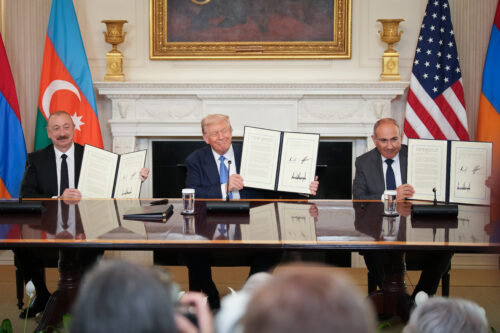
    President Trump’s family businesses are once again in the spotlight as a new financial disclosure showed they earned $2 billion in income in 2025 — a dramatic increase on the year before, with much of it coming from Gulf entities, raising emoluments concerns. Mounting perceptions of corruption, combined with unresolved crises in Iran and Israel-Palestine, are eroding trust among key partners in the Middle East. With the 2026 midterms approaching, these entanglements could represent a major political vulnerability and further undermine America’s already-strained standing in the region.

    Do the Gulf States Need a New Playbook?
  • Podcast
  • Do the Gulf States Need a New Playbook?

    After the US-Israel-Iran war — and the strikes that followed the cease-fire — the Gulf states find themselves dangerously exposed. Host Alistair Taylor is joined by MEI Associate Fellow Gregory Gause to discuss the war’s impact on the Gulf, their partnership with the United States, and whether the turmoil of recent months will push Gulf leaders to reassess their alliances and international engagement.

    July 2, 2026

    Additional Research & Commentary

    Backgrounders

    The Houthis
  • Backgrounder
  • The Houthis

    The Houthis are a political-military faction and Zaydi religious movement founded in northwestern Yemen in the 1980s. A key member of Iran’s Axis of Resistance with links to other militant organizations in the Arabian Peninsula and the Horn of Africa, the group has continued to pose a threat to Western interests on a global scale.

    May 15, 2026

    The Abraham Accords
    Photo by Alex Wong/Getty Images
  • Backgrounder
  • The Abraham Accords

    This backgrounder provides an overview of how the Abraham Accords came about, the US interests involved, their economic and strategic consequences, and the prospects for further enlargement going forward.

    November 17, 2025

    Turkish Foreign Policy
  • Backgrounder
  • Turkish Foreign Policy

    After a decade of post-Arab Spring isolation, Turkey’s leaders have recognized that their ambition to position the country as an agenda-setter on the world stage requires active engagement in all directions. President Recep Tayyip Erdoğan’s consolidation of executive authority has centralized foreign policy decision-making and tied it to his domestic political priorities, transforming the country’s revisionist approach to one shaped primarily by personal and pragmatic interests.

    April 23, 2026

    Western Sahara: Why the conflict still matters
  • Video
  • Western Sahara: Why the conflict still matters

    As the Western Sahara conflict reaches its fifth decade, the territorial dispute remains unresolved and largely unknown. MEI’s Intissar Fakir unpacks the Western Sahara’s complex history and the rival claims by Morocco and the Sahrawi Arab Democratic Republic. She examines recent developments, such as President Trump’s recognition of Moroccan sovereignty over the territory and the collapse of a 30-year cease-fire, as well as the core questions that remain unanswered after half a century.

    August 7, 2025

    Podcasts

    Middle East Focus

    MEI’s flagship weekly podcast on US foreign policy and contemporary political and social issues in the Middle East.

    Taking the Edge Off the Middle East

    MEI Senior Fellow Brian Katulis engages friends, colleagues, and policy experts in casual conversations on the most important happenings in the Middle East. 

    Rethinking Democracy

    MEI Senior Fellow Gonul Tol hosts leading scholars and thought leaders on global democracy trends and the state of the liberal international order. 

    Filter by
    8748 Results
    The Rise of Gulf Investment in India: Searching for Complementarity and Synergy
    Middle East Institute
  • Analysis
  • The Rise of Gulf Investment in India: Searching for Complementarity and Synergy

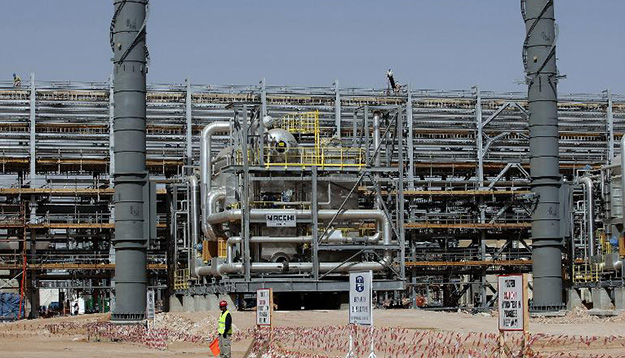
    This essay sheds light on the pattern of GCC investment in India by identifying India’s major Gulf partners, the size of their investment presence, and key investment sectors, as well as the areas of potential growth in and barriers to greater investment.

    October 9, 2014

    Turkey's tough choice: Take on ISIS or the PKK?
  • Analysis
  • Turkey's tough choice: Take on ISIS or the PKK?

    Read the full article on CNN.com.

    Turkey is in a tough spot. It has ISIS militants threatening the Syrian border town of Kobani, inching ever closer to confronting Turkish security forces. In addition thousands of Syrian Kurds, fleeing ISIS attacks, have massed along its border, adding further to Ankara’s troubles.

    Remember Our Syrian Allies
  • Analysis
  • Remember Our Syrian Allies

    This article was first published in The New York Times.

    President Obama made the right decision to boost military aid to moderate Syrian rebels last year, but today America’s approach to attacking Islamic State fighters risks undermining the moderate opposition and alienating support among the Syrian public.

    Gulf Investment in China: Beyond the Petroleum Sector
    Middle East Institute
  • Analysis
  • Gulf Investment in China: Beyond the Petroleum Sector

    This essay explores recent GCC investment in sectors of the Chinese economy other than the petrochemicals industry and examines the challenges confronted by Gulf investors.

    October 4, 2014

    Defeating the Islamic State Militarily is Only Half the Battle
  • Analysis
  • Defeating the Islamic State Militarily is Only Half the Battle

    In his speech on September 10 President Obama characterized the Islamic State (ISIS) as a terrorist group.[1] There were clear political benefits to using this label, not the least of which was to facilitate the formation of a broad-based military coalition against the organization.

    The Afghan Unity Government: A Victory for Democracy
  • Analysis
  • The Afghan Unity Government: A Victory for Democracy

    Afghanistan is often thought of as a place where some of the world’s most dangerous Islamists have taken refuge, been nurtured, and been allowed to launch regional and global jihad. Yet, with the agreement to form a unity government, the nation has provided an answer to extremism. Admittedly, the presidential election results were so riddled with fraud that it is probably impossible to determine who actually won. But it may nevertheless result in a victory for democracy. Seven million people risked their lives to vote.

    Agrarian Mirage: Gulf Foreign Direct Investment in Pakistan’s Agricultural Sector
    Middle East Institute
  • Analysis
  • Agrarian Mirage: Gulf Foreign Direct Investment in Pakistan’s Agricultural Sector

    In the late 2000s, one rarely picked up a financial newspaper without seeing an announcement of Gulf investments in large tracts of Pakistani agricultural land. Today, however, there is little, if any evidence of a single foreign-financed agricultural project in Pakistan having come to fruition. This essay explores why.

    October 1, 2014

    Gulf Investment: Destination Asia
    Middle East Institute
  • Analysis
  • Gulf Investment: Destination Asia

    The rise of China and India, coupled with major changes in the global energy market such as the US shale revolution have shifted the Gulf countries’ economic focus towards the Asian continent. East Asia has already emerged as the GCC’s most important trade partner, accounting for over 57% of its external trade.

    October 1, 2014

    Contemporary Patterns in Transregional Islam
    Middle East Institute
  • Analysis
  • Contemporary Patterns in Transregional Islam

    The essays in this series deal with transregional linkages between the Middle East and Asia. As a whole, the series explores the  “vectors” of religious transmission and the consequences of or implications of such interactions.


    October 1, 2014

    A Promising Ally in Syria
  • Analysis
  • A Promising Ally in Syria

    This article was first published on LobeLog.

    Alongside the wave of Syrian Kurdish refugees into Turkey this month is an equally unsettling story: alarming gains by the Islamic State in an offensive against a potential ally. Syria’s Kurds carved out their own regional bastion extending west from their main base in the extreme northeast corner of Syria. For two years they have fiercely defended their lands against the Islamic State and other extremists, employing many thousands of veteran Kurdish fighters.

    September 26, 2014

    Q&A with Hala Shukrallah, President of Egypt's Al-Dostour Party
  • Analysis
  • Q&A with Hala Shukrallah, President of Egypt's Al-Dostour Party

    Hala Shukrallah, president of Egypt’s Al Dostour (Constitution) Party, spoke with MEI about the party’s preparations for upcoming parliamentary elections, its legislative agenda, and the challenges it will face in Parliament. See more of her comments at this year’s Egypt Conference.

    Q: How has the Dostour party been preparing for the upcoming parliamentary elections?

    September 26, 2014

    Is Turkey Finally Ready to Aid Military Strikes Against ISIS?
  • Analysis
  • Is Turkey Finally Ready to Aid Military Strikes Against ISIS?

    This article was first published on CNN.

    Turkey, a key U.S. ally and a NATO member that borders the territory captured by ISIS, which now calls itself the Islamic State, in Syria and Iraq, could play a critical role in the U.S.-led military assault against the jihadist group.

    Testimony: US Strategy To Defeat ISIS
  • Analysis
  • Testimony: US Strategy To Defeat ISIS

    The following is the written testimony prepared and delivered by Amb (ret) Robert S. Ford for the Senate Foreign Relations Committee hearing held on September 17, 2014. Click here to watch video of the full hearing (Amb. Ford’s testimony begins at the 3 hours and 26 minutes mark).

    Read the Middle East Journal

    The oldest peer-reviewed publication dedicated to the study of the modern Middle East, MEI’s flagship journal covers politics, society, and culture in the region.