Skip to Content

Research & Commentary

Read in-depth research, analysis, and commentary from MEI’s fellows and experts on the Middle East. 

Trump’s Family Business Deals Risk Further Undermining the Credibility of US Middle East Policy
  • Analysis
  • Trump’s Family Business Deals Risk Further Undermining the Credibility of US Middle East Policy

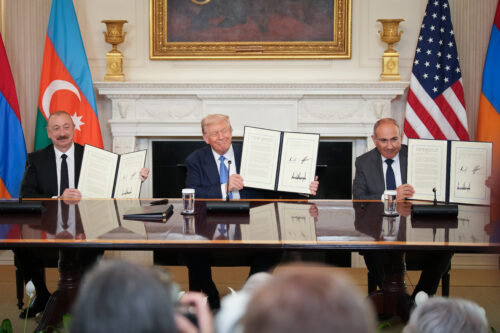
    President Trump’s family businesses are once again in the spotlight as a new financial disclosure showed they earned $2 billion in income in 2025 — a dramatic increase on the year before, with much of it coming from Gulf entities, raising emoluments concerns. Mounting perceptions of corruption, combined with unresolved crises in Iran and Israel-Palestine, are eroding trust among key partners in the Middle East. With the 2026 midterms approaching, these entanglements could represent a major political vulnerability and further undermine America’s already-strained standing in the region.

    Do the Gulf States Need a New Playbook?
  • Podcast
  • Do the Gulf States Need a New Playbook?

    After the US-Israel-Iran war — and the strikes that followed the cease-fire — the Gulf states find themselves dangerously exposed. Host Alistair Taylor is joined by MEI Associate Fellow Gregory Gause to discuss the war’s impact on the Gulf, their partnership with the United States, and whether the turmoil of recent months will push Gulf leaders to reassess their alliances and international engagement.

    July 2, 2026

    Additional Research & Commentary

    Backgrounders

    The Houthis
  • Backgrounder
  • The Houthis

    The Houthis are a political-military faction and Zaydi religious movement founded in northwestern Yemen in the 1980s. A key member of Iran’s Axis of Resistance with links to other militant organizations in the Arabian Peninsula and the Horn of Africa, the group has continued to pose a threat to Western interests on a global scale.

    May 15, 2026

    The Abraham Accords
    Photo by Alex Wong/Getty Images
  • Backgrounder
  • The Abraham Accords

    This backgrounder provides an overview of how the Abraham Accords came about, the US interests involved, their economic and strategic consequences, and the prospects for further enlargement going forward.

    November 17, 2025

    Turkish Foreign Policy
  • Backgrounder
  • Turkish Foreign Policy

    After a decade of post-Arab Spring isolation, Turkey’s leaders have recognized that their ambition to position the country as an agenda-setter on the world stage requires active engagement in all directions. President Recep Tayyip Erdoğan’s consolidation of executive authority has centralized foreign policy decision-making and tied it to his domestic political priorities, transforming the country’s revisionist approach to one shaped primarily by personal and pragmatic interests.

    April 23, 2026

    Western Sahara: Why the conflict still matters
  • Video
  • Western Sahara: Why the conflict still matters

    As the Western Sahara conflict reaches its fifth decade, the territorial dispute remains unresolved and largely unknown. MEI’s Intissar Fakir unpacks the Western Sahara’s complex history and the rival claims by Morocco and the Sahrawi Arab Democratic Republic. She examines recent developments, such as President Trump’s recognition of Moroccan sovereignty over the territory and the collapse of a 30-year cease-fire, as well as the core questions that remain unanswered after half a century.

    August 7, 2025

    Podcasts

    Middle East Focus

    MEI’s flagship weekly podcast on US foreign policy and contemporary political and social issues in the Middle East.

    Taking the Edge Off the Middle East

    MEI Senior Fellow Brian Katulis engages friends, colleagues, and policy experts in casual conversations on the most important happenings in the Middle East. 

    Rethinking Democracy

    MEI Senior Fellow Gonul Tol hosts leading scholars and thought leaders on global democracy trends and the state of the liberal international order. 

    Filter by
    8748 Results
    Turkey and the ISIS Challenge
  • Analysis
  • Turkey and the ISIS Challenge

    With the Syrian civil war raging and the ISIS offensive in northern Iraq creating a fresh crisis, Turkey now effectively has two failed states on its southern border and is dealing with new security, political, and economic challenges. Gonul Tol, director of MEI’s Turkish Center, explains how Turkey is responding to this predicament.

    Iran’s Moment of Truth with Maliki
  • Analysis
  • Iran’s Moment of Truth with Maliki

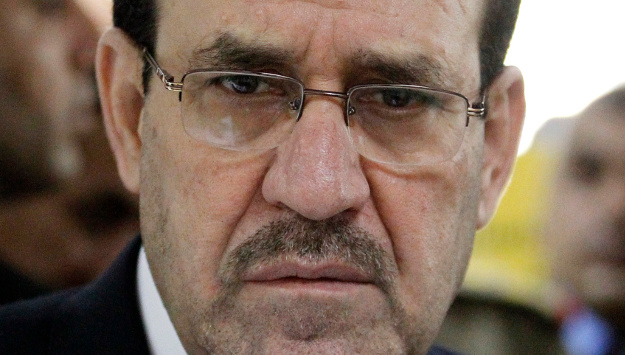
    The swift and violent rise of the Islamic State in Iraq and Syria (ISIS) continues to rattle the cages of power in Tehran. Overnight, Iran’s ally in Baghdad, Prime Minister Nuri al-Maliki, is suddenly fighting for his political life and the country of Iraq, which he had largely inherited from the Americans. Maliki has been a solid friend of Iran, but rapidly shifting realities inside Iraq can turn him into an expendable ally, making him more into a liability than an asset.

    Palestine at the Center of Israel-Turkey Trade
  • Analysis
  • Palestine at the Center of Israel-Turkey Trade

    On the north side of Istanbul’s Golden Horn, the Mavi Marmara sits in quiet isolation. In May 2010, the Turkish vessel was carrying aid for the besieged Gaza Strip when Israel forcibly intercepted it in international waters. Nine activists were killed in the raid, and a tenth succumbed to his injuries last month.

    The maritime crisis set off several years of polarized relations between Israel and Turkey that both countries believe are now on the mend. These improving ties may produce humanitarian and economic benefits for the West Bank and Gaza Strip.

    June 24, 2014

    The Science of Preserving Egypt’s Cultural Heritage
  • Analysis
  • The Science of Preserving Egypt’s Cultural Heritage

    Around the world, priceless monuments and artifacts are disintegrating due to exposure to pollution and hordes of visitors coupled with the sheer weight of age. The inexorable loss of cultural heritage concerns us all, but is especially troubling for decision-makers in places like Egypt that rely on cultural tourism-generated income to stay afloat. How to reconcile the need to make decaying treasures available to the public with the fact that public display is ruining them?

    June 23, 2014

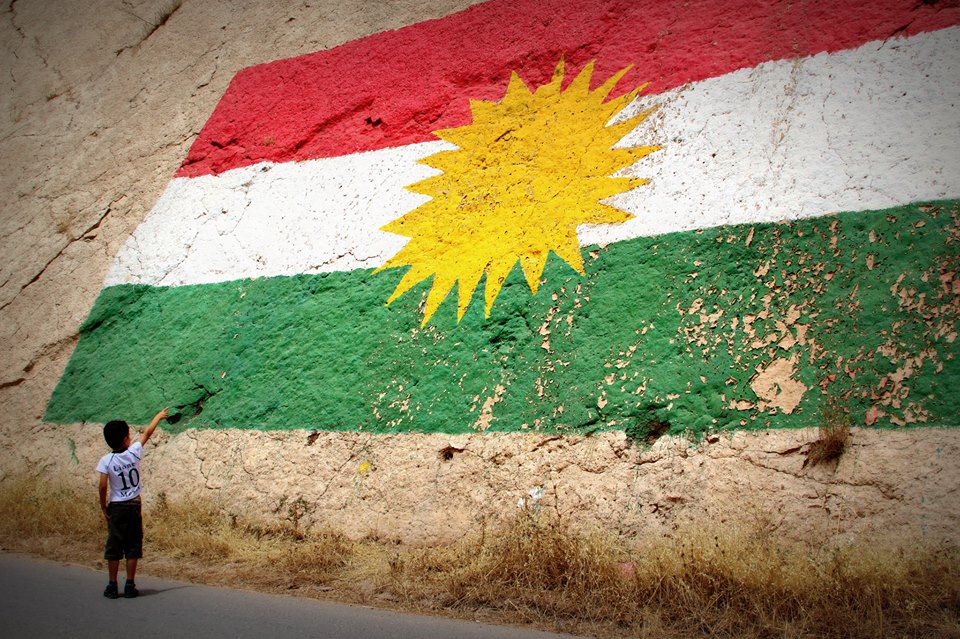
    Shi'astan 1, Kurdistan 1, Sunnistan 0
  • Analysis
  • Shi'astan 1, Kurdistan 1, Sunnistan 0

    President Obama’s decision to send 300 troops to Iraq to help Prime Minister Nuri al-Maliki’s government organize and gain the intelligence needed to fight off a Sunni rebellion spearheaded by the Islamic State in Iraq and Syria (ISIS) is getting decidedly mixed reviews.

    June 20, 2014

    Reconceptualizing Sectarianism in the Middle East and Asia
  • Analysis
  • Reconceptualizing Sectarianism in the Middle East and Asia

    Sectarianism as a concept has gained renewed prominence following an offensive by the Islamic State in Iraq and Syria (ISIS) in early June 2014, which resulted in the fall of Mosul and a string of Iraqi towns. These land grabs have resulted in a flurry of commentaries blaming the conflict on sectarian differences between Iraq’s Shi‘a and Sunnis and predicting the fragmentation of Iraq along sectarian lines. This piece seeks to provide an analysis as to whether sectarianism, in and of itself, is the driving factor behind the renewed conflict in Iraq or the three-year civil war raging in Syria.

    June 18, 2014

    The New President of Israel: Not Easily Categorized
  • Analysis
  • The New President of Israel: Not Easily Categorized

    Understanding the new president of Israel, Reuven (“Ruby”) Rivlin—his motives and beliefs, how he contrasts with outgoing President Shimon Peres, and what role he is likely to play during his seven-year term—requires some knowledge of history and Zionist ideology.

    June 17, 2014

    Secular Sectarians
    Middle East Institute
  • Analysis
  • Secular Sectarians

    A common dichotomy that emerges in discussions of Sunni-Shi‘i “sectarianism” in the contemporary Middle East is that of secular versus sectarian. The logic underlining this false duality is obvious enough: a sect is, after all, a subgroup of a religious denomination that exists as a result of theological or jurisprudential peculiarity as shaped by history, politics, and geography. Therefore, logic would suggest that “secularism” is a plausible antonym for “sectarianism:” a temporal, civic approach to public space rooted in modern understandings of the nation-state and its master institutions and the need to separate church from state. As intuitive as this undoubtedly seems, it remains a false dichotomy that misrepresents sectarian identities and sectarian dynamics in the Arab world and overlooks the role played by class, politics, and power in what is ostensibly a religious issue.

    June 17, 2014

    Iraq — So What to Do?
  • Analysis
  • Iraq — So What to Do?

    This article was originally posted on Charles Duelfer’s blog.

    A possible path ahead is to take advantage of the post-election negotiations and configure a leadership that accommodates Sunni interests. This would by necessity mean someone other than Maliki becoming prime minister.

    June 13, 2014

    Robert Ford on the ISIS Offensive in Iraq
  • Analysis
  • Robert Ford on the ISIS Offensive in Iraq

    The Islamic State of Iraq and Syria (ISIS), a Sunni militant group controlling territory spanning the border between the two country’s northern regions, made a rapid advance toward Baghdad this week, seizing control of Mosul, Iraq’s second largest city, and Tikrit, and attacking the refinery town of Baiji. Forces from Iraqi Kurdistan have since moved to secure Kirkuk as the Iraqi central government’s military has fled in disarray. Robert Ford, former U.S.

    Social Media and Economic Development in Egypt
  • Analysis
  • Social Media and Economic Development in Egypt

    In a country of deteriorating economic conditions, young Egyptians are using social media to create opportunities and change the way business is done.

    June 11, 2014

    Read the Middle East Journal

    The oldest peer-reviewed publication dedicated to the study of the modern Middle East, MEI’s flagship journal covers politics, society, and culture in the region.