Skip to Content

Research & Commentary

Read in-depth research, analysis, and commentary from MEI’s fellows and experts on the Middle East. 

Trump’s South Caucasus Peacemaking Is His Most Successful, but It Remains Unfinished
  • Commentary
  • Trump’s South Caucasus Peacemaking Is His Most Successful, but It Remains Unfinished

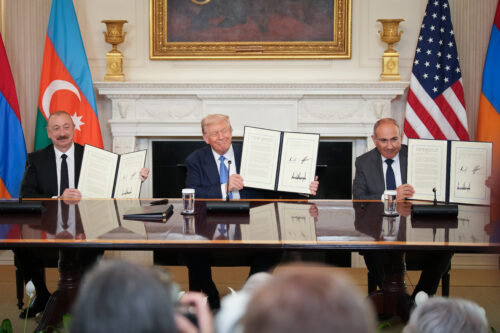
    Of all the fronts in President Trump’s peacemaking agenda, the South Caucasus has delivered the most concrete results. The August 2025 Washington Declaration, signed between Armenia and Azerbaijan and witnessed by Trump, marked an important step toward peace in the region. The two sides initialed a peace agreement and advanced plans to unblock regional connectivity, including through the establishment of the Trump Route for International Peace and Prosperity (TRIPP), which would connect Azerbaijan to its Nakhijevan exclave through southern Armenia. Implementation of TRIPP has since made notable progress, but construction has yet to start. A breakthrough on those two tracks would, in turn, unlock Armenia–Türkiye normalization, transforming a long-fractured region into an area of trade and interdependence.
    The Iran War Was Always About Regime Change
  • Commentary
  • The Iran War Was Always About Regime Change

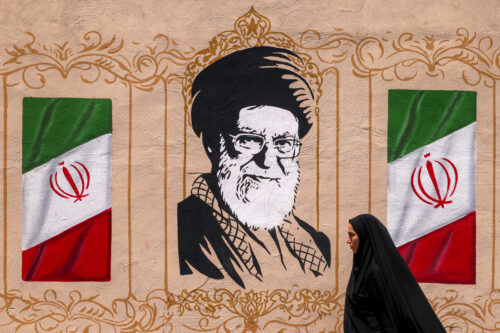
    Wars don’t just end. They get interpreted, reinterpreted, and turned into strategic doctrine. That is what happened after the Iran-Iraq War of the 1980s, a conflict that saw the United States back Tehran’s Iraqi adversaries. The war taught Tehran three lessons it never unlearned: that Washington wants the Islamic Republic gone, that Iran stands essentially alone in the world, and that it cannot survive a direct, overt fight with the U.S. and Israel.

    Iran’s New War Cabinet Is Really an Old One
  • Analysis
  • Iran’s New War Cabinet Is Really an Old One

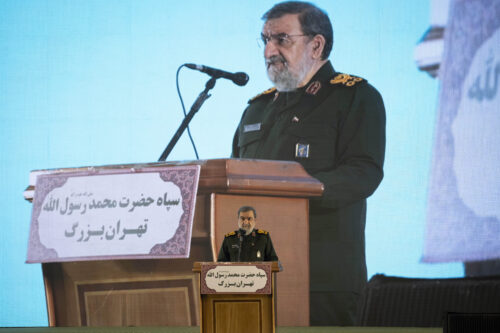
    Within 48 hours this week, Iran filled six of the most important posts in its battered military and security establishment. Read together with the biographies and mandates behind them, the appointments show how Tehran is drawing lessons from successive wars and preparing for a prolonged period of insecurity, without proving it has abandoned negotiation.

    Additional Research & Commentary

    Backgrounders

    Israeli Settlements in the West Bank
  • Backgrounder
  • Israeli Settlements in the West Bank

    Since 1967, Israeli settlements in the West Bank have been a contested feature of the Israeli-Palestinian conflict. The ultimate disposition of the settlements and ongoing activity related to their growth have repeatedly defied agreement in negotiations over a resolution to the conflict.

    June 9, 2026

    The Houthis
  • Backgrounder
  • The Houthis

    The Houthis are a political-military faction and Zaydi religious movement founded in northwestern Yemen in the 1980s. A key member of Iran’s Axis of Resistance with links to other militant organizations in the Arabian Peninsula and the Horn of Africa, the group has continued to pose a threat to Western interests on a global scale.

    May 15, 2026

    The India-Middle East-Europe Economic Corridor
  • Backgrounder
  • The India-Middle East-Europe Economic Corridor

    The India-Middle East-Europe Economic Corridor (IMEC) is a proposed multinational infrastructure initiative aimed at upgrading connectivity between the three regions through integrated trade, energy, and digital networks. Announced at the G20 summit in New Delhi in September 2023, IMEC is envisioned partially as a counterweight to China’s international infrastructure project, the Belt and Road Initiative.

    June 3, 2026

    Turkish Foreign Policy
  • Backgrounder
  • Turkish Foreign Policy

    After a decade of post-Arab Spring isolation, Turkey’s leaders have recognized that their ambition to position the country as an agenda-setter on the world stage requires active engagement in all directions. President Recep Tayyip Erdoğan’s consolidation of executive authority has centralized foreign policy decision-making and tied it to his domestic political priorities, transforming the country’s revisionist approach to one shaped primarily by personal and pragmatic interests.

    April 23, 2026

    Podcasts

    Middle East Focus

    MEI’s flagship weekly podcast on US foreign policy and contemporary political and social issues in the Middle East.

    Taking the Edge Off the Middle East

    MEI Senior Fellow Brian Katulis engages friends, colleagues, and policy experts in casual conversations on the most important happenings in the Middle East. 

    Rethinking Democracy

    MEI Senior Fellow Gonul Tol hosts leading scholars and thought leaders on global democracy trends and the state of the liberal international order. 

    Filter by
    8783 Results
    Maliki in Washington: Arms Deals, Politics, and Proxy Wars
    Middle East Institute
  • Analysis
  • Maliki in Washington: Arms Deals, Politics, and Proxy Wars

    Iraqi Prime Minister Nouri al-Maliki is in Washington this week for meetings with Vice President Joe Biden, Defense Secretary Chuck Hagel, and President Barack Obama. We sat down with MEI’s Vice President for Policy and Research, Paul Salem, to discuss the topics on the table, what each side hopes to accomplish, and how the United States should approach Iraq.

    What is Maliki looking to accomplish?

    October 31, 2013

    Saudi Arabia & the Arab Gulf’s Disappointment with U.S. Policy
    Middle East Institute
  • Analysis
  • Saudi Arabia & the Arab Gulf’s Disappointment with U.S. Policy

    Whether Saudi Arabia takes a seat on the United Nations Security Council or not, the initial snub is aimed primarily at the United States. In particular, U.S.-Saudi relations are in for an exceptionally difficult period—perhaps a return to the policies of King Faisal bin Abdulaziz. It appears that Saudi Arabia and the Arab Gulf now share the view of Sir Charles Johnston, a British diplomat in the 1960s, who offered the following assessment of U.S.

    October 28, 2013

    An Alternative Partner to the West? Turkey’s Growing Relations with China
  • Analysis
  • An Alternative Partner to the West? Turkey’s Growing Relations with China

    The relationship between Turkey and China has rarely been a point of focus for international observers in the early twenty-first century. However, the landscape has recently undergone a dramatic change, with increasing numbers of symposiums, forums, panels, articles, columns, think tanks, and researchers focusing on Sino-Turkish relations in China or in Turkey. The change is mostly due to the impressive rise of both Turkey and China as powers on the regional and global level, respectively. Today, Turkey is the sixteenth largest economy and China the second largest. At the same time, they are more ardently looking at and listening to each other.

    October 25, 2013

    Women & the Fight for Bodily Integrity in Egypt
    Middle East Institute
  • Analysis
  • Women & the Fight for Bodily Integrity in Egypt

    The struggle for bodily integrity—a right broadly defined as the inviolability of the human body and the self-determination of humans over their bodies—has been at the center of revolutionary aspirations in Egypt. Sexual assaults, arbitrary arrests, and torture by security forces; corrupt and defunct state healthcare systems; the abuse of agricultural subsidies resulting in innutritious food products—all of these are realities that took a painful physical toll on Egyptians and helped drive them to demand an end to Mubarak’s regime.

    October 24, 2013

    Syria's Rebels: Radicalization and Division
    Middle East Institute
  • Analysis
  • Syria's Rebels: Radicalization and Division

    Last month, when Secretary of State John Kerry sought to dispel the mounting skepticism of lawmakers over the advisability of launching punitive air strikes against the regime of President Bashar al-Assad, he portrayed the rebel fighters in the Western and Gulf-backed Free Syrian Army (FSA) as pluralistic and democratic, distinguishing them from jihadi groups and hard-line Islamists.[1]

    October 21, 2013

    The Shanghai Cooperation Organization: A New Alternative for Turkish Foreign Policy?
    Middle East Institute
  • Analysis
  • The Shanghai Cooperation Organization: A New Alternative for Turkish Foreign Policy?

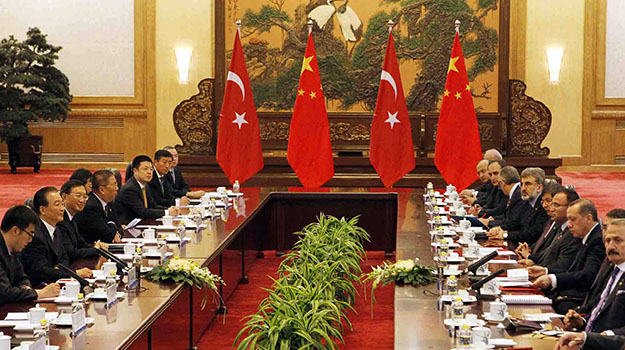
    In June 2012, Turkey was accepted as a “dialogue partner” at the Beijing Summit of the Shanghai Cooperation Organization (SCO). Although this decision did not completely satisfy the Turkish government, which apparently preferred the status of an observer, it still had a profound meaning, as Turkey is the first NATO member state to enjoy such a privileged institutional relationship with the SCO. This new relationship has become even more significant in light of Turkish Prime Minister Recep Tayyip Erdoğan’s declaration in a televised interview in January 2013 that membership in the SCO could become an alternative to Turkey’s stalled EU accession process. More recently, the brutal suppression of the Taksim Gezi Park demonstrations by Turkish security forces heightened concerns about the future of democracy in Turkey, giving rise to more frequent comparisons between the Turkish regime and the authoritarian political systems of the SCO member states.

    October 18, 2013

    A Conversation with Egypt's Aboul Fotouh
    Middle East Institute
  • Analysis
  • A Conversation with Egypt's Aboul Fotouh

    Dr. Abdel Moneim Aboul Fotouh, once a prominent member of the Muslim Brotherhood, former presidential candidate, and head of the Strong Egypt Party, spoke with Cornelis Hulsman, editor of Arab-West Report, in an interview for MEI regarding his break from the Brotherhood, Morsi’s ouster, and what he sees as necessary for Egypt’s future.

    You were once a member of the Muslim Brotherhood. Why did you leave the organization?

    October 16, 2013

    A Discussion with Ken Pollack, Author of Unthinkable
  • Video
  • A Discussion with Ken Pollack, Author of Unthinkable

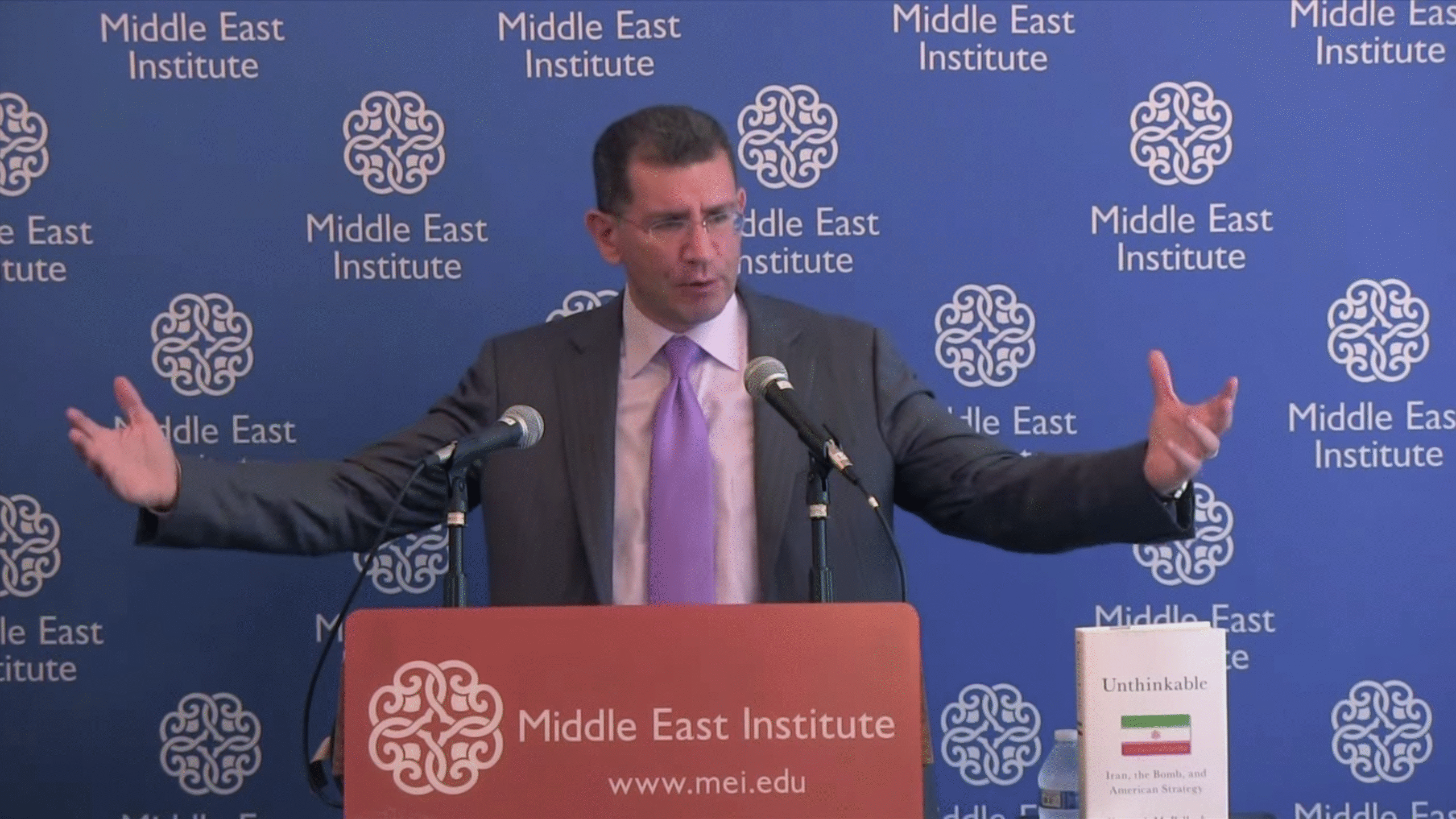
    On Wednesday, October 16, 2013, the Middle East Institute hosted author and Brookings senior fellow Ken Pollack for a discussion of his book, Unthinkable: Iran, the Bomb, and American Strategy(Simon & Schuster, 2013). In his latest work, Pollack explores the protracted tensions underlying the U.S.-Iranian relationship, how it evolved to its current status, and how the U.S. should best address Iran’s nuclear ambitions.

    October 16, 2013

    A Discussion with Ken Pollack, Author of Unthinkable
    Middle East Institute
  • Podcast
  • A Discussion with Ken Pollack, Author of Unthinkable

    The Middle East Institute is proud to host author and Brookings senior fellow Ken Pollack for a discussion of his book, Unthinkable: Iran, the Bomb, and American Strategy (Simon & Schuster, 2013). In his latest work, Pollack explores the protracted tensions underlying the U.S.-Iranian relationship, how it evolved to its current status, and how the U.S. should best address Iran’s nuclear ambitions.

    October 16, 2013

    Turkey and the Shanghai Cooperation Organization: Few Shared Values and No Common Destiny
    Middle East Institute
  • Analysis
  • Turkey and the Shanghai Cooperation Organization: Few Shared Values and No Common Destiny

    Almost every written piece on Turkey’s relations with Asia begins with a reference to the ancient Silk Road. When Turkish statesmen address Chinese audiences, they often use this metaphor to point out the “millennia-old cultural exchanges and neighborly relations” between the two countries. Inside Turkey, however, few can make sense of this anachronistic notion of shared identity. Asked about ancient Sino-Turkish ties, many will only recall how the Chinese built the “Great Wall” against the nomadic tribes of Central Asia—considered to be the forefathers of modern Turks.

    October 15, 2013

    The Turkish “Democratization Package”
    Middle East Institute
  • Analysis
  • The Turkish “Democratization Package”

    On September 30, 2013, Prime Minister Recep Tayyip Erdoğan announced his government’s long-awaited reform or “democratization” package. In Turkey’s highly polarized political atmosphere, responses ranged from describing the package as a historical victory for democracy that will finally free Turkey from heavy chains imposed upon it for decades, to an electoral ploy designed to polish the country’s badly damaged image as a result of the Gezi Park incidents, with no substantial improvements in democratic standards. As often is the case, the truth lies in the middle.

    October 15, 2013

    Read the Middle East Journal

    The oldest peer-reviewed publication dedicated to the study of the modern Middle East, MEI’s flagship journal covers politics, society, and culture in the region.