Skip to Content

Research & Commentary

Read in-depth research, analysis, and commentary from MEI’s fellows and experts on the Middle East. 

Trump’s Family Business Deals Risk Further Undermining the Credibility of US Middle East Policy
  • Analysis
  • Trump’s Family Business Deals Risk Further Undermining the Credibility of US Middle East Policy

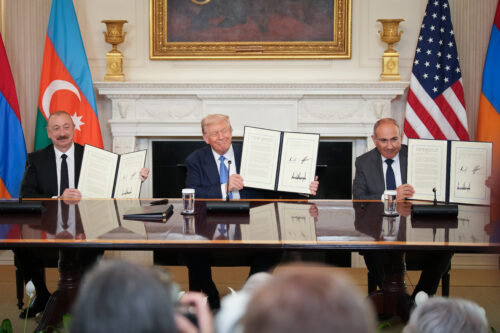
    President Trump’s family businesses are once again in the spotlight as a new financial disclosure showed they earned $2 billion in income in 2025 — a dramatic increase on the year before, with much of it coming from Gulf entities, raising emoluments concerns. Mounting perceptions of corruption, combined with unresolved crises in Iran and Israel-Palestine, are eroding trust among key partners in the Middle East. With the 2026 midterms approaching, these entanglements could represent a major political vulnerability and further undermine America’s already-strained standing in the region.

    Do the Gulf States Need a New Playbook?
  • Podcast
  • Do the Gulf States Need a New Playbook?

    After the US-Israel-Iran war — and the strikes that followed the cease-fire — the Gulf states find themselves dangerously exposed. Host Alistair Taylor is joined by MEI Associate Fellow Gregory Gause to discuss the war’s impact on the Gulf, their partnership with the United States, and whether the turmoil of recent months will push Gulf leaders to reassess their alliances and international engagement.

    July 2, 2026

    Additional Research & Commentary

    Backgrounders

    The Houthis
  • Backgrounder
  • The Houthis

    The Houthis are a political-military faction and Zaydi religious movement founded in northwestern Yemen in the 1980s. A key member of Iran’s Axis of Resistance with links to other militant organizations in the Arabian Peninsula and the Horn of Africa, the group has continued to pose a threat to Western interests on a global scale.

    May 15, 2026

    The Abraham Accords
    Photo by Alex Wong/Getty Images
  • Backgrounder
  • The Abraham Accords

    This backgrounder provides an overview of how the Abraham Accords came about, the US interests involved, their economic and strategic consequences, and the prospects for further enlargement going forward.

    November 17, 2025

    Turkish Foreign Policy
  • Backgrounder
  • Turkish Foreign Policy

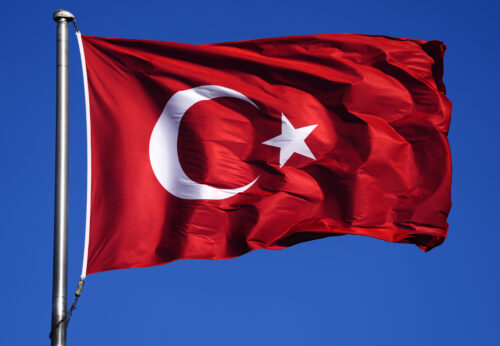
    After a decade of post-Arab Spring isolation, Turkey’s leaders have recognized that their ambition to position the country as an agenda-setter on the world stage requires active engagement in all directions. President Recep Tayyip Erdoğan’s consolidation of executive authority has centralized foreign policy decision-making and tied it to his domestic political priorities, transforming the country’s revisionist approach to one shaped primarily by personal and pragmatic interests.

    April 23, 2026

    Western Sahara: Why the conflict still matters
  • Video
  • Western Sahara: Why the conflict still matters

    As the Western Sahara conflict reaches its fifth decade, the territorial dispute remains unresolved and largely unknown. MEI’s Intissar Fakir unpacks the Western Sahara’s complex history and the rival claims by Morocco and the Sahrawi Arab Democratic Republic. She examines recent developments, such as President Trump’s recognition of Moroccan sovereignty over the territory and the collapse of a 30-year cease-fire, as well as the core questions that remain unanswered after half a century.

    August 7, 2025

    Podcasts

    Middle East Focus

    MEI’s flagship weekly podcast on US foreign policy and contemporary political and social issues in the Middle East.

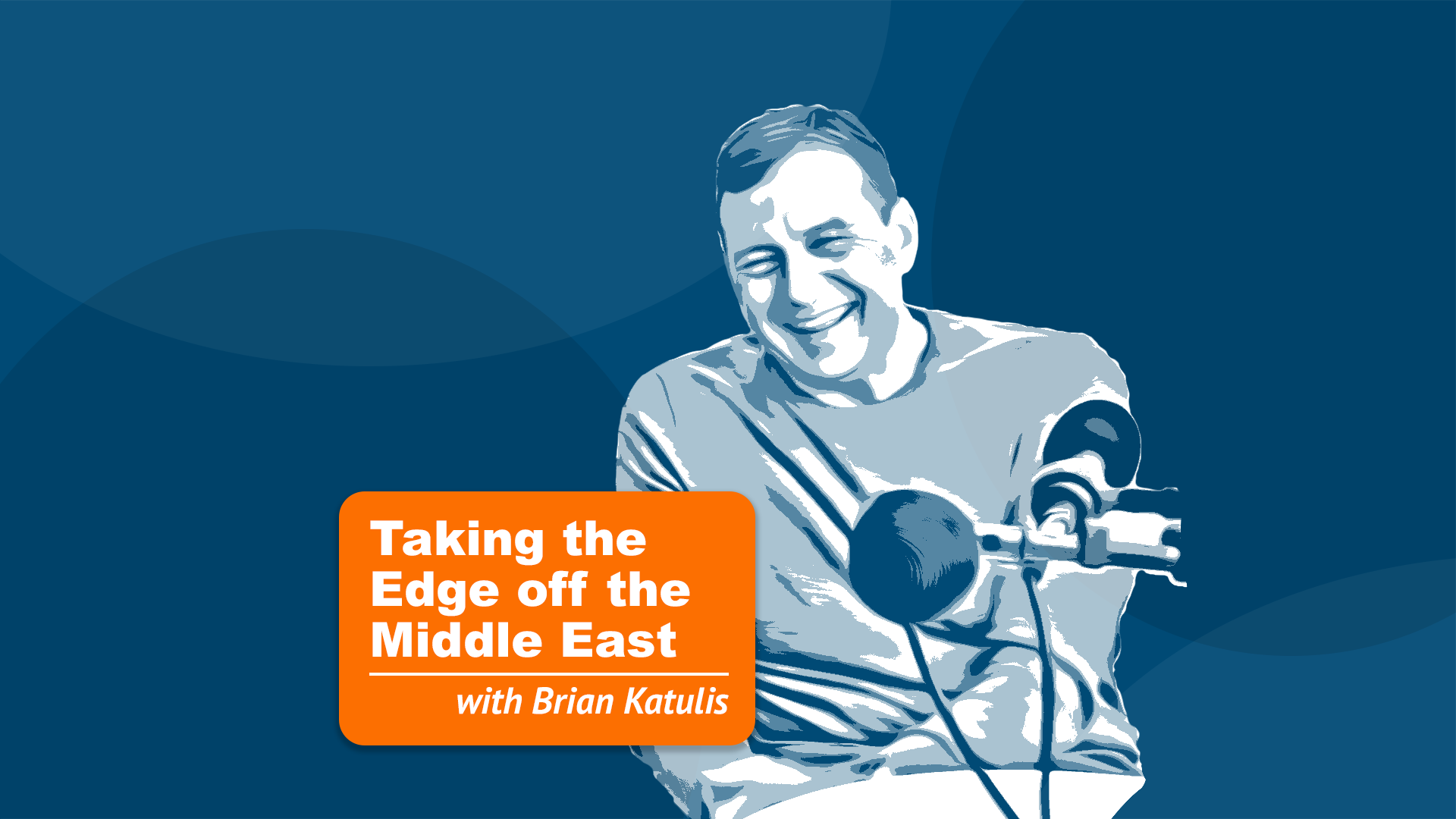
    Taking the Edge Off the Middle East

    MEI Senior Fellow Brian Katulis engages friends, colleagues, and policy experts in casual conversations on the most important happenings in the Middle East. 

    Rethinking Democracy

    MEI Senior Fellow Gonul Tol hosts leading scholars and thought leaders on global democracy trends and the state of the liberal international order. 

    Filter by
    8748 Results
    Egypt: Reconciliation Or Repression?
  • Analysis
  • Egypt: Reconciliation Or Repression?

    This article first appeared in Al-Monitor.

    The ongoing confrontation between Egypt’s military and the Muslim Brotherhood has left the country in deep disarray.

    August 30, 2013

    A Conversation with Amb. Raouf Adly Saad
  • Video
  • A Conversation with Amb. Raouf Adly Saad

    The Middle East Institute is pleased to welcome H.E. Ambassador Raouf Adly Saad, former special envoy to Africa of the interim president of Egypt, for a conversation about Egypt’s political transition and future. In light of Egypt’s many challenges, Ambassador Saad will discuss the transitional government’s goals and priorities and offer his insights about how to get Egypt on a path toward economic stability and democracy.

    August 28, 2013

    How the US Can Use Aid to Nudge Egypt
    Middle East Institute
  • Analysis
  • How the US Can Use Aid to Nudge Egypt

    This article originally appeared in The Christian Science Monitor

    The American relationship with Egypt needs to change if Washington wants to have substantive influence in Cairo. America’s recent strategy in Egypt has been focused on buying Egyptian compliance through military and economic aid, but it seems to have had little effect.

    August 27, 2013

    Reasons to Be Optimistic About Egypt
    Middle East Institute
  • Analysis
  • Reasons to Be Optimistic About Egypt

    With the dual announcement this week of the completion of a preliminary constitutional draft by a ten-member committee of experts, in addition to appointments to the quasi-governmental National Council on Human Rights, Egyptians finally have reason to be cautiously optimistic.

    August 23, 2013

    A Conversation with Amb. Raouf Adly Saad
    Middle East Institute
  • Podcast
  • A Conversation with Amb. Raouf Adly Saad

    Wed, 8/14/2013 12:00 pm to 1:00 pm The Middle East Institute is pleased to welcome H.E. Ambassador Raouf Adly Saad, former special envoy to Africa of the interim president of Egypt, for a conversation about Egypt’s political transition and future.  In light of Egypt’s many challenges, Ambassador Saad will discuss the transitional government’s goals and priorities and offer his insights about how to get Egypt  on a path toward economic stability and democracy.Bios:H.E. Ambassador Raouf Adly Saad served as the special envoy to Africa for Interim Egyptian President Adly Mansour.

    August 21, 2013

    A Conversation with Amb. Raouf Adly Saad
    Middle East Institute
  • Podcast
  • A Conversation with Amb. Raouf Adly Saad

    Wed, 8/14/2013 12:00 pm to 1:00 pm The Middle East Institute is pleased to welcome H.E. Ambassador Raouf Adly Saad, former special envoy to Africa of the interim president of Egypt, for a conversation about Egypt’s political transition and future.  In light of Egypt’s many challenges, Ambassador Saad will discuss the transitional government’s goals and priorities and offer his insights about how to get Egypt  on a path toward economic stability and democracy.Bios:H.E. Ambassador Raouf Adly Saad served as the special envoy to Africa for Interim Egyptian President Adly Mansour.

    August 21, 2013

    A Conversation with Amb. Raouf Adly Saad
    Middle East Institute
  • Podcast
  • A Conversation with Amb. Raouf Adly Saad

    Wed, 8/14/2013 12:00 pm to 1:00 pm The Middle East Institute is pleased to welcome H.E. Ambassador Raouf Adly Saad, former special envoy to Africa of the interim president of Egypt, for a conversation about Egypt’s political transition and future.  In light of Egypt’s many challenges, Ambassador Saad will discuss the transitional government’s goals and priorities and offer his insights about how to get Egypt  on a path toward economic stability and democracy.Bios:H.E. Ambassador Raouf Adly Saad served as the special envoy to Africa for Interim Egyptian President Adly Mansour.

    August 21, 2013

    A Conversation with Amb. Raouf Adly Saad
    Middle East Institute
  • Podcast
  • A Conversation with Amb. Raouf Adly Saad

    Wed, 8/14/2013 12:00 pm to 1:00 pm The Middle East Institute is pleased to welcome H.E. Ambassador Raouf Adly Saad, former special envoy to Africa of the interim president of Egypt, for a conversation about Egypt’s political transition and future.  In light of Egypt’s many challenges, Ambassador Saad will discuss the transitional government’s goals and priorities and offer his insights about how to get Egypt  on a path toward economic stability and democracy.Bios:H.E. Ambassador Raouf Adly Saad served as the special envoy to Africa for Interim Egyptian President Adly Mansour.

    August 21, 2013

    The UAE’s Strategic Trade Partnership with Asia: A Focus on Dubai
  • Analysis
  • The UAE’s Strategic Trade Partnership with Asia: A Focus on Dubai

    Over the past several decades, the United Arab Emirates (UAE) has been transformed into one of the world’s most robust economies. The key to the UAE’s success has been economic diversification; indeed, oil now accounts for only one-third of the country’s GDP. According to UAE Ministry of Foreign Trade Reports, the value of non-oil exports increased thirtyfold during the period 1981-2009. Dubai accounted for approximately 82 percent of non-oil exports in the UAE in 2010, while Abu Dhabi accounted for 14 percent. In particular, by setting up over two dozen free zones as platforms for nearly all industry sectors, the UAE has become far less dependent on oil.

    August 19, 2013

    7 Signs of the Death of Egyptian Politics
  • Analysis
  • 7 Signs of the Death of Egyptian Politics

    1. The current state apparatus is intent on using force to disperse sit-ins—protests that are a direct response to a genuine political crisis. Blood has been spilled; victims are being shot down. Political solutions have been willfully ignored, and so has the fact that efforts to bring about such solutions are absolutely critical, regardless of what difficulties or obstacles may stand in the way.

    August 19, 2013

    Snapshots of the Iranian Diaspora in Malaysia
    Middle East Institute
  • Analysis
  • Snapshots of the Iranian Diaspora in Malaysia

    The Iranian diaspora in Malaysia is a diverse and vibrant community of educators, students, artists, and entrepreneurs. The following essays provide snapshots of the historical and cultural connections between Iran and Malaysia, as well as the personal and professional experiences and creative output of some of the members of this community.


    August 17, 2013

    “Invisible” White-Collar Indians in the Gulf
    Middle East Institute
  • Analysis
  • “Invisible” White-Collar Indians in the Gulf

    Since the 1970s oil boom, the Gulf region has been one of the principal destinations for workers from South Asia, with the result that today Indians constitute a large percentage of the non-nationals living in the region. Indeed, at five million out of an estimated 15 million people, the Indian community forms the largest expatriate group in each of the Gulf countries. Most Indian immigrants are from the south Indian state of Kerala, while many of the rest originate from Tamil Nadu, Punjab, Uttar Pradesh, and Bihar.

    August 14, 2013

    Read the Middle East Journal

    The oldest peer-reviewed publication dedicated to the study of the modern Middle East, MEI’s flagship journal covers politics, society, and culture in the region.